Dubai Landlord Eviction Rights: Legal Grounds & RDC Procedures 2025
Discover when Dubai landlords can legally evict tenants. Complete guide to RDC procedures, notice requirements, and property owner protections under UAE law.
By Vadim Kouznetsov, published

Can Dubai Landlords Legally Evict Tenants? Complete Rights Guide 2025
Property owners in Dubai have clear legal pathways to protect their investments and address lease violations. The Rental Disputes Centre (RDC) provides a fair, efficient system that balances landlord rights with tenant protections.
Dr Omar Bin Suwaidan Al Suwaidi, Senior First Instance Judge at the RDC, confirms that whilst Dubai law prevents arbitrary evictions, landlords have legitimate recourse when tenants breach agreements. Here’s what property owners need to know about lawful eviction procedures.
When Can Landlords Evict Tenants Before Lease Expires?
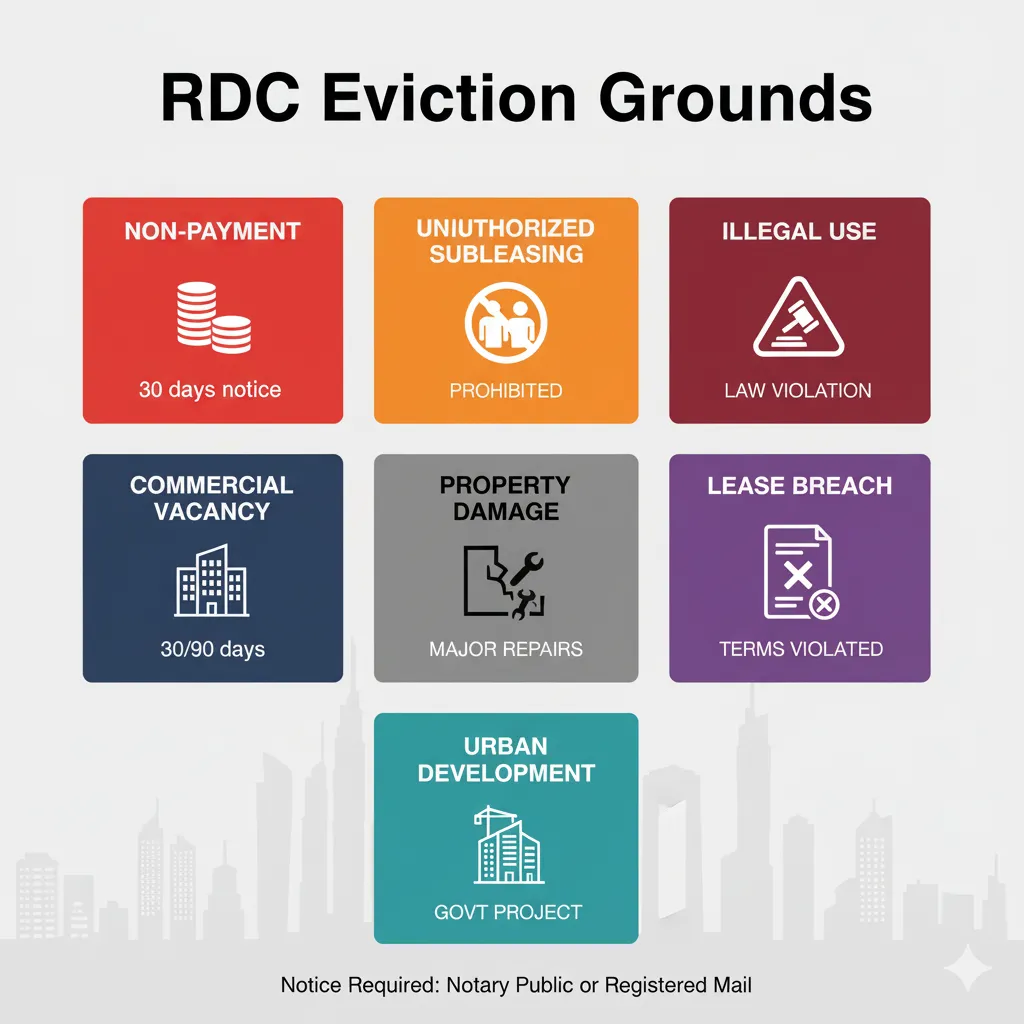
Dubai law permits landlords to evict tenants during the lease term under seven specific circumstances:
Non-payment of rent: Tenants who fail to pay rent within 30 days of receiving written notice can be evicted. This protection allows landlords to recover their property when tenants default on payment obligations.
Unauthorised subleasing: Subleasing without written landlord consent allows eviction of both the original tenant and subtenant. Dubai’s occupancy laws specifically prohibit sharing leased properties without permission.
Illegal property use: Using the property for illegal activities or actions that violate public order gives landlords immediate eviction rights. This clause protects property owners from legal liability associated with tenant misconduct.
Commercial property vacancy: For commercial leases, properties left unoccupied for 30 consecutive days or 90 non-consecutive days within a year qualify for eviction proceedings.
Property damage: Significant alterations or negligent acts that harm the property allow landlords to terminate the lease. Property maintenance responsibilities clearly define what constitutes damage versus normal wear.
Breach of lease obligations: Failure to comply with lease terms within 30 days of receiving notice permits eviction. This covers various violations from pet restrictions to noise complaints.
Urban development needs: When authorities require demolition or reconstruction for city planning, landlords can evict with proper documentation.
For pre-lease evictions, landlords must notify tenants through a Notary Public or registered mail, following strict legal procedures.
Eviction Rights After Lease Expiry
Once the lease contract expires, landlords gain additional eviction grounds beyond the pre-expiry reasons:
Property demolition or expansion: When rebuilding or adding structures that prevent tenant use, landlords can reclaim their property. Tenants have first refusal rights if the property is reconstructed.
Major renovation requirements: Renovations that cannot be carried out whilst the property remains occupied justify eviction. The work must genuinely require vacant possession.
Personal use: Landlords or close family members requiring the property for personal residence can evict tenants. However, Dubai law imposes a 2-year rental ban if landlords re-rent after claiming personal use.
Property sale: If the landlord plans to sell the property, they can reclaim it from tenants. This provision allows owners to sell vacant possession, often commanding higher prices.
Post-lease evictions require at least 12 months’ notice through a Notary Public or registered mail. This timeline gives tenants adequate opportunity to find alternative accommodation.
How Rental Disputes Centre Protects Both Parties
The RDC provides digital tools that streamline dispute resolution whilst maintaining fairness. Dr Al Suwaidi emphasises that the system prevents arbitrary evictions whilst giving landlords recourse against genuine violations.
“If tenants fail to pay rent or make unauthorised structural changes, landlords are entitled to take action,” he said. The centre’s approach balances protection with accountability.
Available services include:
- Online complaint submissions
- Remote hearings for landlords abroad
- Real-time case tracking
- Digital documentation management
- Expert mediation services
These tools particularly benefit property owners managing investments from overseas, eliminating the need for physical presence in Dubai.
Landlord Maintenance Obligations
Landlords cannot neglect property maintenance whilst pursuing evictions. According to Dubai law, property owners remain legally responsible for maintaining properties to municipal standards.
If tenants report unresolved maintenance issues, the RDC can compel landlords to act. This reciprocal obligation prevents landlords from using maintenance neglect as a strategy to force tenant departures.
Understanding your maintenance responsibilities helps avoid RDC disputes that could delay eviction proceedings.
Proper Notice Requirements
Dubai law mandates specific notice procedures that landlords must follow precisely. Failure to provide proper notice invalidates eviction attempts and can result in RDC rulings favouring tenants.
Pre-lease evictions: 30-day written notice via Notary Public or registered mail, specifying the violation and opportunity to remedy.
Post-lease evictions: 12-month written notice via Notary Public or registered mail, clearly stating the grounds for non-renewal.
Rent increase notifications also require 90 days’ notice before contract expiry, separate from eviction proceedings.
Preventing Eviction Disputes
Property owners can avoid RDC involvement through proactive management:
Clear lease agreements: Specify all terms explicitly, including subletting restrictions, maintenance responsibilities, and acceptable property use.
Regular inspections: Conduct periodic property visits with proper notice to tenants, documenting the property condition photographically.
Written communications: Maintain email or SMS records of all tenant interactions, rent reminders, and violation warnings.
Prompt issue resolution: Address tenant complaints quickly to prevent maintenance disputes from escalating.
Professional property management: Consider hiring experienced firms familiar with Dubai’s rental regulations.
For landlords managing freehold properties in Dubai, understanding these procedures protects your investment rights.
Rent Increase Limitations
Whilst eviction rights protect landlords, Dubai law caps rent increases to prevent displacement disguised as market adjustments. According to Decree No. 43 of 2013, maximum increases reach 20% only when current rent falls more than 40% below market rates.
Landlords attempting excessive rent increases to force tenant departures face RDC penalties. The Real Estate Regulatory Agency (RERA) determines fair market rates through its rental index.
Tenants can challenge rent increases through the RDC if landlords violate these caps, potentially delaying your ability to reclaim the property.
Common Eviction Mistakes to Avoid
Changing locks: Never physically lock out tenants without RDC orders. This constitutes illegal eviction regardless of rent arrears.
Utility disconnection: Cutting water, electricity, or cooling services to force departures violates Dubai law and gives tenants strong RDC cases.
Harassment: Threatening behaviour or repeated unwanted property visits can result in landlord penalties.
Inadequate documentation: Verbal warnings or informal notices don’t satisfy legal requirements. Always use Notary Public services.
Premature possession: Taking possession before the notice period expires invalidates the eviction and may require compensation.
Understanding Tenant Protections
Awareness of tenant rights helps landlords navigate evictions legally. Tenants cannot be evicted for:
- Refusing to pay unauthorized rent increases
- Reporting property maintenance issues to authorities
- Declining to reduce cheque frequency
- Requesting repairs covered by landlord obligations
- Early termination attempts due to unforeseen circumstances without mutual agreement
These protections ensure the eviction system isn’t abused to remove tenants exercising their legal rights.
Filing an Eviction Case
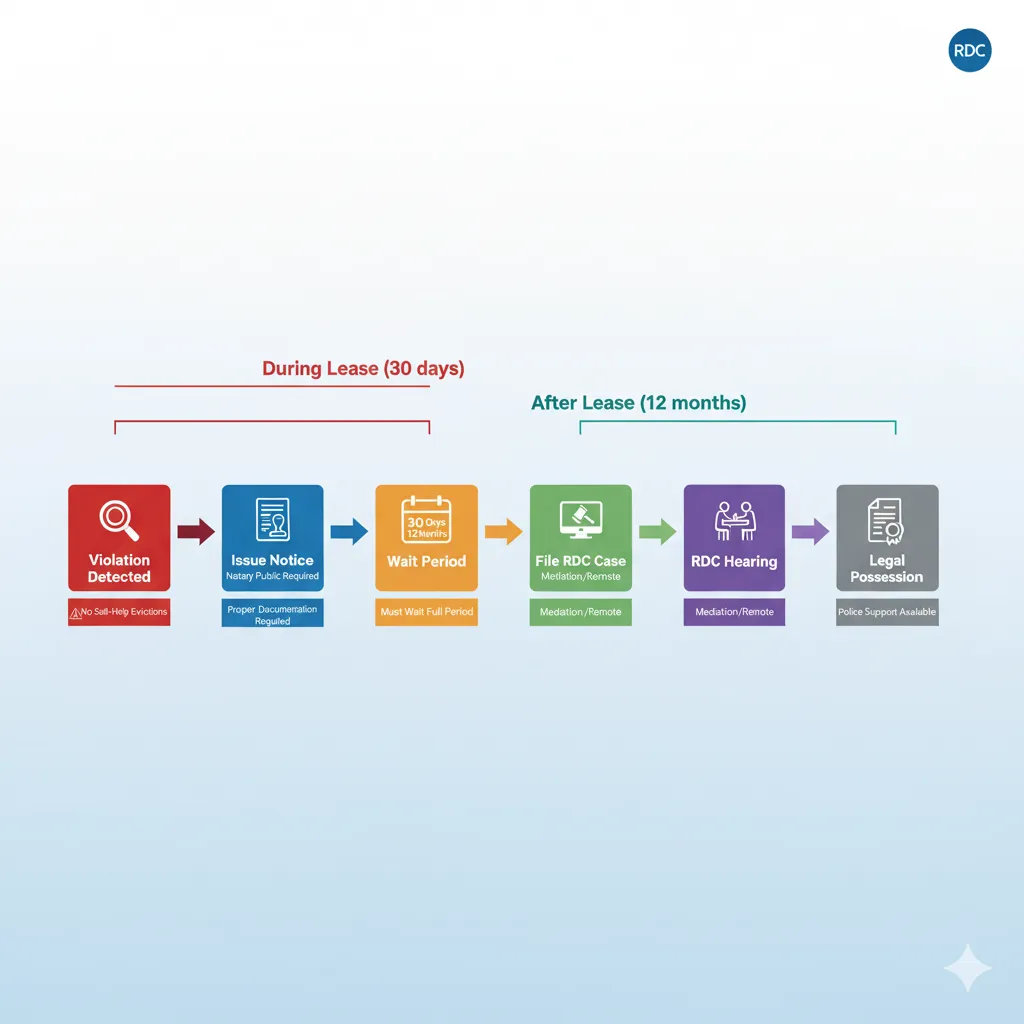
When eviction becomes necessary, follow this structured process:
- Document the violation: Gather evidence including photographs, written communications, and witness statements.
- Issue formal notice: Use Notary Public or registered mail, specifying the violation and remedy period.
- Wait the notice period: Allow the full 30-day (pre-lease) or 12-month (post-lease) period to expire.
- File RDC complaint: Submit your case online with supporting documentation.
- Attend hearings: Participate in mediation or formal hearings as scheduled.
- Obtain RDC order: Receive official eviction order before taking possession.
- Execute order: Coordinate with Dubai Police if tenant refuses to vacate.
Key Takeaways for Dubai Property Owners
Dubai landlords have clear legal avenues to protect their properties and address tenant violations. The Rental Disputes Centre provides efficient resolution whilst preventing arbitrary evictions. Landlords must follow proper notice procedures, cannot neglect maintenance obligations, and must obtain RDC orders before reclaiming properties. For post-lease evictions, 12-month notice is mandatory. Understanding both landlord rights and tenant protections helps navigate disputes successfully whilst maintaining property value.
Frequently Asked Questions
Can I evict a tenant immediately for non-payment in Dubai?
No. Even for rent non-payment, you must provide 30 days’ written notice via Notary Public or registered mail. Only after the 30-day period expires without payment can you file an eviction case with the RDC. Immediate lockouts or utility disconnections are illegal.
What happens if my tenant subleases without permission?
Unauthorized subleasing gives you grounds to evict both the original tenant and any subtenants. Issue a 30-day notice specifying the violation. Document the subletting with evidence such as photographs or witness statements. File an RDC case after the notice period expires.
How much notice must I give tenants before not renewing their lease?
You must provide at least 12 months’ notice before the current lease expires. The notice must be delivered via Notary Public or registered mail, clearly stating your reasons for non-renewal. Late notice allows tenants to request contract renewal at fair market rates.
Can I increase rent and evict if the tenant refuses to pay the new amount?
Rent increases must comply with RERA’s rental index and Decree No. 43 of 2013. Maximum increases of 20% apply only when current rent falls 40%+ below market rates. Tenants can challenge excessive increases through the RDC, which determines fair rent. You cannot evict for refusing unlawful increases.
What if I want to renovate the property but the tenant won’t leave?
For major renovations requiring vacant possession, provide 12 months’ notice before lease expiry, specifying renovation as the reason. The renovations must genuinely require the property to be empty. Upon completion, the original tenant has first right of return under Dubai law.
Do I need to compensate tenants when evicting for personal use?
No compensation is legally required for personal use evictions after proper 12-month notice. However, remember that re-renting the property within two years of claiming personal use violates Dubai law and subjects you to penalties.
Can landlords evict tenants who report property maintenance issues?
Absolutely not. Tenants have legal protection when reporting legitimate maintenance problems. Attempting eviction in retaliation for maintenance complaints will result in RDC rulings against you, potentially including financial penalties and mandatory lease renewal.
Further Reading
- Dubai Rent Increase Law 2024: Your Rights as a Tenant (Complete Guide)
- Dubai Tenant Rights: Eviction for Maintenance and Your Legal Options
- Dubai Rental Guide: Who Pays for Property Maintenance? Landlord or Tenant?
- Dubai Property Law: 2-Year Rental Ban After Personal Use Eviction Claims
- Tenant Rights in Dubai: Can Landlords Force Fewer Cheques or Raise Your Rent?
- Dubai Rental Laws: Early Termination and Refund Rights Explained
- Freehold Property in Dubai: Complete Ownership Guide 2025
The UAE week, every Monday
The week's stories on jobs, visas, money and daily life in one short email. Unsubscribe in one click.