Zakat Al Fitr vs Zakat Al Mal in the UAE: What Each Means, How Much to Pay, and When It Is Due
Zakat Al Fitr is Dh25 per person before Eid. Zakat Al Mal is 2.5% of wealth annually. UAE Council for Fatwa confirms cash payment. Full guide.
By Vadim Kouznetsov, published
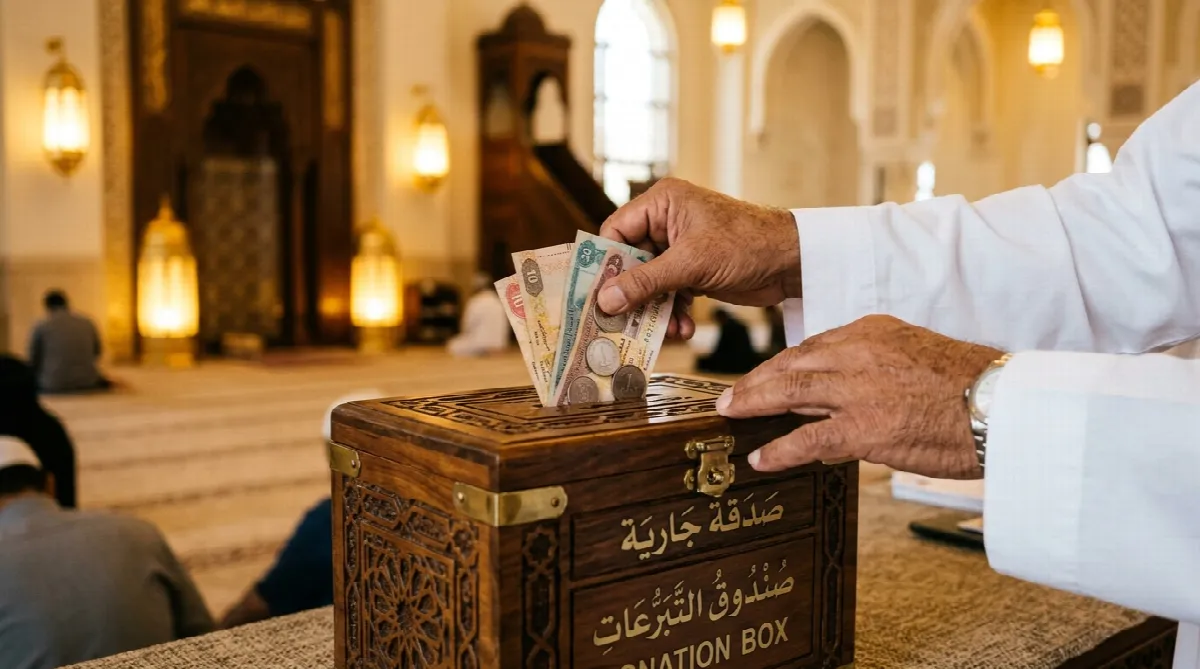
As Ramadan draws to a close, two forms of Zakat come into focus — Zakat Al Fitr and Zakat Al Mal. Both are obligations in Islam, but they differ in purpose, amount, timing, and who must pay.
Here is a clear breakdown of each, with the specific amounts applicable in the UAE for 2026.
What Is Zakat?
Zakat is one of the Five Pillars of Islam. It requires Muslims to give a portion of their wealth to those in need. The standard rate is 2.5% of savings, investments, and other accumulated assets held for a full lunar year.
It is not voluntary charity (sadaqah). It is an obligatory act of worship with defined rules on who pays, how much, and when.
What Is Zakat Al Fitr?
Zakat Al Fitr is a mandatory charitable donation paid before the Eid Al Fitr prayer. Its purpose is to purify the fasting person and provide support to the poor so they can also celebrate Eid.
Key details for the UAE in 2026:
- Amount: Approximately 2.5 kg of rice or Dh25 per person
- Who must pay: Every Muslim — man, woman, child, or elderly person — who possesses food or wealth beyond their basic needs
- When to pay: Before the Eid prayer. It should not be delayed beyond this point
- Can it be paid in cash? Yes. On March 16, the UAE Council for Fatwa confirmed that Zakat Al Fitr may be paid in cash to ease the process for donors
The head of a household typically pays on behalf of all dependants. For a family of four, that amounts to Dh100.
Fidyah — the compensation for those unable to fast — is set at feeding one poor person with 3.25 kg of wheat or Dh20 per day of missed fasting.
What Is Zakat Al Mal?
Zakat Al Mal is the annual wealth-based Zakat calculated at 2.5% of accumulated wealth and assets.
Key details:
- Rate: 2.5% of qualifying wealth
- When to pay: It can be paid at any time of the year, but many Muslims choose to pay during Ramadan for increased spiritual reward
- Who must pay: Adult Muslims whose wealth exceeds the Nisab threshold for a full lunar year
- What counts: Savings, investments, gold, silver, cash, business inventory, and agricultural produce
- What is exempt: Personal belongings such as clothing, household furniture, and your primary residence
The key requirement is that your qualifying assets must exceed the Nisab threshold and must have been held for one complete lunar year.
What Is Nisab and How Is It Calculated?
Nisab is the minimum amount of wealth a Muslim must possess before Zakat Al Mal becomes obligatory.
It is based on the value of either:
- 87.48 grams of gold, or
- 612.36 grams of silver
Since gold and silver prices fluctuate, the Nisab threshold changes accordingly. Most scholars recommend using the silver standard as it results in a lower threshold, meaning more people qualify to pay — and more recipients benefit.
To check the current Nisab value, you can use online Zakat calculators that update based on real-time precious metal prices.
What Is the Difference Between Zakat Al Fitr and Zakat Al Mal?
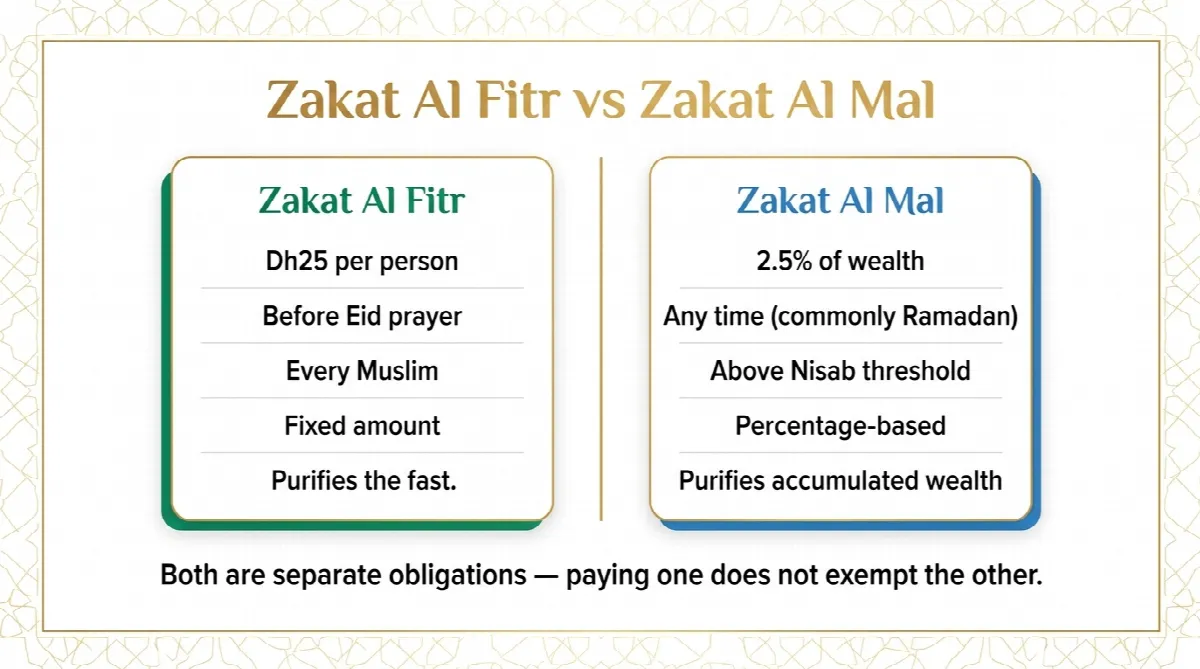
| Zakat Al Fitr | Zakat Al Mal | |
|---|---|---|
| Purpose | Purify the fast; support the poor for Eid | Purify accumulated wealth; support those in need |
| Amount | Dh25 per person (UAE 2026) | 2.5% of qualifying wealth |
| Who pays | Every Muslim with excess food/wealth | Adult Muslims above Nisab threshold for one lunar year |
| When due | Before Eid Al Fitr prayer | Any time (commonly during Ramadan) |
| Based on | Per person (fixed amount) | Per wealth (percentage-based) |
| Paid in cash? | Yes — confirmed by UAE Council for Fatwa | Yes |
Where Can You Pay Zakat in the UAE?
The UAE has established official channels for Zakat collection and distribution:
- Emirates Red Crescent — accepts Zakat donations through its website, app, and physical centres
- Dubai Charity Association — runs Ramadan charity campaigns including Zakat collection
- Zakat Fund (Abu Dhabi) — the official government body for Zakat collection in Abu Dhabi
- Islamic Affairs and Charitable Activities Department (IACAD) — handles Zakat matters in Dubai
- Authorised mosques — some mosques collect Zakat Al Fitr directly
For those who want to contribute beyond Zakat, volunteering during Ramadan through official UAE platforms is another way to support the community.
Key Takeaway
Zakat Al Fitr is a fixed per-person donation (Dh25 in the UAE) paid before the Eid prayer, obligatory for every Muslim. Zakat Al Mal is 2.5% of accumulated wealth paid annually once the Nisab threshold is met for a full lunar year. The UAE Council for Fatwa has confirmed Zakat Al Fitr can be paid in cash. Both forms are distinct obligations — fulfilling one does not exempt you from the other.
FAQ
Can I pay Zakat Al Fitr in cash in the UAE?
Yes. On March 16, 2026, the UAE Council for Fatwa confirmed that Zakat Al Fitr may be paid in cash. The amount is Dh25 per person.
How much is Zakat Al Fitr per family in the UAE?
Zakat Al Fitr is Dh25 per person. For a family of four, the total is Dh100. The head of the household pays on behalf of all dependants, including children and elderly family members.
When is the deadline for paying Zakat Al Fitr?
Zakat Al Fitr must be paid before the Eid Al Fitr prayer. It should not be delayed beyond this point. Many scholars recommend paying it a day or two before Eid to allow distribution to reach those in need in time.
Do I have to pay both Zakat Al Fitr and Zakat Al Mal?
Yes, if you qualify for both. They are separate obligations. Zakat Al Fitr is due from every Muslim before Eid. Zakat Al Mal is due from Muslims whose accumulated wealth exceeds the Nisab threshold for a full lunar year. Paying one does not fulfil the other.
What is the current Nisab threshold?
Nisab is based on 87.48 grams of gold or 612.36 grams of silver. The exact monetary value fluctuates with precious metal prices. Check an online Zakat calculator for the current threshold.
What is Fidyah and how much is it in the UAE?
Fidyah is the compensation for those who cannot fast during Ramadan due to illness or old age. In the UAE, it is set at feeding one poor person with 3.25 kg of wheat or Dh20 per day of missed fasting.
Further Reading
- When Is Ramadan 2026 in UAE? Start Date, Eid Holiday and Fasting Hours
- UAE Ramadan 2025: Complete Guide to Donating Iftar Meals & Charity
- Complete Guide: How to Volunteer During Ramadan 2025 in UAE
- UAE Public Holidays 2026: 12 Days Off & Long Weekend Guide
- Double Ramadan in 2030: A Rare Islamic Calendar Phenomenon in UAE
- Working During Eid Al Fitr: Your Rights & Compensation Under UAE Labour Law
The UAE week, every Monday
The week's stories on jobs, visas, money and daily life in one short email. Unsubscribe in one click.