Mental Fog During War: UAE Experts Explain Why You Can’t Focus and How to Protect Your Brain
UAE psychologists explain why war stress causes brain fog, poor focus, and emotional decisions. Grounding techniques and daily habits to protect your mind.
By Vadim Kouznetsov, published

You keep mistyping simple words. You forget what someone just said. You stare at your screen for minutes, unable to form a sentence. You are not losing your mind — your brain is responding to sustained stress exactly as it was designed to.
UAE psychologists explain what is happening inside your head right now, why it does not mean you are weak, and what you can do about it.
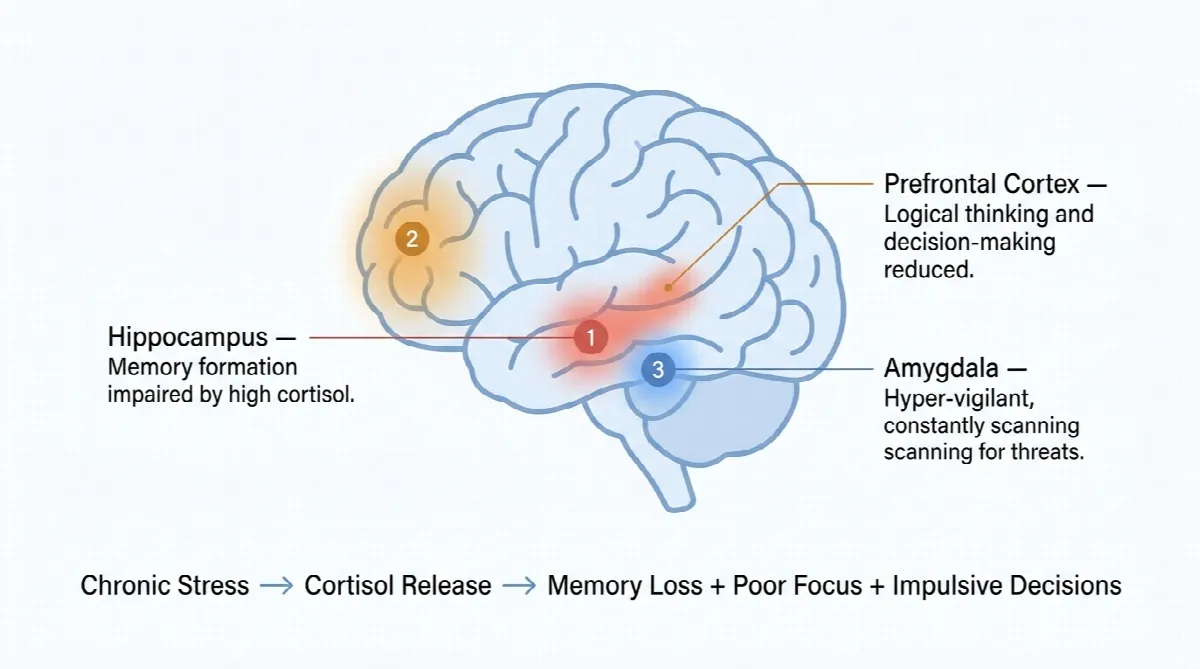
Why Does War-Related Stress Cause Brain Fog?
Prolonged exposure to conflict-related news triggers chronic stress in the brain. Dr Diana Maatouk, Clinical Psychologist at The Hummingbird Clinic, explains the biology behind it: the stress increases hormones like cortisol, which impairs memory and focus. The brain stays in a constant state of threat monitoring, reducing cognitive capacity for everyday tasks.
Even if you are physically safe and far from the conflict zone, your brain may not register that distance. It continues scanning for danger, diverting energy away from routine thinking.
Dr Olivia Pounds, also a Clinical Psychologist at The Hummingbird Clinic, adds that high cortisol levels interfere with the hippocampus — the brain region responsible for forming and retrieving memories. That is why you struggle to remember details or recall information accurately.
The effects extend further. Your attention becomes fragmented because the brain is hyper-vigilant, constantly scanning for threats. The prefrontal cortex — the area responsible for logical thinking and decision-making — essentially reduces its activity. You shift focus to immediate threats, but everything else in life drifts.
The result: your mind feels both overstimulated and overwhelmed at the same time.
Is Brain Fog a Sign of Weakness?
No. This is one of the most critical misconceptions to address.
“One common misconception is that brain fog means a person is weak or not coping well,” says Dr Maatouk. “In reality, it is often a normal response to prolonged stress and uncertainty.”
She addresses several other common fears:
- “Is this permanent damage?” — In many cases, mental fog is temporary and improves once stress levels decrease
- “I’m not in a war zone, so I shouldn’t feel affected” — Constant exposure to distressing news can still impact cognitive functioning, regardless of physical proximity
- “I’m just being lazy” — Brain fog is frequently mistaken for laziness or lack of motivation when the real problem is emotional strain or mental fatigue
Dr Jais Adam Troian, Assistant Professor of Psychology at Heriot-Watt University Dubai, adds important nuance: war is experienced differently by individuals. Some may develop anxiety or depression, while others may actually feel energised by disruption. Research shows wartime has both negative consequences — increased mental health issues — and unexpected effects, including increased social cohesion and sense of community.
How Does Brain Fog Affect Decision-Making?
This is where it becomes practically dangerous — especially in a digital environment saturated with misinformation.
“When people experience brain fog due to stress, anxiety, and information overload, their ability to think critically can weaken,” says Dr Maatouk. Reduced cognitive clarity makes it harder to recognise misleading content.
People in this state are more likely to believe or share false information, especially if it aligns with their fears. “Instead of carefully analysing information, people may respond emotionally to dramatic headlines or unverified reports.”
This is particularly relevant given the UAE’s strict laws on spreading rumours and misinformation, which carry fines of up to Dh200,000 during a crisis. A foggy brain combined with an emotional reaction to a headline can lead to sharing content that has real legal consequences.
Dr Troian echoes this concern: “The sense of uncertainty and threat inherent in war does make people more vulnerable to misinformation and conspiracy theories.”
How Does Wartime Stress Change Your Behaviour?
The shifts are gradual, which makes them easy to miss.
Perhaps most surprising is how war stress alters risk tolerance. Dr Troian notes: “People exposed to wartime violence tend to develop a higher tolerance for risk. Contrary to what we may think intuitively, people exposed to war can develop a habit of making less conservative or ‘safe’ decisions in different domains.”
While that might sound harmless, it carries a warning: “This increased risk appetite is a risk factor for addiction, gambling or other forms of risk-taking in the long run.”
Wartime stress also makes people less inhibited and slightly more impulsive — which again connects to the risk of sharing unverified content online or making financial decisions under emotional pressure.
What Can UAE Residents Do to Clear the Fog?
Dr Maatouk recommends small, consistent habits that help the brain reset:
Daily habits:
- Limit news consumption to prevent information overload
- Prioritise quality sleep — it supports memory, focus, and emotional regulation
- Keep a structured daily routine for stability during uncertain times
- Exercise regularly to reduce stress and boost cognitive performance
- Take breaks from screens and news to let the brain rest
- Connect with friends or family to ease emotional strain
Grounding techniques for immediate relief:
- Deep breathing (4-4-6 method): Inhale for 4 seconds, hold for 4, exhale for 6. This calms the nervous system
- 5-4-3-2-1 grounding: Name 5 things you see, 4 you can touch, 3 you hear, 2 you smell, 1 you taste. This brings attention back to the present
- Body scan meditation: Slowly focus on each body part to release stored tension
- Mindful walking: Pay attention to your breathing, footsteps, and surroundings
- Journaling: Write down your thoughts to organise mental clutter
Dr Maatouk notes that even a few minutes a day can make a difference: “Practising these exercises regularly can help reduce stress, improve emotional regulation, and restore mental clarity during periods of ongoing conflict.”
For residents whose work-life balance is already strained, adding even small grounding practices can help prevent burnout from compounding war-related stress.
What About Sleep, Food, and Exercise?
The basics become the most essential tools during a crisis.
“Maintaining a consistent daily routine provides stability and helps the brain manage stress more effectively,” says Dr Maatouk. “Quality sleep restores cognitive functions such as memory, focus, and emotional regulation, while balanced nutrition supplies the brain with the energy it needs to think clearly.”
Dr Troian reinforces this: “In wartime as in peacetime, the lifestyle factors that protect your mental health are well known — physical activity and sleep are key.”
On food specifically, he offers a measured perspective: “There is no good evidence that specific food items you eat or avoid may prevent you from experiencing depression, anxiety or PTSD.” The focus should be on balanced nutrition rather than any specific “brain food” claims.
Key Takeaway
Mental fog during wartime is a normal neurological response to sustained stress — not a sign of weakness or permanent damage. Elevated cortisol impairs memory, fragments attention, and reduces decision-making capacity. UAE psychologists recommend limiting news exposure, maintaining sleep and exercise routines, practising grounding techniques, and keeping a structured daily schedule. The fog is temporary and begins to lift as stress levels decrease.
FAQ
Is brain fog during war normal or a sign of a mental health problem?
Brain fog is a normal neurological response to prolonged stress. Dr Maatouk confirms it does not indicate permanent cognitive damage and typically improves when stress levels decrease. However, if symptoms persist or worsen significantly, speaking with a mental health professional is recommended.
Can brain fog make me more likely to share misinformation?
Yes. Reduced cognitive clarity weakens critical thinking, making it harder to recognise misleading content. People in a state of heightened emotion are more likely to respond impulsively to dramatic headlines. In the UAE, sharing unverified content carries legal penalties of up to Dh200,000 during a crisis.
I’m not in a war zone. Why am I still affected?
Constant exposure to distressing news can impact cognitive functioning regardless of physical distance from the conflict. Your brain processes the threat information the same way, releasing cortisol and staying in a state of heightened alertness.
What is the quickest way to reduce brain fog right now?
The 4-4-6 deep breathing method — inhale for 4 seconds, hold for 4, exhale for 6 — can calm the nervous system within minutes. The 5-4-3-2-1 grounding technique also helps bring attention back to the present moment immediately.
Does wartime stress change how I make decisions?
Yes. Research shows that people exposed to wartime conditions develop higher risk tolerance and may make less conservative decisions across different areas of life. Dr Troian warns this increased risk appetite can become a factor for addiction or other risk-taking behaviours over time.
Should I stop reading news entirely?
Experts do not recommend cutting off completely, but limiting consumption is important. Set specific times for checking updates rather than refreshing constantly. Rely on official UAE sources rather than social media feeds, and take breaks from screens to allow the brain to reset.
Further Reading
- UAE Fights Fake News: 70% More Shares Than Real News, Officials Say
- UAE’s 6 Banned Online Content Types: Dh500,000 Fine and 5-Year Jail Risk
- Dubai’s $28.5M Mental Wealth Framework: Pioneering Urban Well-being
- UAE Work-Life Balance: Why Being Underworked Can Harm Your Wellbeing
- UAE Social Media Laws 2025: Comments Can Lead to Dh500k Fines
- 4 Easy Ways to Report Online Scams in the UAE
The UAE week, every Monday
The week's stories on jobs, visas, money and daily life in one short email. Unsubscribe in one click.