UAE Petrol Prices March 2026: Will Fuel Costs Rise as US-Iran Tensions Push Oil Higher?
UAE petrol prices likely to rise 5-10 fils in March 2026 as Brent crude jumps to $68.9/barrel amid US-Iran tensions. See estimates.
By Vadim Kouznetsov, published
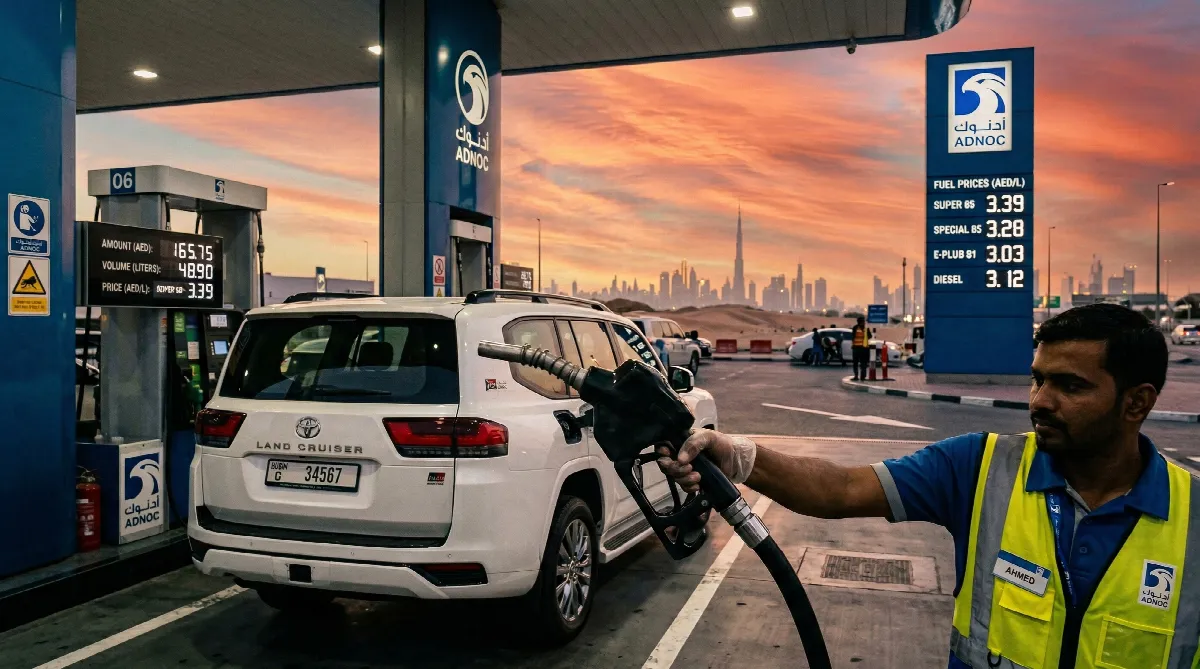
UAE motorists should prepare for a potential petrol price increase in March 2026. Brent crude averaged $68.9 per barrel in February — up from $63.47 in January — driven by rising geopolitical tensions between the US and Iran. The UAE Fuel Price Committee will announce official March rates by the end of February, with new prices taking effect from 1 March.
February brought welcome relief at the pump, with the committee reducing petrol prices by 8–9 fils per litre. But global oil markets have shifted direction since then, and the February Brent average suggests that relief may be short-lived.
What Are the Current UAE Petrol Prices (February 2026)?
The UAE Fuel Price Committee set the following rates for February 2026:
- Super 98: Dh2.45 per litre
- Special 95: Dh2.33 per litre
- E-Plus 91: Dh2.26 per litre
These prices reflected a reduction of approximately 8–9 fils per litre from January, based on lower global oil prices at the time. For context, filling a standard 60-litre tank with Special 95 currently costs around Dh139.80.
For motorists tracking how fuel costs affect their monthly budgets, the UAE cost of living guide for 2025 provides a broader breakdown of transport and daily expenses.
Why Could March Petrol Prices Increase?
The core driver is oil price movement. Brent crude averaged $68.9 per barrel in February, compared to $63.47 in January — a jump of approximately $5.43 per barrel, or roughly 8.6%.
Since the UAE links domestic fuel prices directly to global oil benchmarks, this increase in Brent will likely translate to higher pump prices in March.
As of 25 February 2026, Brent and WTI were trading at $71.38 and $66.31 per barrel, respectively. Brent crossed the $71 mark earlier in the month — a level not seen consistently since late 2025.
What’s Driving Oil Prices Higher?
US-Iran Tensions and the Strait of Hormuz
The primary catalyst for February’s oil price surge is the escalating conflict between the US and Iran. Several developments have rattled markets:
Tehran temporarily closed the Strait of Hormuz for several hours, triggering immediate concern about global oil supply. Approximately 20% of the world’s oil flows through this narrow waterway between Iran and Oman.
Insurance premiums for vessels transiting the Strait of Hormuz have increased, adding costs to oil transportation and signalling that the shipping industry views the risk as material.
Some analysts warn oil could exceed $100 per barrel if tensions between the US and Iran escalate into direct military confrontation.
Daniela Hathorn, senior market analyst at Capital.com, noted that Iran’s strategic position near the Strait of Hormuz means any disruption could carry significant consequences for global supply.
What the Experts Say
Norbert Rücker, head of economics and next generation research at Julius Baer, offered a more measured view. He acknowledged that oil prices currently include a substantial geopolitical risk premium, but pointed out several factors that limit the upside:
- Ample global oil storage provides a buffer against short-term disruptions
- Production currently exceeds consumption, creating surplus capacity
- OPEC+ spare output capacity can be deployed if supply is disrupted
Rücker noted that while the current price bounce could reach the high $70s or even high $80s per barrel, Julius Baer expects the risk premium to fade, with oil prices returning below $60 by mid-2026.
This is an important distinction for UAE residents. A temporary spike driven by geopolitical fear doesn’t necessarily mean sustained high fuel prices throughout 2026.
How Much Could Petrol Prices Rise in March?
Based on the Brent average increase from $63.47 (January) to $68.9 (February), motorists could see an increase of approximately 5–10 fils per litre across all petrol grades in March.
Here’s what that might look like:
| Fuel Type | February 2026 (Dh/litre) | Estimated March 2026 (Dh/litre) |
|---|---|---|
| Super 98 | 2.45 | 2.50 – 2.55 |
| Special 95 | 2.33 | 2.38 – 2.43 |
| E-Plus 91 | 2.26 | 2.31 – 2.36 |
For a 60-litre tank of Special 95, this translates to roughly Dh3–6 extra per fill-up. Over a month with four fill-ups, the additional cost would be approximately Dh12–24.
These are estimates based on current Brent averages. The official prices will be confirmed by the UAE Fuel Price Committee at the end of February. Previous months have shown that late-month oil price movements can shift the final calculation. Our May 2025 petrol price forecast demonstrated how volatile late-month trading can alter the committee’s final decision.
UAE Petrol Price History: How Do Current Prices Compare?
Current prices remain well below the peaks seen in 2024 and early 2025:
- Highest recent price: Super 98 reached Dh3.34 per litre in May 2024
- Current February 2026 price: Super 98 at Dh2.45 per litre — approximately 27% lower than the 2024 peak
- Lowest 2025 price: December 2024 saw Super 98 at Dh2.61 per litre
Even with a potential March increase, UAE fuel prices remain significantly below their recent historical highs. The broader trend since mid-2024 has been downward, with occasional upward corrections driven by geopolitical events.
Our August 2025 fuel rate analysis covered a similar pattern — geopolitical tensions temporarily pushed prices up before they corrected downward again.
How the UAE Fuel Pricing System Works
The UAE deregulated fuel prices in 2015, replacing fixed government-set rates with a monthly adjustment mechanism. Here’s how it operates:
The UAE Fuel Price Committee reviews global oil price averages, currency exchange rates, and distribution costs each month. New prices are announced on the last day of each month and take effect on the first day of the following month.
This means February’s global oil performance directly determines March’s pump prices. The system provides transparency but also means residents experience the full impact of global market volatility.
Since fuel is a significant component of living costs in the UAE, price movements matter for household budgets. Residents can explore our detailed cost of living breakdown for Dubai to understand how transport costs fit within overall monthly expenses.
Could Oil Prices Drop Before March Announcement?
It’s possible, though unlikely to erase February’s average gains entirely. Julius Baer’s Rücker suggested that the geopolitical risk premium currently baked into oil prices will eventually diminish, with prices potentially falling below $60 by mid-2026.
However, for the March price announcement specifically, the damage is already largely done. The Brent average for February ($68.9) is locked in based on the month’s trading activity, and the final days of February are unlikely to pull that average down significantly.
The scenario to watch for April and beyond: if US-Iran tensions de-escalate or if a military confrontation occurs without major oil supply disruption, the risk premium could deflate quickly. Past conflicts in the region have shown that actual military action doesn’t always translate into sustained supply cuts, particularly given today’s surplus production capacity.
Tips for Managing Higher Fuel Costs
If March brings a price increase, these practical steps can help offset the additional expense:
- Fill up before 1 March while February prices are still active
- Consider E-Plus 91 if your vehicle supports it — the price difference between E-Plus 91 and Super 98 currently stands at 19 fils per litre
- Monitor Salik toll costs alongside fuel expenses, as Dubai’s variable toll pricing also affects monthly transport budgets
- Use fuel-efficient driving habits — smooth acceleration and consistent speeds reduce consumption by 10–15%
For employees whose transport costs are rising, the trend of UAE workers requesting higher allowances continues to gain momentum across the private sector.
Key Takeaway
UAE petrol prices are likely to increase by 5–10 fils per litre in March 2026, reversing February’s reduction. The primary driver is a $5.43 jump in Brent crude’s monthly average — from $63.47 to $68.9 — fuelled by US-Iran geopolitical tensions and concerns over the Strait of Hormuz. Analysts expect oil prices could reach the high $70s or $80s if tensions escalate, though Julius Baer projects a return below $60 by mid-2026 as the risk premium fades. The UAE Fuel Price Committee will confirm official March rates by the end of February.
Frequently Asked Questions
Will UAE petrol prices increase in March 2026?
Likely, yes. Brent crude averaged $68.9 per barrel in February, up from $63.47 in January. Since the UAE Fuel Price Committee bases monthly rates on global oil averages, this 8.6% increase in Brent will probably push petrol prices up by 5–10 fils per litre across all grades.
How much more will I pay per tank in March?
For a 60-litre tank of Special 95, the estimated increase is Dh3–6 per fill-up. Over a month with four refuelling stops, that’s approximately Dh12–24 in additional costs.
Why are oil prices rising in February 2026?
US-Iran tensions are the primary driver. Tehran temporarily closed the Strait of Hormuz — a waterway carrying roughly 20% of global oil supply — and insurance premiums for vessels in the area have increased. Some analysts warn that further escalation could push oil above $100 per barrel.
When will official March 2026 petrol prices be announced?
The UAE Fuel Price Committee typically announces new rates on the last day of each month. March prices will be confirmed by the end of February 2026 and take effect from 1 March.
Will petrol prices keep rising after March?
Not necessarily. Julius Baer’s head of economics projects oil prices returning below $60 per barrel by mid-2026, as the geopolitical risk premium fades and global supply remains resilient. The trend depends heavily on whether US-Iran tensions escalate or de-escalate in coming months.
How does the UAE determine monthly petrol prices?
The UAE Fuel Price Committee reviews global oil price averages, currency exchange rates, and distribution costs each month. This system, introduced in 2015, links domestic pump prices directly to international market movements, providing market-driven transparency.
Further Reading
- UAE Petrol Prices March 2025: Will Fuel Costs Fall After February Hike?
- UAE Fuel Prices Drop in April 2025: Save on Petrol and Diesel Costs
- UAE Fuel Prices November 2025: Will Petrol Rates Drop This Month?
- UAE Petrol Prices May 2025: Forecast Shows Third Consecutive Drop
- UAE Cost of Living 2025: 6 Major Price Increases Affecting Residents
- Dubai’s New Salik Toll Rates 2025: Complete Peak Hours Guide
The UAE week, every Monday
The week's stories on jobs, visas, money and daily life in one short email. Unsubscribe in one click.