15+ Countries Tell Citizens to Leave Iran Now as US Military Buildup Intensifies
Over 15 countries tell nationals to leave Iran as US military builds up. How this affects UAE flights, oil prices, and expat safety.
By Vadim Kouznetsov, published
More than 15 countries have issued urgent travel advisories telling their nationals to leave Iran immediately. The warnings come as US-Iran tensions escalate sharply following five rounds of nuclear talks that ended without a deal, and the United States continues to expand its military presence across the Middle East.
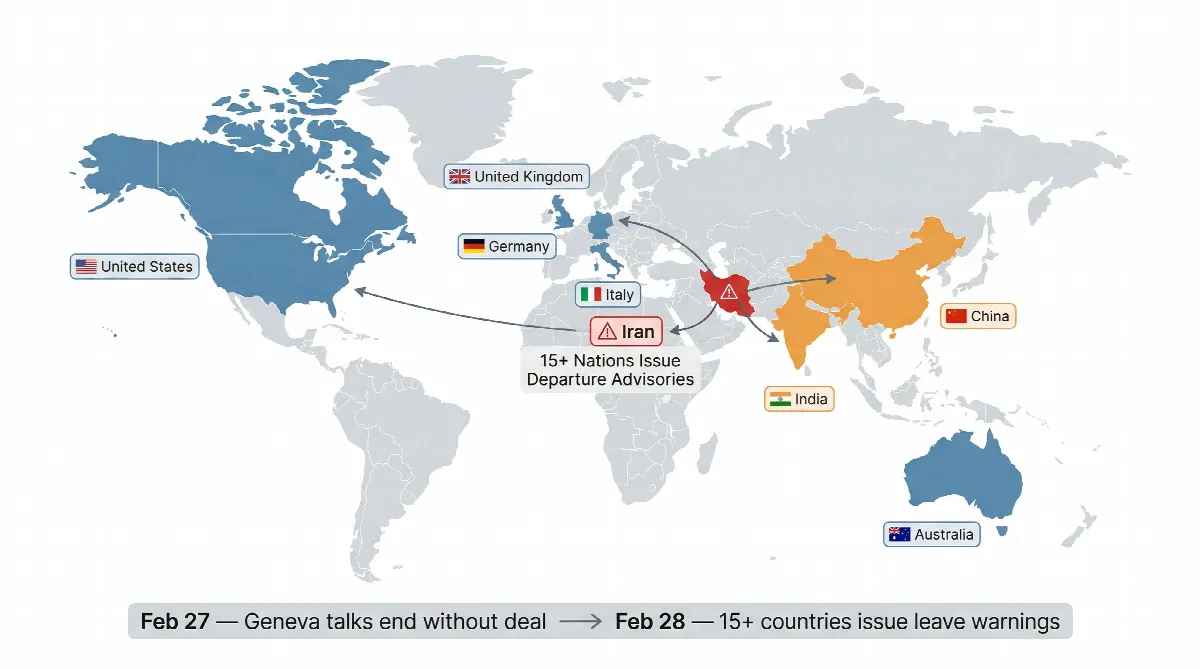
As of 28 February 2026, governments including the US, UK, Germany, Canada, Italy, Australia, India, China, and several other European and Asian nations have advised citizens to avoid Iran entirely — and to depart as soon as possible if they’re already there.
For UAE residents, the situation carries direct implications. Flights between regional hubs and Tehran have been cancelled or rerouted, oil prices have climbed on supply disruption fears, and the broader security landscape across the Gulf is shifting.
Here’s what we know so far.
What Triggered the Evacuations?
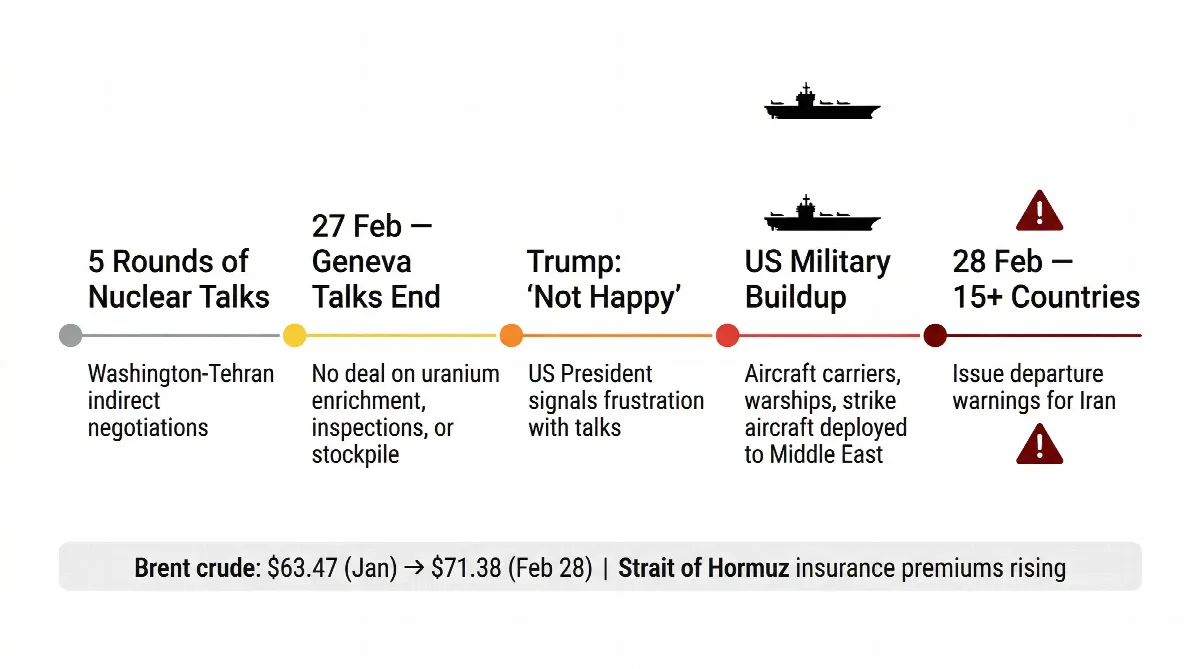
The latest round of indirect negotiations between Washington and Tehran concluded in Geneva on Thursday, 27 February 2026, with no breakthrough. Key issues remain unresolved, including uranium enrichment limits, inspection mechanisms, and the future of Iran’s highly enriched uranium stockpile.
Diplomats indicated that technical-level discussions may continue, but fundamental differences persist.
US President Donald Trump stated on Friday that he is “not happy” with the outcome of the five rounds of talks — a signal that diplomatic patience may be running thin.
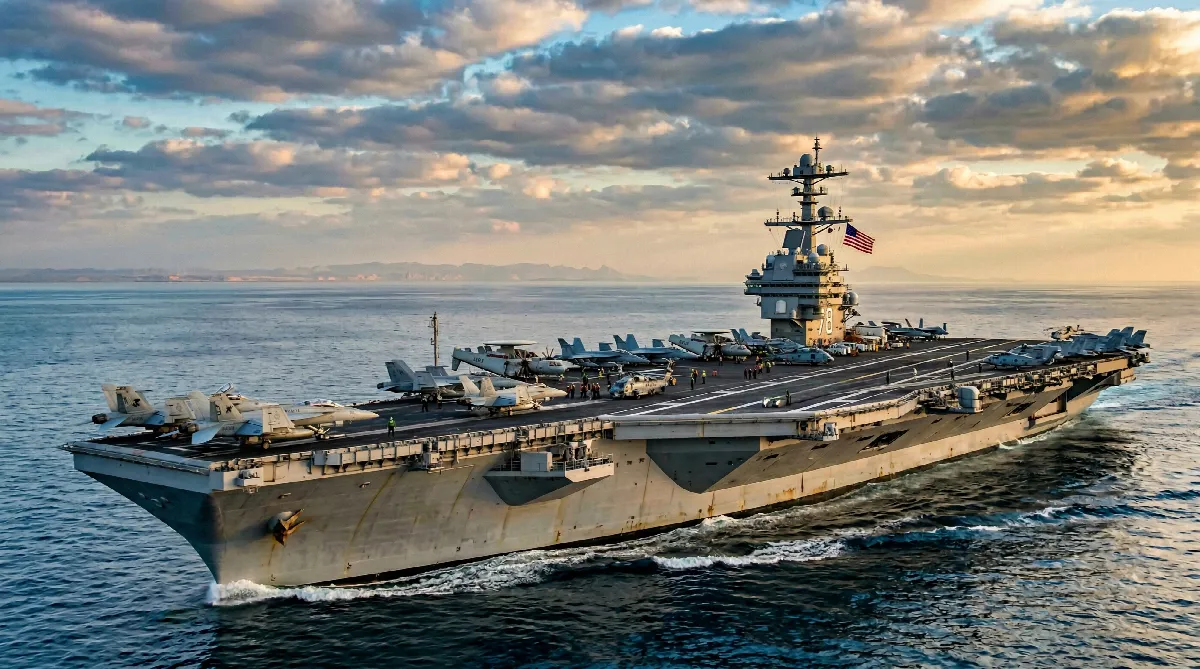
At the same time, the US has significantly expanded its military footprint in the region, deploying additional aircraft carriers, warships, and strike aircraft. The USS Gerald R. Ford carrier group is among the assets now positioned in the area.
This military buildup has intensified fears of a potential strike on Iranian facilities and a wider escalation that could draw in other regional actors.
Which Countries Have Issued Warnings?
Over 15 nations have issued travel advisories specifically regarding Iran. The governments that have publicly advised their nationals to leave include:
- United States — issued a direct “leave Iran now” warning, advising citizens to maintain a low profile
- United Kingdom
- Germany
- Canada
- Italy
- Australia
- India
- China
- Several additional European and Asian countries
The US State Department has also separately authorised the departure of non-essential government personnel and family members from its mission in Israel, citing security risks. It warned that travel by US officials in certain areas, including parts of Jerusalem and the West Bank, could be restricted without advance notice.
The US travel advisory for the UAE remains at Level 2 (“exercise increased caution”), reflecting regional tensions rather than specific threats within the Emirates.
How Are Flights Affected?
Travel disruptions are already spreading across the region:
Flights between regional hubs and Tehran have been cancelled or rerouted. The Istanbul–Tehran route — a major corridor for travellers to and from Iran — was among the first to see cancellations.
Airlines are reassessing risks of operating in Iranian airspace. If the situation escalates, airspace closures similar to those seen during previous Middle Eastern conflicts could affect connecting flights through the region.
UAE residents will recall that Iran-Israel tensions in mid-2025 caused major flight disruptions for Emirates, Etihad, flydubai, and Air Arabia, with routes cancelled and airspace from Iran to the Mediterranean closed for over ten days.
If you have upcoming flights that transit Iranian airspace, monitor your airline’s communications closely. Under UAE consumer protection rules, airlines that cancel flights must offer free rebooking, full refunds, or travel vouchers. However, passengers who cancel before the airline does may forfeit these protections.
What Does This Mean for UAE Residents?
While the UAE is not directly involved in the US-Iran dispute, the proximity of the situation creates several tangible effects:
Oil Prices and Fuel Costs
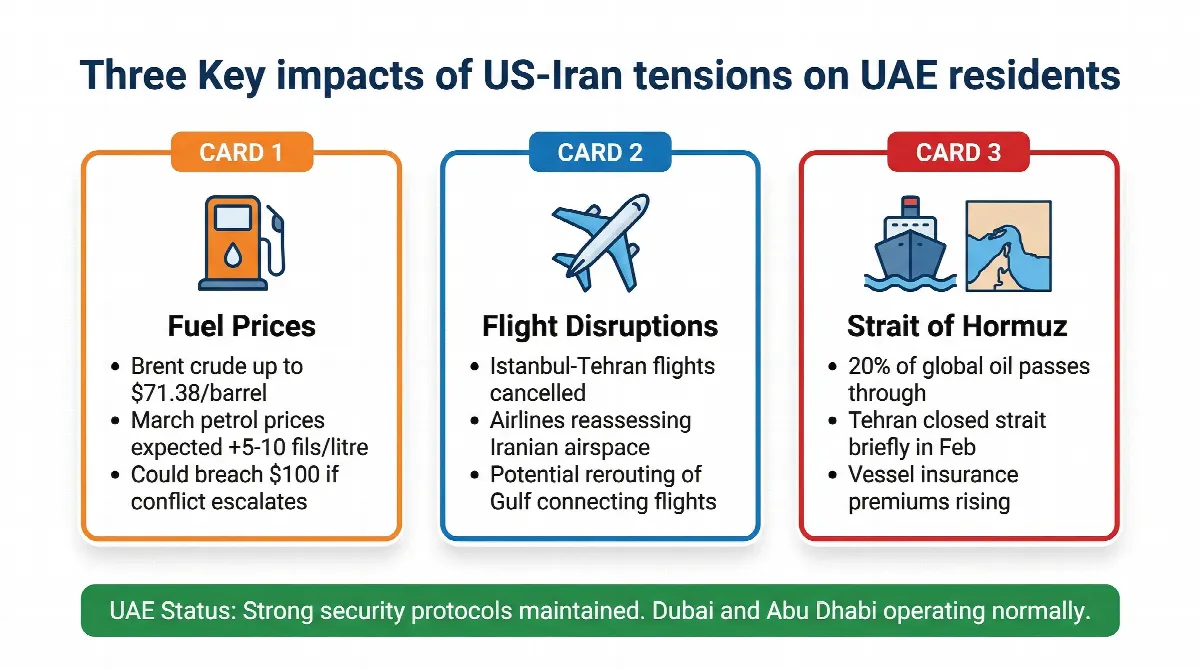
Brent crude has already risen to $71.38 per barrel amid these tensions, up from $63.47 in January. As we covered in our UAE petrol prices March 2026 forecast, this increase will likely push pump prices higher by 5–10 fils per litre starting 1 March.
If tensions escalate further, some analysts have warned that oil could breach $100 per barrel, which would significantly affect fuel costs, transport expenses, and the broader cost of living across the Emirates.
Strait of Hormuz Concerns
Approximately 20% of global oil supply passes through the Strait of Hormuz — the narrow waterway between Iran and Oman. Tehran temporarily closed the strait for several hours earlier this month, and insurance premiums for vessels transiting the area have risen.
Any extended closure or military activity in the strait would have immediate consequences for global energy markets and regional shipping operations.
Regional Security
The US has already withdrawn hundreds of troops from Qatar and Bahrain as part of a broader repositioning effort. While this doesn’t directly affect UAE security, it signals a changing military posture in the Gulf that residents should be aware of.
The UAE maintains strong security protocols and continues operating as one of the region’s most stable environments. Dubai and Abu Dhabi have historically demonstrated resilience during periods of regional tension, maintaining normal operations for business and tourism.
What Should UAE Expats Do?
If you’re a UAE resident with connections to Iran — whether family, business, or travel plans — consider the following steps:
Avoid non-essential travel to Iran. Multiple governments, including those of the US, UK, and India, have explicitly advised against travel to Iran at this time.
Review travel insurance coverage. Standard travel policies typically exclude coverage for events in regions under government travel warnings. Check whether your policy covers cancellations due to geopolitical events. Our guide on travel insurance and war coverage explains what UAE travellers should know.
Monitor flights closely. If you have bookings that route through Iranian airspace, contact your airline proactively. Don’t cancel before the airline does — wait for official airline communications to preserve your right to free rebooking or refunds.
Register with your embassy. If you haven’t already, register with your home country’s embassy or consulate in the UAE. This allows your government to contact you directly if the situation deteriorates.
Stay informed. Follow official government channels and reliable news sources. Situations of this nature can shift rapidly, and early information helps with decision-making.
For a broader overview of UAE safety conditions, our Dubai safety guide covers the emirate’s security measures and what international travellers should know.
Key Takeaway
Over 15 countries — including the US, UK, Germany, Canada, India, China, and Australia — have told their citizens to leave Iran immediately as US military deployments intensify and nuclear talks stall. Flights to Tehran from regional hubs are being cancelled, oil prices have jumped above $71 per barrel on Strait of Hormuz fears, and the broader Gulf region faces heightened uncertainty. UAE residents are not directly at risk, but should monitor flight routes, prepare for rising fuel costs in March, and avoid non-essential travel to Iran until the situation stabilises.
Frequently Asked Questions
Why are countries telling citizens to leave Iran?
US-Iran nuclear negotiations concluded on 27 February 2026 without a deal. The US has expanded its military presence in the Middle East with additional aircraft carriers and strike aircraft, raising fears of a potential strike on Iranian facilities. Over 15 governments have issued departure advisories as a precautionary measure.
Is the UAE safe during the US-Iran tensions?
Yes. The UAE is not directly involved in the dispute and maintains strong security protocols. Dubai and Abu Dhabi continue normal operations for residents, businesses, and tourists. The US maintains a Level 2 (“exercise increased caution”) advisory for the UAE — the second-lowest tier — reflecting regional tensions rather than specific local threats.
How are UAE flights affected by the Iran situation?
Flights from Istanbul to Tehran and several other regional routes to Iran have been cancelled. Airlines are reassessing the safety of operating in Iranian airspace. If airspace closures expand, connecting flights through the Gulf region could face disruptions. UAE-based airlines may reroute some services.
Will this affect petrol prices in the UAE?
Likely, yes. Brent crude has risen to $71.38 per barrel, up from $63.47 in January. March 2026 petrol prices are expected to increase by 5–10 fils per litre. If tensions escalate further, analysts warn oil could exceed $100 per barrel, which would push fuel costs higher still.
What should I do if my flight routes through Iranian airspace?
Monitor your airline’s official communications. Do not cancel your booking before the airline does — if they cancel, you’re entitled to a free rebooking, full refund, or travel voucher under UAE consumer protection rules. Contact your airline proactively to ask about rerouting options.
Could the Strait of Hormuz be closed?
Iran temporarily closed the strait for several hours earlier in February, and insurance premiums for vessels in the area have increased. A prolonged closure would disrupt approximately 20% of global oil supply. However, analysts note that previous military confrontations in the region haven’t resulted in sustained supply disruptions.
Further Reading
- US Travel Advisory UAE Level 2: Essential Safety Guide for Americans
- Iran-Israel Conflict: UAE Flight Cancellation Rights & Rebooking Guide
- Is Dubai Safe to Visit Now? Travel Advisory & Safety Guide
- UAE Fuel Prices to Rise as Oil Surges on Middle East Tensions
- UAE Cost of Living 2025: 6 Major Price Increases Affecting Residents
- UAE Visa Guide 2025: Check Entry Requirements for 80+ Countries
The UAE week, every Monday
The week's stories on jobs, visas, money and daily life in one short email. Unsubscribe in one click.