Ramadan 2026 UAE: Crescent Moon Sighting, Start Date and Global Announcements
Ramadan 2026 likely starts Thursday, Feb 19 in UAE. Oman, Turkey and Singapore confirm dates. Moon sighting committee meets in Abu Dhabi today at 6pm.
By Vadim Kouznetsov, published
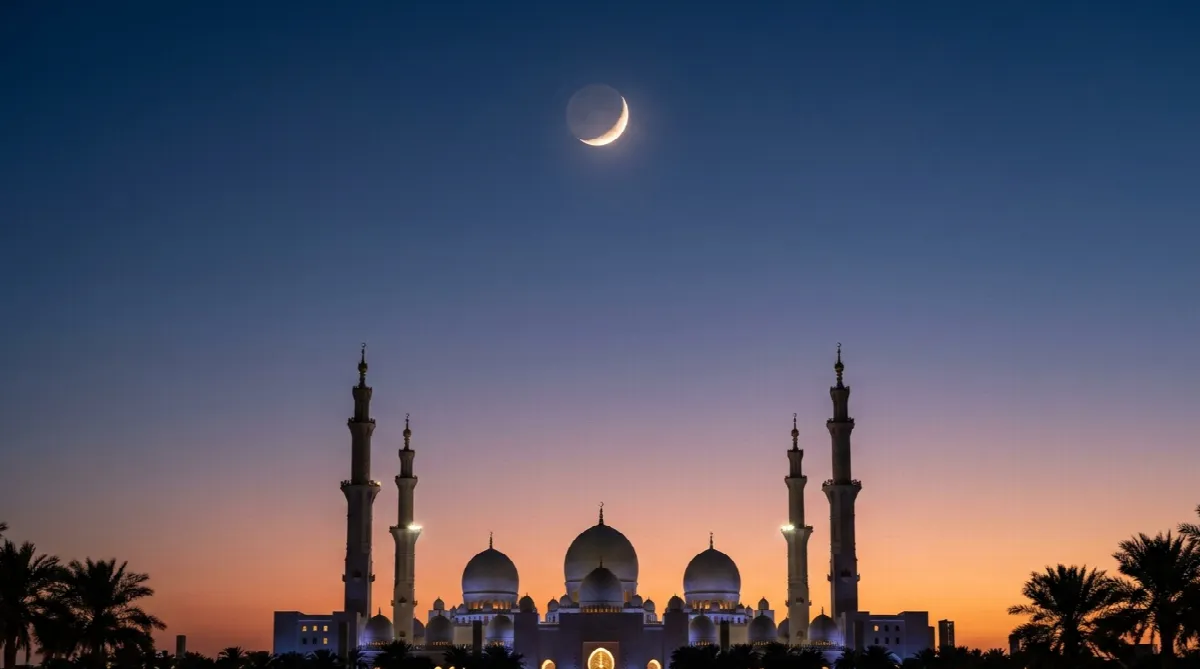
The countdown to Ramadan 2026 is almost over. Muslims across the UAE and the wider world are awaiting official confirmation of when the holy month begins, with crescent moon sighting committees preparing to convene on Tuesday, February 17.
Several countries have already declared their Ramadan start dates, and Oman has become the first GCC country to confirm. Here’s everything we know so far — and what UAE residents should expect.
When Does Ramadan 2026 Start in the UAE?
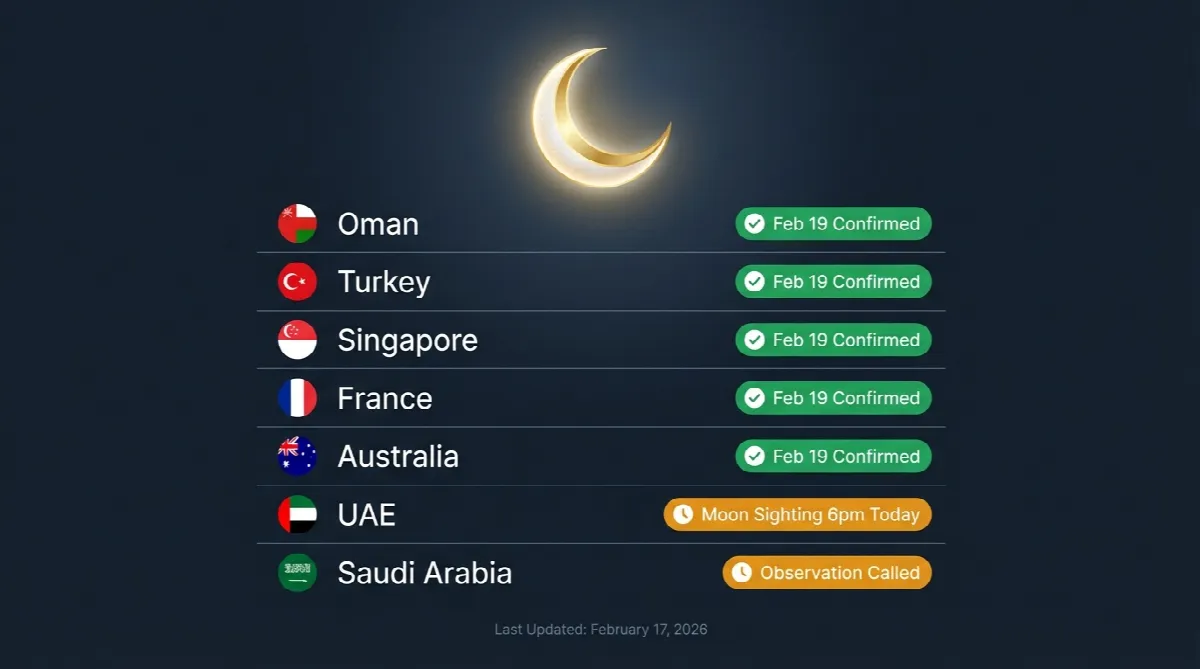
The UAE Council for Fatwa has called on residents to sight the Ramadan crescent on Tuesday, February 17, 2026. The committee will convene at Qasr Al Hosn in Abu Dhabi at 6pm, chaired by Sheikh Abdullah bin Sheikh Al Mahfouz bin Bayyah and attended by Dr Omar Habtoor Al Darei.
After Maghrib prayer, the committee will review reports from observatories and public submissions to confirm whether Ramadan begins on Wednesday, February 18 or Thursday, February 19. Residents can submit their own sightings via the Council’s online platform — reviving the prophetic tradition of moon observation.
However, astronomical calculations strongly suggest the crescent will not be visible on February 17 across most of the region. On that evening:
- The moon will set before the sun
- The angular separation between the sun and moon falls below the Danjon limit — making visual sighting physically impossible
- A rare annular solar eclipse on the same day further confirms this alignment
As a result, Thursday, February 19 is the most likely first day of Ramadan in the UAE. This aligns with earlier astronomical predictions from the Dubai Astronomy Group.
Saudi Arabia’s Supreme Court has also urged Muslims across the Kingdom to observe the Ramadan crescent on Tuesday evening, the 29th day of Sha’ban 1447 AH. The outcome of the Saudi moon sighting will be closely watched, as it often influences announcements across the wider Gulf.
Which Countries Have Already Confirmed Ramadan Dates?
Several countries have already made official announcements ahead of the UAE’s moon sighting committee meeting.
Oman became the first GCC country to confirm that Thursday, February 19 marks the start of Ramadan 1447H. The main Hijri month sighting committee determined that Wednesday, February 18 would complete the month of Shaaban. Authorities explained that astronomical calculations show the moon will set before or at sunset on the 29th of Shaaban across all Omani governorates, making visual sighting impossible. The decision aligns with both religious and scientific criteria.
Turkey has officially declared Thursday, February 19 as the first day of Ramadan. The Presidency of Religious Affairs confirmed that crescent visibility would not be possible on Tuesday, February 17 across regions sharing night-time hours with Turkey.
Singapore confirmed Thursday, February 19 after the Islamic Religious Council, led by the Mufti of Singapore, ruled out crescent visibility using a calculation-based method guided by local visibility criteria. Authorities noted the moon would set before the sun on Tuesday, making sighting impossible.
France announced fasting begins on Thursday, February 19. The French Council of Muslim Faith based its decision on astronomical calculations showing the new moon conjunction on Tuesday, February 17 at 1:01pm Paris time. The traditional Night of Doubt was observed at the Great Mosque of Paris, where a religious commission reviewed lunar data before final confirmation.
Australia confirmed Thursday, February 19 through the Australian Fatwa Council following consultations led by Grand Mufti Dr Ibrahim Abu Mohamad. In Sydney and Perth, the new moon will appear only after sunset on Tuesday, February 17, making it impossible for the month to begin that evening. Taraweeh prayers will be observed on Wednesday evening, February 18, after Isha.
Crescent Marking End of Shaaban Already Spotted in UAE
The International Astronomy Center has confirmed that the crescent marking the end of Shaaban 1447 AH was photographed from Abu Dhabi by the Khatm Astronomical Observatory, affiliated with the Centre.
The crescent was captured on Monday, February 16 at 8:15am UAE time.
Key observations from the sighting:
- The moon’s distance from the sun was 15.7 degrees
- The moon’s age was negative 33 hours and 37 minutes
- Advanced astronomical imaging techniques were used to document the crescent
This observation supports the scientific conclusion that Wednesday, February 18 completes the month of Shaaban, with Ramadan beginning on Thursday.
Why Do Ramadan Start Dates Differ Between Countries?
The Islamic calendar is lunar, with each month beginning at the sighting of the new moon. Differences in start dates occur because countries and communities rely on different methods:
- Local moon sightings — what is visible from that specific location
- Global moon sightings — if the crescent is seen anywhere in the world
- Astronomical calculations — scientific predictions of moon visibility
These variations can result in a one-day difference between regions. Some nations may begin Ramadan a day earlier or later depending on which criteria they follow.
How Long Will Ramadan 2026 Last?
Ramadan lasts either 29 or 30 days, depending on the sighting of the crescent moon at the end of the month. Dubai’s astronomical forecasts indicate Ramadan 2026 is likely to be a 29-day month, subject to official moon sighting confirmation.
Eid Al Fitr is expected around Friday, March 20, creating a three-day public holiday weekend (March 20–22).
What Changes During Ramadan for UAE Workers and Residents?
Ramadan brings significant adjustments to daily life across the Emirates. Here’s what to prepare for:
Working hours are reduced across all sectors. Private sector employees receive a two-hour reduction in daily working hours under Article 15(2) of Cabinet Resolution No. 1 of 2022. This applies to both Muslim and non-Muslim staff, with no salary deductions.
Shopping and entertainment hours shift as well. Dubai malls will extend opening hours past midnight to accommodate post-Iftar shopping and dining, while cinemas move to afternoon and late-night screenings.
Fasting hours will be shorter than Ramadan 2025. The first fast (February 19) lasts approximately 12 hours and 46 minutes, compared to 13 hours and 16 minutes on the first day last year. The cooler February weather also makes fasting more comfortable.
School timings are typically shortened to approximately five hours during Ramadan. Parents should check with their children’s schools for specific schedule adjustments.
Preparing early helps make the month more meaningful. This includes setting clear worship intentions, adjusting work and daily routines to accommodate fasting and prayers, and organising charitable giving — including Zakat and Zakat Al Fitr — through trusted organisations.
Key Takeaways
- The UAE’s moon sighting committee meets at Qasr Al Hosn, Abu Dhabi at 6pm on Tuesday, February 17
- Astronomical calculations indicate the crescent will not be visible — Thursday, February 19 is the most likely first day of Ramadan
- Oman is the first GCC country to confirm February 19, joining Turkey, Singapore, France, and Australia
- The crescent marking the end of Shaaban was photographed from Abu Dhabi on February 16
- Ramadan 2026 is expected to last 29 days, with Eid Al Fitr around March 20
- Private sector employees will receive two-hour reductions in daily working hours
- Saudi Arabia’s Supreme Court has also called for moon observation on Tuesday evening
Frequently Asked Questions
When does Ramadan 2026 start in the UAE?
The official start date depends on the moon sighting committee meeting at Qasr Al Hosn on February 17. Based on astronomical calculations, Thursday, February 19 is the most probable first day of Ramadan in the UAE, as the crescent is not expected to be visible on the observation night. The moon will set before the sun, and a rare annular solar eclipse further confirms the alignment.
Why might Ramadan start on different days in different countries?
The Islamic calendar is lunar-based, and countries use varying methods to confirm the start of each month — local moon sightings, global observations, or astronomical calculations. These differences can result in a one-day variation between regions. For example, some countries follow strict local visibility criteria whilst others accept global sighting reports.
How long will Ramadan 2026 last?
Astronomical forecasts from Dubai indicate Ramadan 2026 will likely be a 29-day month. This means Eid Al Fitr is expected around Friday, March 20, 2026, subject to moon sighting confirmation at the end of the month.
What are the fasting hours during Ramadan 2026 in the UAE?
Fasting hours start at approximately 12 hours and 46 minutes on the first day and gradually increase to around 13 hours and 26 minutes by the end of the month. These are shorter than Ramadan 2025 due to the earlier February timing and cooler weather.
Do working hours change during Ramadan in the UAE?
Yes. All private sector employees are entitled to a two-hour reduction in daily working hours under UAE labour law (Article 15(2) of Cabinet Resolution No. 1 of 2022). This applies to both Muslim and non-Muslim employees, with no impact on salary. Federal government employees also follow reduced schedules.
When is Eid Al Fitr 2026 in the UAE?
Eid Al Fitr is expected to begin on Friday, March 20, 2026, with the UAE designating three public holidays (Shawwal 1–3) covering March 20–22. This creates a three-day weekend for those on Saturday–Sunday schedules.
Which GCC country was first to confirm Ramadan 2026?
Oman became the first GCC country to confirm that Thursday, February 19 marks the start of Ramadan 1447H. The main Hijri month sighting committee determined that the moon would set before or at sunset across all Omani governorates on the observation date.
Further Reading
- When Is Ramadan 2026 in UAE? Start Date, Eid Al Fitr Holiday and Fasting Hours
- Ramadan 2026 Dubai Mall and Cinema Hours: What Times Are Changing?
- UAE Public Holidays 2026: 6-Day Break & Transferable Dates
- UAE Ramadan Working Hours: Employee Rights & Overtime Rules
- Ramadan 2025 UAE Guide: Work Hours, Holidays & Essential Changes
The UAE week, every Monday
The week's stories on jobs, visas, money and daily life in one short email. Unsubscribe in one click.