How to Pay Rent in Dubai: Top 3 Payment Methods for Tenants in 2026
Learn the top 3 ways to pay rent in Dubai: cheques, monthly instalments via Keyper, and direct debit. Know your rights before signing your contract.
By Vadim Kouznetsov, published
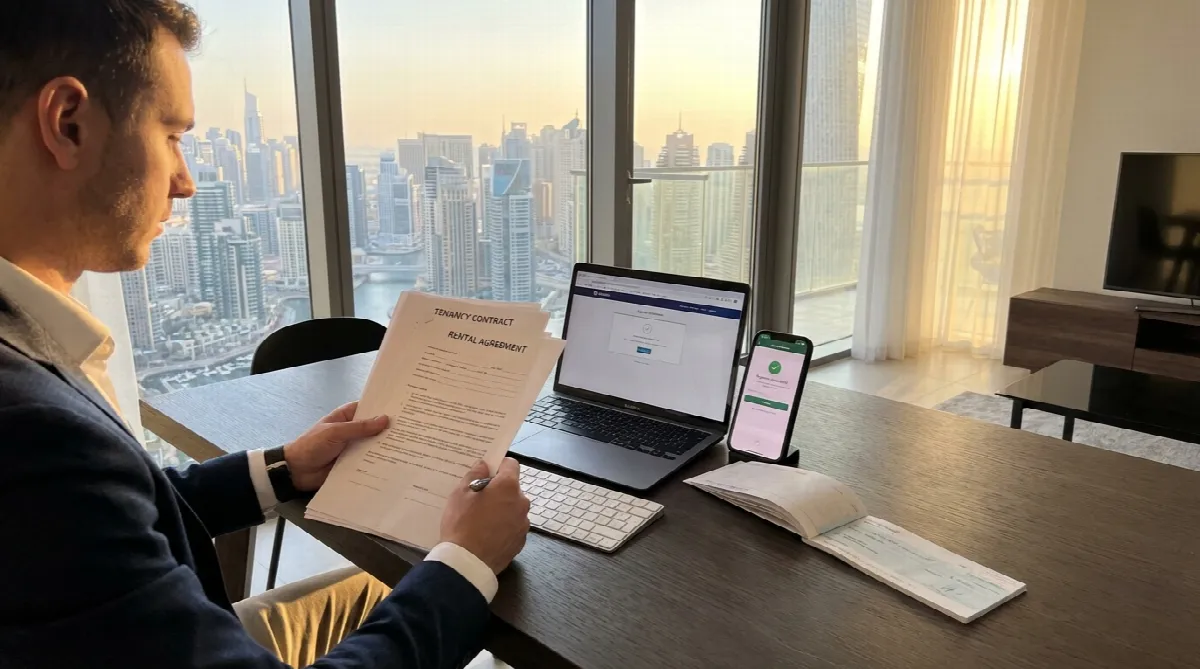
Key Takeaway: While postdated cheques remain the dominant rent payment method in Dubai, newer options like monthly instalments through platforms such as Keyper and direct debit via Noqodi are gaining traction. Whatever method you choose must be written into your tenancy contract and registered with Ejari.
Renting a home in Dubai involves one critical decision beyond location and price: how you’ll pay your rent. While landlords often set the terms, tenants can negotiate payment options before signing the contract.
Here’s what you need to know about each method and how to choose the right one for your situation.
1. Cheque Payments: Still the Standard in Dubai
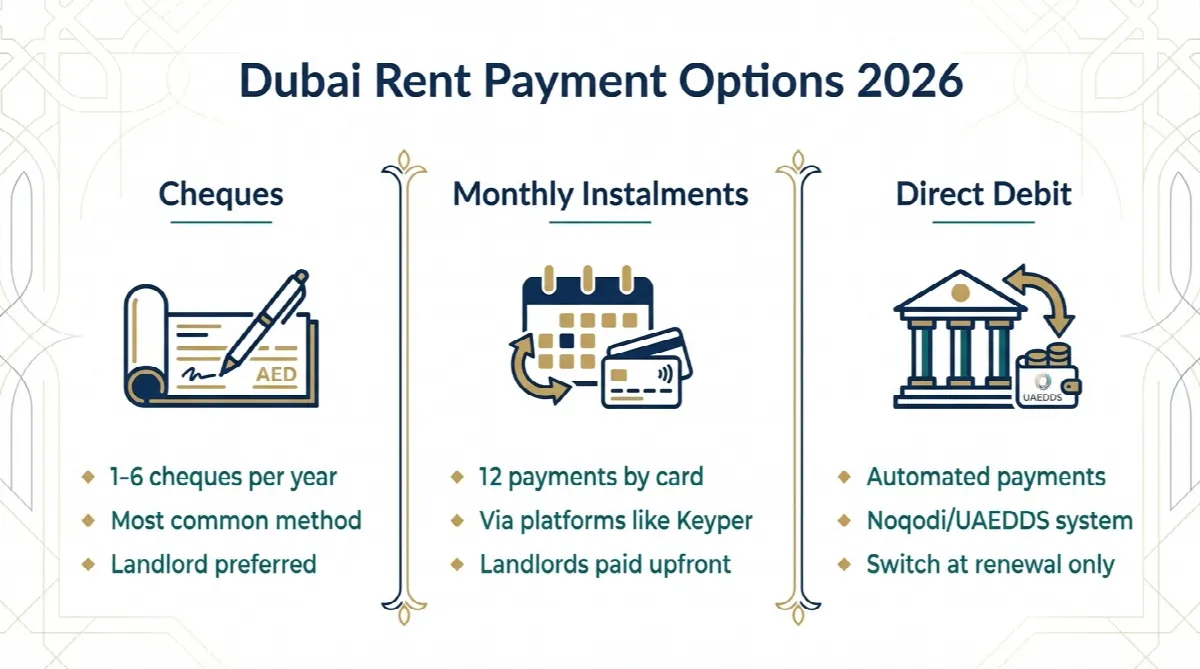
Postdated cheques remain the most common rental payment method across the emirate. The number of cheques varies based on your agreement with the landlord.
Common arrangements include:
- One cheque – Full annual rent paid upfront
- Two to four cheques – Payments spread across the year
- Six or more cheques – Less common but increasingly available
Most landlords prefer fewer cheques because it reduces their risk and improves cash flow. However, recent market data shows a 13.6% increase in landlords offering multiple-cheque options, with four or more cheques becoming more popular.
Why landlords prefer fewer cheques: Many individual landlords and small family offices own Dubai’s residential stock. With smaller portfolios, they can’t spread risk easily and prefer upfront payments. This explains why some landlords demand single cheques or threaten rent increases if tenants request more instalments.
Your rights regarding cheque payments: Dubai rental laws protect tenants from landlords who attempt to change payment terms mid-contract. The number of cheques agreed in your original tenancy contract remains valid throughout the contract period. Any change requires mutual consent.
2. Monthly Rent Instalments: A Growing Alternative
Monthly payments represent one of the most significant reforms in the UAE rental market. Rather than accumulating several months’ rent ahead of renewal, tenants can treat rent like any recurring household bill.
How monthly instalments work: In 2025, Property Finder announced a partnership with Keyper, a UAE firm enabling tenants to pay rent in 12 monthly instalments by card. Meanwhile, landlords still receive their payment upfront in one, two, or four lump sums.
This flexible arrangement benefits both parties. Keyper’s co-founder Walid Shihabi explains: “Tenants have the ability to pay in 12 payments by card, while landlords get paid upfront. This flexibility is a win-win.”
Why this matters: For many tenants, the challenge isn’t the cost of rent itself but the requirement to pay through one to four large cheques. Easing liquidity pressure gives residents a payment structure that mirrors how they earn and manage their finances.
Several prominent Dubai property firms have joined this initiative, expanding access to flexible payment options across various locations and price points.
3. Direct Debit Payments: The Digital Shift
Direct debit payments are becoming more common as landlords move away from cheque-based systems. A Visa study published in January 2025 indicated that more UAE consumers are abandoning cheque payments for rent settlements.
How direct debit works in Dubai: The UAE Central Bank fully supports the shift to direct debits. In 2023, the Dubai Land Department integrated Ejari (the registered tenancy contract system) with the Noqodi Direct Debit System.
Noqodi is the digital payment channel for Dubai government services, while UAEDDS (UAE Direct Debit System) provides residents with an automated method for recurrent payments from their bank accounts.
Important limitation: If you currently pay rent with postdated cheques, you can only switch to direct debit at contract renewal. Your landlord or property management company must agree to this payment method, and the instalment plan requires mutual agreement between both parties.
What You Need to Know Before Signing
Whatever payment method you choose, several rules apply:
Everything must be documented: Your agreed payment schedule must be explicitly written in the tenancy contract and registered with Ejari. Without proper registration, you lack legal protection under Dubai’s rental laws.
Negotiation is possible: You can negotiate the payment schedule before signing. For example, you might agree to pay in more instalments if the landlord accepts. The key is reaching agreement before contract signing, not after.
The market is evolving: Ongoing moves in Dubai and across the UAE aim to expand monthly payment options. Platforms now let tenants pay monthly while landlords still receive full amounts upfront. Direct bank options are also expanding.
For tenants considering their options, understanding Dubai’s overall cost of living helps determine which payment structure best fits your financial situation.
Frequently Asked Questions
Can I pay rent monthly in Dubai?
Yes, through platforms like Keyper. These services let tenants pay monthly by card while landlords receive upfront payments. Traditional direct monthly payments to landlords are less common but possible if both parties agree.
How many cheques is normal for Dubai rent?
One to four cheques is standard. However, six or more cheques are becoming more available as landlords adapt to tenant preferences. Fewer cheques often result in better rates.
Can my landlord force me to pay in one cheque?
Not during an active contract. Dubai rental laws protect your agreed payment terms. At renewal, landlords can propose new terms, but you can negotiate or challenge unfair demands through the Rental Disputes Centre.
What is Ejari and why does it matter?
Ejari is Dubai’s official tenancy contract registration system operated by the Dubai Land Department. All rental agreements must be registered here. Your payment terms are only legally enforceable if included in your registered Ejari contract.
Can I switch from cheques to direct debit?
Only at contract renewal. You cannot change payment methods mid-contract. Both you and your landlord must agree to the direct debit arrangement and specify it in the new Ejari registration.
What happens if my rent cheque bounces?
Bounced cheques carry serious legal consequences in the UAE, including potential criminal charges and fines. If you anticipate payment difficulties, contact your landlord immediately to discuss options before the cheque date.
Further Reading
The UAE week, every Monday
The week's stories on jobs, visas, money and daily life in one short email. Unsubscribe in one click.