Dubai Property Market Defies 2025 Slowdown Predictions With 20% Growth
Dubai property market proves Fitch wrong with Dh917bn in 2025 transactions, 20% growth. Industry executives predict even stronger 2026. Full market analysis.
By Vadim Kouznetsov, published
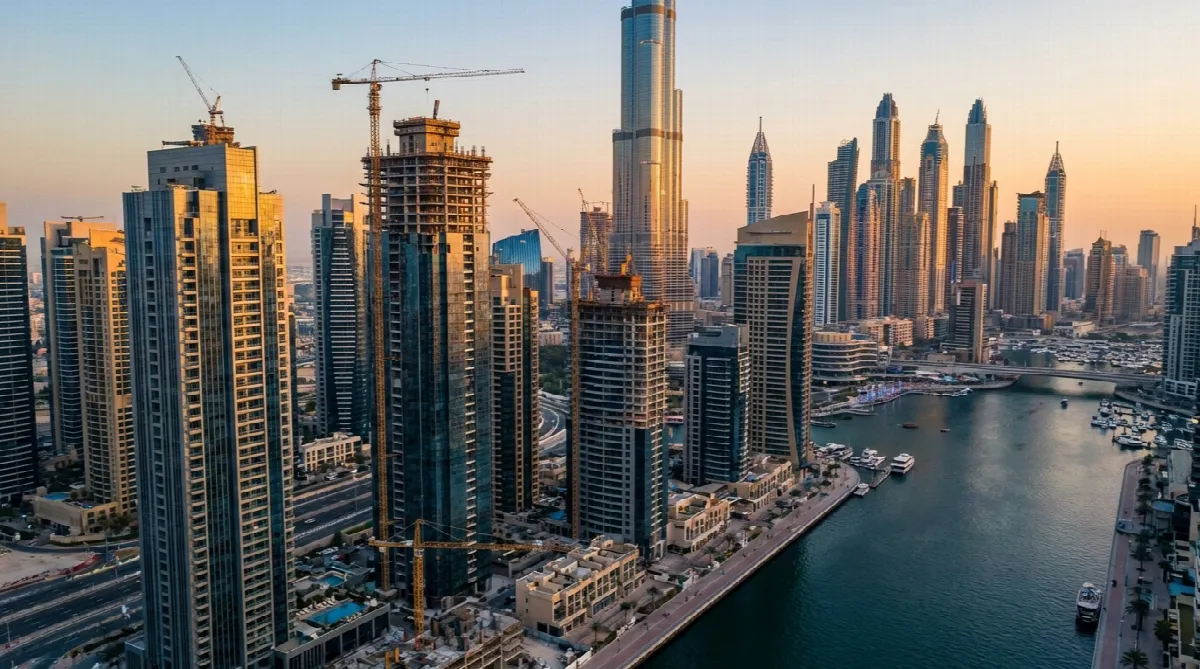
Dubai’s real estate market has proved analysts wrong, recording 20% year-on-year growth in 2025 despite forecasts of a significant slowdown.
In early 2025, global ratings agency Fitch projected that Dubai property prices could fall up to 15% amid an anticipated supply surge. The actual data tells a different story entirely.
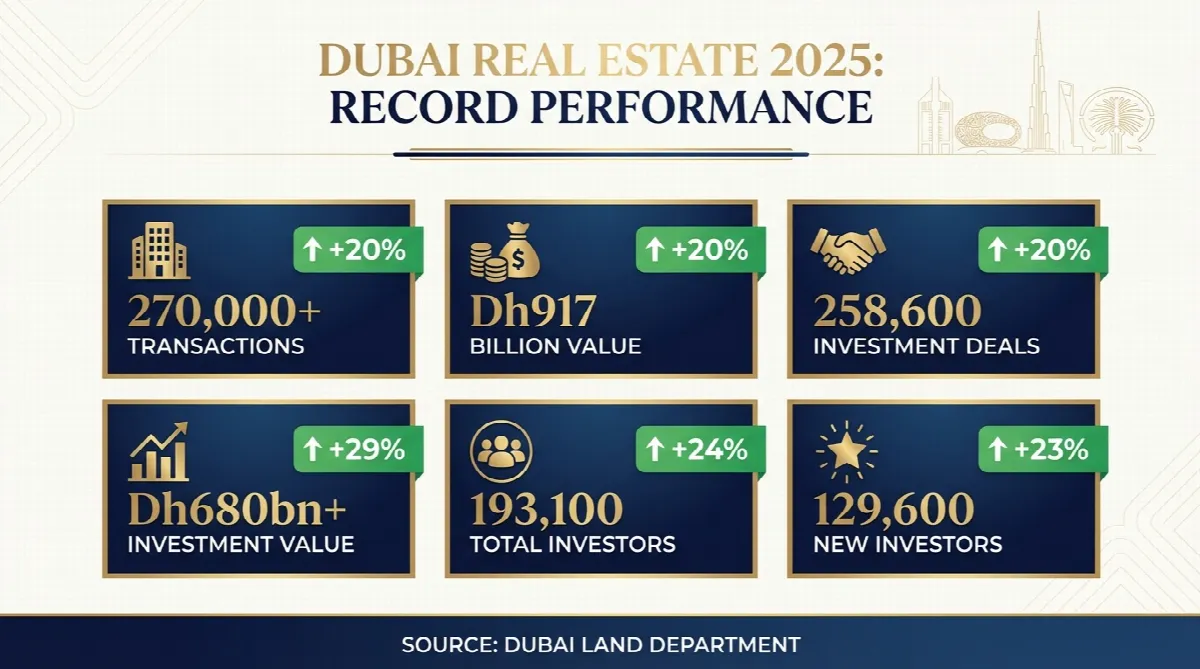
The Numbers: What Actually Happened in 2025
Dubai Land Department figures reveal a market that defied all expectations:
| Metric | 2025 Performance |
|---|---|
| Total transactions | Over 270,000 |
| Total value | Dh917 billion |
| Year-on-year growth | 20% |
| Investment value | Over Dh680 billion |
| Investment growth | 29% in value, 20% in volume |
Real estate investments exceeded Dh680 billion across 258,600 deals. The investor base expanded to approximately 193,100—a 24% increase that included 129,600 new investors (23% growth).
Resident investors accounted for 56.6% of total buyers, indicating strong local confidence alongside international demand.
Why Predictions Got It Wrong
Fitch’s forecast was based on an anticipated supply surge that would dramatically outpace population growth. The reasoning seemed sound: new property supply growing at 16% annually against 5% population growth would inevitably pressure prices downward.
What the predictions missed was the depth and breadth of sustained demand.
“All of the key metrics—transaction volume, pricing, and average prices—show growth. The narrative of a slowdown simply doesn’t align with the actual data,” said Lewis Allsopp, chairman of Allsopp & Allsopp.
Dubai Land Department reported price growth of around 7% in 2025. Internal Allsopp & Allsopp data showed even stronger performance, with average sales prices increasing nearly 33%—a figure that correlates directly with buyers purchasing higher-value properties.
What’s Actually Driving the Market?
Industry executives point to fundamentals rather than speculation as the key drivers:
Population inflows: Dubai continues attracting residents from across the globe, creating genuine housing demand.
Long-term residency initiatives: Golden visas and other residency programmes give buyers confidence in extended stays.
Infrastructure development: Ongoing transport, utilities, and urban projects support property values.
Economic fundamentals: Strong GDP growth and diversification away from oil revenues provide a solid foundation.
Humaira Vaqqas, senior consultant at Range International Properties, highlighted the structural changes:
“What stands out is that growth is not speculative; it is supported by population inflows, long-term residency initiatives, infrastructure development, and strong economic fundamentals. The market has evolved into a more transparent and regulated ecosystem, which has helped maintain momentum while avoiding extreme volatility.”
Progress Toward Dubai Real Estate Strategy 2033
The 2025 results confirm steady progress toward the Dubai Real Estate Sector Strategy 2033, which aims to raise transaction volume by 70% to reach Dh1 trillion.
At Dh917 billion in 2025, the market is well on track to achieve this target.
What This Means for Investors
The sustained growth creates specific implications for different buyer groups.
For investors: Rising transaction numbers indicate deep liquidity and healthy absorption rates across multiple segments. This translates into stronger capital appreciation potential, improved exit options, and attractive rental yields driven by continued demand.
For end-users: The results reflect confidence in long-term ownership. However, they also highlight the importance of early entry and informed decision-making—prices in prime and well-connected communities are becoming increasingly competitive.
2026 Outlook: Even Stronger Performance Expected
Industry executives are optimistic about 2026, citing sustained demand drivers:
- Continued population growth
- Ongoing inflow of high-net-worth individuals
- More affordable projects hitting the market
- Shift toward quality assets and branded residences
“The market’s performance in 2025 sets a strong precedent for the years ahead,” said Vaqqas. “Investors are likely to adopt a longer-term, portfolio-driven approach, focusing on quality assets, branded residences, and communities aligned with Dubai’s 2040 Urban Master Plan.”
Lewis Allsopp echoed this sentiment:
“2025 was Dubai’s strongest year yet, and all indicators suggest that 2026 has the potential to be even better. We’re seeing sustained population growth, continued high-net-worth migration, and rising demand from established families—all fundamentals that underpin long-term market strength rather than short-term speculation.”
Institutional Interest Growing
One notable shift is increasing interest from institutional investors and high-net-worth individuals who now view Dubai as a stable, global real estate hub rather than a cyclical opportunity.
This evolution suggests sustainable growth extending well beyond 2026, with the market entering its next phase from a position of strength rather than decline.
For those tracking Dubai’s first-time buyer trends, the expanding investor base—particularly the 129,600 new investors in 2025—confirms that fresh capital continues entering the market.
Market Maturation, Not Speculation
The key message from industry professionals is that Dubai’s growth represents market maturation rather than speculative activity.
Unlike previous boom periods, the current growth is backed by:
- Transparent regulatory frameworks
- Strong economic diversification
- Genuine population-driven demand
- Long-term commitment from residents and investors
This foundation provides confidence that even if growth moderates, the market has structural support that previous cycles lacked.
For buyers considering the market, understanding Q2 2025 price trends and quarterly movements can help inform timing decisions.
Key Takeaway
Dubai’s real estate market defied 2025 slowdown predictions, recording over 270,000 transactions worth Dh917 billion—a 20% year-on-year increase. Global ratings agency Fitch had forecast up to 15% price declines, but actual DLD data showed 7% price growth with investment values surging 29%. Industry executives attribute the performance to population inflows, long-term residency initiatives, and strong economic fundamentals rather than speculation. With the investor base expanding 24% to include 129,600 new buyers, professionals expect 2026 to be even stronger as high-net-worth migration continues and Dubai progresses toward its Real Estate Strategy 2033 targets.
FAQs
Did Dubai property prices fall in 2025 as predicted?
No. Despite Fitch’s prediction of up to 15% price declines, Dubai property prices grew approximately 7% in 2025 according to Dubai Land Department data. Total transaction values reached Dh917 billion with 20% year-on-year growth, defying slowdown expectations.
How much did Dubai real estate transactions grow in 2025?
Dubai recorded over 270,000 property transactions worth Dh917 billion in 2025, representing 20% year-on-year growth. Investment value exceeded Dh680 billion across 258,600 deals—a 29% increase in value and 20% increase in volume.
Is Dubai’s property growth speculative or fundamental?
Industry executives stress the growth is fundamental, not speculative. It is supported by population inflows, long-term residency initiatives like Golden Visas, infrastructure development, and strong economic fundamentals. The market has evolved into a more transparent and regulated ecosystem.
What is the outlook for Dubai property in 2026?
Industry professionals expect 2026 to potentially be even stronger than 2025. Key drivers include sustained population growth, continued high-net-worth migration, more affordable projects entering the market, and increased institutional investor interest viewing Dubai as a stable global real estate hub.
How many new property investors entered Dubai in 2025?
The investor base expanded to approximately 193,100 in 2025—a 24% increase. This included 129,600 new investors, representing 23% growth. Resident investors accounted for 56.6% of total buyers, indicating strong local confidence alongside international demand.
Further Reading
The UAE week, every Monday
The week's stories on jobs, visas, money and daily life in one short email. Unsubscribe in one click.