Are Dubai Property Prices Still Rising? Q2 2025 Market Analysis
Dubai property prices up 24% annually in Q2 2025 despite slowing growth. Villa prices surge 28.7% while apartments moderate. Market relief ahead?
By Vadim Kouznetsov, published
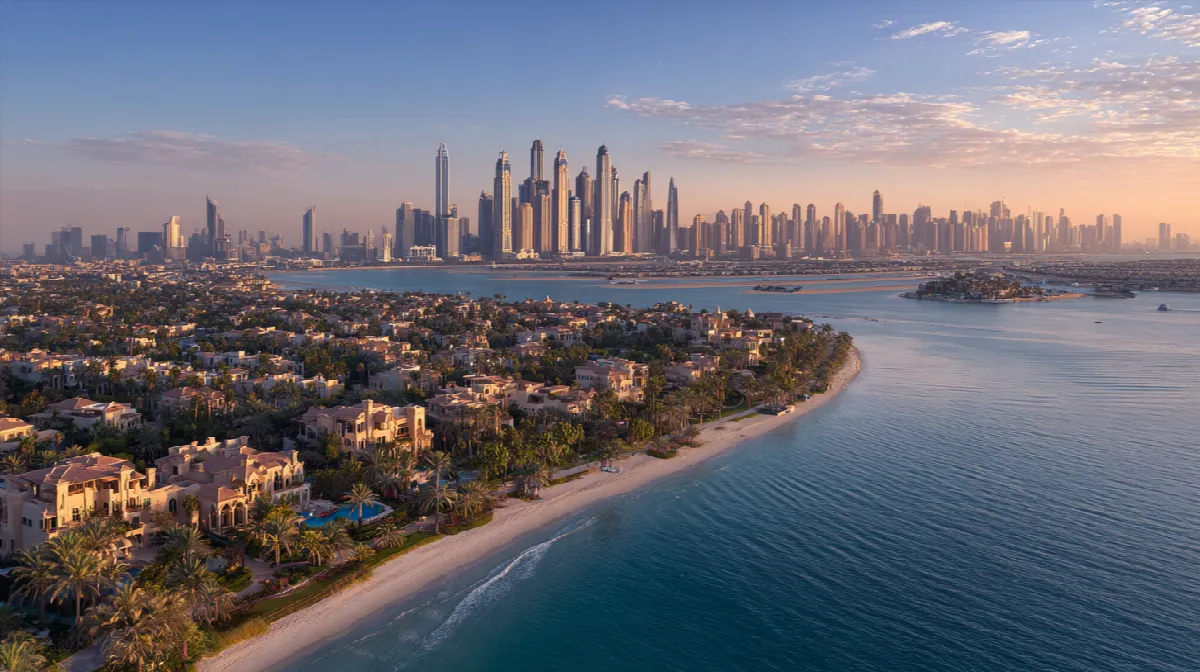
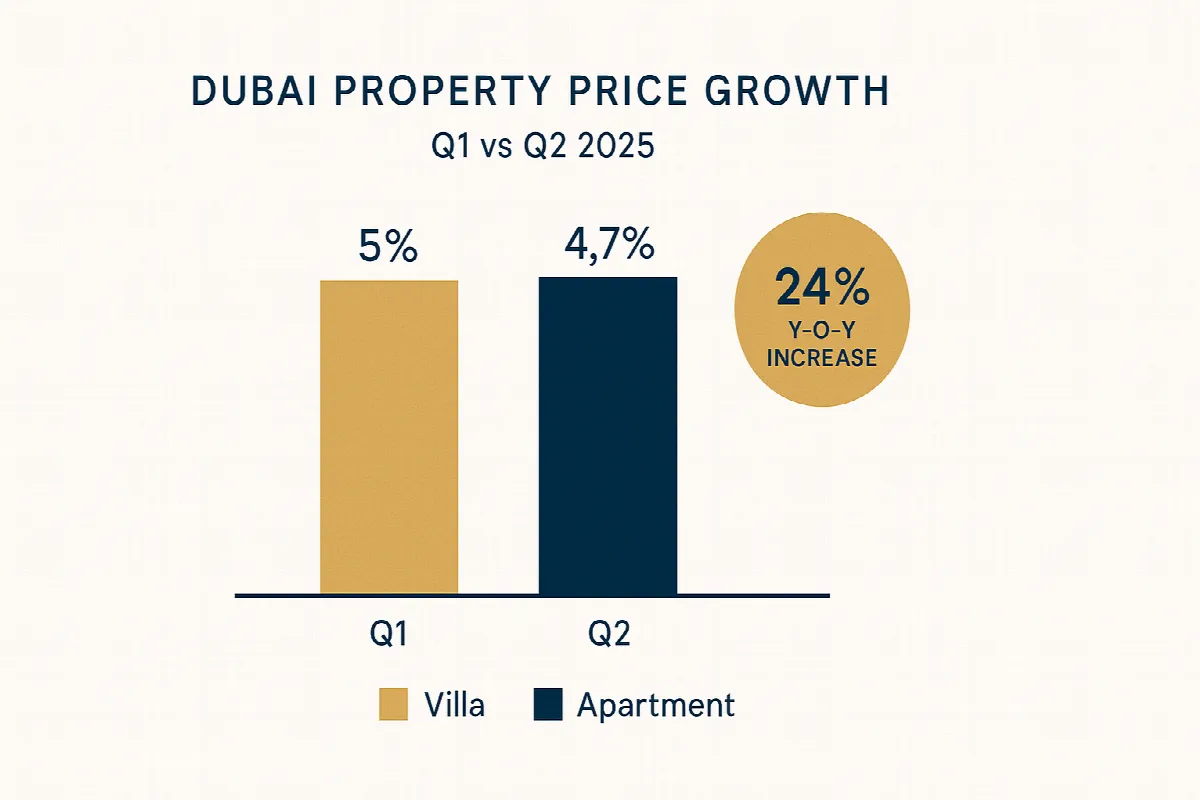
Dubai property prices continue climbing in Q2 2025, though at a gentler pace of 4.7% quarterly growth compared to 5% in Q1. However, year-on-year prices remain up nearly 24%, with values more than doubling since early 2021, raising questions about market sustainability.
The latest ValuStrat Price Index (VPI) reveals mixed signals across Dubai’s property segments. Whilst villa prices maintain strong momentum with 28.7% annual growth, apartment prices show moderation at 19.1% year-on-year increase, suggesting different dynamics across property types.
What’s Driving Dubai’s Property Price Growth in 2025?
Several factors continue pushing Dubai property values higher despite slower quarterly growth:
Supply and Demand Imbalance: Despite 17,000 new homes completed in 2025’s first half, demand continues outpacing supply, particularly in prime locations.
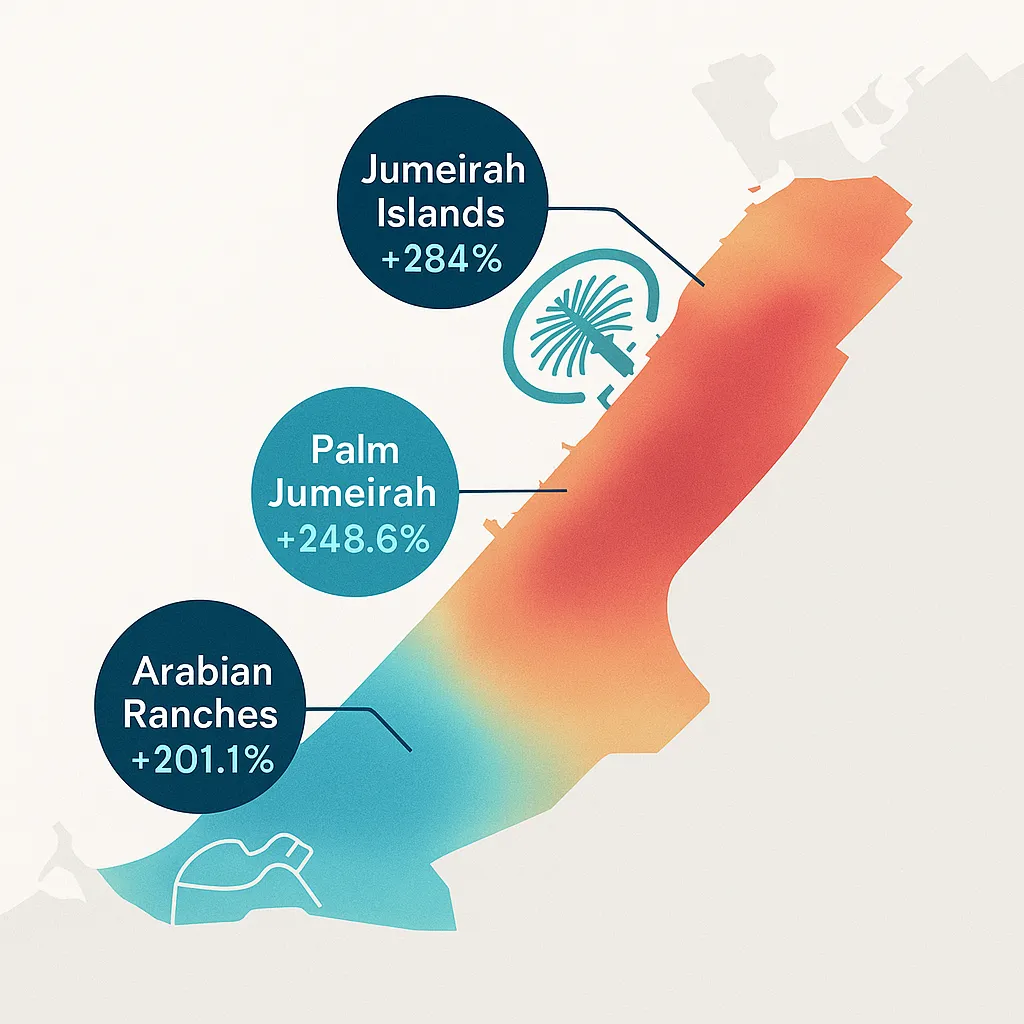
Villa Market Dominance: Premium communities like Jumeirah Islands (+284% since 2021) and Palm Jumeirah (+248.6% since 2021) demonstrate exceptional price appreciation.
Off-Plan Investment Appetite: Record 35,700+ off-plan deals in Q2 valued at Dh113 billion indicate sustained investor confidence.
Cash Transaction Preference: 16,003 cash purchases worth Dh37 billion highlight strong liquidity in the market.
Which Dubai Areas Are Seeing the Biggest Price Increases?
Villa Communities Leading Growth
The most expensive villa communities continue setting new records:
- Jumeirah Islands: +8.5% in Q2 alone
- Palm Jumeirah: +8.5% quarterly growth
- Emirates Hills: +5.5% quarterly increase
- The Meadows: +5.5% quarterly growth
- Mudon: Modest +2.1% growth
Apartment Hotspots
Apartment price growth varies significantly by location:
- Remraam: +5.4% quarterly
- Dubai Silicon Oasis: +5% quarterly
- The Greens: +4.5% quarterly
- Town Square: +4.5% quarterly
- Palm Jumeirah: +4.2% quarterly
Meanwhile, Dubai Marina (+2.9%) and International City (+2.3%) show cooling growth, potentially offering better value for buyers.
How Much Does it Cost to Rent in Dubai Now?
Rental prices remain elevated but show more manageable growth compared to purchase prices:
Average Annual Asking Rents:
- Studio: Dh64,000
- 1-bedroom: Dh91,000
- 2-bedroom: Dh131,000
- 3-bedroom: Dh191,000
Villa Rental Prices:
- 3-bedroom villa: Dh335,000
- 4-bedroom villa: Dh426,000
- 5-bedroom villa: Dh522,000
Overall rents increased 1% quarterly and 6.2% annually, whilst villa rents remained flat quarterly but up 4.8% yearly.
When Will Dubai Property Prices Cool Down?
Market analysts suggest relief may come as supply increases. Nearly 200,000 homes are planned until 2029, with 66,596 units expected by end-2025 (65% apartments, 35% villas).
Haider Tuaima, Managing Director at ValuStrat, notes: “As supply ramps up in the second half of the year, close attention will be needed to monitor its impact on pricing dynamics.”
Recent project completions include:
- JVC: 1,160 units
- Arjan: 1,029 units
- Dubai Science Park: 575 units
- Tilal Al Ghaf (Aura): 808 villas
Is Now a Good Time to Buy Property in Dubai?
The market presents mixed signals for potential buyers:
Positive Factors:
- Mortgage transactions increasing (11,589 deals worth Dh24 billion)
- Average off-plan price of Dh3.2 million (+32% yearly)
- 36.4% of resale deals under Dh1 million provide entry points
Cautionary Factors:
- Prices more than doubled since 2021
- Slowing quarterly growth may indicate peak pricing
- Upcoming supply could pressure prices downward
For budget-conscious buyers, the secondary market offers 13,691 resale opportunities, with over one-third priced below Dh1 million.
What About Dubai’s Rental Market Future?
Rental growth appears more sustainable than purchase price increases. With overall rents up just 6.2% annually compared to 24% for purchase prices, rental yields may become more attractive.
The rental market shows regional variation, with areas like Dubai Marina and International City offering more moderate rent increases, potentially providing better value for tenants.
How Is Dubai’s Property Market Performing Globally?
Dubai’s property market demonstrates remarkable resilience compared to global markets. The emirate’s strategic location, tax advantages, and growing expatriate population continue attracting international investment.
Off-plan sales hitting record highs despite price increases suggests sustained confidence in Dubai’s long-term prospects. The market’s ability to maintain momentum whilst other global cities face corrections highlights Dubai’s competitive position.
What Should Property Investors Know About Dubai in 2025?
Key Investment Considerations:
- Timing: Current market conditions favour sellers, but increasing supply may shift dynamics
- Location Strategy: Prime areas maintain premium pricing whilst emerging communities offer growth potential
- Property Type: Villas continue outperforming apartments in capital appreciation
- Financing: Rising mortgage activity suggests improved accessibility for financed purchases
Risk Factors:
- Supply pipeline may pressure future pricing
- Global economic conditions could affect international investment
- Rental yields may compress as purchase prices outpace rent growth
FAQ: Dubai Property Prices 2025
Are Dubai property prices expected to fall in 2025?
Whilst quarterly growth has slowed from 5% to 4.7%, annual prices remain up 24%. Increased supply in H2 2025 may moderate growth further but significant price falls seem unlikely given strong demand fundamentals.
Which Dubai areas offer the best value for money?
Dubai Marina and International City show slower price growth at 2.9% and 2.3% respectively, potentially offering better value. The secondary market also provides entry points with 36.4% of deals under Dh1 million.
Should I buy an apartment or villa in Dubai?
Villas continue outperforming apartments with 28.7% annual growth versus 19.1% for apartments. However, apartments offer lower entry prices and potentially better rental yields.
How much deposit do I need for Dubai property?
Typical deposits range from 20-25% for UAE residents, with some developers offering flexible payment plans. Cash transactions remain common, representing over half of ready property purchases.
Will Dubai rental prices continue rising?
Rental growth appears more sustainable at 6.2% annually. With purchase prices rising faster than rents, rental yields may become more attractive, potentially moderating future rent increases.
What’s the best time to buy property in Dubai?
Current market conditions favour sellers due to strong demand. However, increasing supply in H2 2025 may provide more negotiating power for buyers, particularly in non-prime areas.
Are off-plan properties a good investment in Dubai?
Off-plan sales hit record highs with 35,700+ deals worth Dh113 billion in Q2, suggesting strong investor confidence. However, buyers should consider completion risks and market conditions at delivery.
How do Dubai property prices compare to other cities?
Dubai’s 24% annual growth significantly exceeds most global markets. However, this rapid appreciation raises sustainability questions, particularly as supply increases.
Key Takeaway
Dubai property prices continue rising but at a slowing pace, with villas outperforming apartments and premium areas maintaining strong growth. Whilst immediate price falls seem unlikely, increasing supply may provide relief for buyers in H2 2025, particularly in non-prime locations. The market remains attractive for long-term investors but requires careful timing and location selection.
Further Reading:
The UAE week, every Monday
The week's stories on jobs, visas, money and daily life in one short email. Unsubscribe in one click.