Do You Need a Real Estate Agent to Rent Out Property in Dubai?
Dubai landlords can rent property without agents. Learn about Ejari registration, lease contract requirements, maintenance duties, and RERA rent increase rules.
By Vadim Kouznetsov, published

Buying a townhouse in Dubai is exciting. But before collecting your first rent cheque, you need to understand the legal framework for landlords.
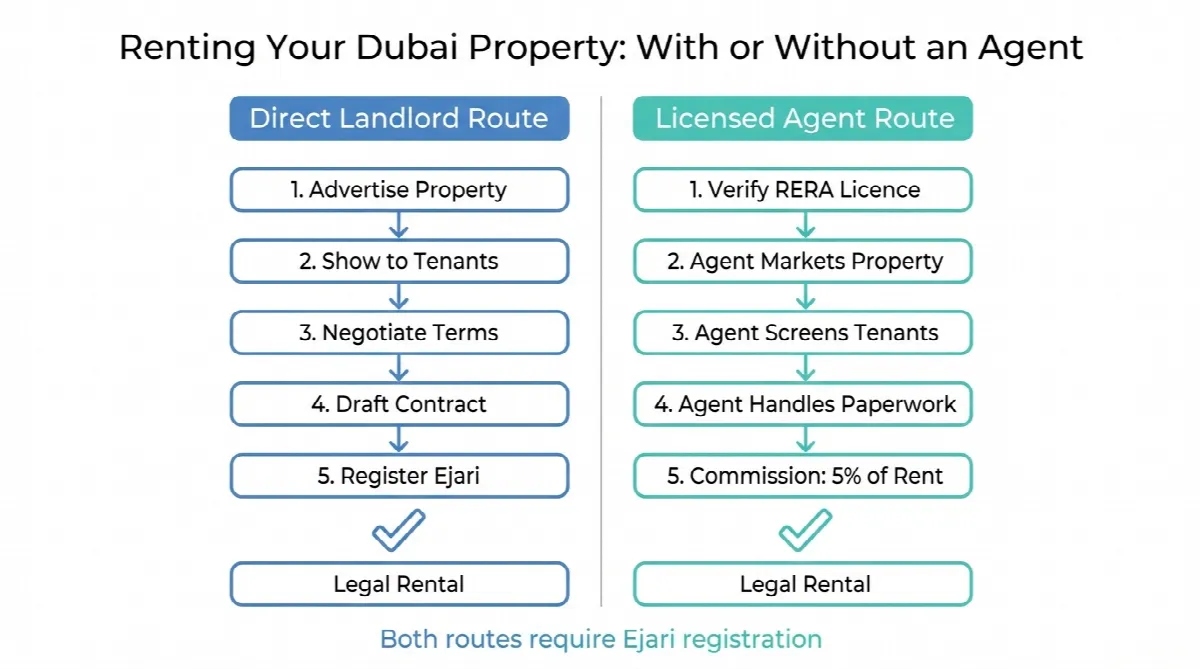
Good news: there is no legal requirement to use a real estate agent when renting out property in Dubai. Property owners can lease directly to tenants without agent involvement.
However, if you do engage an agent, they must hold a valid licence from the Real Estate Regulatory Agency (RERA).
Key Takeaway
Dubai landlords can rent property without using a real estate agent. However, all lease contracts must be registered with RERA through the Ejari system to be legally valid. Landlords must provide property in good condition and handle maintenance unless otherwise agreed in writing. If using an agent, verify their RERA licence under Bylaw No. 85 of 2006.
Is a Real Estate Agent Mandatory for Renting Property in Dubai?
No. Dubai’s land laws impose no obligation to rent property through a real estate agent.
Property owners can:
- Advertise their property directly
- Show the unit to prospective tenants
- Negotiate lease terms independently
- Draft and sign rental agreements
This applies to all property types including apartments, villas, and townhouses in any Dubai community.
However, if you choose to work with an agent, they must be licensed. Bylaw No. 85 of 2006 Regulating the Real Estate Brokers Register requires all agents and brokers to register with RERA.
Understanding Dubai rental laws and tenant rights helps landlords avoid disputes.
When Can You Start Renting Out Your Property?
You can lease your property once ownership is registered with the Dubai Land Department (DLD).
Requirements before renting:
| Requirement | Details |
|---|---|
| DLD registration | Title deed in your name |
| Property condition | Ready for occupancy |
| Utilities | DEWA connection available |
| Community approvals | Any required NOCs from management |
The property buying costs guide explains registration fees and DLD charges.
What Must a Dubai Rental Contract Include?
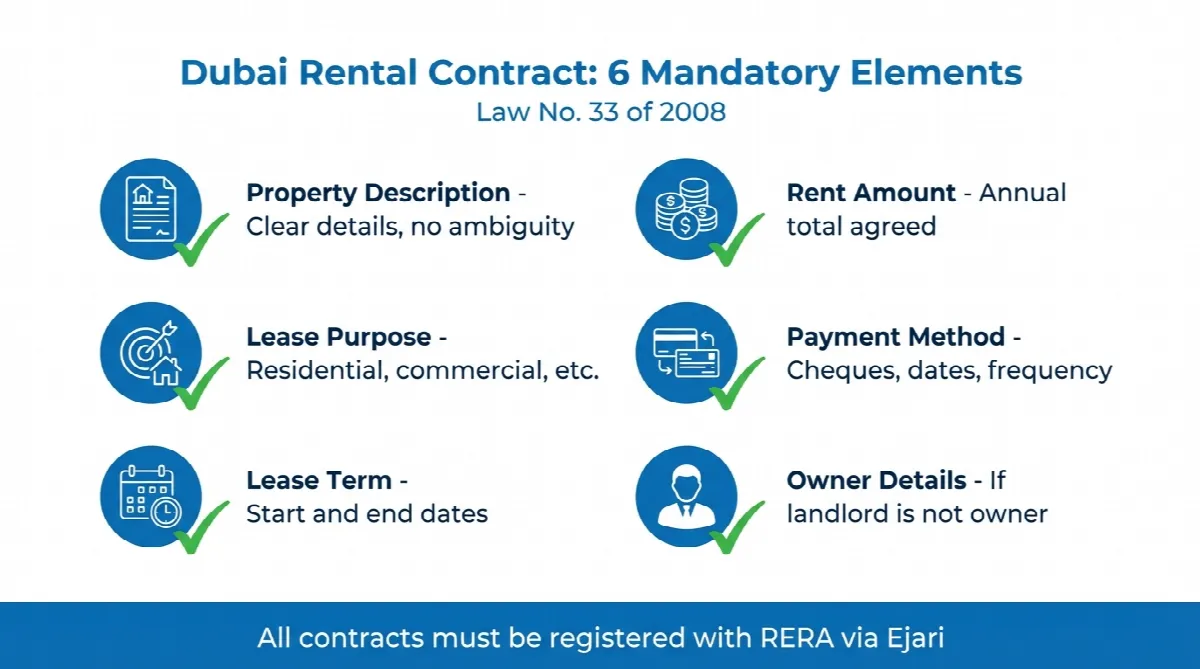
Article 4 of Law No. 33 of 2008 (amending Law No. 26 of 2007) specifies mandatory contract elements.
Essential contract terms:
- Property description: Clear details leaving no room for uncertainty
- Purpose: Residential, commercial, or other use
- Lease term: Start and end dates
- Rent amount: Total annual rent
- Payment method: Number of cheques and due dates
- Owner information: Required if landlord is not the property owner
All lease contracts and amendments must be registered with RERA to be legally valid. This happens through the Ejari system.
The rental contract renewal guide covers contract terms and negotiation strategies.
How Do You Register a Lease Contract in Dubai?
Ejari registration makes your rental contract legally enforceable. Without registration, you cannot pursue legal remedies through the Rental Disputes Centre (RDC).
Ejari registration process:
- Create an Ejari account online or visit a typing centre
- Upload required documents (title deed, passport, Emirates ID, contract)
- Pay registration fee
- Receive Ejari certificate
Documents needed:
| Document | From |
|---|---|
| Title deed | Dubai Land Department |
| Passport copies | Landlord and tenant |
| Emirates ID copies | Both parties |
| Signed lease contract | Prepared by parties |
| DEWA premise number | Utility account |
Registration typically costs between Dh155-220 depending on the channel used.
What Are a Landlord’s Legal Responsibilities?
Dubai Rent Law (Law No. 26 of 2007) establishes clear landlord obligations.
Article 15 – Property condition:
The landlord must hand over property in good condition, allowing the tenant full use as stated in the lease contract.
Article 16 – Maintenance:
Unless otherwise agreed in writing, the landlord is responsible during the lease term for:
- Maintenance works
- Repairs affecting tenant’s use
- Fixing defects or damage
The maintenance responsibilities guide explains how to negotiate these terms.
Article 17 – Property changes:
Landlords cannot make changes to the property or its amenities that would prevent the tenant from full use.
Landlords are responsible for:
- Any changes made by them or persons they authorise
- Defects, damage, or wear not caused by tenant fault
Can You Shift Maintenance Responsibility to Tenants?
Yes, but only through written agreement in the lease contract.
Article 16 states: “Unless otherwise agreed by the parties…”
This means:
- Default position: Landlord handles all maintenance
- Alternative: Written contract clause can shift responsibility
- Common approach: Tenant handles minor repairs, landlord covers major systems
Many Dubai landlords include clauses requiring tenants to cover:
- Minor repairs under a certain value (often Dh500)
- Appliance servicing (AC filters, water heaters)
- Cosmetic damage caused by tenant
Major structural repairs, plumbing failures, and electrical issues typically remain with landlords regardless of contract terms.
What Rent Increase Rules Apply to Landlords?
RERA’s rental index governs how much landlords can increase rent.
Rent increase caps (Decree No. 43 of 2013):
| Current Rent vs Market Rate | Maximum Increase |
|---|---|
| Up to 10% below average | 0% |
| 11-20% below average | 5% |
| 21-30% below average | 10% |
| 31-40% below average | 15% |
| Over 40% below average | 20% |
Landlords must provide 90 days’ notice before lease expiry for any rent increase.
The RERA rent calculator guide helps calculate permitted increases.
What Are the Benefits of Using a Licensed Agent?
While not legally required, agents offer advantages for landlords.
Agent services include:
- Property marketing and advertising
- Tenant screening and verification
- Contract preparation and Ejari registration
- Rent collection management
- Maintenance coordination
- Dispute handling
Typical agent commission: 5% of annual rent (paid by tenant in most cases)
Verification check: Confirm agent licensing through RERA’s online broker database before engagement.
For landlords managing multiple properties or living outside Dubai, agent services may justify the cost.
What Happens If Disputes Arise with Tenants?
The Rental Disputes Centre (RDC) handles landlord-tenant conflicts.
Common dispute types:
- Non-payment of rent
- Unauthorised property modifications
- Lease term violations
- Security deposit disagreements
- Eviction challenges
RDC process:
- Register case online or at RDC office
- Pay filing fees (percentage of claim value)
- Attend mediation session
- Proceed to hearing if unresolved
- Receive binding judgment
Having a properly registered Ejari contract strengthens your legal position in any dispute.
The tenant rights and eviction guide covers legal grounds for ending tenancies.
Can Foreign Property Owners Rent Out Their Dubai Property?
Yes. Foreign nationals who own property in designated freehold areas can rent out their units.
Requirements for non-resident landlords:
- Property registered in your name at DLD
- Valid passport
- Power of Attorney for representatives (if applicable)
- UAE bank account for rent collection
Many foreign owners appoint property management companies to handle tenant relations, especially when living overseas.
The property investment costs guide covers ongoing ownership expenses.
What Tax Considerations Apply to Rental Income?
Dubai does not impose income tax on individuals, including rental income.
However, landlords should note:
- No personal income tax on rent collected
- No capital gains tax on property sales
- Corporate tax applies if renting through a company (from June 2023)
- VAT may apply to commercial properties
Short-term rental operators (holiday homes) have additional registration requirements with the Department of Economy and Tourism.
Frequently Asked Questions
Do I need a real estate agent to rent out my Dubai property?
No. There is no legal requirement to use an agent. You can rent directly to tenants. However, if you use an agent, they must hold a valid RERA licence.
What is Ejari and is it mandatory?
Ejari is Dubai’s official rental contract registration system. All lease agreements must be registered with RERA through Ejari to be legally valid and enforceable.
What maintenance is the landlord responsible for?
Unless otherwise agreed in writing, landlords handle all maintenance and repairs during the lease term. This includes any defects affecting the tenant’s use of the property.
Can I increase rent whenever I want?
No. Rent increases are capped by RERA’s rental index and require 90 days’ notice before lease expiry. Maximum increase is 20% if rent is over 40% below market average.
What must be included in a Dubai rental contract?
Property description, lease purpose, term duration, rent amount, payment method, and owner details (if landlord is not the owner). All contracts must be registered with RERA.
What if my tenant doesn’t pay rent?
You can file a case with the Rental Disputes Centre (RDC). Ensure your Ejari registration is current as this strengthens your legal position.
Can I evict a tenant who pays rent on time?
Only for specific legal reasons such as property sale, major renovation, or personal use. Standard eviction requires 12 months’ notice through notary public.
How do I verify if an agent is licensed?
Check RERA’s online broker database or request their broker card. All licensed agents have a registration number you can verify with the Real Estate Regulatory Agency.
Further Reading
The UAE week, every Monday
The week's stories on jobs, visas, money and daily life in one short email. Unsubscribe in one click.