Family Evicted After 2-Year Hotel Stay: Why You Lack Tenant Rights
A Dubai court has ordered a family to vacate a hotel after a 2-year stay and pay Dh155,000. Learn why long-term hotel guests are not protected by tenancy laws.
By Vadim Kouznetsov, published
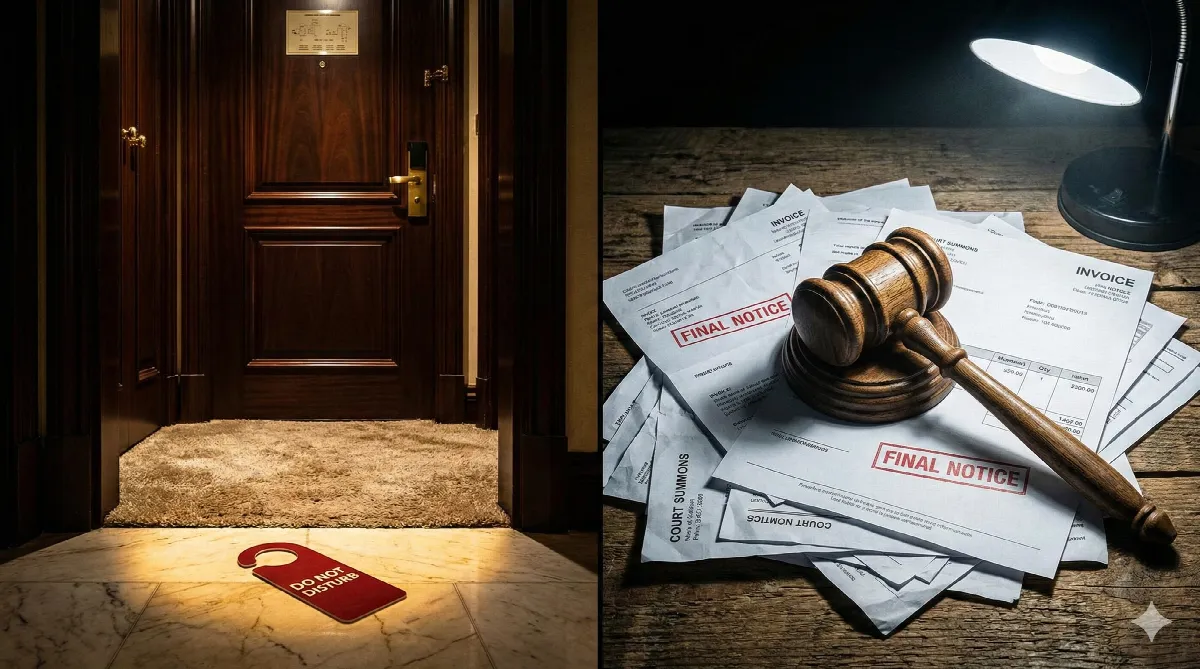
A recent court ruling clarifies the thin line between a resident and a guest. If you live in a hotel, you do not have the same rights as a tenant.
For many Dubai residents, long-term hotel living is an attractive alternative to traditional renting. It offers all-inclusive bills, housekeeping, and flexibility without the need for cheques or Ejari contracts.
However, a significant judgment from the Dubai Civil Court has highlighted the severe risks involved. A family of six, who had been living in a hotel room for two years, has been ordered to vacate and pay over Dh155,000 in outstanding dues, shattering the assumption that long-term occupancy grants you tenancy rights.
The Case: “We Are Tenants, Not Guests”
The dispute involved an Arab family—a couple and their four children—who checked into a Dubai hotel in 2023. Over the course of two years, they accumulated a bill exceeding Dh275,000. While they made partial payments, a massive balance remained unpaid.
When the hotel management filed a lawsuit for eviction and payment, the family attempted a bold legal defense. They argued that due to the length of their stay (2 years), their arrangement resembled a residential lease.
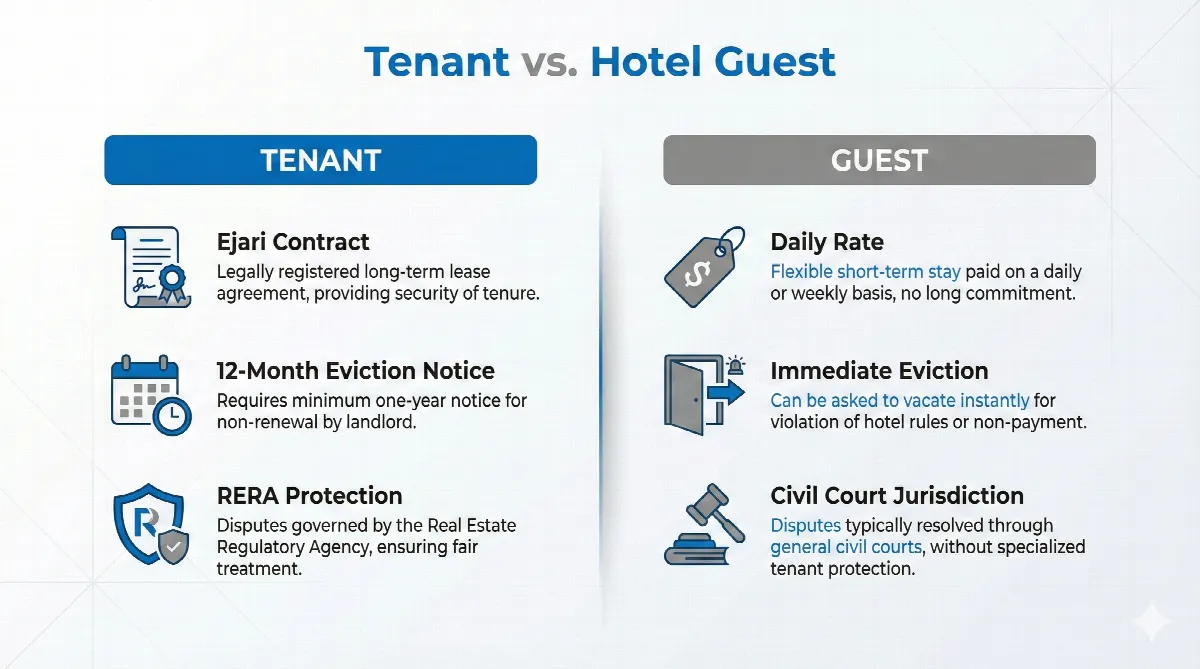
They claimed the dispute should be handled by the Rental Disputes Center (RDC)—the body that protects tenants and typically requires landlords to give 12 months’ notice for eviction.
The Verdict: No Ejari, No Protection
The Dubai Civil Court firmly rejected the family’s argument.
The court ruled that the relationship was strictly a commercial hotel accommodation arrangement, not a residential lease. The key factors in the decision were:
- No Tenancy Contract: There was no signed tenancy agreement.
- No Ejari: The tenancy was not registered with the Dubai Land Department.
- No Utility Bills: The family did not pay DEWA directly (a hallmark of a standard lease).
Because of this, the family was not entitled to the protections of Dubai’s Rental Law. They were simply guests who hadn’t paid their bill.
The Financial Consequence
The court-appointed expert calculated the arrears based on seasonal room rates. The judgment was severe:
- Outstanding Dues: Dh155,837 (as of October 1, 2025).
- Daily Penalty: Dh375 per day for every day they remain in the room past October 2.
- Interest: 5% legal interest on the debt until fully paid.
- Eviction: Immediate order to vacate and return the room in its original condition.
Why This Matters for You
If you are one of the thousands of expats living in “Long-Term Hotel Apartments” in Dubai, this ruling is a crucial wake-up call.
1. You Can Be Evicted Quickly
Unlike a standard tenant, who often requires a 30-day notice for non-payment eviction (and a court order from the RDC), a hotel can move much faster through Civil Courts or even police intervention for theft of services if bills are unpaid.
2. Rates Are Not Capped
Standard tenants are protected by the RERA Rental Index, which caps rent increases upon renewal. Hotel guests are subject to seasonal rate fluctuations. If the hotel wants to double your rate for December, they generally can.
3. It Is a Civil Debt
Unpaid hotel bills are treated as commercial debt. Failure to pay can lead to travel bans and civil legal action, exactly as seen in this case.
Key Takeaway
Duration does not equal rights. Staying in a hotel for 2 years does not magically turn you into a tenant. Without an Ejari contract, you remain a guest, subject to immediate eviction if you fail to pay.
Frequently Asked Questions (FAQ)
Q: Can I get an Ejari for a hotel apartment? A: Generally, no. Most hotel apartments operate under a lodging contract. However, some serviced apartments offered by developers (not hotels) can be rented on a standard lease with Ejari.
Q: Does the Rental Disputes Center handle hotel issues? A: No. The RDC handles disputes between landlords and tenants with valid leases. Disputes regarding hotel stays fall under the jurisdiction of the Civil Courts or consumer rights departments.
Q: Can a hotel lock me out if I don’t pay? A: Hotels have stricter rights than residential landlords regarding access, but they typically involve the police if a guest refuses to pay or leave. You do not have the same “quiet enjoyment” rights as a standard tenant.
Further Reading
The UAE week, every Monday
The week's stories on jobs, visas, money and daily life in one short email. Unsubscribe in one click.