Petrofac: Timeline of Dh30b Rise to Collapse & Layoffs 2025
Trace Petrofac’s journey from a FTSE 100 giant to administration. A complete timeline of scandals, debt, and the 2025 layoffs affecting UAE staff.
By Vadim Kouznetsov, published
By JobXDubai Team | November 24, 2025
Once a titan of the energy services world, Petrofac’s market value soared past GBP 6 billion (Dh27.5 billion). A fixture on the FTSE 100, it was the go-to contractor for major oil and gas projects across the Middle East.
Today, that legacy lies in ruins. A corruption scandal, mounting debt, and the loss of critical contracts have pushed the parent company into administration. In the UAE, the fallout is real, with hundreds of employees facing immediate termination and unpaid gratuity.
Here is the timeline of how a corporate giant unraveled.
2011 to 2017: Graft Amid Growth
During its peak, Petrofac dominated the MENA region, securing multi-billion dollar deals in Iraq, Saudi Arabia, and the UAE. To the outside world, it was a golden era of expansion.
However, court records would later reveal a darker truth. Executives were using agents to bribe officials to win these lucrative contracts. This “pay-to-play” model created a ticking time bomb of legal liability that would eventually explode.
Mid-2017: The SFO Probe Begins
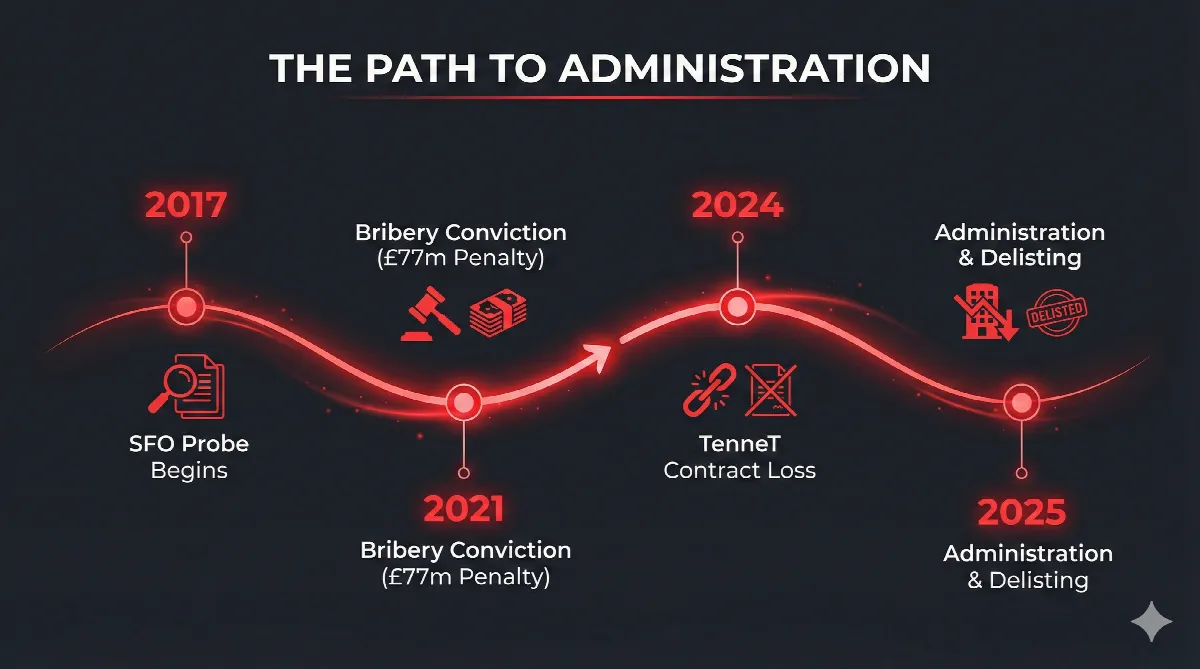
The turning point came in May 2017, when the UK Serious Fraud Office (SFO) opened a formal investigation into suspected bribery, corruption, and money laundering.
Almost immediately, the company’s reputation took a hit. Lenders became cautious, and state-owned clients—Petrofac’s bread and butter—began to distance themselves. This marked the beginning of a long, painful erosion of trust.
2019 to 2021: Conviction and Penalties
The investigation bore fruit when former executive David Lufkin pleaded guilty to 14 counts of bribery. His testimony was damning.
In October 2021, Petrofac admitted to seven counts of failing to prevent bribery. The consequences were severe:
- Penalties: The court imposed fines exceeding GBP 77 million (Dh370 million).
- The Verdict: The judge described the corruption as “systemic, serious and grave.”
- The Cost: Crucially, the conviction effectively shut Petrofac out of major bidding processes in key markets like the UAE and Saudi Arabia, cutting off its financial lifeline.
2022 to Mid-2025: Debt Crushes Recovery Efforts
Crippled by a lack of new business, Petrofac struggled under a massive $4 billion debt load. Management attempted a desperate restructuring plan, aiming to convert over $800 million of debt into equity.
While the High Court initially granted approval, the plan was overturned by the Court of Appeal in July 2025 after challenges from partners. This legal defeat left the company exposed to any operational shock—which arrived swiftly.
Late 2025: The Final Blow
Mid-October: The Dutch grid operator TenneT removed Petrofac from a massive 2GW offshore wind transmission project due to unmet contractual obligations. This deal represented over 80% of the Engineering and Construction division’s revenue. Losing it made recovery impossible.
Late October: Petrofac’s holding company filed for administration, and its shares were delisted from the London Stock Exchange.
November: The human cost became visible. In the UAE, termination notices were issued to roughly 200 employees tied to the TenneT project, sparking the current crisis over unpaid End-of-Service Benefits.
Key Takeaway
Petrofac’s collapse is a stark lesson in corporate governance. A business model built on illicit practices may deliver short-term growth, but it carries a long-term death sentence. For the employees left behind in the UAE, the focus now shifts from corporate history to the fight for their legal rights.
Further Reading:
The UAE week, every Monday
The week's stories on jobs, visas, money and daily life in one short email. Unsubscribe in one click.