UAE Loans: No Minimum Salary, But Will Banks Say Yes?
The UAE Central Bank has scrapped the Dh5,000 minimum salary rule for loans. Find out why banks might still say ‘no’ and what due diligence means for you.
By Vadim Kouznetsov, published

By JobXDubai Team | November 21, 2025
The UAE Central Bank has officially scrapped the long-standing rule that required borrowers to have a minimum salary of Dh5,000 to qualify for a personal loan. This regulatory shift is designed to widen access to credit for millions of low-income residents who were previously locked out of the formal banking system.
However, before you rush to your local branch, it is vital to understand that “eligible” does not mean “approved”.
Senior officials from the UAE Banks Federation (UBF) have clarified that while the door is open, the screening process will be stricter than ever.
The Official Stance: A Positive Step, But Not a Free-For-All
AbdulAziz Abdullah Al-Ghurair, Chairman of the UBF, described the move as a positive development for financial inclusion. It allows financial institutions the freedom to decide their own risk appetites rather than being constrained by a blanket regulatory limit.
“It is a very positive development. It’s to support financial inclusion. Let financial institutions decide what kind of lending they want to do.” — AbdulAziz Abdullah Al-Ghurair, Chairman of UBF
Despite this optimism, Al-Ghurair was clear on one point: not every member of the workforce will qualify for personal finance. The removal of the salary floor does not remove the need for banks to protect their assets.
The Risk Factor: Why Banks Might Still Say “No”
When asked if the entire workforce would now be eligible for loans, the UBF chief’s answer was a definitive “No.”
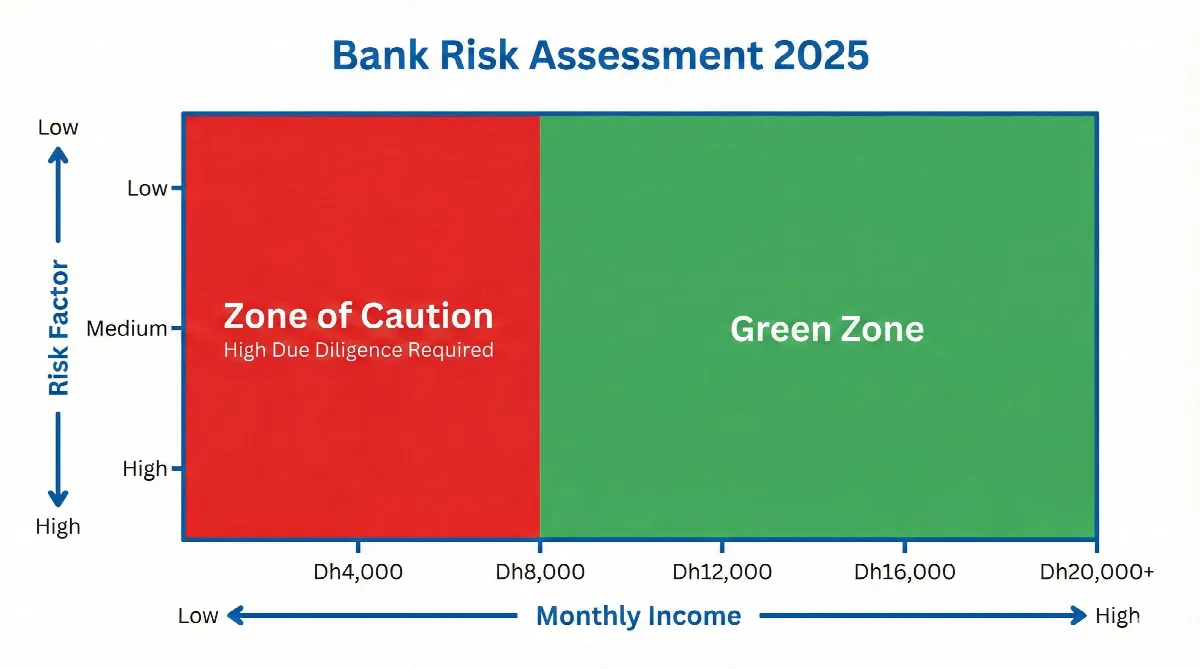
The primary concern is risk. Blue-collar roles and lower-income jobs often come with higher volatility. A driver earning Dh3,000 or a farmer earning Dh2,000 faces different financial pressures than a corporate manager.
“The lower you go, (the higher the risk). These jobs are volatile and risky, and people lose their jobs. If we are giving a loan to a farmer who gets Dh2,000, if he loses his job, what do I do?” — AbdulAziz Abdullah Al-Ghurair
Consequently, applicants in lower salary brackets should expect banks to perform intense due diligence. Lenders will likely look at:
- Job Stability: How long have you been with your current employer?
- Company Reputation: Is your employer financially stable?
- Spending Habits: Do you have any existing liabilities?
Financial Inclusion: The Bigger Picture
Despite the caution, this is a massive opportunity for the banking sector to tap into the “unbanked” market.
Mohammad Kamran Wajid, Deputy CEO of Emirates Islamic, noted that this decision allows banks to engage with a demographic that is regulatory compliant but was previously ignored.
“More people will become bankable. From banks’ perspective, the risk gets diversified even more because banks will have a wider population to bank with.” — Mohammad Kamran Wajid
By bringing these residents into the formal banking system, the UAE hopes to reduce reliance on informal lenders and provide safer credit options, provided the borrower can prove their ability to repay.
What This Means for You
If you earn less than Dh5,000, you are no longer automatically disqualified from getting a loan. However, you must present a strong case to the bank.
How to improve your chances:
- Maintain a Clean Record: Pay your utility and mobile bills on time.
- Employment History: Staying with one employer for a longer period shows stability.
- Start Small: Apply for smaller amounts that are easily manageable within your monthly budget.
For a deeper look at how salaries are structured in the region, read our Minimum Wage in UAE Guide 2025.
FAQ: New Loan Eligibility
1. Is the Dh5,000 minimum salary rule completely gone? Yes, the Central Bank has removed this mandatory requirement. However, individual banks may still set their own internal minimums based on their risk policies.
2. Can I get a loan if I earn Dh2,500? Legally, yes. But practically, it depends on the bank. You will face strict due diligence checks regarding your job stability and ability to repay.
3. Will interest rates be higher for low-income loans? Likely, yes. Banks typically charge higher interest rates on riskier loans to protect themselves against potential defaults.
4. Does this apply to all banks? The regulation allows all banks to lend below Dh5,000, but no bank is forced to do so. Some banks may choose to stick to higher income clients.
Key Takeaway
The scrapping of the Dh5,000 minimum salary rule is a major step towards financial inclusion, but it is not an automatic pass for a loan. Banks will exercise “more due diligence” and assess high-risk applicants strictly to prevent defaults.
Further Reading:
The UAE week, every Monday
The week's stories on jobs, visas, money and daily life in one short email. Unsubscribe in one click.