How to Get Freelance Licence in Dubai and Abu Dhabi 2025: Complete Cost and Process Guide
Complete guide to getting freelance licences in Dubai (AED 7,520) and Abu Dhabi (AED 5,285). Step-by-step process, requirements, and costs explained.
By Vadim Kouznetsov, published
Getting a freelance licence in the UAE lets you earn money from side projects, build your portfolio, or start a full-time self-employment career—but you need proper authorisation before accepting any paid work. The process and costs differ between Dubai and Abu Dhabi, with Dubai charging AED 7,520 and Abu Dhabi requiring approximately AED 5,285 in mandatory fees.
The UAE’s gig economy creates significant opportunities for professionals across industries, from fresh graduates building portfolios to experienced veterans seeking project-based work. Companies throughout the Emirates—from multinationals and local conglomerates to SMEs—regularly need freelance services for one-off projects or ongoing gigs.
Why You Need a Freelance Licence
Working without proper authorisation in the UAE violates employment law, even for occasional projects. The UAE work permit regulations require legal authorisation for all professional activities, including freelance work.
A freelance licence allows you to operate legally under your personal name rather than establishing a formal company structure. This provides several advantages over traditional employment or business setup:
Legal Protection: Your work is protected under UAE law, giving you recourse if clients fail to pay or disputes arise. Working without a licence leaves you vulnerable with no legal standing.
Professional Credibility: Licensed freelancers demonstrate legitimacy to potential clients. Many companies require proof of proper licensing before engaging freelance services.
Income Opportunities: Licensed status allows you to accept projects from multiple clients simultaneously. The freelance permit represents the only work authorisation individuals can apply for directly without employer sponsorship.
Residency Options: Freelance licences can provide visa sponsorship, giving you legal residency status in the UAE. This eliminates the need for employer-sponsored visas or tourist visa arrangements.
Dubai Freelance Licence: Process and Costs
The Dubai Development Authority oversees freelance licensing in the emirate. Applications can be completed online or through customer service centres, with processing typically taking two working days.
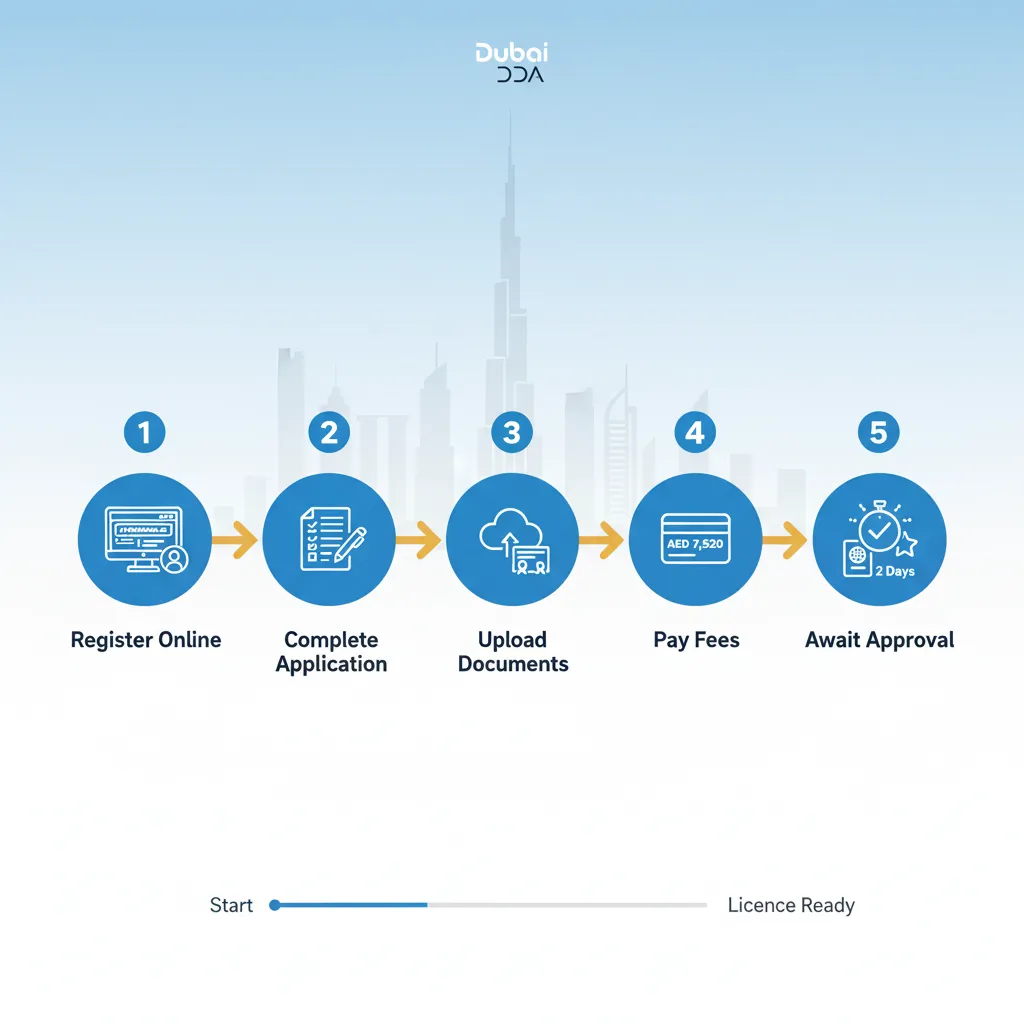
Cost Breakdown for Dubai
Total Cost: AED 7,520
- Permit fees: AED 7,500
- Knowledge Dirham: AED 10
- Innovation Dirham: AED 10
These fees cover the licence itself but don’t include optional services like visa processing or office space rental. The pricing reflects Dubai’s position as the UAE’s business hub, where freelancers can access the emirate’s extensive professional network.
Requirements for Dubai Application
Essential Documents:
- Valid passport copy with residence visa page (if applicable)
- Self-declaration form (downloadable from dda.gov.ae website for visa holders)
- No-objection certificate from authorities if your activity appears on the Licensing Categories Decision
The self-declaration form requirement applies only to applicants who currently hold valid UAE residence visas. This confirms you have permission from your current sponsor to engage in freelance activities.
Dubai Application Process
Step 1: Register Online Visit gofreelance.ae and click “Apply Now” or “Register” on the homepage. You’ll receive an email with a link to the axs portal (axs2.my.site.com/axslogin).
Step 2: Complete Application Log into the axs portal and select “Set up as a Freelancer” service. Fill out all required information fields accurately.
Step 3: Upload Documents Submit all required documentation including passport copies, visa pages, and any necessary certificates.
Step 4: Pay Fees Complete payment of AED 7,520 through the portal’s secure payment system. Most major credit cards and debit cards are accepted.
Step 5: Await Approval Processing takes approximately two working days. You’ll receive notification once your licence is approved and ready for collection.
The streamlined online process eliminates the need for multiple physical visits to government offices, making Dubai freelance licensing accessible to applicants across the emirate.
Abu Dhabi Freelance Licence: Process and Costs
Abu Dhabi permits freelancing across approximately 100 activities, including photography, design, gift-wrapping, gaming consultancy, and AI development. The Capital’s system operates through the Tamm platform.
Cost Breakdown for Abu Dhabi
Total Mandatory Fees: Approximately AED 5,285
- Ministry of Economy fees: AED 2,500
- Abu Dhabi Chamber fee: AED 50
- Additional AED 100 for each activity beyond 6 activities
- Commercial licence issuance: AED 10
- Organisational entities fee: AED 790
- Registration fee: AED 10
- Establishment card from Federal Authority for Identity and Citizenship: AED 315
- Social contributions: AED 1,500
The cost structure in Abu Dhabi includes social contributions and various administrative fees spread across multiple government entities. Additional charges apply if you select more than six professional activities.
Requirements for Abu Dhabi Application
Abu Dhabi maintains stricter qualification requirements than Dubai, emphasising documented experience or achievements in your chosen field.
Essential Documents:
- Attested certificate/academic qualification/record by issuing entity
- Experience certificates proving professional background
- No-objection certificate for foreign investors
- Professional certificates relevant to your field
These documentation requirements confirm legitimate professional expertise. Simple interest in a field isn’t sufficient—you must demonstrate actual qualifications or substantial experience.
Abu Dhabi Application Process
Step 1: Access Tamm Portal Visit tamm.abudhabi and navigate to the Services section. Select the “Business” tab from the main menu.
Step 2: Navigate to Licensing Choose “Start a Business” and click “Economic Licence” from the left-side menu. Select “Issue Economic Licence – Freelancer Licence” from the available options.
Step 3: Login with UAE Pass Authentication requires UAE Pass, the government’s unified digital identity system. If you don’t have UAE Pass, you’ll need to register before proceeding.
Step 4: Complete Application Follow the platform’s instructions to provide required information and upload all necessary documentation.
Step 5: Submit and Pay Review all information for accuracy before submitting. Complete payment through the Tamm platform’s secure payment gateway.
Step 6: Await Processing Abu Dhabi processing takes approximately 10 working days according to official Tamm platform timelines. This longer processing period reflects the additional verification of qualifications and experience.
Comparing Dubai vs Abu Dhabi Options
The choice between Dubai and Abu Dhabi freelance licences depends on several factors beyond just cost differences.
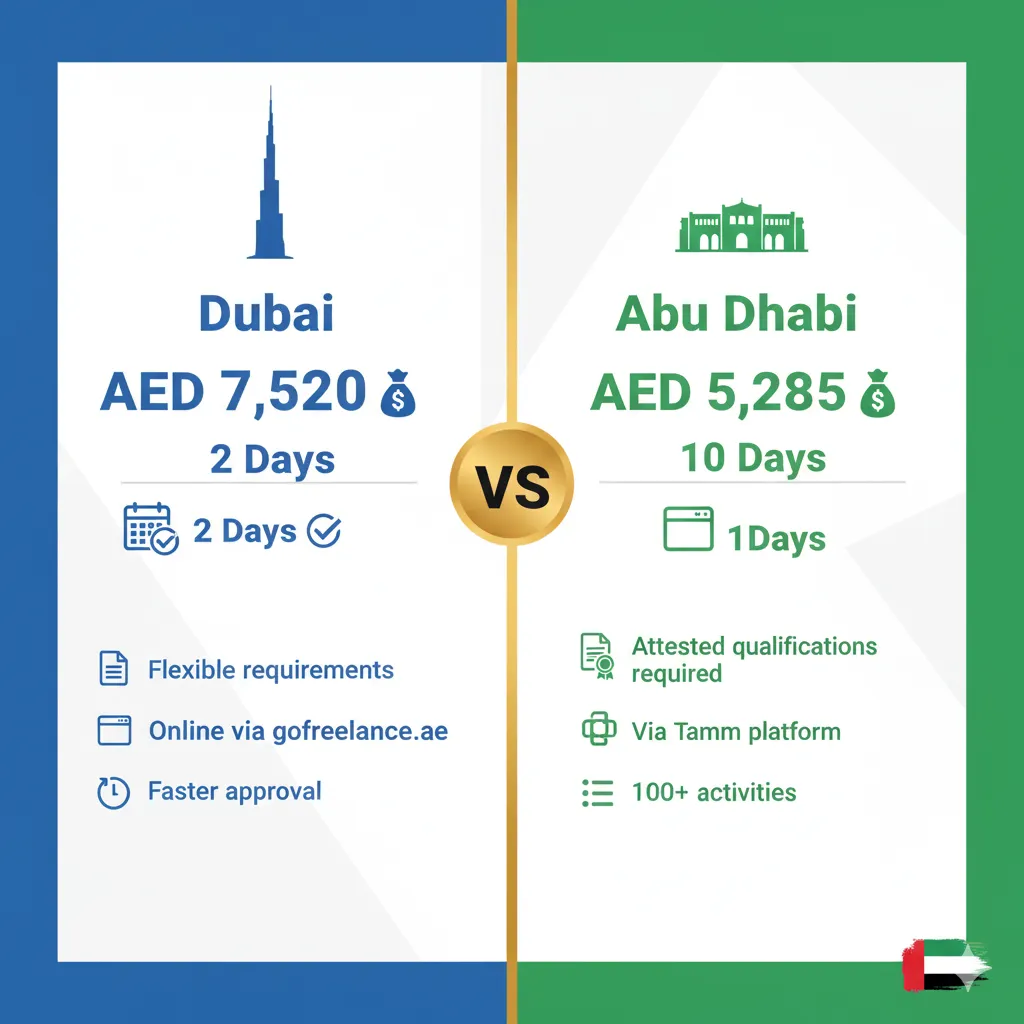
Cost Comparison: Dubai charges AED 7,520 compared to Abu Dhabi’s base cost of approximately AED 5,285. However, Abu Dhabi’s fees increase with additional activities beyond the initial six.
Processing Time: Dubai offers faster processing at two working days versus Abu Dhabi’s 10 working days. If you need quick turnaround, Dubai provides significant advantages.
Qualification Requirements: Dubai generally maintains more flexible qualification standards. Abu Dhabi requires documented experience certificates and attested qualifications, which may prove challenging for professionals without formal credentials.
Activity Scope: Abu Dhabi explicitly lists approximately 100 permitted activities. Dubai’s system offers broader flexibility, though certain activities still require special approvals.
Business Environment: Dubai’s status as the region’s commercial hub provides access to larger client bases and more extensive professional networks. Abu Dhabi offers advantages for government-related projects and Capital-based opportunities.
For professionals already working in either emirate, choosing your current location simplifies the process by eliminating travel requirements and leveraging existing networks.
Free Zone Alternatives
Beyond mainstream Dubai and Abu Dhabi options, several UAE free zones offer freelance packages under AED 10,000. These alternatives provide compelling benefits for specific professional categories.
DMCC Freelance Packages: Dubai Multi Commodities Centre offers three distinct freelance packages starting under AED 10,000. DMCC particularly suits professionals in precious metals, crypto, and trading sectors.
Expo City Dubai: The Expo City Dubai facility processes freelance permits in just three working days—faster than standard Dubai licensing. Access to 90+ professional activities includes social media marketing, fashion design, choreography, and makeup artistry.
Ajman NuVentures: The newest UAE free zone offers 15-minute business licences and 48-hour visa processing. Competitive pricing and digital processes attract startups and individual professionals.
Sharjah Publishing City: Specialises in creative and media professionals including writers, designers, photographers, and content creators. The niche focus provides targeted services for creative industries.
Free zone options often include visa processing, office facilities, and additional support services in their packages. Compare total costs including all services you’ll actually use before making decisions.
Activities Permitted Under Freelance Licences
Freelance licences cover a broad range of professional services, though specific permitted activities vary by issuing authority.
Creative Services: Photography, graphic design, content writing, video production, animation, illustration, and creative direction all qualify for freelance licensing. The UAE’s growing creative economy creates strong demand for these services.
Professional Services: Consulting, business advisory, marketing strategy, project management, and training services represent high-demand freelance categories. These activities suit experienced professionals offering specialised expertise.
Technical Services: Software development, web design, IT consulting, cybersecurity consulting, and technical writing attract strong demand in Dubai’s tech sector. The emirate’s digital transformation creates ongoing opportunities.
Specialised Services: Gift-wrapping, gaming consultancy, AI development, fitness training, translation services, and event planning fall under permitted activities depending on your licensing authority.
Activities requiring specific professional licences—such as medical services, legal services, or engineering—cannot be performed under standard freelance licences. These require additional authorisation from relevant professional bodies.
NOC Requirements for Employed Professionals
Current employees considering freelance work must understand NOC (No Objection Certificate) requirements. UAE labour law addresses this situation explicitly.
Under Federal Decree Law No. 33 of 2021, employees can establish businesses or become partners provided their employer issues an NOC. The certificate confirms your employer has no objection to your freelance activities.
When NOC is Critical: If your freelance work operates in similar sectors to your employment, obtaining NOC becomes particularly important. This prevents potential conflicts of interest or non-compete clause violations.
NOC Application Process: Submit a formal written request to your employer’s HR department. Include details about your proposed freelance activities, target market, and how you’ll manage time commitments.
Employer Considerations: Employers evaluate whether freelance activities could conflict with employment responsibilities, compete with company business, or compromise confidential information.
Alternatives if NOC Denied: Consider freelancing in completely different industries from your employment. Alternatively, wait until you change employers or focus on building freelance businesses after working hours without formal licensing until you can transition fully.
Some employers proactively support employee freelance activities, viewing them as professional development opportunities. Others maintain strict policies against side businesses.
Common Mistakes to Avoid
Several frequent errors complicate or delay freelance licence applications. Understanding these pitfalls helps applicants navigate the process smoothly.
Incomplete Documentation: Failing to provide all required documents causes processing delays. Double-check requirements lists and prepare everything before starting applications.
Wrong Emirate Selection: Applying in an emirate where you don’t actually work or reside creates complications. Choose the emirate matching your current situation or target market.
Unclear Activity Selection: Vague descriptions of professional activities lead to rejection or requests for clarification. Be specific about services you’ll provide.
Ignoring NOC Requirements: Current employees must address NOC requirements upfront. Discovering NOC needs mid-application causes frustrating delays.
Underestimating Costs: Budget only for licence fees without accounting for additional expenses like visa processing, office requirements, or professional insurance creates financial surprises.
Rushing Quality Applications: Submitting applications with errors or inconsistencies wastes time. Invest effort in accurate, complete initial submissions.
Missing Follow-Up: After submission, monitor application status regularly. Respond promptly to any authority requests for additional information or clarification.
What Happens After Licence Approval
Receiving your freelance licence is just the beginning. Several post-approval steps complete your setup.
Visa Processing: If you selected visa options with your licence, complete medical examinations and Emirates ID applications. Processing times vary by emirate and chosen visa type.
Banking Setup: Open a business bank account using your freelance licence. UAE banks require commercial accounts for business transactions separate from personal banking.
Accounting Systems: Establish bookkeeping systems tracking income and expenses. Proper financial records support tax compliance and business growth planning.
Professional Insurance: Consider professional liability insurance protecting against client disputes or project issues. Many corporate clients require proof of insurance before engaging freelancers.
Client Contracts: Develop standard contract templates covering project scope, payment terms, intellectual property rights, and dispute resolution procedures.
Marketing Materials: Create professional profiles showcasing your licensed status, services offered, and portfolio examples. Licensed credentials enhance credibility with potential clients.
Tax and Legal Obligations
Freelancers in the UAE must understand their tax and legal obligations, even with the country’s favourable tax environment.
Corporate Tax: UAE corporate tax applies to businesses exceeding AED 375,000 in annual revenue. Freelancers below this threshold currently face no corporate tax obligations, though monitoring changes remains important.
VAT Registration: Businesses with taxable supplies exceeding AED 375,000 annually must register for Value Added Tax. Voluntary registration is available for businesses above AED 187,500.
Contract Compliance: All client agreements must comply with UAE contract law. Written contracts protect both parties and provide recourse if disputes arise.
Record Keeping: Maintain comprehensive financial records for at least five years. These support tax compliance and provide documentation if authorities request verification.
Renewal Requirements: Freelance licences require annual renewal. Track expiry dates and initiate renewal processes before licences lapse to avoid gaps in legal authorisation.
Frequently Asked Questions
How long does it take to get a freelance licence in Dubai?
Dubai freelance licence processing takes approximately two working days after submitting a complete application through the gofreelance.ae portal. Abu Dhabi processing takes about 10 working days through the Tamm platform.
Can I get a freelance licence if I’m currently employed?
Yes, but you need a No Objection Certificate from your current employer under Federal Decree Law No. 33 of 2021. The NOC confirms your employer permits you to engage in freelance activities alongside your employment.
What’s the difference between Dubai and Abu Dhabi freelance licences?
Dubai charges AED 7,520 with two-day processing and more flexible qualification requirements. Abu Dhabi costs approximately AED 5,285 with 10-day processing and requires attested qualifications plus experience certificates.
Do freelance licences include visa sponsorship?
Freelance licences can include visa sponsorship as an optional service, though this increases total costs. Check with your chosen licensing authority about visa packages and additional fees required for residency permits.
Can I work for multiple clients with a freelance licence?
Yes, freelance licences specifically allow you to serve multiple clients simultaneously. This distinguishes freelance permits from standard employment arrangements restricted to single employers.
What activities are not permitted under freelance licences?
Activities requiring specific professional licences—such as medical practice, legal services, or engineering work—cannot be performed under standard freelance licences. These require additional authorisation from relevant regulatory bodies.
How much does it cost to renew a freelance licence?
Renewal costs typically match initial licensing fees, though some authorities offer discounts for returning freelancers. Budget the same amounts as initial applications when planning annual renewals.
Can I convert my freelance licence to a full company later?
Yes, successful freelancers often upgrade to formal company structures as their businesses grow. The freelance licence provides a low-risk entry point for testing business viability before committing to full company setup.
What happens if I work without a freelance licence?
Working without proper authorisation violates UAE employment law and can result in fines, deportation, and bans from re-entering the country. Both you and clients engaging your services face potential penalties.
Are there cheaper alternatives to Dubai and Abu Dhabi licences?
Yes, several free zones offer freelance packages under AED 10,000, including DMCC, Expo City Dubai, and Sharjah Publishing City. Compare total costs including all services you need before deciding.
Key Takeaway
Dubai freelance licences cost AED 7,520 with two-day processing through gofreelance.ae, whilst Abu Dhabi licences cost approximately AED 5,285 with 10-day processing via the Tamm platform. Both permit legal freelance work across numerous professional activities, with Dubai offering faster processing and more flexible requirements, whilst Abu Dhabi requires documented qualifications and experience certificates but charges lower base fees.
Further Reading
- UAE Free Zone Freelance Visas Now Under Dh10,000 | Complete Guide 2024
- Dubai Freelance Permit in 3 Days: Complete Guide to Expo City Dubai Permits
- What are the 13 different UAE work permit types for maximum employment flexibility?
- UAE Law: Can Employees Start Business While Employed? NOC Requirements
- UAE Free Zone Business Setup: 6 Easy Steps to Success
- Work in the United Arab Emirates (UAE): Complete Guide to Finding Jobs in 2025
The UAE week, every Monday
The week's stories on jobs, visas, money and daily life in one short email. Unsubscribe in one click.