Middle East Needs 10,300+ Pilots by 2030: UAE Career Boom
Middle East faces severe pilot shortage by 2030 with 10,300+ vacancies. UAE airlines offer tax-free salaries, training programmes, and career growth.
By Vadim Kouznetsov, published

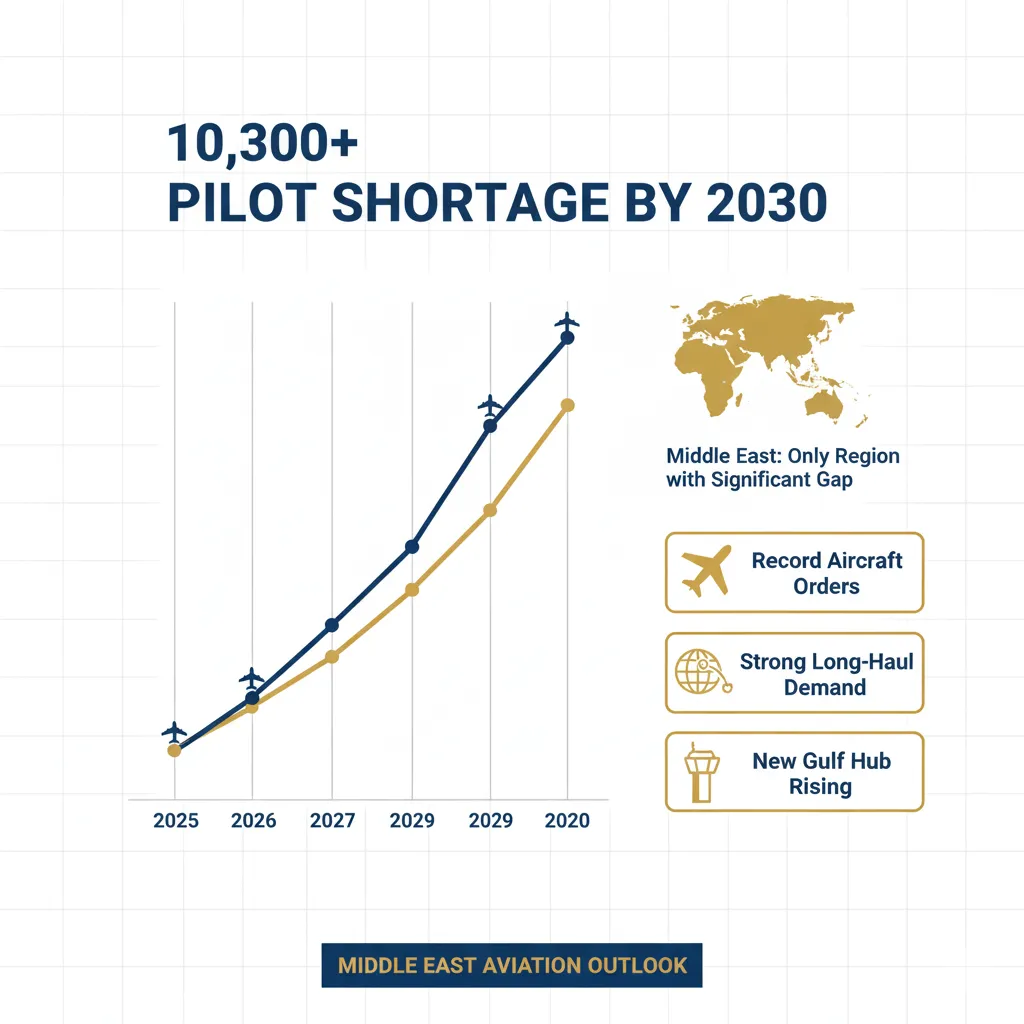
The Middle East will face a shortage of 10,300+ pilots by 2030, according to Oliver Wyman’s latest analysis. This makes the region the only global market where pilot demand significantly outpaces supply.
Unlike North America and Europe—where availability has begun to stabilise—Gulf carriers continue aggressive fleet expansion without adequate flight crew to match. The shortfall stems from record aircraft orders, expanding long-haul networks, and the emergence of new aviation hubs across the region.
Why Is the Middle East Different?
Global aviation is split into distinct regional markets when it comes to pilot availability. Whilst Western markets have balanced their supply-demand equation, the Middle East remains on a steep hiring trajectory through the decade.
The numbers tell a clear story. Regional airlines have placed massive aircraft orders that demand qualified commanders and first officers. Emirates alone plans to hire 1,500 pilots by 2027, whilst flydubai expands its fleet by 12 aircraft in 2025.
This growth happens at a time when experienced pilots increasingly value quality of life over rapid career progression. Younger generations entering aviation prioritise schedule predictability and base stability rather than the traditional rush up the command ladder.
What’s Driving the Shortage?
Three primary factors fuel this talent gap:
Fleet Expansion at Scale
Gulf carriers operate some of the world’s largest and newest fleets. These aircraft require type-rated pilots with wide-body experience, creating intense competition for qualified candidates.
Long-Haul Route Growth
Middle Eastern airlines built their business models on connecting continents. This strategy demands pilots comfortable with extended flight operations and international crew coordination.
New Hub Development
Beyond established airports in Dubai and Abu Dhabi, the region continues developing additional aviation centres. Each new hub requires its own complement of flight crew, instructors, and operational staff.
Flight crew costs are rising faster than airline revenues across the region. This financial pressure pushes carriers to adopt smarter workforce planning tools and accelerate investment in training technology.
How Airlines Are Responding
Regional carriers have begun implementing several strategies to address the pilot pipeline challenge.
Enhanced Training Infrastructure
Airlines are investing heavily in simulation technology, VR platforms, and AR training systems. These tools reduce training time whilst maintaining safety standards. UAE aviation sector salaries have already increased 8% annually to attract qualified professionals.
Overseas Recruitment Drives
Gulf airlines maintain their historical reliance on international talent. Tax-free compensation packages and opportunities to command wide-body aircraft attract pilots from markets with surplus capacity.
Flexible Work Arrangements
Part-time flying schedules, route-based assignments, and enhanced mentoring programmes now feature prominently in recruitment pitches. Airlines recognise that career satisfaction extends beyond salary figures.
What This Means for the UAE
The pilot shortage creates distinct opportunities across several dimensions of UAE aviation employment.

Pilot Training Demand Will Surge
Local academies in Dubai and Abu Dhabi should expect rising enrolments and longer waiting lists. Carriers want to build domestic pipelines rather than depend exclusively on overseas recruitment. flydubai’s Ab Initio programme exemplifies this shift, offering high school graduates direct pathways to Boeing 737 cockpits.
Scholarships and Cadet Pathways Set to Expand
Major carriers will likely introduce more structured funding support tied to post-training employment guarantees. These programmes benefit UAE nationals and long-term residents seeking aviation careers without upfront training costs.
Higher Compensation Floors and Lifestyle Incentives
Pilot pay in the region already ranks amongst the world’s highest. Emirates pilots earn between AED 31,840 and AED 98,750 monthly depending on position and experience. Competition for talent may push airlines to offer more predictable rosters and flexible contract terms beyond base salary.
Simulation and Tech-Driven Training Will Accelerate
VR, AR, and AI-based assessment tools will enter mainstream training programmes at UAE academies. These technologies shorten training cycles and widen the candidate funnel for future pilots.
More Hiring for New Airports and Fleets
Al Maktoum International Airport’s expansion creates sustained hiring cycles beyond 2030. The talent requirement extends past pilots to cover flight instructors, aircraft engineers, and aviation safety specialists.
Career Opportunities Beyond Flying
The pilot shortage impacts more than cockpit positions. Supporting roles across aviation training, operations, and safety will see increased demand.
Flight instructor positions will multiply as academies scale up training capacity. Simulation technicians who maintain and operate advanced training equipment become increasingly valuable. Aviation safety managers who design and implement crew resource management programmes will find expanded opportunities.
Dubai’s aviation sector expects to create 185,000 new jobs by 2030, with one in four jobs in the emirate connected to aviation. This growth spans ground operations, customer service, aircraft maintenance, and airline management.
Preparing for an Aviation Career
Aspiring pilots should understand the commitment required. Commercial aviation demands significant training investment, strict medical standards, and continuous skill development.
Most UAE carriers seek candidates with strong mathematics and physics backgrounds. Etihad Airways, for instance, operates comprehensive assessment programmes evaluating technical knowledge, situational awareness, and interpersonal skills.
The financial commitment varies. Whilst some programmes like flydubai’s Ab Initio cover training costs, they typically include service bonds. Independent pilot training can cost upwards of $100,000, making cadet programmes an attractive alternative for many candidates.
FAQ: Middle East Pilot Shortage
How many pilots does the Middle East need by 2030?
The region will require 10,300+ additional pilots by 2030 to meet fleet expansion and route growth demands, according to Oliver Wyman analysis.
Why is the Middle East the only region with a pilot shortage?
Whilst North American and European markets have stabilised supply and demand, Middle Eastern carriers continue aggressive fleet growth and long-haul network expansion at rates that outpace pilot availability.
What starting salary can pilots expect in the UAE?
Entry-level Second Officers at carriers like flydubai earn approximately AED 22,465 monthly. First Officers at major airlines start around AED 31,840, whilst Captains can earn up to AED 98,750 monthly, all tax-free.
Do I need prior flying experience to become a pilot in the UAE?
No. Several UAE carriers offer Ab Initio programmes for candidates without flying experience. These comprehensive training pathways take candidates from zero flight hours through commercial pilot licensing.
How long does pilot training take in the UAE?
Ab Initio programmes typically span 18-24 months from start to commercial pilot licence. Additional type rating for specific aircraft adds several months. Total time from beginning training to first officer position averages 2-3 years.
Will AI replace pilots in the coming years?
Current aviation technology still requires human pilots for safety and decision-making. Whilst automation assists with routine operations, pilots remain essential for handling non-standard situations and providing overall flight management.
What are the medical requirements for UAE airline pilots?
Pilots must maintain a Class 1 Medical Certificate issued by aviation medical examiners. Requirements include good vision (correctable to 20/20), normal colour perception, cardiovascular health, and absence of conditions that could impair flight safety.
Can international pilots work in the UAE?
Yes. Gulf carriers actively recruit international pilots and provide visa sponsorship. Most pilots working for UAE airlines come from overseas markets, particularly India, Europe, and other Asian countries.
Further Reading
Explore these related articles about aviation careers and opportunities in the UAE:
The UAE week, every Monday
The week's stories on jobs, visas, money and daily life in one short email. Unsubscribe in one click.