Dubai Free Zone Mainland Permit: $1,361 Access to Onshore Market
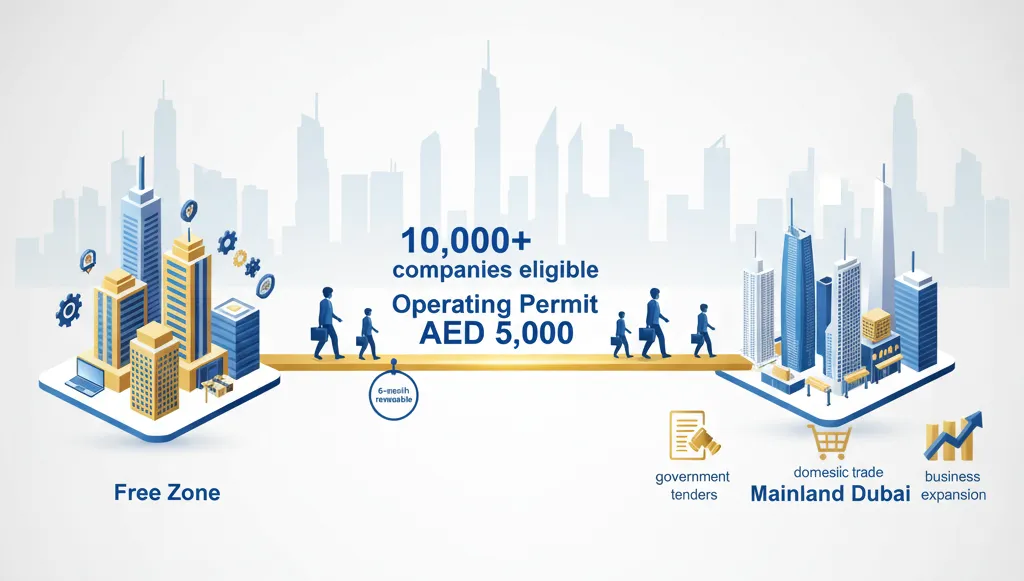
Dubai’s new AED5,000 permit allows 10,000+ free zone companies to operate mainland. Six-month renewable license opens domestic trade and government tenders.
By Vadim Kouznetsov, published

Dubai has introduced a transformative business framework that bridges the gap between free zone and mainland operations. The new Free Zone Mainland Operating Permit offers companies an affordable pathway to expand their market reach whilst maintaining their free zone status.
Understanding the New Permit Framework
The Dubai Business Registration and Licensing Corporation (DBLC), working alongside the Dubai Free Zone Council, launched this initiative to create structured access for free zone companies operating in Dubai’s mainland. The permit represents a significant shift in how businesses can navigate different jurisdictions within the emirate.
Free zone companies have traditionally operated with certain restrictions on domestic market access. This new framework removes those barriers through a straightforward permit system, opening opportunities in areas previously limited to mainland entities.
Ahmad Khalifa Al Qaizi Al Falasi, CEO of DBLC, emphasized that the initiative reflects Dubai’s commitment to regulatory modernization and creating a seamless investor journey. Simplifying cross-jurisdictional operations enhances business efficiency and opens new opportunities in trading and government tenders.
Who Can Apply and How
The permit is available to free zone companies holding a Dubai Unified Licence (DUL). More than 10,000 active free zone firms across Dubai’s various free zones qualify for this opportunity.
The application process operates entirely through digital channels via the Invest in Dubai platform. This streamlined approach eliminates paperwork and reduces processing time, aligning with Dubai’s broader digital transformation initiatives.
Companies can complete their applications online without visiting physical offices or navigating multiple government entities. The digital-first approach reflects Dubai’s focus on efficiency and convenience for business owners.
Permit Costs and Validity
The Free Zone Mainland Operating Permit costs AED5,000 ($1,361) for an initial six-month period. Companies can renew the permit for an additional six months at the same cost, providing a full year of mainland operating capability for AED10,000 total.
This pricing structure offers substantial value compared to establishing a separate mainland entity, which involves higher setup costs, additional licensing fees, and more complex administrative requirements.
The renewable six-month structure gives businesses flexibility to test mainland operations before committing to longer-term expansion strategies. Companies can evaluate market response and adjust their approach accordingly.
What the Permit Enables
The Free Zone Mainland Operating Permit unlocks several key business capabilities:
Domestic Trade Access: Companies can engage in onshore trading activities, selling products and services directly to mainland customers and businesses.
Government Tender Participation: Free zone firms can now bid for government contracts that were previously restricted to mainland entities, opening substantial new revenue opportunities.
Supply Chain Integration: Businesses can integrate more deeply with domestic supply chains, forming partnerships and distribution arrangements with mainland companies.
Market Expansion: The permit provides a low-risk method to expand operations without abandoning free zone benefits or establishing separate legal entities.
Companies operating under the permit must maintain separate financial records for mainland activities in accordance with Federal Tax Authority requirements. This ensures clear tracking of revenues subject to the nine per cent corporate tax on related income.
Tax Implications and Compliance
Free zone companies using the permit will pay nine per cent corporate tax on revenues generated through mainland operations. This tax applies specifically to income earned from activities conducted under the permit.
Companies need to implement proper financial record-keeping systems that distinguish between free zone and mainland revenues. The Federal Tax Authority requirements mandate this separation for accurate tax calculation and reporting.
Despite the tax obligation, the permit remains cost-effective when compared to full mainland establishment. The nine per cent rate is competitive, and the simplified structure reduces administrative overhead associated with maintaining multiple legal entities.
Staffing and Operations
One particularly beneficial aspect of the permit: existing staff can continue working under the same arrangement. Companies don’t need to hire new employees or transfer workers to different visa sponsorships for mainland activities.
This provision significantly reduces operational complexity and costs. Businesses can deploy their current workforce across both free zone and mainland operations as needed, maximizing resource efficiency.
The flexibility to use existing personnel makes the permit especially attractive for smaller companies and startups that need to manage costs carefully whilst expanding their market reach.
Eligible Business Activities
The initial phase of the permit covers non-regulated business activities, including:
- Technology services and solutions
- Consultancy and advisory services
- Design and creative services
- Professional services (legal, accounting, HR)
- Trading in permissible goods
Future phases may extend coverage to regulated sectors, though specific timelines have not been announced. The current scope already encompasses a wide range of business activities that represent significant opportunities for free zone companies.
Companies should verify their specific business activities fall within permitted categories before applying. The Invest in Dubai platform provides detailed information about eligible activities and any restrictions.
Economic Impact and Projections
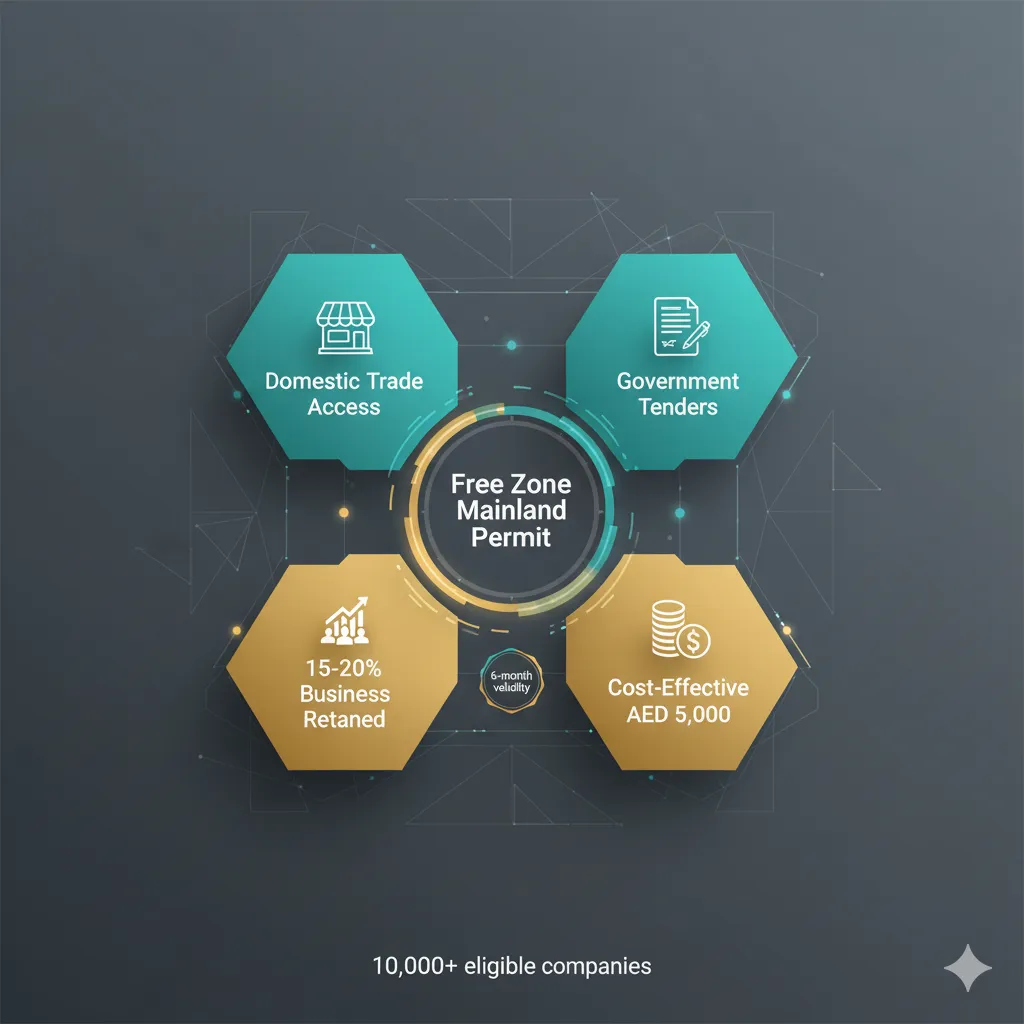
Dubai authorities expect the permit framework to boost cross-jurisdictional business activity by 15 to 20 per cent during its first year of operation. This projected growth reflects substantial pent-up demand from free zone companies seeking mainland access.
Dr Juma Al Matrooshi, Assistant Secretary-General at the Dubai Free Zones Council, noted the initiative strengthens Dubai’s business ecosystem and enhances its attractiveness to foreign investment. It complements competitive advantages offered by the city’s free zones whilst supporting expansion goals.
The initiative aligns with the Dubai Economic Agenda D33, which aims to double the emirate’s economy by 2033. By facilitating business growth and removing operational barriers, the permit contributes directly to this ambitious economic target.
Similar to opportunities for international professionals, this framework makes Dubai more accessible and attractive for business expansion.
Connection to Dubai Unified Licence
The Free Zone Mainland Operating Permit builds on the success of the Dubai Unified Licence (DUL) system. The DUL simplified business licensing by consolidating multiple approvals into a single process, and the new permit extends this streamlining philosophy to cross-jurisdictional operations.
Companies with a DUL can seamlessly add mainland operating capabilities through the permit, maintaining the advantages of unified licensing whilst accessing new markets. This integrated approach demonstrates how Dubai continues refining its business environment through connected initiatives.
The Department of Economy and Tourism’s wider strategy includes integrating services and streamlining regulation across the emirate. Each new initiative builds on previous improvements, creating a progressively more efficient business ecosystem.
Strategic Benefits for Different Business Types
Startups and Small Businesses: The low cost and flexible structure allow testing mainland markets without major financial commitment. Companies can validate business models and customer demand before investing in full mainland establishment.
Established Free Zone Companies: Mature businesses can expand their customer base and diversify revenue streams whilst maintaining operational efficiency within their existing organizational structure.
International Companies: Foreign businesses using Dubai free zones as regional hubs can now serve the local market more effectively, enhancing their UAE presence without complex restructuring.
Service Providers: Professional services firms gain access to a broader client base, including government entities that previously required mainland registration for engagement.
Comparing Free Zone vs Mainland Operations
The permit creates a middle ground between pure free zone operation and full mainland establishment:
Free Zone Only: Limited to free zone customers, international trade, and specific approved mainland activities. Lower costs, simpler setup, often 100% foreign ownership.
Mainland Only: Full domestic market access, government tender eligibility, broader activity scope. Higher costs, more complex licensing, may require local partnership in some cases.
Free Zone with Permit: Combines free zone benefits with mainland access. Moderate costs, maintained operational simplicity, tax on mainland revenues only. Ideal for companies wanting both markets.
Understanding these distinctions helps businesses make informed decisions about their operating structure. For many companies, the permit offers the optimal balance of benefits and costs.
Application Process and Timeline
Applying for the Free Zone Mainland Operating Permit involves several straightforward steps:
- Verify your company holds a valid Dubai Unified Licence
- Access the Invest in Dubai platform online
- Complete the digital application form
- Submit required documentation
- Pay the AED5,000 fee
- Receive permit approval and documentation
The digital process typically processes applications faster than traditional methods. Companies should allow adequate time for any required document verification, though the system is designed for efficiency.
Future Developments and Extensions
While the initial launch focuses on non-regulated activities, authorities have indicated plans to extend the framework to additional sectors. These future phases will likely respond to market demand and regulatory considerations specific to each industry.
The phased approach allows Dubai to refine the system based on real-world implementation experience before expanding to more complex regulated sectors. This measured rollout ensures the framework delivers intended benefits whilst maintaining appropriate oversight.
Companies in regulated industries should monitor announcements from DBLC and the Dubai Free Zone Council regarding permit expansion to their sectors.
Dubai’s Competitive Position
The Free Zone Mainland Operating Permit reinforces Dubai’s status as a leading global business hub. By offering flexible, cost-effective frameworks that adapt to business needs, the emirate maintains its competitive edge in attracting international investment and entrepreneurship.
This initiative demonstrates how regulatory innovation can create value for businesses whilst supporting government economic objectives. Dubai continues setting global benchmarks for transparency, efficiency, and competitiveness in business regulation.
For professionals considering working in Dubai or entrepreneurs evaluating expansion opportunities, the new permit framework adds another compelling reason to choose Dubai as a business base.
Frequently Asked Questions
What is the Free Zone Mainland Operating Permit?
The Free Zone Mainland Operating Permit is a new Dubai initiative allowing free zone companies to operate in the emirate’s mainland through a structured permit system, enabling domestic trade and government tender participation whilst maintaining free zone status.
How much does the permit cost?
The permit costs AED5,000 ($1,361) for six months and can be renewed for an additional six months at the same cost, totaling AED10,000 for a full year of mainland operating capability.
Who is eligible to apply?
Free zone companies holding a Dubai Unified Licence (DUL) are eligible to apply. More than 10,000 active free zone firms across Dubai qualify for this permit.
How do I apply for the permit?
Applications are submitted digitally through the Invest in Dubai platform. The entire process is online, eliminating the need for physical office visits or paper documentation.
What business activities does the permit cover?
The initial phase covers non-regulated activities including technology services, consultancy, design, professional services, and trading. Future phases may extend to regulated sectors.
Do I need to hire new staff for mainland operations?
No, existing staff can continue working under the same permit. Companies don’t need to hire new employees or transfer workers to different visa sponsorships for mainland activities.
What are the tax implications?
Companies will pay nine per cent corporate tax on revenues generated through mainland operations under the permit. Separate financial records must be maintained for these activities per Federal Tax Authority requirements.
Can I bid for government contracts with this permit?
Yes, the permit enables free zone companies to bid for government tenders that were previously restricted to mainland entities, opening new revenue opportunities.
How long is the permit valid?
The permit is valid for six months and renewable for an additional six months, providing up to one year of mainland operating capability before requiring renewal.
Will this affect my free zone benefits?
No, companies maintain their free zone status and associated benefits. The permit adds mainland capabilities without requiring you to abandon your free zone registration.
Further Reading
For more information about Dubai business opportunities and UAE employment:
- Jobs in Dubai for Foreigners: Your 2025 Guide to UAE Career Success
- Work in the United Arab Emirates (UAE): Complete Guide 2025
- UAE Golden Visa Guide 2024: Dh30,000 Salary Requirements & Application Steps
- The Complete Cost to Live in Dubai as an Expat in 2025
- UAE Online Business Guide: How to Get Digital Activity NOC in 2024
Stay updated with the latest Dubai business news and opportunities by following JobXDubai.
The UAE week, every Monday
The week's stories on jobs, visas, money and daily life in one short email. Unsubscribe in one click.