How to Spot Fake Job Offers in Dubai: Protection Guide 2025
Learn to identify fake job scams in Dubai with Dubai Police eCrime tips. Verify MOHRE offers, check company legitimacy & protect personal documents.
By Vadim Kouznetsov, published

Dubai Police’s eCrime platform warns that fake job scams target everyone from students to professionals, using sophisticated tactics including fake company websites, fraudulent documentation, and pressure tactics. These scams can result in financial loss, compromised personal documents, and emotional distress. Recognising warning signs and verifying opportunities through official channels like MOHRE are essential steps to protect yourself.
Dubai’s thriving job market attracts millions of hopeful candidates worldwide, but this popularity has created opportunities for scammers to exploit job seekers’ dreams and aspirations.
What Are Fake Job Scams and How Do They Work?
According to Dubai Police’s eCrime platform, fake job scams involve fraudsters pretending to offer legitimate employment whilst their real goal is stealing money or personal information. These criminals have become increasingly sophisticated in their approach.
Modern scammers employ several deceptive tactics:
- Create fake company names and convincing websites
- Impersonate well-known Dubai companies to build trust
- Use artificial intelligence to forge realistic documentation
- Apply psychological pressure for quick decisions
Once trust is established, scammers typically request payment for visa processing, training fees, or background checks. After receiving payment, the job offer disappears along with your money.
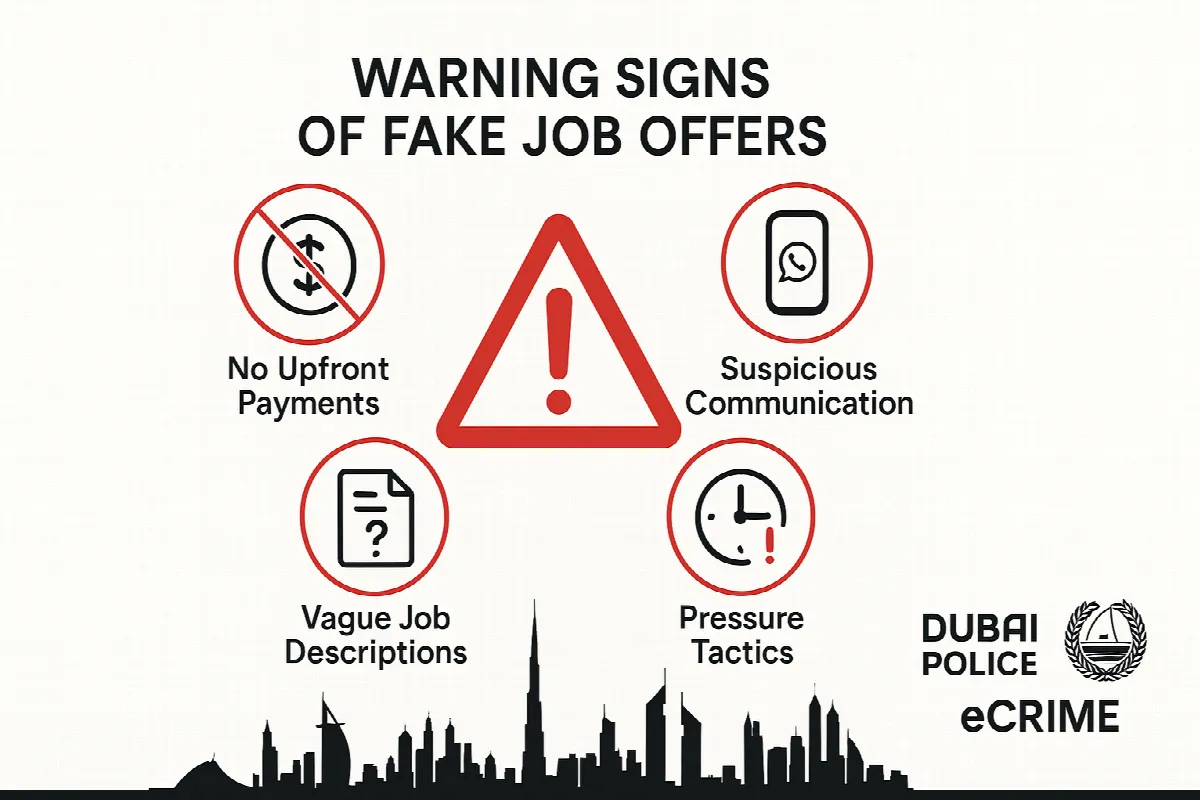
What Warning Signs Indicate a Fake Job Offer?
Dubai Police has identified key red flags that job seekers should recognise immediately:
Financial Red Flags
- Requests for upfront payments for visa processing, training, or background checks
- Unusually high salary offers compared to market rates
- Payment requests through informal channels instead of official banking systems
Communication Red Flags
- Exclusive communication through WhatsApp, Telegram, or free email services (legitimate companies use official channels)
- Personal email addresses instead of company domains
- Pressure to accept offers immediately without proper evaluation time
Process Red Flags
- Job offers without interviews or proper assessment procedures
- Requests for sensitive documents before offer confirmation
- Vague job descriptions or unrealistic requirements
Remember, genuine employers in Dubai never ask applicants for money upfront. All legitimate employment expenses are handled by the employer.
How Do You Verify a Legitimate UAE Job Offer?
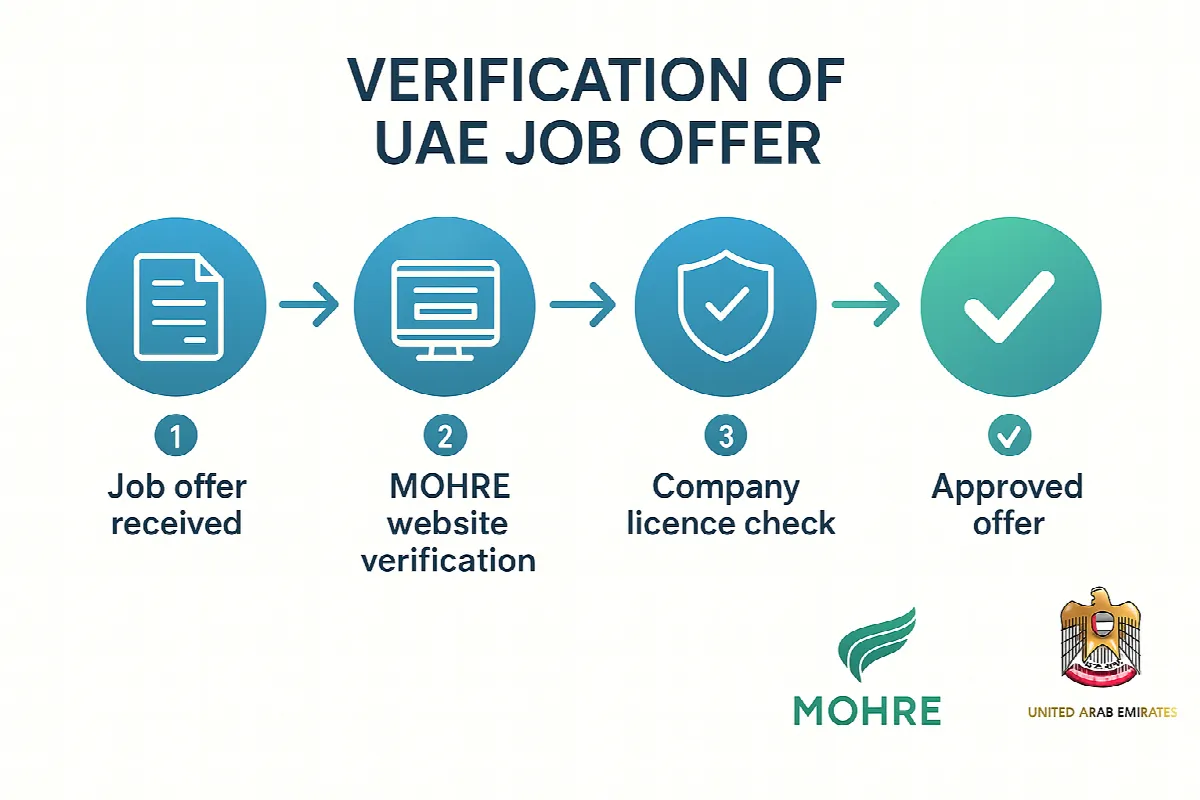
The UAE Ministry of Human Resources and Emiratisation (MOHRE) provides official verification channels for all job offers:
MOHRE Verification Process
- Visit the official MOHRE website at inquiry.mohre.gov.ae
- Enter your offer letter number in the verification system
- Check employer validity through the same platform
- Verify at UAE embassy in your home country for additional confirmation
All legitimate UAE job offers must be registered with MOHRE. If your offer doesn’t appear in their system, consider it suspicious.
Embassy Verification
Prospective employees can verify offer validity at UAE embassies in their home countries. Embassy officials cross-reference offers with MOHRE records, typically providing verification within 3-5 working days.
How Can You Check if a Company Is Legitimate?
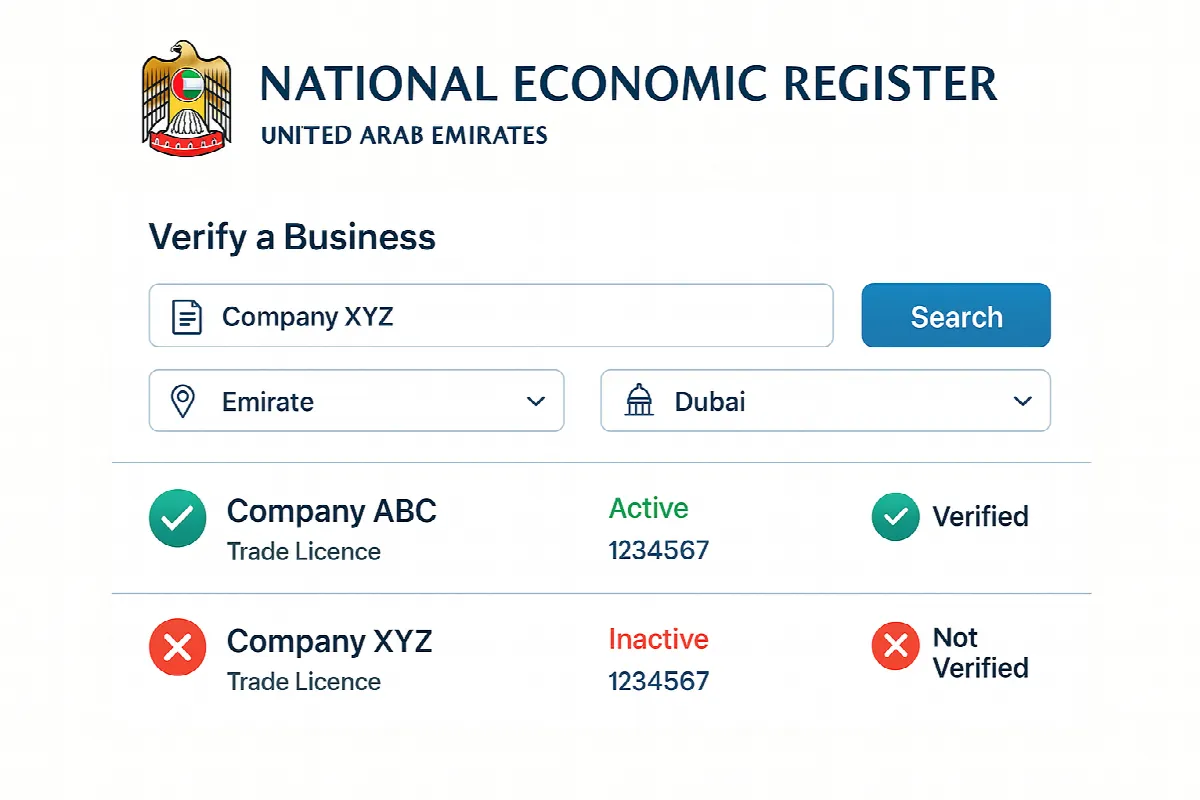
The National Economic Register (NER) provides instant verification of company legitimacy:
Company Verification Steps
- Access the NER platform online
- Select “Inquiry about economic licences”
- Enter the company name (English or Arabic)
- Select the emirate where the company operates
- Click Search to confirm active trade licence status
Any company operating in the UAE must hold a valid trade licence. The absence of verifiable licensing is an immediate disqualifier, regardless of how attractive the offer appears.
How Do You Verify UAE Entry Permits and Visas?
Entry permit verification depends on the issuing emirate:
Dubai-Issued Permits
- Visit GDRFA website at gdrfad.gov.ae/en
- Click “Visa Status” on the homepage
- Enter required details: file number, nationality, date of birth, first name
Other Emirates
- Use ICP Smart Services platform at smartservices.icp.gov.ae
- Navigate to “Public Services”
- Click “File Validity”
- Enter passport or file number and nationality
What Should You Do If You Encounter a Fake Job Scam?
Dubai Police’s eCrime Division provides clear guidance for handling suspicious offers:
Immediate Actions
- Never pay any fees for job applications or visa processing
- Verify company contact details through official websites
- Trust your instincts – if something feels suspicious, investigate further
- Avoid sharing personal documents until verification is complete
Reporting Procedures
If you suspect a fake job offer:
- Collect evidence including screenshots, emails, and payment requests
- Report immediately to Dubai Police’s eCrime Division at eCrime.ae
- Use the Dubai Police app to access the eCrime reporting section
- Do not engage further with suspected scammers
The Dubai Police app provides multiple reporting channels for cybercrime incidents, making it easy to report suspicious activity.
What Makes Job Seekers Vulnerable to Scams?
Several factors contribute to scam vulnerability:
Emotional Factors
- Desperation for employment can cloud judgment
- Financial pressure makes attractive offers seem more appealing
- Excitement about opportunities can override caution
Knowledge Gaps
- Unfamiliarity with UAE processes makes unofficial shortcuts seem legitimate
- Lack of awareness about official verification channels
- Trust in social media contacts without proper verification
Understanding these vulnerabilities helps job seekers maintain appropriate skepticism whilst pursuing legitimate opportunities.
Frequently Asked Questions
What information should legitimate Dubai employers never request upfront?
Genuine employers never request payment for visa processing, training fees, or background checks. They also don’t ask for original documents before formal job confirmation.
How long does MOHRE verification typically take?
MOHRE verification through their online platform is instant. Embassy verification usually takes 3-5 working days for cross-referencing with official records.
Can scammers create convincing fake company websites?
Yes, modern scammers use sophisticated techniques including AI to create realistic websites and documentation. Always verify companies through official government channels.
What should I do if I’ve already paid money to a suspected scammer?
Report the incident immediately to Dubai Police’s eCrime Division, document all evidence, and consider seeking legal advice for potential recovery options.
Are WhatsApp job offers always suspicious?
While legitimate companies sometimes use WhatsApp for initial contact, be cautious if it’s the only communication method. Professional companies typically use official email addresses and formal processes.
How can I stay updated about new scam tactics?
Follow Dubai Police’s official social media channels and regularly check the eCrime platform for updates on emerging fraud techniques.
Key Takeaway
Protecting yourself from Dubai job scams requires vigilance, verification, and knowledge of official channels. Always verify offers through MOHRE, check company legitimacy via the National Economic Register, and confirm entry permits through official government platforms. Never pay upfront fees for employment opportunities, and report suspicious activity to Dubai Police’s eCrime Division immediately. Remember: legitimate employers cover all visa and processing costs, communicate through official channels, and follow proper recruitment procedures.
Further Reading
The UAE week, every Monday
The week's stories on jobs, visas, money and daily life in one short email. Unsubscribe in one click.