UAE Education Job Scams: Schools Warn Against Fake Recruitment 2025
UAE schools and universities warn against fake job scams targeting educators. Learn how to verify legitimate teaching opportunities safely.
By Vadim Kouznetsov, published

Why are UAE schools warning about fake job advertisements before the new academic year?
UAE educational institutions are alerting job seekers about fraudulent recruitment scams targeting teaching and administrative positions as the new academic year begins. Scammers are using legitimate school names to steal personal information and solicit illegal payments from unsuspecting candidates.
Multiple schools and universities across the UAE have confirmed encountering fake job postings that misuse their institutional branding to deceive applicants into believing fraudulent offers are legitimate.
Which UAE educational institutions have been targeted by job scammers?
Several prominent educational institutions have reported being impersonated in fake recruitment campaigns:
Woodlem Education: The education group has encountered numerous fraudulent advertisements using their name without authorisation, prompting regular public alerts and preventive warnings.
Shining Star International School Abu Dhabi: Principal Abhilasha Singh confirmed encountering fake job postings on unauthorised websites designed to mislead job seekers.
BITS Pilani Dubai Campus: The university’s IT and HR teams actively monitor online platforms to identify unauthorised job postings and phishing attempts targeting their institutional reputation.
These institutions emphasise that legitimate recruitment only occurs through official channels, warning candidates against engaging with unofficial job offers.
How do scammers exploit UAE education job seekers?
Fraudulent recruitment schemes typically operate through several deceptive tactics:
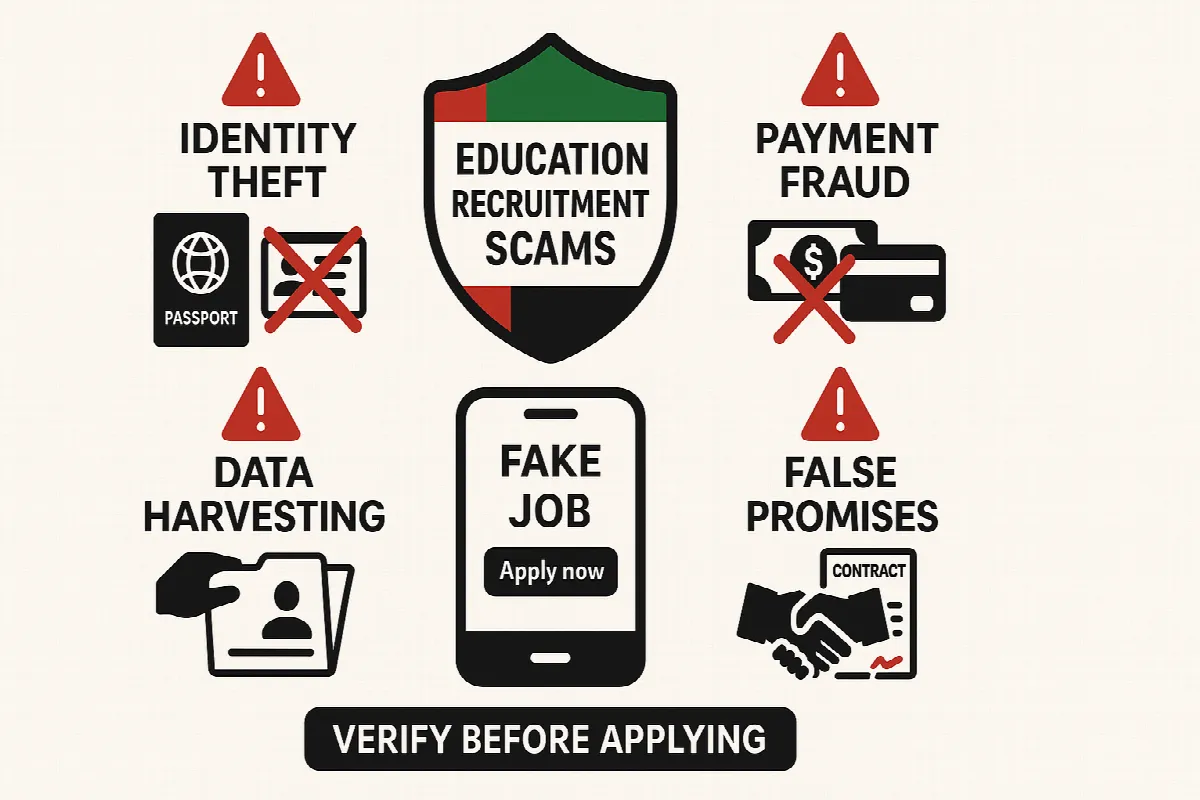
Identity theft: Scammers request personal documents including passports, Emirates ID, and educational certificates under the pretence of processing applications.
Payment fraud: Fake recruiters demand upfront fees for visa processing, application handling, or document verification that legitimate institutions never require.
Data harvesting: Criminals collect detailed personal and professional information to sell on black markets or use for identity fraud.
False promises: Scammers offer attractive packages and guaranteed employment to pressure candidates into quick decisions without proper verification.
Noufal Ahmed, Managing Director of Woodlem Education, explains: “We are aware of fraudulent job advertisements circulating online using Woodlem Education’s name without authorisation, aimed at misleading job seekers and, in some cases, extracting personal or financial information.”
What security measures are UAE schools implementing against job scams?
Educational institutions are adopting comprehensive anti-fraud strategies:
Official platform restrictions: Schools limit job postings to verified channels including institutional websites, Naukri Gulf, Indeed, and LinkedIn.
QR code verification: Institutions like Shining Star use QR codes directing applicants to official submission forms, creating secure application channels.
Regular monitoring: HR and IT teams conduct periodic checks across job sites to detect and report fake postings using their institutional names.
Staff training: HR teams receive regular training to recognise suspicious recruitment communications and follow proper escalation procedures.
Partnership verification: Schools work with legitimate recruitment companies like Surasa to maintain hiring process integrity.
How can job seekers verify legitimate UAE education sector opportunities?
Candidates should follow strict verification protocols before applying:
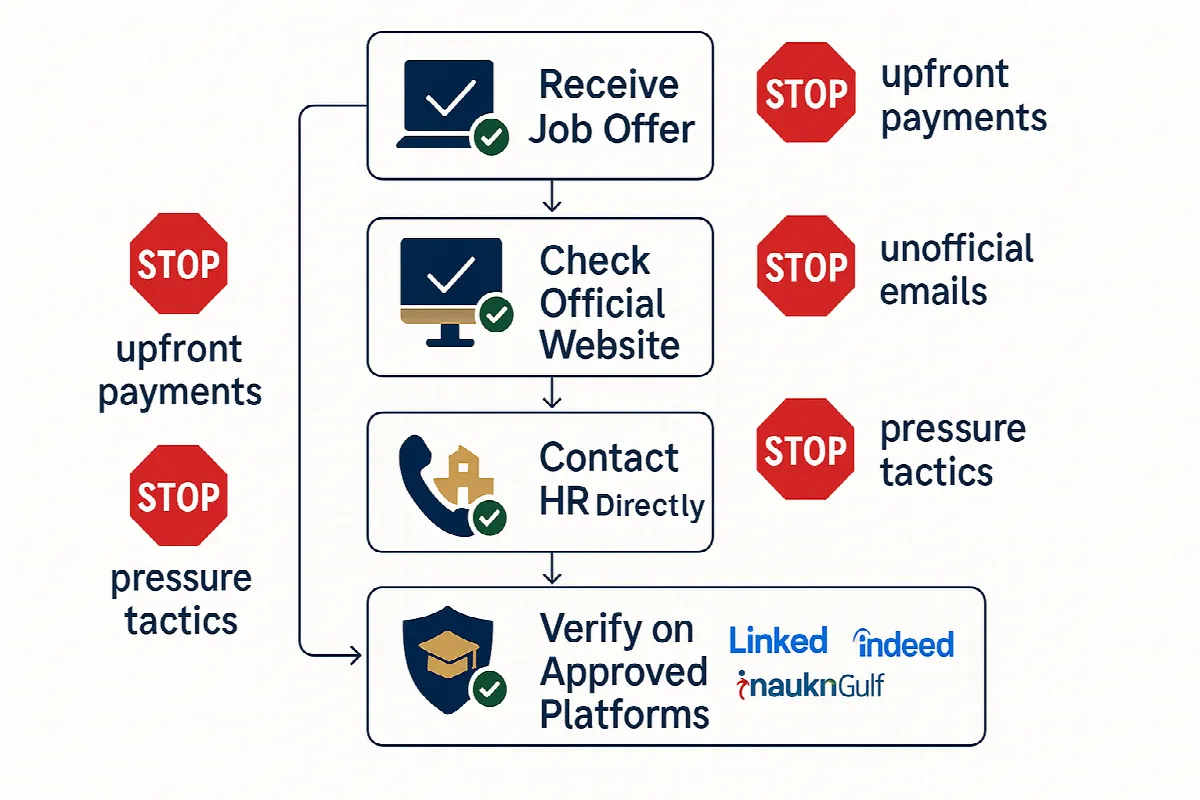
Official website confirmation: Check the institution’s official careers page to confirm job postings exist on legitimate platforms.
Direct contact verification: Contact the school’s HR department directly using published phone numbers or email addresses to verify recruitment communications.
Warning signs recognition: Be suspicious of unsolicited job offers, requests for upfront payments, or pressure for immediate responses.
Platform authentication: Apply only through verified job boards and official institutional channels, avoiding unknown websites or social media offers.
Abhilasha Singh from Shining Star International School emphasises: “For us, safeguarding the interests of job seekers and maintaining transparency in recruitment is a core priority, and we remain committed to upholding the highest standards of integrity in our hiring practices.”
What makes the academic year period particularly vulnerable to scams?
Several factors increase fraud risk during academic year preparation:
High demand: Increased recruitment activity creates opportunities for scammers to blend fraudulent offers with legitimate postings.
Time pressure: Schools’ urgent staffing needs may pressure candidates to act quickly without proper verification.
Volume surge: Higher application volumes make it harder for candidates to distinguish legitimate from fraudulent opportunities.
Seasonal workers: Many educators seek new positions annually, creating predictable target groups for scammers.
This timing allows fraudsters to exploit both institutional urgency and candidate desperation during peak hiring periods.
How do universities protect against sophisticated phishing attempts?
Higher education institutions implement advanced security measures:
Digital monitoring: Universities deploy automated systems to scan for unauthorised use of institutional branding across online platforms.
Official portal restrictions: All legitimate opportunities appear exclusively on verified recruitment portals with institutional authentication.
Social media verification: Universities maintain verified social media accounts with clear warnings about fraudulent communications.
Internal reporting systems: Staff follow established protocols to report and escalate potential fraud incidents promptly.
Saravana Kumar from BITS Pilani Dubai explains: “Our HR and digital teams actively monitor online platforms to identify unauthorised job postings and phishing attempts. They are trained to recognise suspicious recruitment communications and follow an internal process to report and escalate any potential fraud promptly.”
What should educators do if they encounter fake job offers?
Victims or potential victims should take immediate protective action:
Document evidence: Screenshot fraudulent advertisements and communications for reporting purposes.
Report to institutions: Contact the impersonated school directly to alert them about unauthorised use of their branding.
Platform reporting: Report fake postings to job boards, social media platforms, and relevant authorities.
Protect personal data: Avoid sharing sensitive information and monitor financial accounts for suspicious activity.
Warn colleagues: Share experiences with other educators to prevent additional victims within professional networks.
What legal protections exist against recruitment fraud in UAE?
The UAE legal framework provides several protective measures:
Cybercrime laws: Federal legislation criminalises online fraud, identity theft, and unauthorised use of institutional branding.
Labour law protections: UAE labour regulations prohibit charging job seekers fees for recruitment services or visa processing.
Consumer protection: UAE consumer rights frameworks protect individuals against fraudulent business practices and false advertising.
Reporting mechanisms: Government authorities provide channels for reporting cybercrime and recruitment fraud incidents.
Educational institutions work closely with authorities to prosecute fraudulent activities and protect the integrity of the employment market.
FAQ
How can I tell if a teaching job offer is legitimate? Verify through the school’s official website, contact HR directly using published contact details, and never pay upfront fees for job applications or processing.
What information should I never provide to online recruiters? Never share passport copies, Emirates ID, bank details, or pay any fees until you’ve verified the opportunity through official institutional channels.
Are recruitment agencies safe to use for education jobs? Yes, but only use established, licensed agencies with verifiable track records. Check if schools officially partner with specific recruitment companies.
What should I do if I’ve already shared information with a fake recruiter? Immediately contact your bank, monitor your accounts, report the incident to authorities, and alert the impersonated institution.
How long does legitimate school recruitment typically take? Genuine recruitment processes usually involve multiple stages over several weeks, including interviews, reference checks, and proper documentation – never instant offers.
Key Takeaway
UAE educational institutions are intensifying efforts to combat recruitment fraud as the new academic year approaches. Job seekers must verify all opportunities through official channels, avoid paying upfront fees, and remain vigilant against sophisticated scams targeting the education sector. When in doubt, always contact institutions directly using verified contact information.
Further Reading:
The UAE week, every Monday
The week's stories on jobs, visas, money and daily life in one short email. Unsubscribe in one click.