UAE Jobs 2025: 94% Employers Hiring Arabs, Indians, Filipinos Most
94% of UAE and GCC employers plan to hire in 2025. Arab, Indian, and Filipino professionals lead demand. Discover top jobs and hiring trends in Gulf.
By Vadim Kouznetsov, published

Which nationalities are most in demand for jobs in the UAE and GCC in 2025?
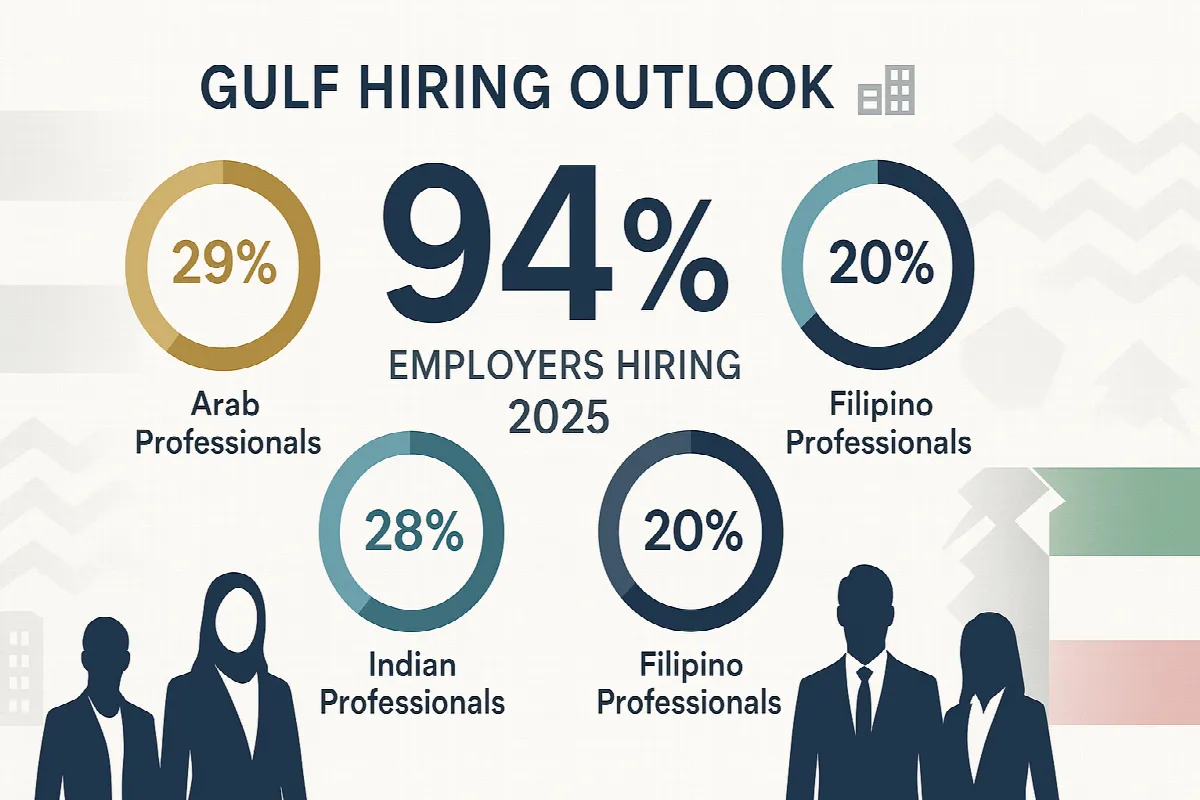
Arab, Indian, and Filipino professionals continue to dominate hiring demand across the UAE and Gulf region, with 94% of employers planning to recruit over the next six months. The latest NaukriGulf Hiring Outlook Report for 2025 reveals that 29% of employers prioritise Arab professionals, 28% seek Indian talent, and 20% target Filipino workers for upcoming positions.
This significant hiring surge reflects the Gulf’s position as one of the world’s fastest-growing economic regions, driven by both oil and diversified non-oil sectors. The recruitment landscape demonstrates the region’s continued reliance on international talent whilst creating substantial opportunities for skilled professionals globally.
What percentage of UAE and GCC employers are planning to hire in 2025?
An overwhelming 94% of employers across the UAE and GCC region plan to hire within the next six months of 2025, indicating exceptionally strong job market conditions. This represents sustained high hiring intentions, reflecting robust economic growth and business expansion across Gulf countries as they continue diversifying their economies.
The hiring activity breakdown shows 58% of employers recruiting for both new positions and staff replacements, whilst 32% focus specifically on newly created roles. Only 5% of surveyed companies reported no hiring plans, demonstrating the region’s economic vitality and growth trajectory.
Which job sectors are experiencing the highest demand in the Gulf region?
Top In-Demand Roles:
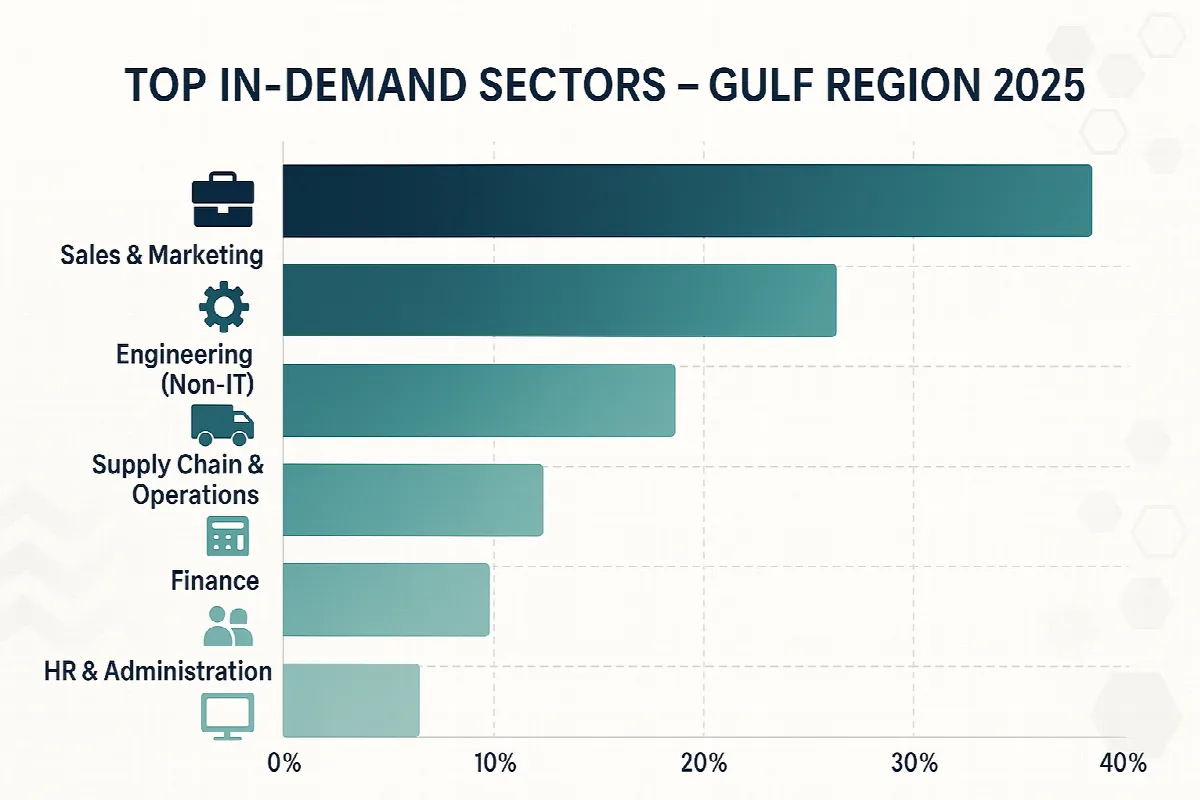
- Sales and marketing positions lead recruitment priorities
- Engineering roles (non-IT) show strong demand
- Supply chain and operations professionals sought after
- Finance specialists remain highly valued
- HR and administration roles continue growing
- IT and software development maintains steady demand
Leading Hiring Industries:
- Construction and real estate sector drives significant recruitment
- Staffing and recruitment agencies expand operations
- Manufacturing and industrial services grow workforce
- IT and telecommunications sector recruits actively
- Oil, gas, chemical and energy maintains hiring momentum
How does expatriate population impact UAE and GCC job markets?
The Gulf region’s job market heavily depends on international talent, with expatriates forming the majority of the workforce. In the UAE, approximately 85% of the population consists of foreign professionals, with Indians representing the largest group at 37% of the country’s 11 million residents.
Saudi Arabia, the region’s largest economy, hosts over 41% foreign workers and professionals. Other Gulf states including Bahrain, Qatar, Kuwait, and Oman similarly rely on expatriate expertise, with foreign workers comprising 55% of the total Gulf population according to Gulf Research Centre data.
What work arrangements do GCC employers prefer in 2025?
Nearly two-thirds (67%) of Gulf companies expect to hire for in-office or hybrid work arrangements in 2025, indicating employer preference for on-site collaboration over fully remote positions. This trend reflects the region’s adaptation to post-pandemic workplace evolution whilst maintaining traditional Gulf business culture emphasising face-to-face interaction.
The preference for physical presence aligns with traditional Gulf business practices whilst accommodating modern flexible work expectations through hybrid models. This approach balances operational efficiency with employee satisfaction in competitive talent markets.
Why are Arab, Indian, and Filipino professionals most sought after?
Arab Professionals (29% employer demand):
- Cultural alignment with regional business practices
- Arabic language proficiency advantages
- Understanding of local market dynamics
- Strong regional network connections
Indian Professionals (28% employer demand):
- Established presence and community support
- Diverse skill sets across multiple industries
- Cost-effective talent pool
- Proven track record in Gulf markets
Filipino Professionals (20% employer demand):
- High English proficiency levels
- Strong work ethic and adaptability
- Experience in service-oriented roles
- Cultural compatibility with international environments
How has the economic diversification period affected Gulf hiring trends in 2025?
The ongoing economic diversification initiatives across Gulf countries have triggered sustained professional migration to the UAE and broader region in 2025. New company establishments and multinational relocations continue creating employment opportunities, particularly benefiting foreign professionals seeking stable, tax-advantaged careers.
Saudi Arabia’s Vision 2030 programme maintains momentum in generating employment across traditional and emerging sectors. The Kingdom’s NEOM project and other mega-developments continue attracting international talent across construction, technology, and renewable energy sectors.
What makes the Gulf region attractive for international professionals?
Economic Advantages:
- Tax-free or low-tax income structures
- Competitive salary packages
- Comprehensive employment benefits
- Career advancement opportunities
Lifestyle Benefits:
- Modern infrastructure and facilities
- Multicultural working environments
- Strategic location connecting East and West
- High standard of living
Professional Growth:
- Exposure to diverse industries
- International business experience
- Networking opportunities
- Skills development programmes
Frequently Asked Questions
Which Gulf country offers the best job opportunities for expatriates? The UAE leads in job diversity and opportunities, whilst Saudi Arabia offers significant growth potential through Vision 2030 initiatives.
What qualifications are most valued by Gulf employers? Technical expertise, relevant experience, English proficiency, and cultural adaptability remain top priorities for employers.
How long does the typical job search take in the Gulf region? With 94% of employers actively hiring, qualified candidates often secure positions within 2-8 weeks depending on sector and seniority.
Are remote work opportunities available in the Gulf? Whilst 67% of employers prefer in-office or hybrid arrangements, remote opportunities exist primarily in IT, consulting, and digital marketing sectors.
What salary expectations should professionals have for Gulf positions? Salaries vary significantly by role, experience, and location, but typically offer tax-free compensation packages competitive with global markets.
Do Gulf employers sponsor work visas for international candidates? Most established companies provide visa sponsorship, accommodation allowances, and relocation support for qualified international professionals.
Key Takeaway
The Gulf region presents exceptional employment opportunities with 94% of employers actively recruiting across diverse sectors. Arab, Indian, and Filipino professionals lead demand, whilst the region’s multicultural business environment creates pathways for qualified international talent seeking career advancement in one of the world’s most dynamic economic zones.
Further Reading:
The UAE week, every Monday
The week's stories on jobs, visas, money and daily life in one short email. Unsubscribe in one click.