UAE Issues 630 Traffic Obstruction Fines 2024: Emergency Vehicle Laws
UAE issued 630 traffic obstruction fines in 2024. Learn emergency vehicle laws, Dh3,000 penalties, and six essential guidelines to avoid violations.
By Vadim Kouznetsov, published

Bottom Line: UAE authorities issued 630 fines for traffic obstruction at accident scenes in 2024, with Dubai recording the highest violations (411 cases). Failing to give way to emergency vehicles costs Dh3,000, 30-day vehicle impoundment, and 6 traffic points under strict new enforcement measures.
The UAE’s commitment to road safety has reached new heights with comprehensive enforcement against drivers who obstruct traffic during emergencies. Recent statistics from the Ministry of Interior reveal concerning patterns of driver behaviour that directly impact emergency response times and public safety.
2024 Traffic Obstruction Statistics Across UAE
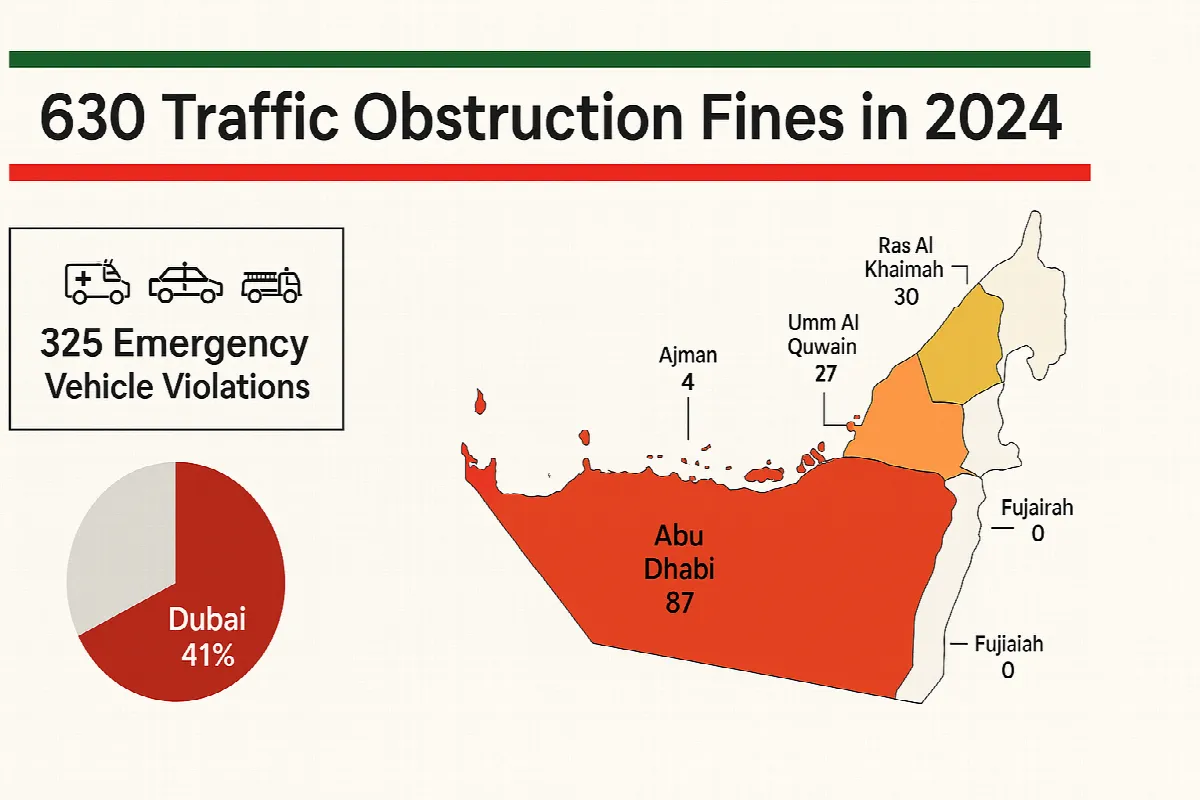
The Ministry of Interior’s official data shows significant enforcement activity throughout 2024, highlighting the prevalence of this dangerous behaviour across all seven emirates. Traffic departments issued a total of 630 violations specifically for obstructing traffic during road accidents.
Regional Breakdown of Violations
Dubai led the statistics with 411 violations, representing 65% of all cases nationwide. This high number reflects both Dubai’s dense traffic conditions and active enforcement policies. Abu Dhabi recorded 87 violations, whilst Sharjah documented 71 cases of traffic obstruction during accident scenes.
The smaller emirates also contributed to the statistics: Ras Al Khaimah recorded 30 violations, Umm Al Quwain reported 27 cases, and Ajman documented 4 violations. These numbers demonstrate that traffic obstruction occurs across all emirates, regardless of population density or traffic volume.
Understanding Emergency Vehicle Priority Laws
Beyond accident scene obstruction, authorities issued 325 additional violations for failing to give way to emergency, ambulance, police, or official convoy vehicles. This separate category addresses the broader issue of emergency vehicle access during critical situations.
The legal framework surrounding emergency vehicle priority is clear and uncompromising. According to UAE traffic law, giving way to emergency vehicles is not optional but represents a moral and humanitarian duty that can mean the difference between life and death.
Severe Penalties for Emergency Vehicle Obstruction
The consequences for failing to prioritise emergency vehicles are substantial. Violators face a Dh3,000 fine, 30-day vehicle impoundment, and 6 traffic points on their licence. These penalties reflect the serious nature of potentially delaying emergency response.
Abu Dhabi Police emphasise that “every second counts during emergencies,” and any delay caused by failing to yield can worsen situations, particularly in cases involving fires or critical medical emergencies. This messaging underscores the life-or-death implications of proper emergency vehicle protocol.
The Problem of Accident Scene Rubbernecking
Traffic departments receive numerous complaints from drivers and patrol officers about reckless behaviour at accident scenes. Many motorists slow down or stop out of curiosity to view damaged vehicles, creating dangerous traffic jams particularly on highways.
This rubbernecking behaviour creates cascading effects throughout the traffic system. When drivers reduce speed to observe accident scenes, they cause congestion that can extend for kilometres, affecting thousands of commuters and blocking emergency vehicles attempting to reach injured people.
Abu Dhabi Police describe this behaviour as uncivilised and a serious infringement on others’ rights. The practice becomes especially problematic on roads lacking designated shoulders for emergency vehicles, where every lane matters for maintaining traffic flow.
Six Essential Guidelines for Emergency Situations
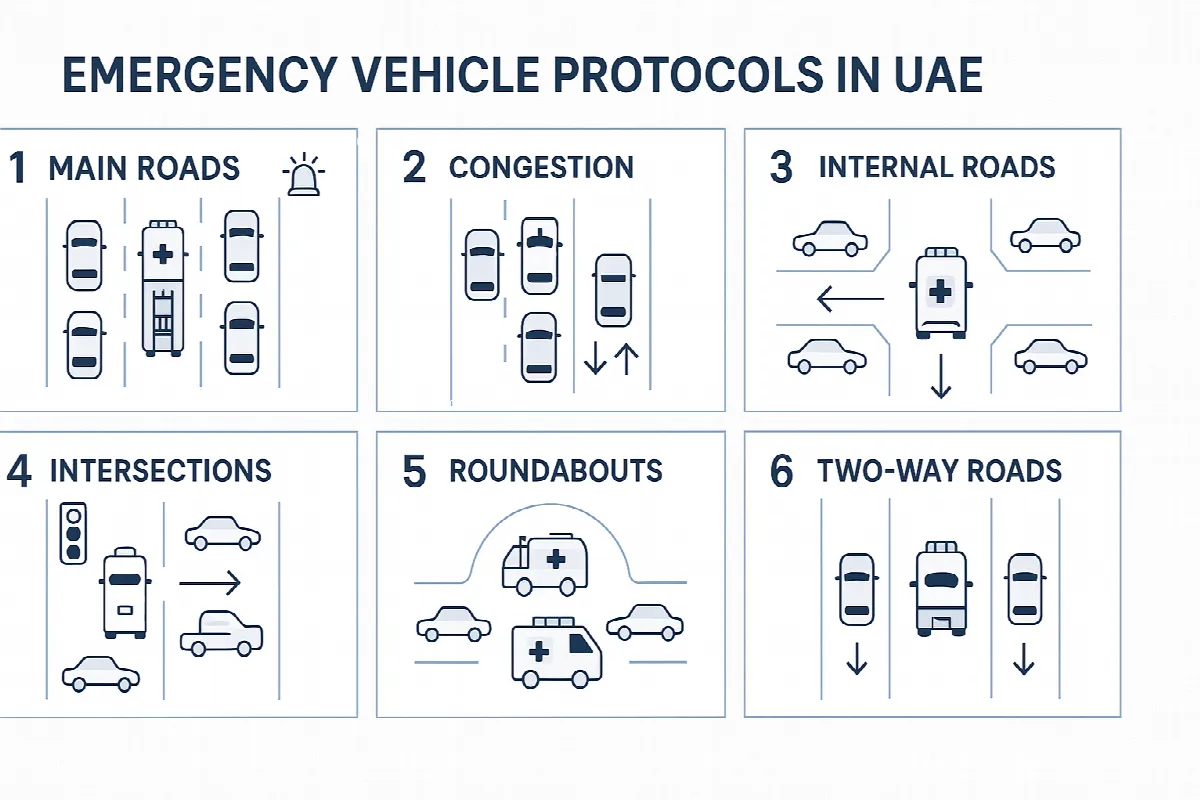
The “Don’t Hesitate, Give Way to Emergency Vehicles Immediately” campaign outlines specific protocols for different road conditions. These guidelines help drivers respond appropriately when encountering emergency vehicles.
Main Roads and Highway Protocols
On main roads, drivers must immediately move to the far right lane upon hearing sirens or seeing emergency lights. During congestion, emergency vehicles may use road shoulders, which must remain clear of other vehicles at all times.
Internal roads present different challenges where emergency vehicles may pass between lanes. In these situations, drivers must move right or left immediately to create passage, demonstrating the importance of situational awareness.
Intersection and Roundabout Procedures
Intersections require immediate clearance when emergency vehicles approach. Drivers cannot chase emergency vehicles, and if traffic signals show red, emergency vehicles may cautiously pass whilst other drivers yield without crossing the red light.
At roundabouts, emergency vehicles enter with caution, and upon hearing sirens, drivers should not enter the roundabout. Those already inside must exit at the nearest opportunity and move right, maintaining clear passage for emergency responders.
Two-Way Road Requirements
On two-way roads, emergency vehicles may travel down the centre, requiring all vehicles from both directions to pull over to the far right. This protocol can initially seem counterintuitive but creates the safest passage for emergency responders.
Impact on Dubai’s Growing Job Market
These traffic enforcement measures directly affect Dubai’s expanding workforce, particularly those in emergency services and transportation sectors. The city’s growing job market includes numerous positions in emergency response, traffic management, and public safety.
Emergency medical technicians, paramedics, fire safety officers, and police personnel all depend on clear road access to perform their duties effectively. The enforcement of traffic obstruction laws supports these critical professions by reducing response times and improving emergency outcomes.
Additionally, the emphasis on traffic law compliance creates opportunities for legal professionals specialising in traffic law, similar to trends in legal sector employment throughout the UAE.
Comprehensive Penalty Structure
The UAE’s traffic law establishes clear penalty structures for different types of obstruction. Understanding these penalties helps drivers make informed decisions about their behaviour during emergency situations.
Standard Traffic Obstruction Fines
Obstructing traffic during an accident carries a Dh1,000 fine, whilst obstructing traffic in any other way results in a Dh500 penalty. These fines represent the baseline consequences for interfering with traffic flow.
However, the most severe penalties target those who fail to give priority to emergency or official vehicles. The Dh3,000 fine, combined with 30-day vehicle impoundment and 6 traffic points, creates substantial consequences that reflect the serious nature of this violation.
Technology Supporting Enforcement
The UAE’s advanced traffic monitoring systems support these enforcement efforts through AI-powered detection and comprehensive surveillance networks. Dubai’s AI radar systems can identify multiple violations simultaneously, including emergency vehicle obstruction.
These technological capabilities enable consistent enforcement across all road conditions and times of day. The integration of smart systems with traditional patrol methods creates comprehensive coverage that supports emergency vehicle access.
Connection to Broader Traffic Safety Initiatives
The emphasis on emergency vehicle access connects to broader UAE traffic safety initiatives, including updated traffic laws for 2024 and comprehensive penalty structures for various violations.
Recent changes to UAE traffic laws demonstrate the government’s commitment to road safety through both education and enforcement. The focus on emergency vehicle priority represents a crucial component of this comprehensive approach.
Coordinated Response Efforts
Abu Dhabi Police coordinate with the Civil Defense Authority, Department of Health, and Department of Municipalities and Transport to ensure effective emergency response. This collaboration creates integrated systems that depend on clear road access for optimal performance.
The partnership approach recognises that emergency response involves multiple agencies working together under time-critical conditions. Each delay caused by traffic obstruction can compound, significantly affecting response effectiveness across all participating departments.
Public Education and Awareness
The awareness campaign encourages drivers to transform from passive bystanders to active contributors in rescue processes. This shift in mindset represents a cultural change toward greater community responsibility for emergency response.
Public education efforts emphasise that simple actions during critical moments can save lives. The campaign’s success depends on widespread understanding of proper emergency vehicle protocols and consistent application by all road users.
Recommendations for Drivers
Drivers can avoid violations and support emergency response by maintaining awareness of their surroundings and understanding proper emergency vehicle protocols. Regular review of these guidelines helps build automatic responses during high-stress situations.
The key lies in preparation and practice. Drivers should familiarise themselves with emergency vehicle sounds and visual signals, understand right-of-way protocols for different road types, and resist curiosity that leads to accident scene obstruction.
Staying informed about current traffic regulations and enforcement practices helps drivers adapt to evolving road safety requirements whilst supporting emergency response effectiveness.
Key Takeaway
The UAE’s enforcement of 630 traffic obstruction fines in 2024 demonstrates serious commitment to emergency response effectiveness. With penalties reaching Dh3,000 plus vehicle impoundment for emergency vehicle obstruction, drivers must prioritise immediate compliance with right-of-way protocols to support life-saving emergency services and avoid substantial legal consequences.
Further Reading
The UAE week, every Monday
The week's stories on jobs, visas, money and daily life in one short email. Unsubscribe in one click.