UAE Influencers Need Two Licenses: Trade & Media Permit Guide 2025
UAE influencers must obtain two licenses: trade license (AED 5,000-15,000) and media permit (AED 1,000). Complete guide to avoid AED 1M penalties.
By Vadim Kouznetsov, published

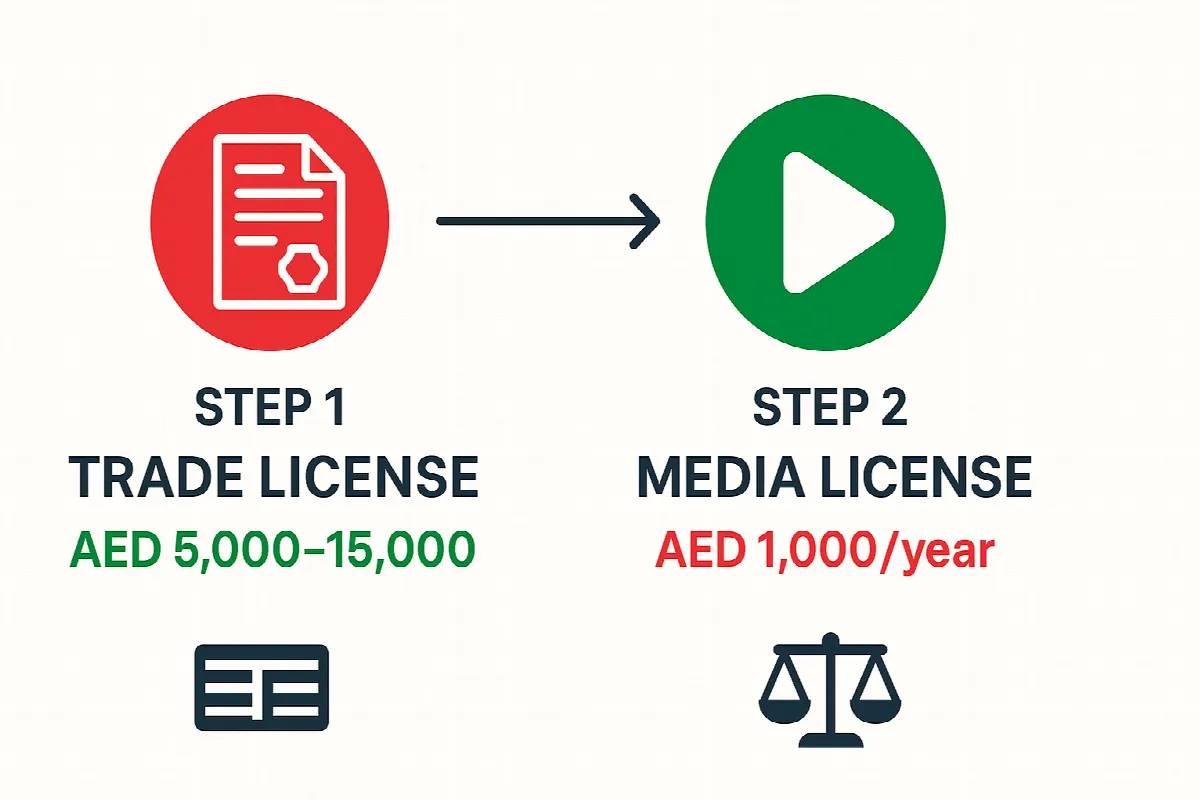
Key Takeaway: UAE influencers earning money from social media must now obtain two separate licenses: a trade license (AED 5,000-15,000) for commercial activities, followed by a media license (AED 1,000 annually) from the UAE Media Council, with violations carrying penalties up to AED 1 million.
The UAE has fundamentally transformed how social media influencers and content creators operate legally within the Emirates. Under Federal Media Law No. 55 of 2023, which came into effect on 29 May 2025, all influencers involved in commercial activities must secure dual licensing: a business/trade license first, followed by a media license from the UAE Media Council.
Two-License System Explained
The new legislation establishes a mandatory two-step licensing process that replaces the previous single-license requirement:
Step 1: Trade License (Business License)
All influencers earning money through brand collaborations, paid promotions, affiliate links, advertising, or product sales must first obtain a valid trade license. This commercial license serves as the foundation for legal business operations in the UAE.
Step 2: Media License from UAE Media Council
Only after securing a trade license can influencers apply for a media license through the UAE Media Council at uaemc.gov.ae. This secondary license specifically governs content creation and media activities.
This sequential approach brings influencer marketing under the same commercial standards as traditional businesses, marking a significant shift in the UAE’s digital media regulation.
Trade License Options and Costs
Influencers have several pathways to obtain their required trade license, with costs varying by emirate and free zone:
Free Zone Options
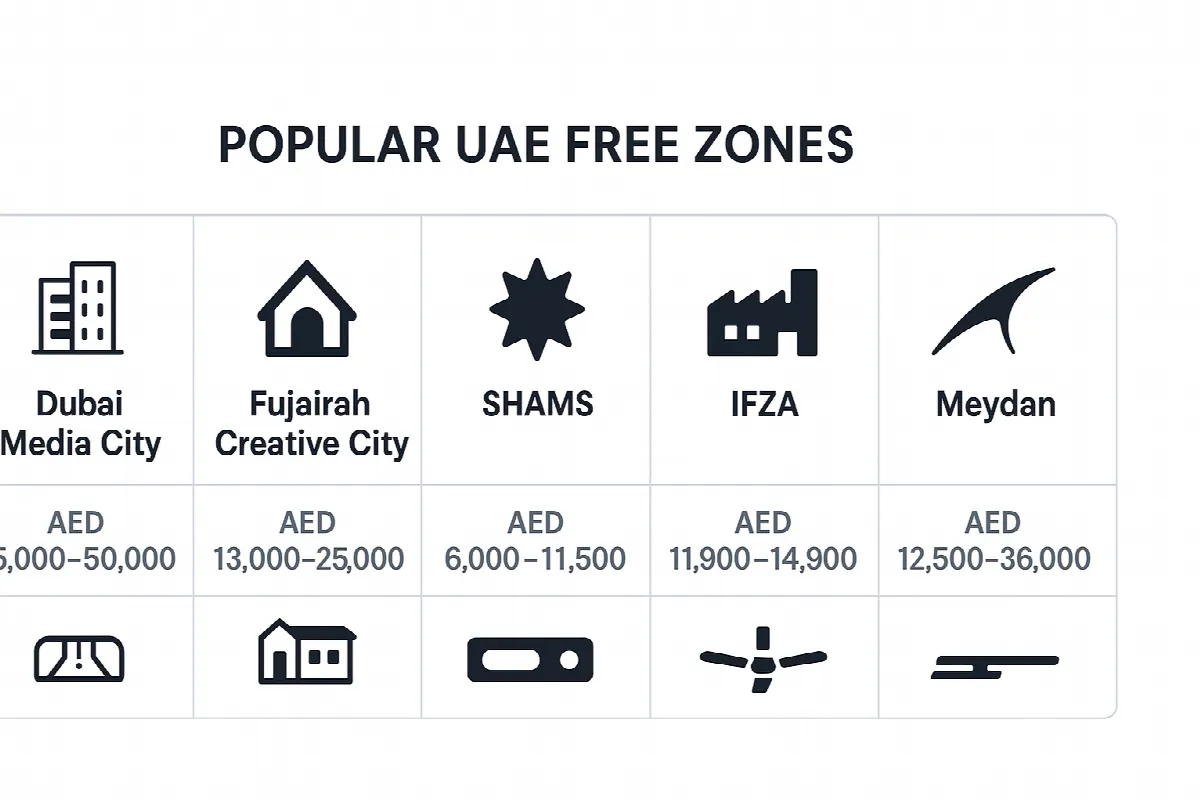
Popular Free Zones for Content Creators:
- Dubai Media City: Specialised for media and content professionals
- Fujairah Creative City: Creative industry focus
- SHAMS (Sharjah): Affordable options for freelancers
- IFZA: Comprehensive business services
- Meydan Free Zone: Flexible licensing options
Typical Free Zone Costs: AED 5,000 to AED 15,000 annually, depending on the specific zone and license type.
Mainland Options
Influencers can also obtain trade licenses through local Department of Economic Development (DED) offices in each emirate. Fast-track business setup platforms now enable license acquisition in minutes through digital platforms.
Freelance Permits
For individual content creators, UAE free zones offer freelance visas under AED 10,000, providing affordable entry points for smaller-scale influencers.
Media License Requirements and Fees
After securing a trade license, influencers must apply for their media license through the UAE Media Council. Key details include:
Available Permits
- Advertising and media content licenses
- Audio and visual podcasting permits
- Temporary licenses for visiting content creators
Annual Cost
As per Cabinet Resolution No. (41) of 2025 on Media Services Fees, the influencer media permit costs AED 1,000 per year, including renewal fees.
Content Standards Compliance
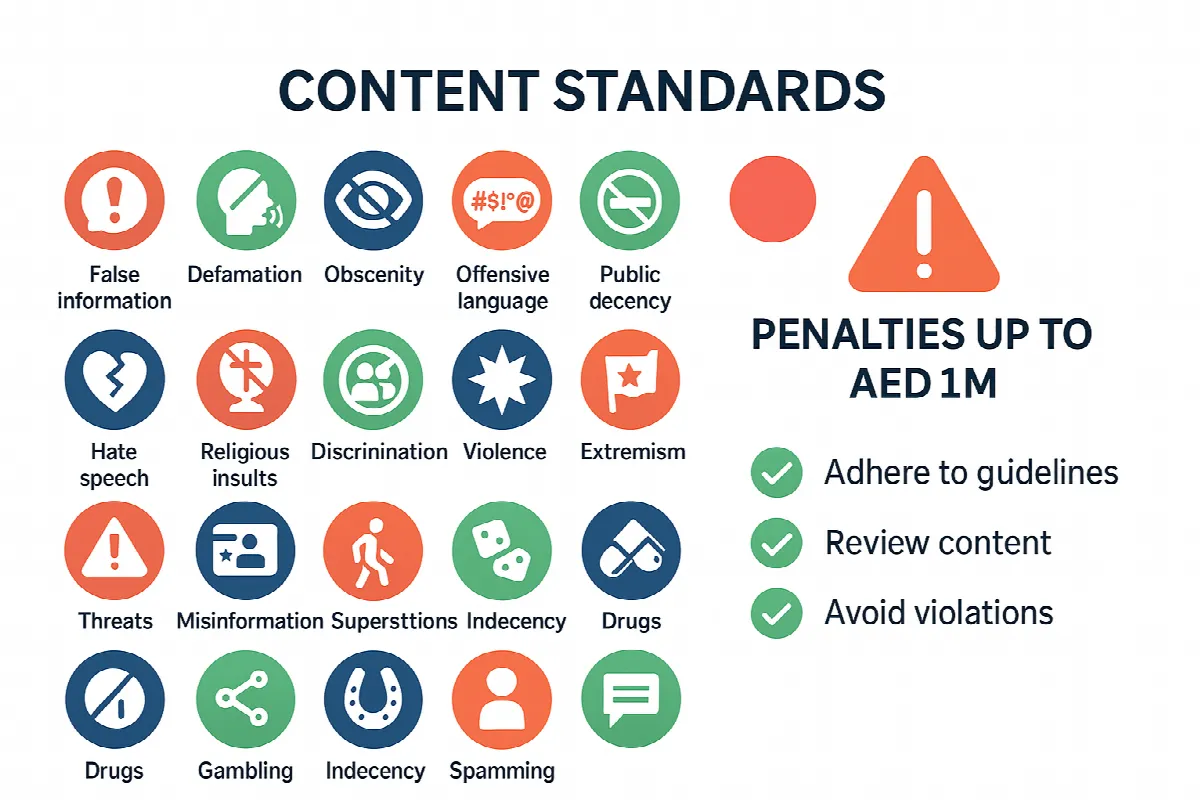
All licensed influencers must follow 20 mandatory content standards, including prohibitions on content that disrespects religion, government, or societal values.
Abu Dhabi’s Additional Requirements
Since 2024, the Abu Dhabi Department of Economic Development (ADDED) has mandated that influencers promoting any product or service through social media platforms must hold a trade license. Non-compliance can result in fines up to AED 10,000.
This emirate-specific requirement demonstrates how individual emirates are implementing additional layers of influencer regulation beyond federal requirements.
Who Must Comply with New Licensing Rules
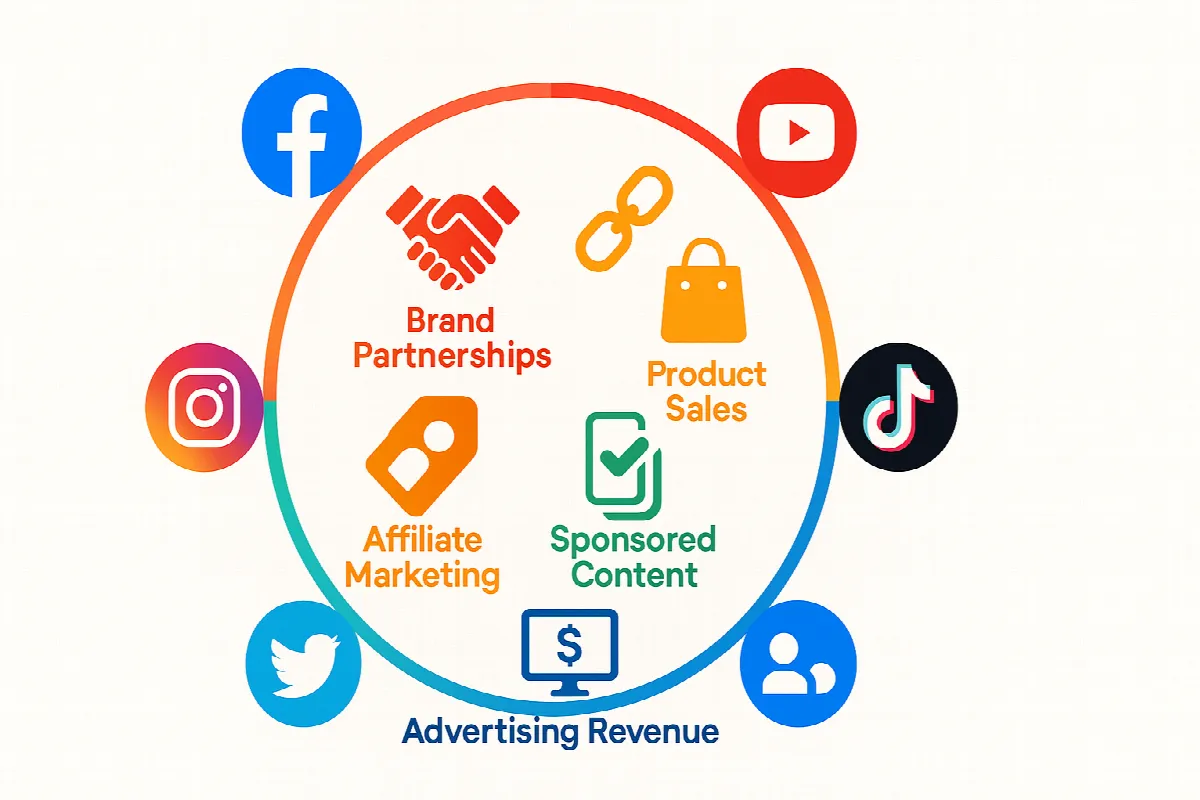
The licensing requirements apply to all UAE-based individuals earning money through:
- Brand partnerships and sponsored content
- Affiliate marketing programmes
- Product reviews and recommendations
- Direct product sales through social media
- Advertising revenue from content platforms
- Paid promotional activities
The law covers all social media platforms, including Instagram, YouTube, TikTok, Twitter, LinkedIn, and emerging platforms.
Financial Influencers Face Additional Scrutiny
Financial content creators (‘finfluencers’) must register proactively with the Securities and Commodities Authority (SCA). UAE investors are advised to verify and report unauthorised financial advice, making proper licensing crucial for finance-focused content creators.
Penalties for Non-Compliance
The UAE enforces strict penalties for unlicensed influencer activities:
Federal Penalties
- Fines up to AED 1 million for violations of the Media Regulation Law
- Content removal powers granted to the UAE Media Council
- Scaled penalties based on severity and frequency of offences
Emirate-Specific Fines
- Abu Dhabi: Up to AED 10,000 for promoting without a trade license
- Other emirates may implement similar penalty structures
Corporate Tax Implications for Influencers
Licensed influencers must also consider corporate tax obligations. UAE corporate tax rules for freelancers and influencers require registration when annual revenue exceeds AED 1 million.
Key tax considerations include:
- Registration deadline: March 31, 2025, for those exceeding AED 1 million in 2024
- Small Business Relief: Available for qualifying influencers earning between AED 1-3 million annually
- Tax-free threshold: 0% rate on first AED 375,000 of taxable income
Digital Activity Requirements
Beyond licensing, influencers operating online businesses may need additional permits. TDRA NoC requirements apply to digital commercial activities, adding another compliance layer for comprehensive online operations.
Step-by-Step Licensing Process
Phase 1: Trade License Application
- Choose your licensing route (free zone or mainland)
- Select appropriate business activities for content creation
- Register trade name following UAE naming conventions
- Submit required documents and pay licensing fees
- Await approval (typically 1-7 days depending on jurisdiction)
Phase 2: Media License Application
- Access UAE Media Council portal at uaemc.gov.ae
- Select appropriate media permit type
- Submit trade license documentation as prerequisite
- Pay AED 1,000 annual fee
- Await approval and receive media license
Phase 3: Compliance Maintenance
- Renew both licenses annually
- Maintain content standards compliance
- Keep accurate financial records for tax purposes
- Report revenue changes affecting tax obligations
Industry Impact and Benefits
The dual-licensing system creates several advantages for the influencer ecosystem:
Professional Standards
Licensed influencers demonstrate legitimacy to brands and audiences, potentially commanding higher rates for partnerships and collaborations.
Legal Protection
Proper licensing provides legal protection for business operations and intellectual property rights.
Access to Services
Licensed businesses can access banking, insurance, and other commercial services typically unavailable to unlicensed activities.
UAE Residency Benefits
Trade licenses enable visa sponsorship, allowing influencers to obtain UAE residency and family sponsorship options.
Global Trend Alignment
The UAE’s approach aligns with international regulatory trends governing digital content creators. This positions the Emirates as a responsible jurisdiction for global brands seeking transparent influencer partnerships.
The framework balances regulatory oversight with support for digital entrepreneurship, maintaining the UAE’s reputation as a business-friendly environment while establishing clear professional standards.
Practical Implementation Timeline
For existing influencers, immediate action is required:
- Current unlicensed influencers: Must obtain both licenses immediately to avoid penalties
- New influencers: Should secure licenses before monetising content
- International influencers: Must obtain UAE licenses for any commercial activities targeting UAE audiences
Future Considerations
The regulatory framework continues evolving as the UAE adapts to digital economy growth. Influencers should monitor updates from the UAE Media Council and relevant economic development authorities for regulatory changes.
Understanding freelancing opportunities in the UAE becomes increasingly important as content creation professionalises under the new licensing regime.
The dual-licensing requirement represents a maturation of the UAE’s approach to digital media regulation. By establishing clear commercial and content standards, the framework supports sustainable growth in the influencer economy while protecting audiences and maintaining the UAE’s position as a global digital hub.
For content creators seeking to operate legally in the UAE, understanding and complying with both licensing requirements is no longer optional—it’s a fundamental business necessity that enables professional growth and legal protection in one of the world’s most dynamic digital markets.
Further Reading
- UAE Influencers Must Get Business Licenses: Complete 2025 Law Guide
- UAE Free Zone Freelance Visas Under AED 10,000: Complete Guide
- Launch Your UAE Business in Minutes: Fast-Track Platforms
- UAE Corporate Tax Guide for Freelancers and Influencers
- How to Register a Trade Name in UAE: Step-by-Step Guide
The UAE week, every Monday
The week's stories on jobs, visas, money and daily life in one short email. Unsubscribe in one click.