UAE Employment: Can You Add Annual Salary Increment Clause Contract?
Learn your rights to negotiate annual salary increment clauses in UAE employment contracts. Discover legal requirements and negotiation strategies.
By Vadim Kouznetsov, published

Negotiating employment terms in the UAE can feel overwhelming, especially when comparing offers that differ significantly in their approach to career progression. If you’re weighing a job offer with a higher base salary but no mention of annual increases against your current position that includes regular salary bumps, understanding your rights under UAE labour law becomes crucial.
Key Takeaway: UAE law permits employees and employers to mutually agree on additional contract clauses, including annual salary increments, provided they comply with Federal Decree-Law No. 33 of 2021 and don’t conflict with minimum worker rights.
Legal Framework for Contract Modifications
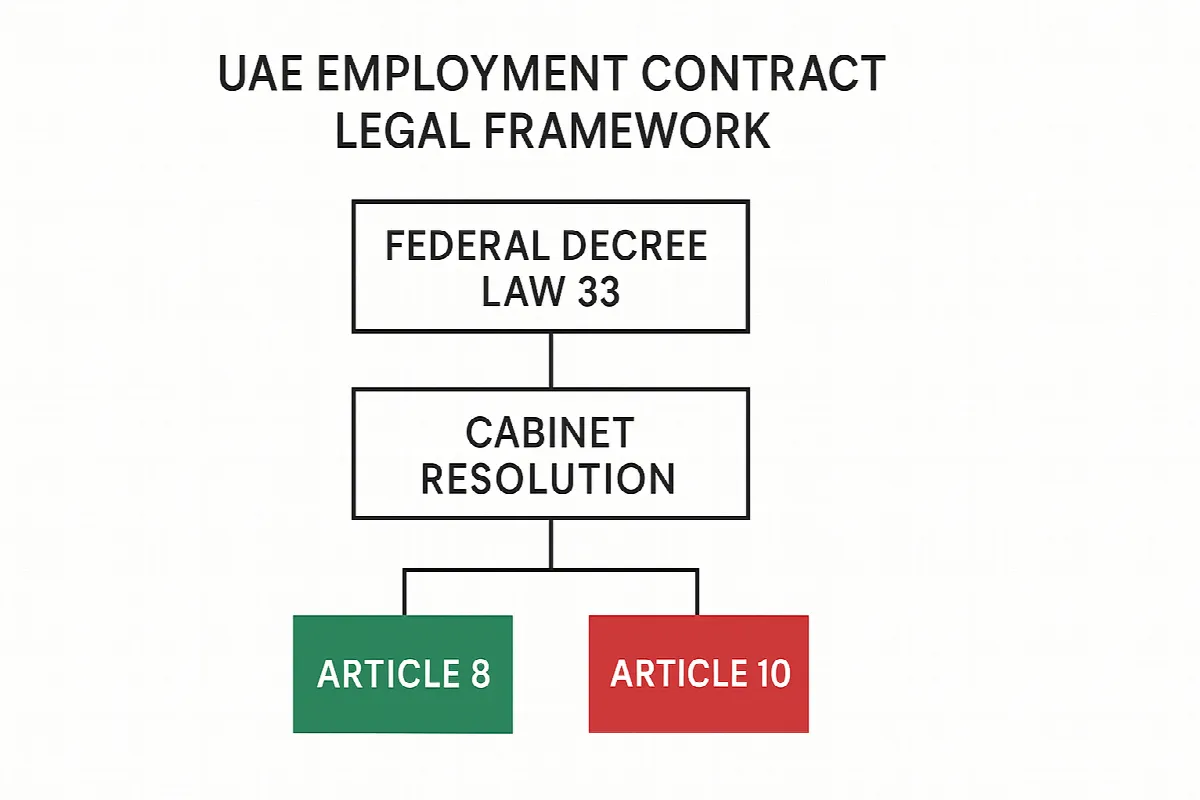
Under Article 8 of Federal Decree-Law No. 33 of 2021 and Article 10(1) of Cabinet Resolution No. 1 of 2022, UAE employment contracts must include specific mandatory information, including wages, benefits, allowances, and other data determined by the Ministry of Human Resources and Emiratisation (MOHRE).
However, the law provides flexibility for additional terms. Article 10(2) of Cabinet Resolution No. 1 of 2022 states that “the employee and the employer may agree to introduce new clauses to the approved contract forms, provided that they are in agreement with the provisions of the Decree-Law, this Resolution and the Legal Regulations.”
Understanding Your Rights to Better Benefits
The UAE labour law establishes minimum worker rights whilst allowing for enhanced benefits. Article 65(1) of the Employment Law confirms that “the rights stipulated herein shall represent the minimum rights for workers and the provisions hereof shall not prejudice any of the rights granted to the worker under any other legislation, agreement, acknowledgement, regulation or employment contract, which would grant the worker rights that are more useful than the rights established under the provisions hereof.”
This provision protects workers from having superior benefits reduced simply because they exceed minimum legal requirements.
Why Employers Often Avoid Increment Guarantees
Most UAE employers hesitate to include guaranteed annual salary increments in initial contracts for practical reasons. At the hiring stage, employers cannot accurately assess your future performance, market conditions, or company financial health that would typically influence salary decisions.
Annual increments traditionally depend on:
- Individual performance evaluations
- Company profitability
- Market salary trends
- Role expansion or additional responsibilities
- Economic conditions affecting the business
How to Approach Salary Increment Negotiations
1. Research Industry Standards
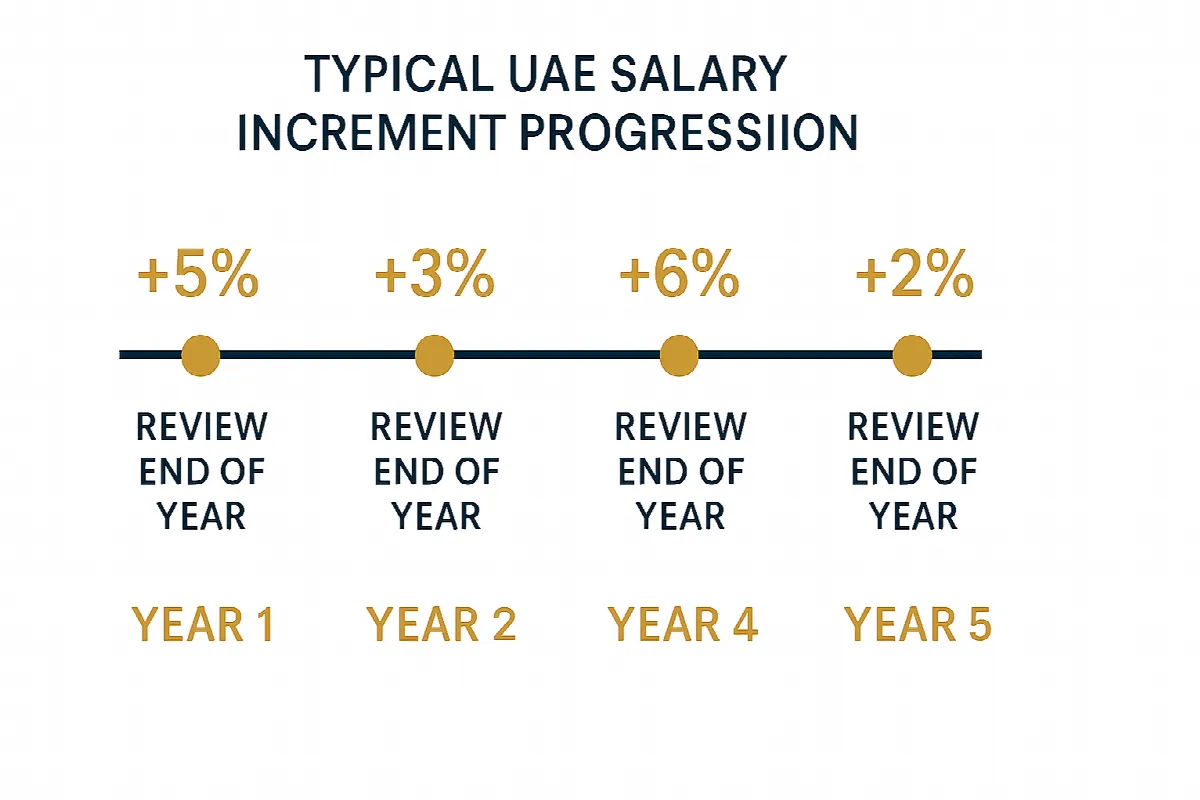
Before requesting increment clauses, understand your sector’s typical salary progression. According to industry data, UAE employees receive an average salary increment of 8% every 17 months, significantly outpacing the world average of 3% every 16 months.
Different industries offer varying increment rates:
- Technology and finance sectors often provide higher annual increases
- Traditional industries may offer more modest but consistent growth
- Experience levels significantly affect increment percentages
2. Propose Performance-Based Increments
Rather than requesting guaranteed increases, consider proposing performance-linked increment clauses. This approach addresses employer concerns about unknown future performance whilst providing you with structured growth opportunities.
Example clauses might include:
- Annual reviews with increment potential based on achievement of specific targets
- Salary adjustments tied to company performance metrics
- Regular market salary benchmarking with adjustment provisions
3. Negotiate Review Periods
If guaranteed increments seem unlikely, request formal salary review periods written into your contract. This approach establishes your right to regular compensation discussions without guaranteeing specific increases.
Legal Enforceability of Increment Clauses
If your prospective employer agrees to include salary increment guarantees in your employment contract, these become legally binding obligations. The UAE courts will enforce contractual terms that comply with labour law requirements.
However, ensure any increment clause includes:
- Clear percentage or amount specifications
- Defined review periods (annual, bi-annual)
- Performance criteria if applicable
- Conditions that might affect implementation
Alternative Approaches to Salary Growth
1. Comprehensive Benefits Packages
If direct salary increments aren’t negotiable, consider requesting enhanced benefits that provide equivalent value:
- Additional annual leave days
- Professional development allowances
- Health insurance upgrades
- Housing or transportation allowances
2. Career Progression Pathways
Request detailed information about promotion timelines and associated salary bands. Clear advancement paths can provide salary growth opportunities even without guaranteed annual increments.
3. Market Adjustment Clauses
Propose clauses that link your salary to market rates for your position, allowing for adjustments based on industry salary surveys or economic indicators.
Companies with 50+ Employees: Enhanced Protections
For organisations employing 50 or more individuals, Article 14(1) & (4) of Cabinet Resolution No. 1 of 2022 requires the creation of internal rules encompassing promotions, rewards, and procedures for terminating employment. These rules must include transparent criteria for promotions and rewards.
If you’re joining a larger organisation, request access to these internal policies during contract negotiations to understand established increment and promotion procedures.
When Increment Negotiations Fail
If your prospective employer refuses to include increment clauses, you have several options:
1. Request Higher Base Salary
Negotiate a higher starting salary to compensate for the lack of guaranteed growth, particularly if you’re leaving a position with regular increments.
2. Shorter Contract Terms
Consider requesting a shorter initial contract period (one year instead of two) to allow for earlier renegotiation opportunities.
3. Written Performance Expectations
Secure written documentation of your role’s performance expectations and growth potential, even if not contractually binding.
Red Flags to Avoid
Be cautious of employers who:
- Refuse to discuss salary progression entirely
- Cannot provide examples of employee advancement within the company
- Avoid putting any performance review processes in writing
- Offer vague promises about “future opportunities” without specifics
Current Market Context
The UAE job market in 2025 remains competitive, with many professionals experiencing significant career growth. Different sectors offer varying salary growth rates, with experience levels significantly affecting annual increment opportunities.
Understanding these market dynamics helps you negotiate from an informed position and set realistic expectations for salary progression.
Practical Steps for Contract Negotiation
Before Negotiating:
- Document current benefits – List all compensation elements from your current role
- Research market rates – Understand industry standards for your position and experience
- Prepare alternatives – Develop multiple negotiation options beyond guaranteed increments
- Review company policies – Research the prospective employer’s typical approach to salary progression
During Negotiations:
- Present data-driven requests – Use industry salary data to support your position
- Emphasise mutual benefits – Show how structured increments benefit both parties
- Remain flexible – Be open to alternative arrangements that meet your core needs
- Document agreements – Confirm all negotiated terms in writing
After Agreement:
- Review final contract carefully – Verify all negotiated terms appear correctly
- Understand review processes – Clarify how and when salary discussions will occur
- Maintain performance records – Document achievements to support future increment requests
Long-term Career Planning
While guaranteed increments provide security, remember that career advancement often depends on multiple factors beyond contractual obligations. Focus on:
- Building valuable skills that increase your market worth
- Understanding your employer’s business objectives and contributing meaningfully
- Maintaining awareness of industry salary trends
- Developing relationships that support career progression
Professional Development Alternatives
If increment clauses aren’t achievable, negotiate professional development opportunities that enhance your earning potential:
- Training budget allocations
- Conference attendance support
- Certification programme funding
- Mentorship programme access
These investments in your skills can provide long-term salary growth opportunities even without guaranteed annual increases.
Remember: UAE labour law protects your right to negotiate enhanced contract terms. While employers aren’t required to provide guaranteed salary increments, they cannot prevent you from requesting such clauses or reduce your minimum legal rights.
Further Reading
- Complete Guide to Average Salary in Dubai: 2025 Pay Scales & Benefits
- UAE Employment Contract Guide: 10 Essential Checks Before Signing
- UAE: Can employee sue employer for no salary raise despite new colleagues getting higher pay?
- UAE Labour Laws: Essential Guide to Private Sector Employment Rights 2025
The UAE week, every Monday
The week's stories on jobs, visas, money and daily life in one short email. Unsubscribe in one click.