Working Eid Al Adha UAE: Rights & 50% Pay Bonus | Labour Law Guide
Required to work on Eid Al Adha 2025? Learn your compensation rights under UAE labour law including 50% pay bonus or replacement days off.
By Vadim Kouznetsov, published

With Eid Al Adha holidays beginning Thursday, 5 June 2025, many UAE private sector workers may find themselves scheduled to work during this four-day public holiday period. If you’re amongst those required to work through Arafat Day and Eid celebrations, understanding your compensation rights under Federal Decree-Law No. 33 of 2021 is crucial.
Key Takeaway: UAE law guarantees workers either a replacement day off or regular wages plus 50% bonus pay for each public holiday worked, regardless of employee grade or category.
What Does UAE Labour Law Say About Holiday Work?
Article 28 of Federal Decree-Law No. 33 of 2021 provides clear protection for workers required to work during public holidays. The law establishes two fundamental rights:
Primary Right: Workers are entitled to official days off with full pay on public holidays as defined by Cabinet resolutions.
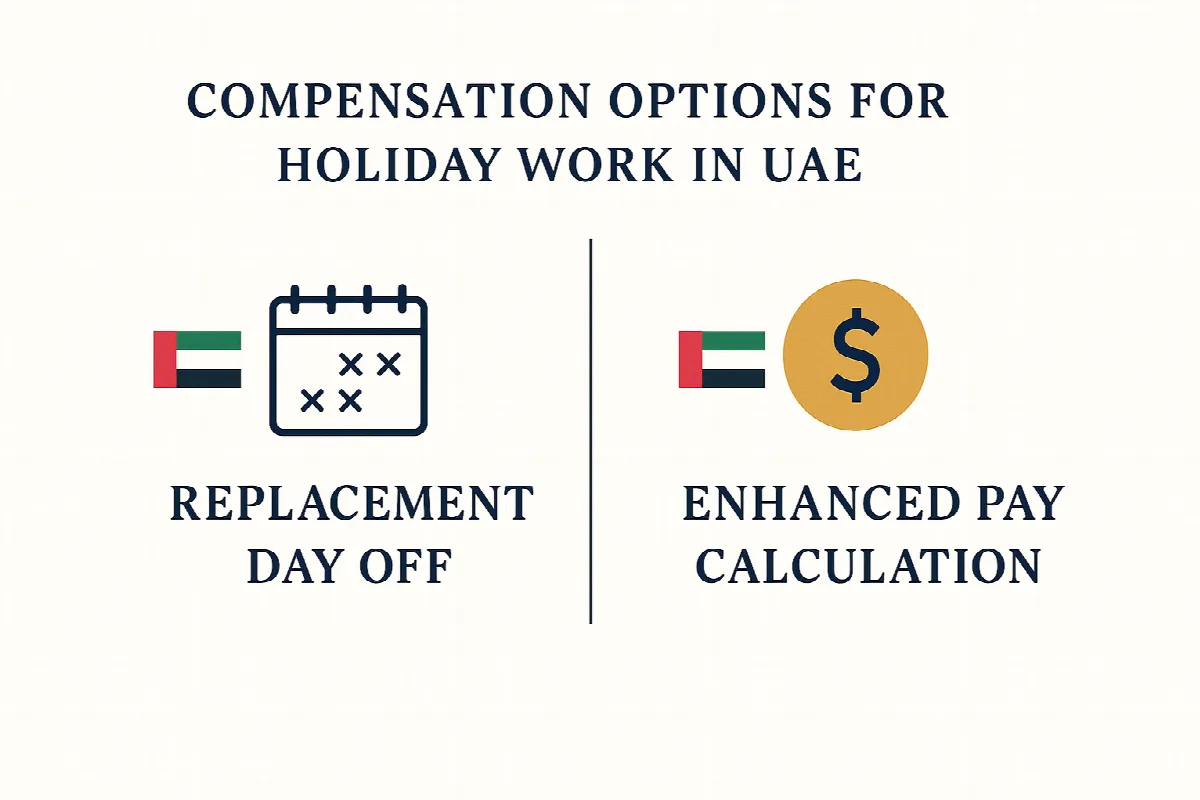
Compensation Requirement: When work conditions necessitate working during public holidays, employers must provide one of two compensation options:
- A replacement day off for each holiday worked, or
- Regular daily wages plus a minimum 50% increase of basic salary for that day
This compensation applies universally across all employee categories and grades, according to legal expert Suneer Kumar, Senior Associate at Al Suwaidi and Company.
Understanding Your Compensation Options
Option 1: Replacement Day Off
Your employer can provide a substitute rest day for each public holiday you work. This arrangement maintains your work-life balance whilst meeting business operational needs.
Option 2: Enhanced Pay
If replacement time off isn’t practical, you’re entitled to:
- Your normal daily wage for the holiday worked
- An additional payment of at least 50% of your basic salary for that day
Example: If your basic daily salary is Dh300, working on Eid would entitle you to Dh300 (regular pay) + Dh150 (50% bonus) = Dh450 total compensation.
When Does This Law Apply?
The compensation requirements apply specifically when:
- Your employer requests you to work during public holidays
- Work requirements necessitate your presence during the holiday period
- You have proper permission to work during the holiday
This protection covers all workers in the UAE private sector, regardless of their position, salary level, or employment category.
The Four-Day Eid Al Adha Break: What You Need to Know
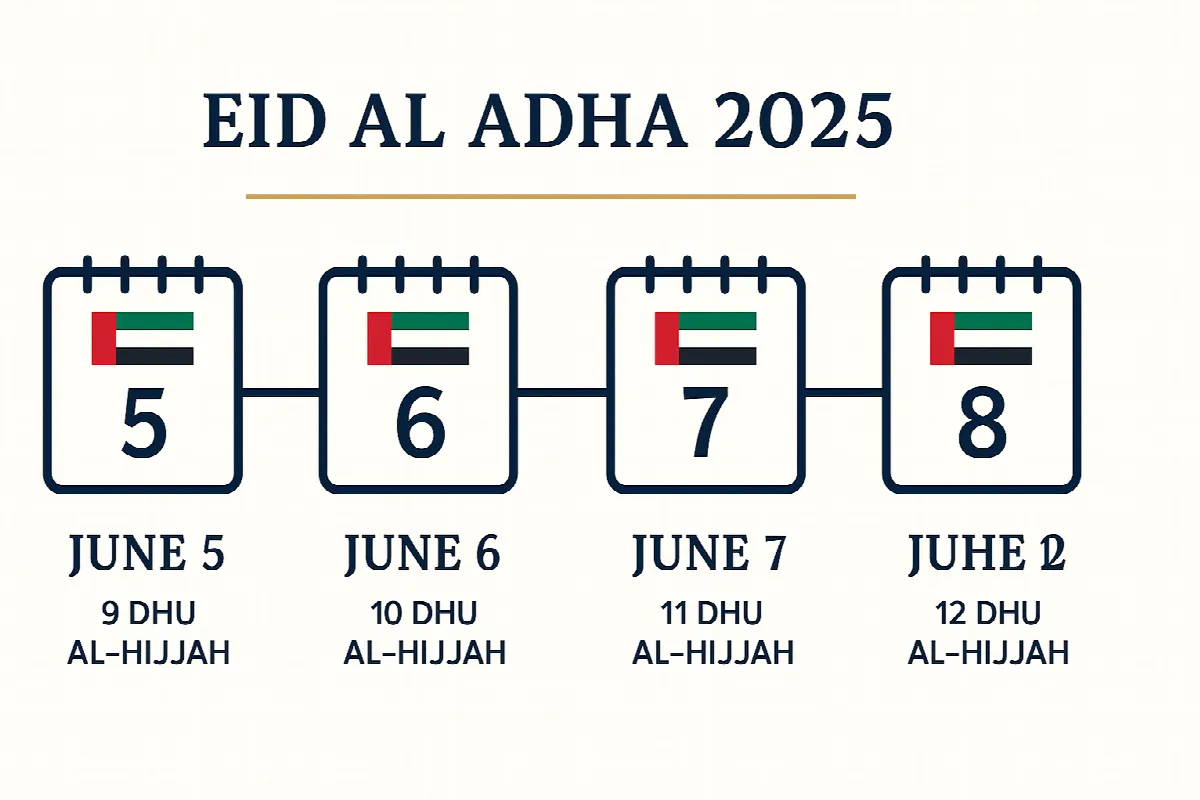
The UAE government has announced that Eid Al Adha 2025 will span four days:
- Thursday, 5 June: Arafat Day (9 Dhu Al-Hijjah)
- Friday, 6 June: First day of Eid Al Adha (10 Dhu Al-Hijjah)
- Saturday, 7 June: Second day of Eid Al Adha (11 Dhu Al-Hijjah)
- Sunday, 8 June: Third day of Eid Al Adha (12 Dhu Al-Hijjah)
Each day you work during this period entitles you to the compensation outlined in Article 28.
Know Your Rights: When Employers Fall Short
Some employers may attempt to avoid providing proper compensation or may be unaware of their legal obligations. Common violations include:
- Refusing to provide replacement days off or enhanced pay
- Offering only regular wages without the 50% bonus
- Claiming certain employee categories are exempt from holiday compensation
- Providing inadequate compensation that falls below legal minimums
All these practices violate UAE labour law.
How to Address Compensation Disputes
If your employer fails to provide proper holiday compensation, you have several options through the Ministry of Human Resources and Emiratisation (MOHRE):
Contact Methods:
- Phone: Call MOHRE’s hotline at 800 60
- Mobile App: Download the MOHRE app and file a labour complaint directly
- Online: Visit www.mohre.gov.ae and select the labour complaint filing option
Before Filing a Complaint:
- Document your work schedule during the holiday period
- Keep records of any communication with your employer about holiday work
- Calculate the compensation you should receive based on your basic salary
- Gather evidence of any refused compensation requests
Important Considerations for Holiday Workers
Documentation is Key
Maintain detailed records of:
- Work schedules during public holidays
- Employer requests to work during holiday periods
- Any agreements made regarding compensation
- Communication about replacement days off
Know Your Employment Contract
Review your employment contract for any specific clauses about holiday work. However, remember that UAE labour law sets minimum standards that cannot be reduced by contractual agreements.
Understand Replacement Day Timing
If you choose replacement days off, discuss timing with your employer. The law doesn’t specify when replacement days must be taken, but reasonable timing should be agreed upon.
Special Circumstances and Exemptions
Certain essential services may require continuous operation during public holidays, including:
- Healthcare facilities
- Security services
- Hospitality and tourism
- Transportation services
- Utilities and infrastructure
Workers in these sectors have the same compensation rights but may face different scheduling arrangements due to operational requirements.
Beyond Eid: Year-Round Holiday Rights
These compensation rules apply to all UAE public holidays throughout the year, including:
- New Year’s Day
- Ramadan and Eid Al Fitr
- UAE National Day
- Commemoration Day
- Other holidays declared by Cabinet resolution
Understanding these rights helps you plan financially and ensures fair treatment year-round.
Your Next Steps
If you’re scheduled to work during Eid Al Adha:
- Clarify compensation with your employer before the holiday begins
- Choose your preferred option (replacement days or enhanced pay)
- Document agreements in writing when possible
- Know your rights and don’t hesitate to contact MOHRE if issues arise
The UAE’s labour laws exist to protect workers whilst recognising legitimate business needs. By understanding your rights and communicating clearly with your employer, you can work confidently knowing you’re properly compensated for holiday work.
Remember, these protections apply regardless of your nationality, position level, or length of employment. Every worker in the UAE private sector deserves fair compensation for holiday work.
Working during Eid Al Adha doesn’t mean sacrificing your rights. Stay informed, document your work, and don’t hesitate to seek help from MOHRE if you face compensation issues.
Further Reading
The UAE week, every Monday
The week's stories on jobs, visas, money and daily life in one short email. Unsubscribe in one click.