UAE Leads Arab World in Workforce Skills as AI Training Surges 344%
UAE tops MENA region in workforce skills with 344% AI training growth. Discover how the nation’s shift to knowledge economy creates career opportunities.
By Vadim Kouznetsov, published

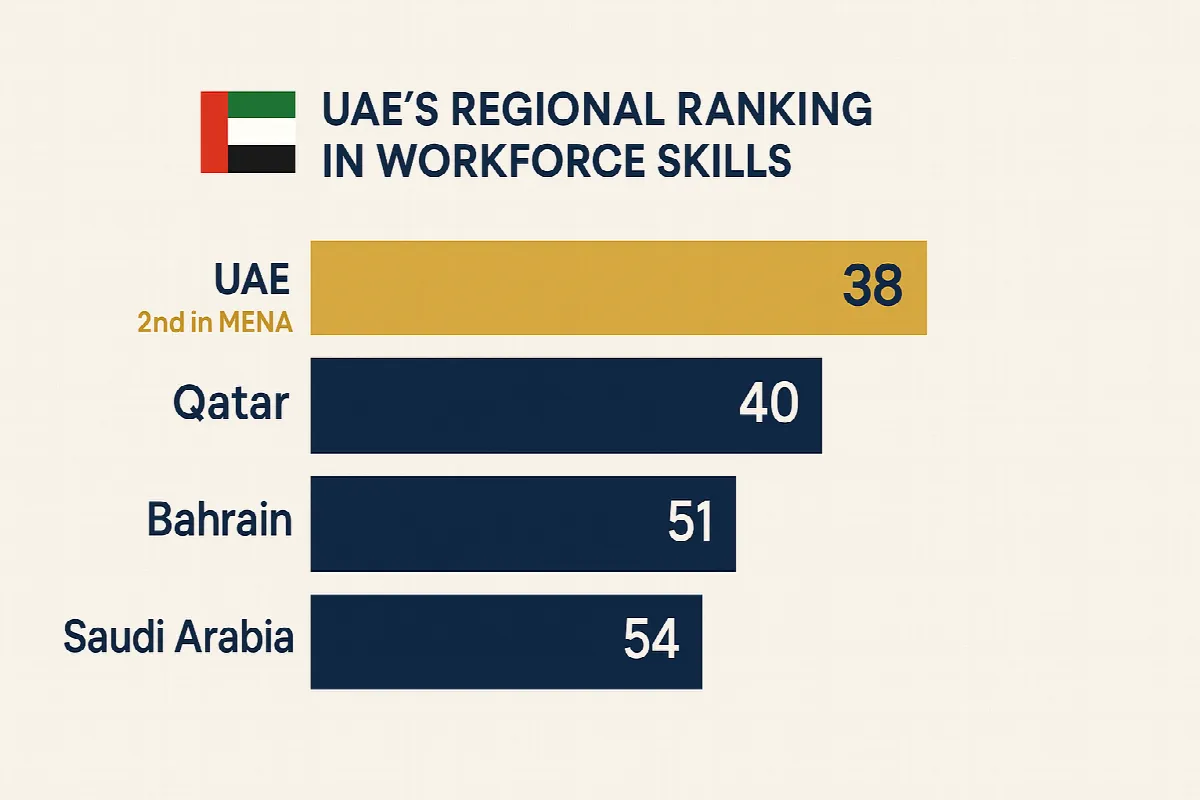
The UAE has cemented its position as the regional leader in workforce development, ranking 38th globally and second in the Middle East and North Africa (MENA) region for skilled employees, according to Coursera’s Global Skills Report 2025. This achievement reflects the nation’s ambitious transformation into a knowledge-based economy that prioritises skilled professionals over traditional blue-collar workers.
Explosive Growth in AI and Digital Skills Training
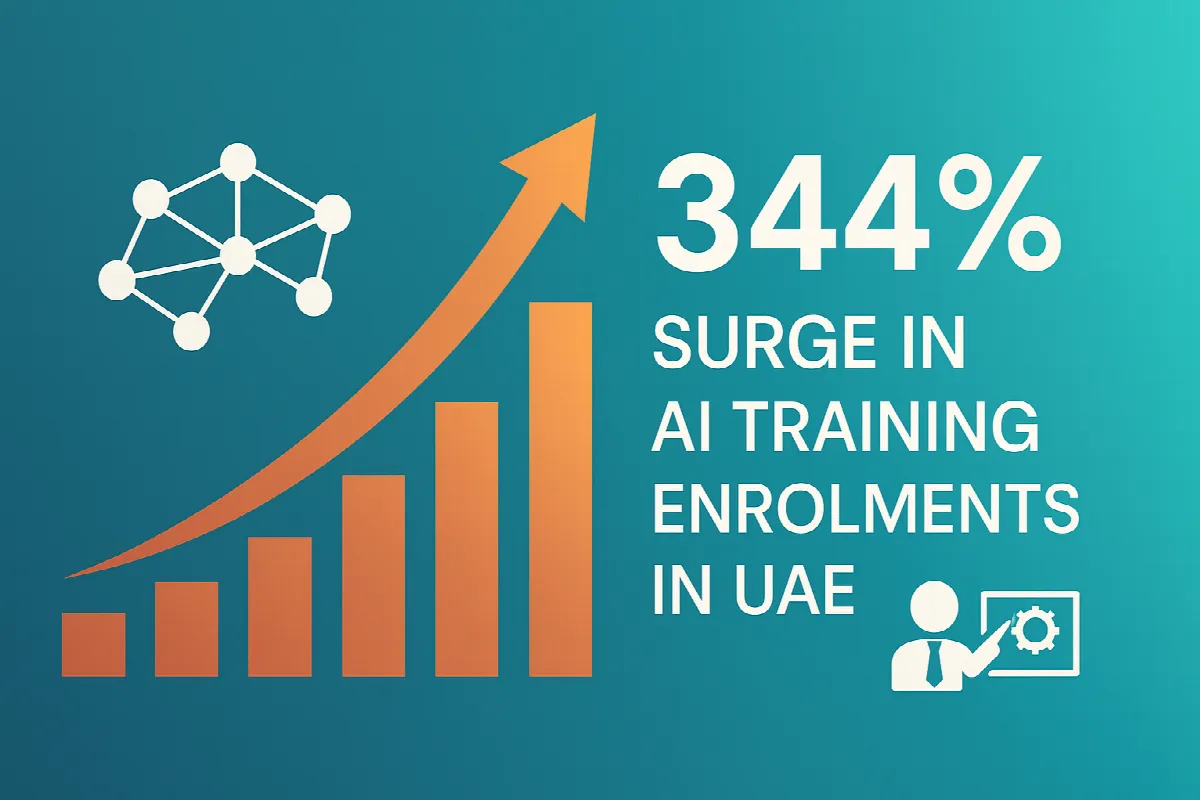
Professional development has reached unprecedented levels across the Emirates, with artificial intelligence training enrolments jumping 344% year-on-year. This dramatic surge demonstrates how UAE professionals are actively preparing for a technology-driven future, aligning with substantial regional investments in digital transformation.
The commitment to continuous learning extends beyond AI, with professional certificate enrolments growing 41%, surpassing regional averages. This enthusiasm for skill development has positioned the UAE as a beacon for career advancement in the region.
Regional Leadership in Workforce Quality
Among Arab nations, the UAE stands distinctly ahead in employee expertise, particularly in emerging technologies such as artificial intelligence and big data analytics. The country outperforms Qatar (40th globally), Bahrain (51st), Saudi Arabia (54th), and other regional competitors in comprehensive skill assessments.
Remarkably, the UAE achieves even higher recognition on the AI Maturity Index, securing 32nd place globally—six positions better than its overall ranking. This specialisation advantage reflects targeted investment in future-ready capabilities.
Technology-First Employment Strategy
Current market dynamics reveal that 87% of UAE employers prioritise technological literacy, artificial intelligence, and big data as core recruitment criteria. This focus represents a fundamental shift from traditional hiring patterns, emphasising cognitive over physical capabilities.
The transformation aligns with government policy objectives outlined by Abdullah bin Touq Al Marri, Minister of Economy, who confirmed the UAE’s ambition to become “a leading global hub for the new economy” through legislative developments and strategic economic policies.
Mohamed Al Shorafa, Chairman of the Abu Dhabi Department of Municipalities and Transport, reinforced this direction in February 2025, stating that focus remains firmly on knowledge-based sectors employing white-collar professionals whilst reducing blue-collar workforce dependency.
Professional Development Driving Economic Growth
The UAE’s workforce development programmes demonstrate remarkable success, with initiatives like Nafis exceeding private-sector employment targets. This achievement occurs despite 72% of organisations citing skill gaps as a major barrier—above the global average—highlighting both challenges and opportunities in the evolving job market.
Training preferences reflect market demands, with enrolments increasing significantly in:
- AI and machine learning
- Cybersecurity
- Customer service excellence
Top learner skills include corporate accounting, predictive analytics, emerging technologies, leadership development, and competitive intelligence—directly supporting the knowledge economy transition.
Implications for Job Seekers and Employers
This skills revolution creates significant opportunities for professionals willing to invest in their development. Technology roles particularly benefit from this trend, with companies actively seeking candidates who combine technical expertise with strategic thinking capabilities.
For employers, the data suggests that investment in employee training yields competitive advantages in attracting top talent. With 13% of the UAE’s labour force actively engaging with online learning platforms—the highest rate among spotlight countries—companies must adapt their recruitment and retention strategies accordingly.
Future Outlook
The UAE’s commitment to building a knowledge-based economy positions it for sustained growth in high-value sectors. As traditional industries evolve through digital transformation, the emphasis on continuous learning and skill development becomes increasingly critical for both individual career success and national economic objectives.
Professional development initiatives must continue expanding to meet growing demand whilst addressing persistent skill gaps. Success in this endeavour will determine whether the UAE achieves its ambitious vision of becoming a global knowledge economy leader by the next decade.
The data clearly demonstrates that UAE professionals are embracing change proactively, with learning behaviours that support both personal advancement and national development goals. This positive cycle of investment and improvement suggests continued regional leadership in workforce quality and economic competitiveness.
Key Takeaway
The UAE’s workforce has emerged as the most skilled in the Arab world, driven by a 344% surge in AI training and strong government commitment to building a knowledge-based economy. With 87% of employers prioritising technological literacy and 13% of workers actively upskilling online, the nation is successfully transitioning from traditional employment models to high-value, professional services that will define its economic future.
Further Reading
The UAE week, every Monday
The week's stories on jobs, visas, money and daily life in one short email. Unsubscribe in one click.