Dubai AI Traffic Radar: 8 Violations & Fines You Must Know 2025
Discover Dubai’s AI radar system detecting 8 traffic violations with fines up to Dh50,000. Learn penalties, black points & avoid costly mistakes.
By Vadim Kouznetsov, published
Key Takeaway: Dubai’s new AI-powered radar systems can detect eight major traffic violations simultaneously, with penalties ranging from Dh300 to Dh50,000 vehicle release fees. Understanding these regulations is crucial for avoiding costly fines and contributing to road safety.
Dubai Police have transformed traffic enforcement with cutting-edge artificial intelligence-powered radar systems that monitor multiple violations simultaneously. These sophisticated devices, strategically positioned across major thoroughfares, represent a significant advancement in road safety technology. For motorists navigating Dubai’s roads, comprehending what these AI systems detect has become essential for avoiding substantial penalties.
The introduction of this technology comes at a critical time. Dubai has achieved a 90% drop in road fatalities and traffic accidents between 2007 and 2024, with road fatalities declining from 21.7 per 100,000 people in 2007 to 1.8 in 2024. This remarkable improvement demonstrates the effectiveness of technological enforcement combined with public awareness campaigns.
How Dubai’s AI Radar Technology Works
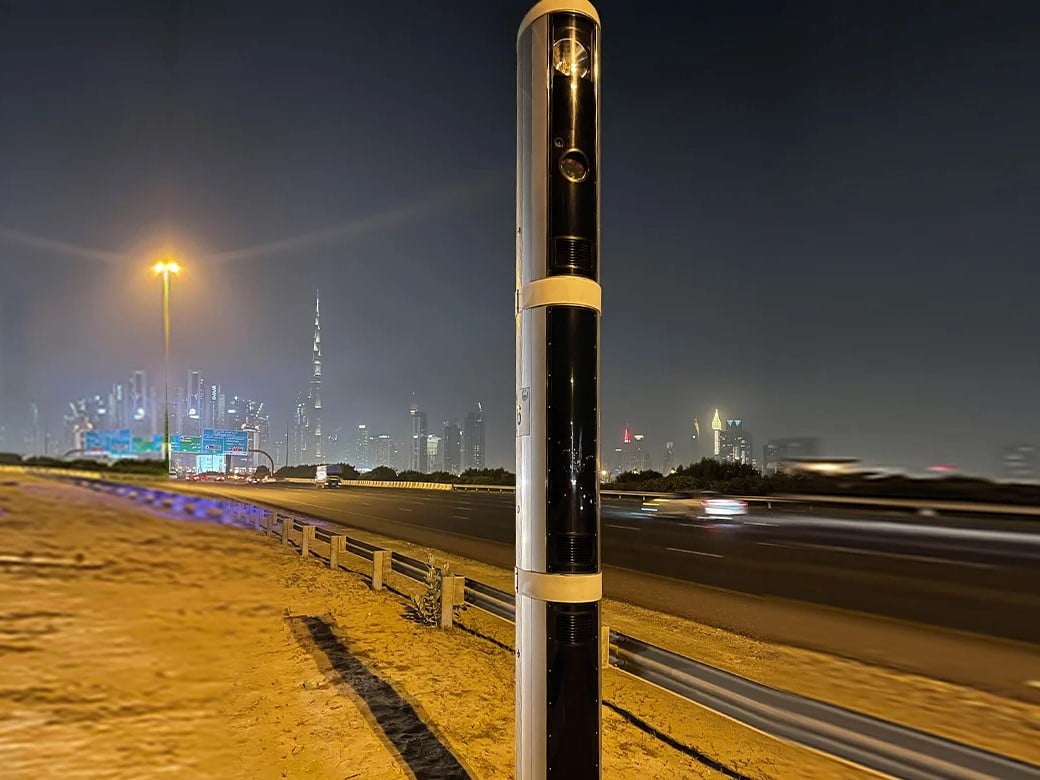
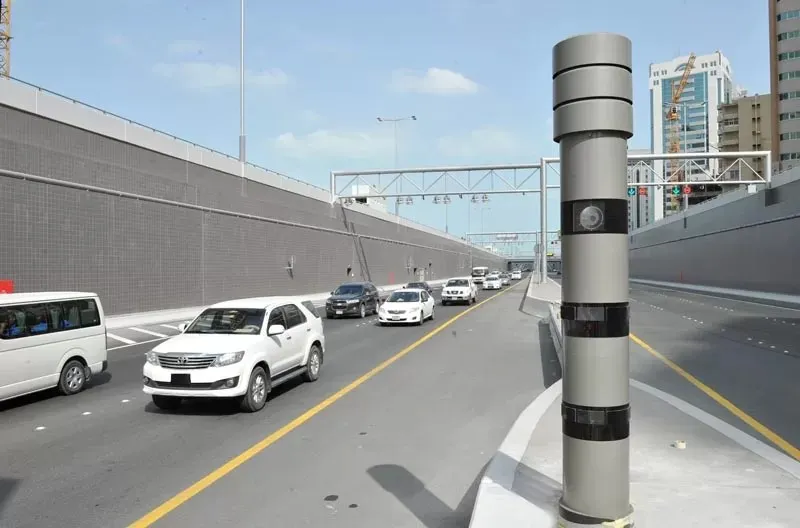
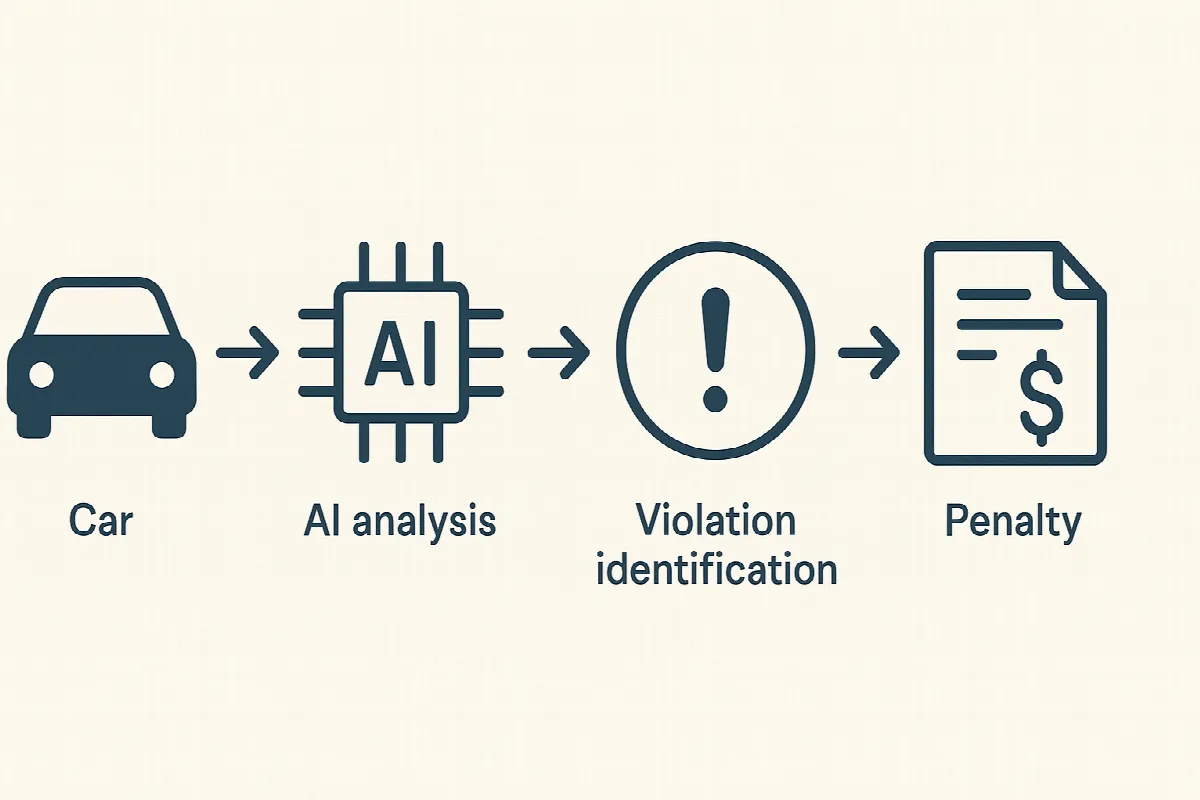
The revolutionary radar systems, developed by KTC International, utilise advanced artificial intelligence to analyse footage in real-time. According to Eyad Al Barkawi, General Manager of KTC International Co, the advanced radar can identify violations such as using mobile phones while driving, sudden lane deviations, failure to wear seat belts, improper lane discipline, and illegal tinting of windshields.
These portable devices offer remarkable flexibility, allowing traffic authorities to relocate them based on emerging traffic patterns and problem areas. With highways featuring up to 10 lanes, these systems are necessary for maintaining order and ensuring public safety.
The 8 Major Traffic Violations Detected by AI Radars
1. Speeding Violations
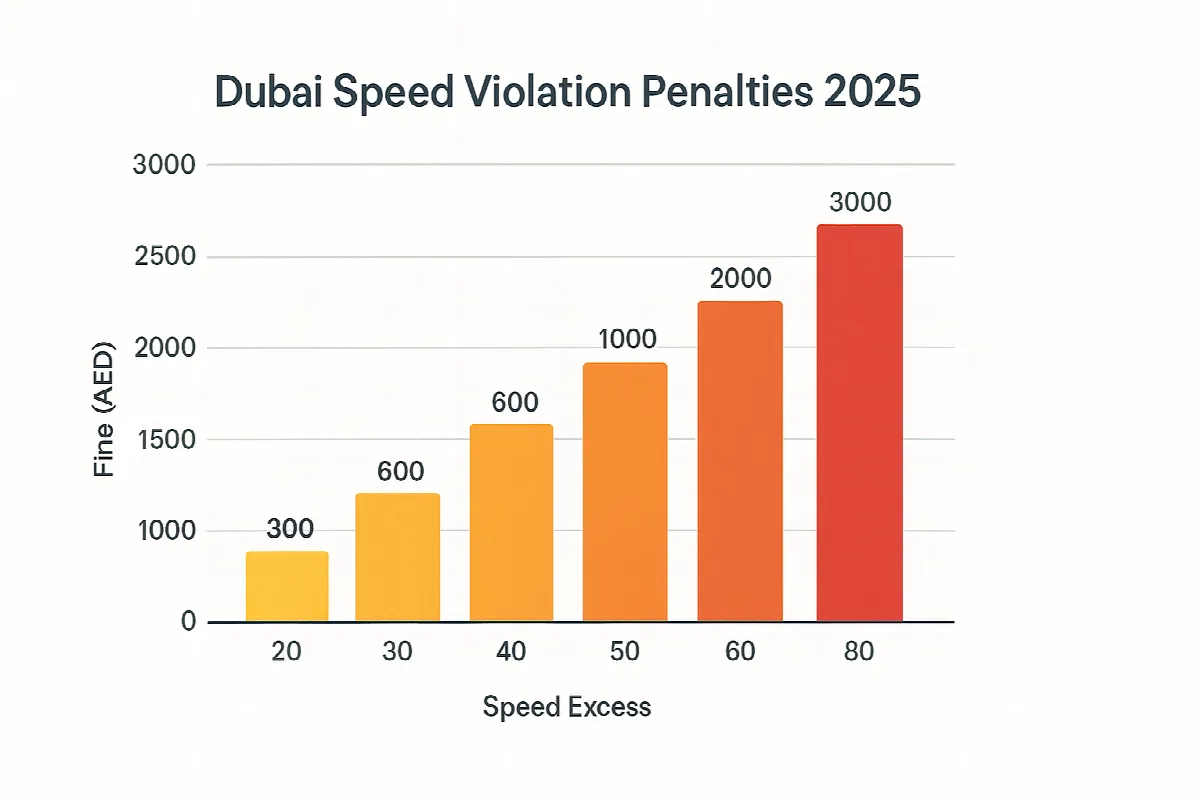
Dubai’s AI radars implement a tiered penalty system for speed violations:
Exceeding speed limit by more than 80 km/h:
- Fine: Dh3,000
- Black Points: 23
- Vehicle impoundment: 60 days
Exceeding speed limit by more than 60 km/h:
- Fine: Dh2,000
- Black Points: 12
- Vehicle impoundment: 30 days
Lesser speed violations include:
- More than 50 km/h: Dh1,000
- More than 40 km/h: Dh700
- More than 30 km/h: Dh600
- More than 20 km/h: Dh300
2. Red Light Violations
Running red lights carries severe consequences under UAE Traffic Law:
- Fine: Dh1,000
- Black Points: 12
- Vehicle impoundment: 30 days
- Vehicle release fee in Dubai: Dh50,000 (Decree No. 30 of 2023)
Dubai resident Sanjay Rizvi faced a Dh50,000 fine and one-month vehicle impoundment after running a red light in his electric car, highlighting the serious financial implications of this violation.
3. Lane Discipline Violations
The AI system monitors various lane-related infractions, each carrying a Dh400 fine:
- Driving on the hard shoulder
- Crossing solid lines
- Sudden swerving
- Tailgating
As many as 32 people died in road accidents caused by swerving since January till now in Dubai, making this a critical safety concern. Traffic experts recommend following the ‘two-second rule’ for maintaining safe distances.
4. Mobile Phone Usage While Driving
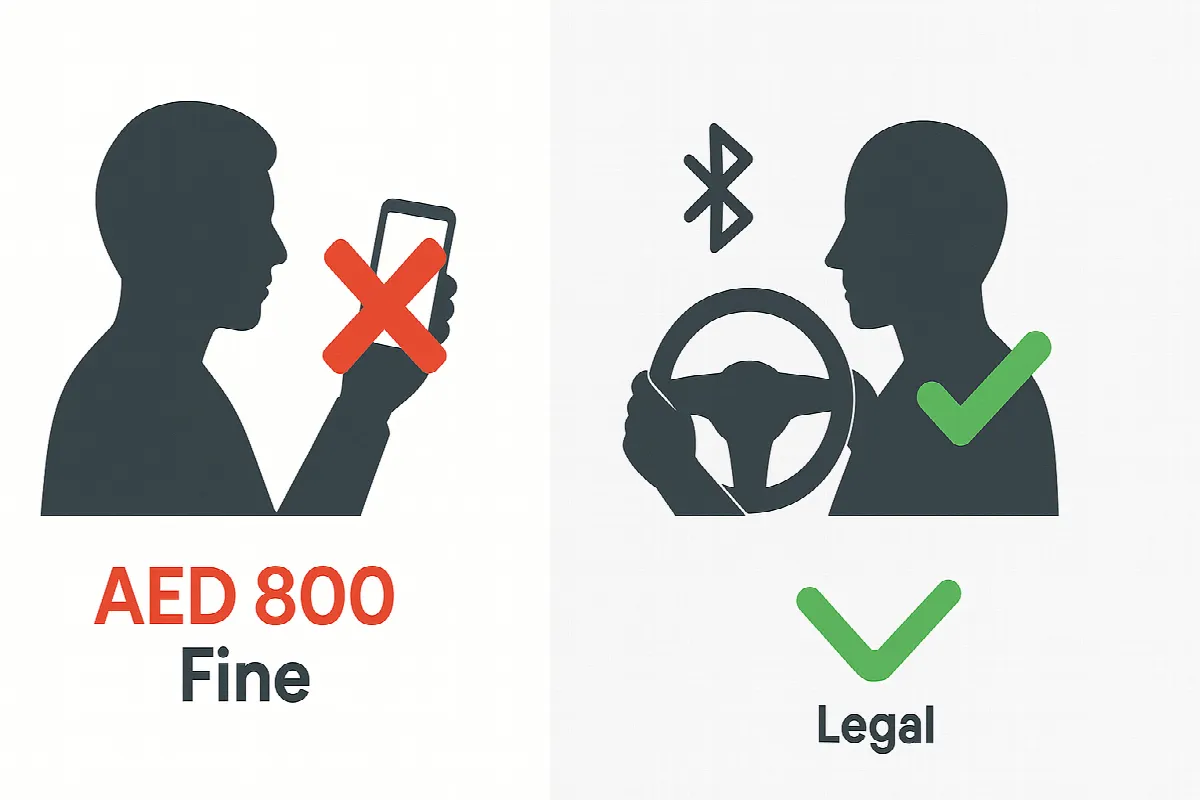
The radar system detects hand movements and phone screen illumination with remarkable precision:
- Fine: Dh800
- Black Points: 4
- Vehicle impoundment: 30 days (Dubai Police)
The system has already identified unusual violations, including instances of drivers reading newspapers while driving and using multiple phones simultaneously.
5. Seat Belt Violations
AI technology can distinguish between clothing and actual seat belts, even in low-light conditions:
- Fine: Dh400
- Black Points: 4
This enforcement extends to all passengers, as drivers remain responsible for passenger compliance with safety regulations.
6. Illegal Window Tinting
The UAE Traffic Law permits maximum 50% tinting on side and rear windows, while windshields must remain clear:
- Fine: Dh1,500
- Vehicle release fee in Dubai: Dh10,000 (Decree No. 30 of 2023)
Dubai Police recommend windshield tint should not exceed 5.5 inches (15cm) in width.
7. Excessive Vehicle Noise
Modified vehicles producing excessive noise face strict penalties under Article 2 of Decree No. 30 of 2023:
- Fine: Dh2,000
- Black Points: 12
- Vehicle release fee: Up to Dh10,000
Following a four-month trial, the system is now operational, targeting modified vehicles that exceed permissible noise levels.
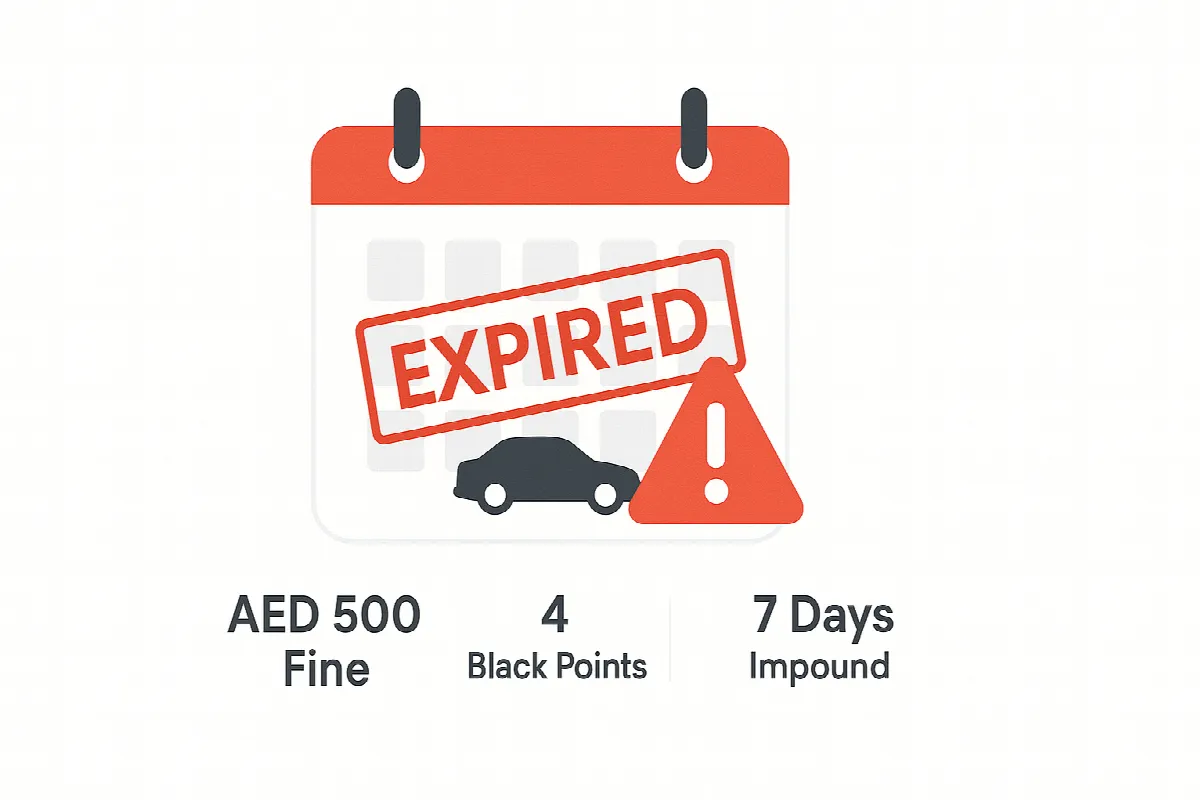
8. Expired Vehicle Registration
Driving with expired registration results in:
- Fine: Dh500
- Black Points: 4
- Vehicle impoundment: 7 days
The Impact on Road Safety
The deployment of AI-powered radars has contributed significantly to Dubai’s road safety achievements. Performance indicators showed remarkable improvement, including a decline in road fatalities from 21.7 per 100,000 people in 2007 to 1.8 in 2024. Pedestrian fatalities dropped from 9.5 to 0.3.
Statistical evidence demonstrates the effectiveness of these measures:
- Carelessness remains the main cause of accidents in the UAE, accounting for over 38% of incidents
- Speeding is one of the main causes of traffic accidents in the UAE. Estimated 13.1% of accidents involve speeding behaviours
- In 2024, eight major awareness campaigns reached more than 255,000 people, and over 24 educational videos highlighting traffic risks were viewed more than 117 million times
Enforcement Expansion and Future Developments
Initially deployed in commercial zones, the system has expanded to residential areas, leading to a noticeable improvement in driver behaviour. The technology continues evolving, with plans for further integration across Dubai’s extensive road network.
The strategic partnership between Dubai Police and the Roads and Transport Authority (RTA) has resulted in 53 joint programmes and initiatives in 2024, demonstrating a comprehensive approach to traffic safety.
Expert Recommendations for Drivers
Traffic safety experts emphasise the importance of adapting to these technological advances. Phil Clarke, director at 4E Road Safety and Transport Consultants, offers additional insights: “Any deterrent to drivers committing violations should be welcomed. However, severe penalties alone will not address all bad driver behaviour”.
Dr Mustafa Aldah, founder of MA-Traffic Consulting and former Dubai Police traffic studies section head, stresses the strategic importance of these measures, particularly with the UAE set to lower the driving age to 17 from March 29, 2025, these strict penalties serve as crucial deterrents.
Best Practices for Dubai Drivers:
- Maintain speed limits religiously – Dubai implements zero-tolerance policies
- Follow the two-second rule for safe following distances
- Use hands-free devices exclusively for phone calls
- Check window tinting compliance before driving
- Keep vehicle registration current to avoid impoundment
- Practice proper lane discipline on multi-lane highways
Financial Implications and Legal Considerations
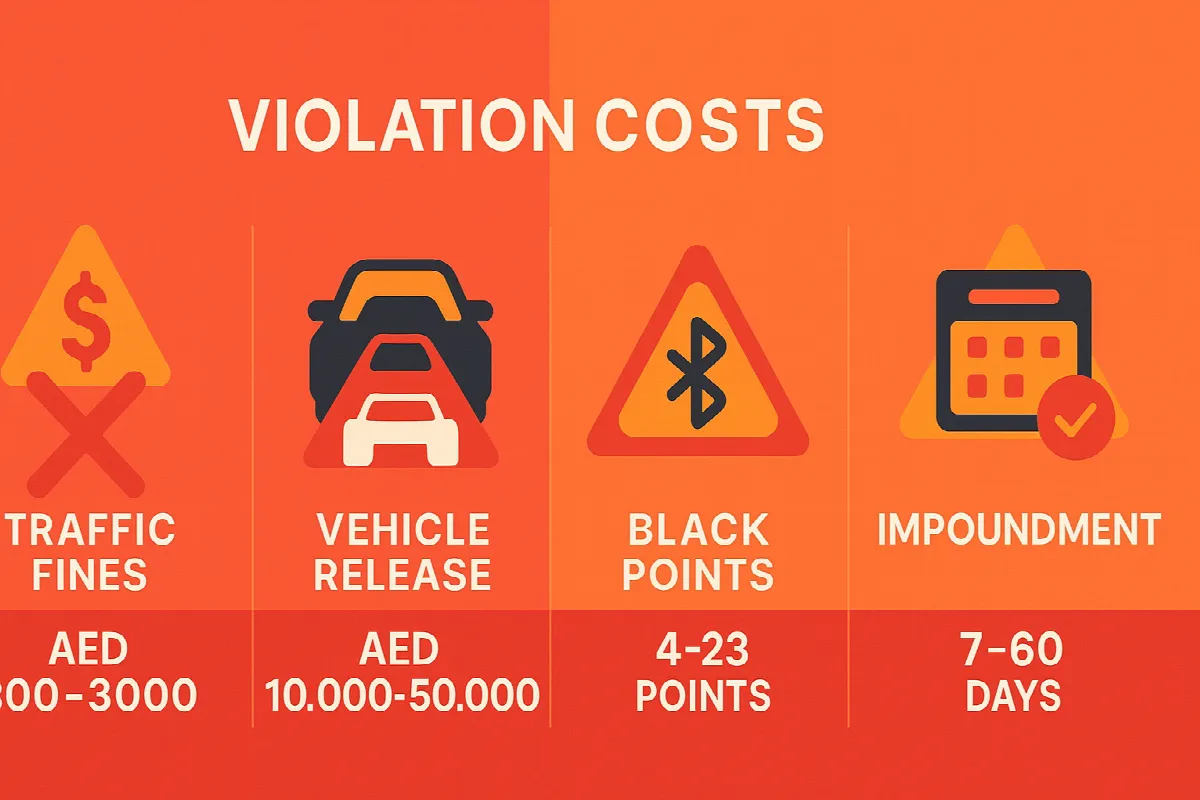
The financial impact of violations can be severe, with some penalties reaching Dh50,000 for vehicle release. For motorists, strict adherence to traffic regulations is more important than ever, as the financial implications of violations can be severe – with fines reaching up to Dh3,000 and vehicle release fees as high as Dh50,000.
Black points accumulation can lead to licence suspension, making compliance even more critical for professional drivers and residents who depend on their vehicles for employment.
Related Traffic Regulations and Enforcement
Dubai’s AI radar system operates alongside other enforcement measures, including traditional speed cameras, mobile patrols, and smart gate systems. Understanding the broader traffic enforcement landscape helps drivers maintain compliance across all situations.
For comprehensive information about UAE traffic laws and penalties, drivers should stay informed about ongoing regulatory changes. Additionally, understanding tailgating and aggressive driving penalties can help avoid common violations detected by AI systems.
Technology and Privacy Considerations
The AI radar systems operate with advanced privacy protections while maintaining enforcement effectiveness. The technology focuses on violation detection rather than general surveillance, addressing concerns about privacy while promoting road safety.
Data collected helps traffic authorities make informed decisions about infrastructure improvements and traffic management strategies, contributing to Dubai’s smart city initiatives.
Conclusion
Dubai’s AI-powered radar systems represent a significant advancement in traffic enforcement technology, capable of detecting multiple violations simultaneously with extraordinary precision. The death rate per 10,000 registered vehicles also fell from 4.2 to 0.45, demonstrating the effectiveness of comprehensive traffic safety measures.
For motorists, staying informed about these regulations and maintaining proper driving habits serves dual purposes: avoiding costly penalties and contributing to safer roads for everyone in Dubai. As technology continues advancing, drivers must adapt their behaviour to match these sophisticated enforcement capabilities.
The investment in AI-powered traffic enforcement reflects Dubai’s commitment to achieving its vision of becoming one of the world’s safest cities for road users. By understanding these eight critical violations and their penalties, drivers can make informed decisions that protect both their finances and the safety of all road users.
Frequently Asked Questions (FAQ)
Q: How accurate are Dubai’s AI radar systems in detecting violations? A: The AI-powered radars use advanced technology to analyse footage in real-time with high precision. They can detect violations even in low-light conditions and distinguish between clothing and seat belts accurately.
Q: Can the AI radars detect violations through tinted windows? A: Yes, the AI technology can detect certain violations like mobile phone use and seat belt violations even through legally tinted windows using infrared technology and advanced image analysis.
Q: What happens if I receive multiple violations from the same AI radar? A: Each violation detected by the AI radar is processed separately. If multiple violations occur simultaneously, you may receive separate fines and black points for each offence.
Q: How quickly are AI radar violations processed and issued? A: AI radar violations are typically processed automatically and appear in the system within 24-48 hours. Drivers can check their violation status through official police websites or mobile applications.
Q: Can I contest an AI radar violation if I believe it’s incorrect? A: Yes, drivers have the right to contest violations through official channels. The AI system captures video evidence of violations, which can be reviewed during the appeals process.
Q: Do AI radars operate 24/7 on all Dubai roads? A: The portable AI radar systems can be deployed across various locations based on police requirements. While not every road has permanent AI radars, the systems operate around the clock where deployed.
Q: What’s the difference between AI radar fines and traditional speed camera fines? A: AI radars can detect multiple violation types simultaneously, while traditional cameras typically focus on speed or red-light violations. The fine amounts remain consistent with UAE traffic law regardless of detection method.
Q: How do AI radars detect tailgating violations? A: The AI systems measure the distance between vehicles and calculate following times to determine if drivers are maintaining safe distances according to traffic regulations.
The UAE week, every Monday
The week's stories on jobs, visas, money and daily life in one short email. Unsubscribe in one click.