Dubai’s Urban and Rural Zone Division: How Residents Benefit from Smart Policing
Dubai Police divides emirate into urban and rural zones using AI technology. Discover how this improves emergency response, resource allocation, and safety for residents.
By Vadim Kouznetsov, published
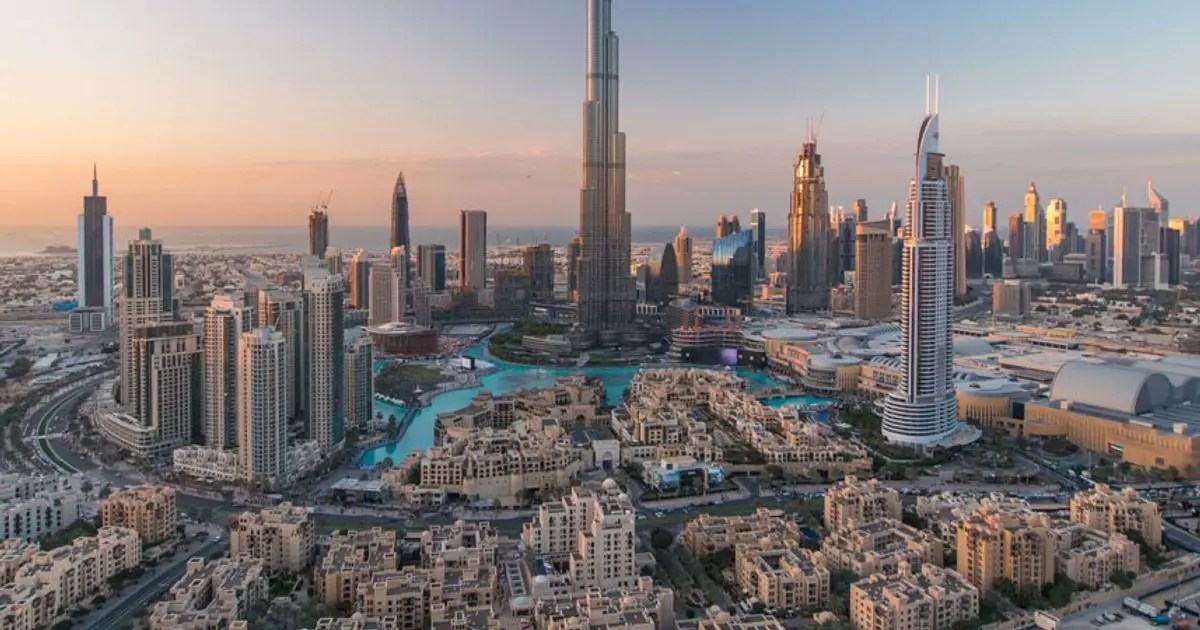
Dubai Police’s groundbreaking decision to divide the emirate into “urban” and “rural” zones marks a transformative approach to public safety and emergency response. This strategic initiative promises improved services for residents across all areas of Dubai through targeted resource allocation and cutting-edge technology integration.
Understanding the Zone Classification System
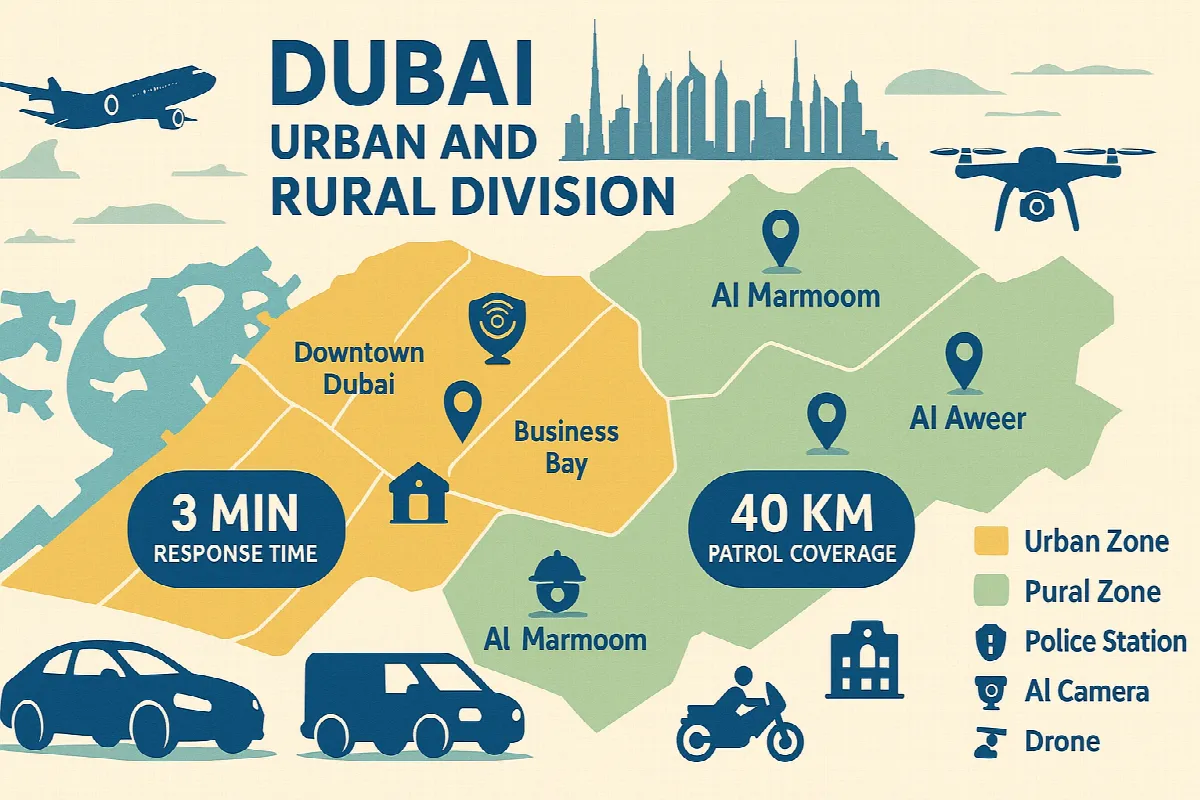
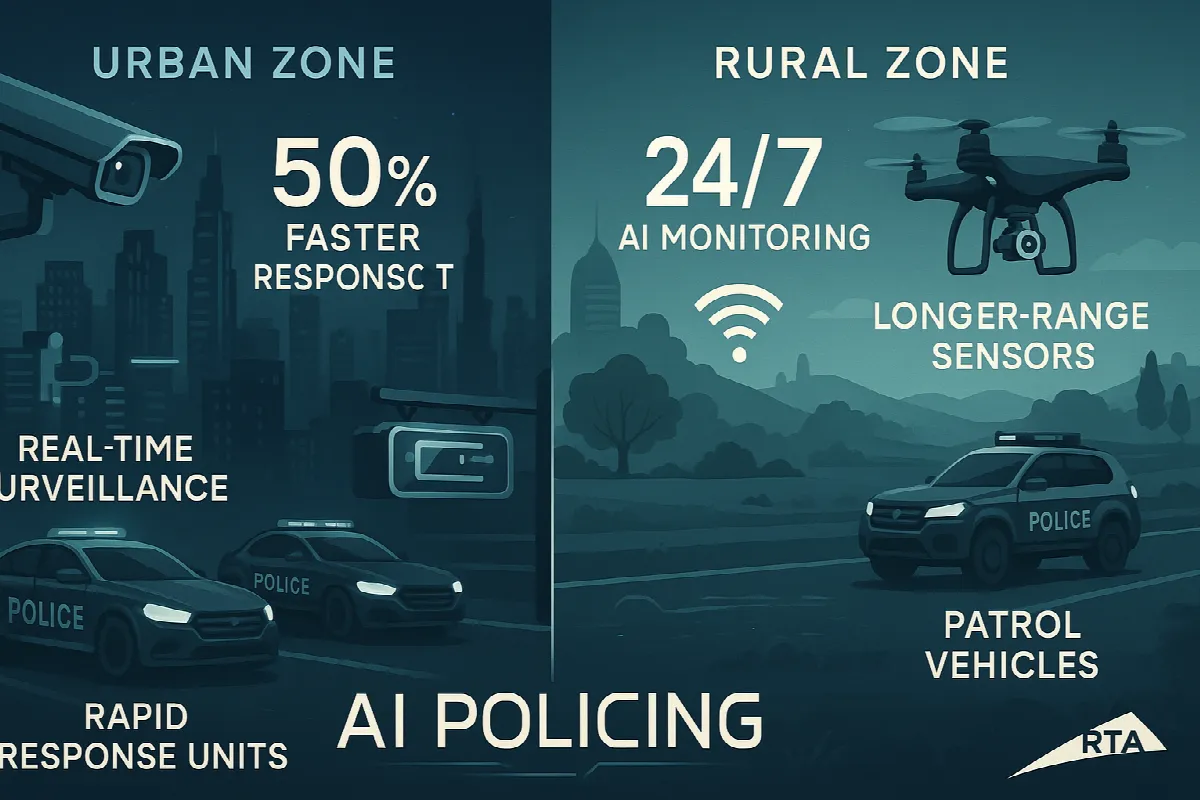
The new zoning system recognises the diverse nature of Dubai’s landscape. Urban zones encompass high-density areas like Downtown Dubai and Business Bay, whilst rural zones include areas such as Al Marmoom and Al Aweer. This strategic division allows Dubai Police to tailor their approach based on each zone’s specific characteristics and challenges.
Urban areas require different policing strategies compared to suburban or rural regions. High-density zones need rapid response units, whilst lower-density areas benefit from broader patrol strategies and enhanced surveillance technology.
Enhanced Emergency Response Times
The primary benefit for residents is significantly improved emergency response times. Urban planner Shweta Gandhi explains that high-density areas require “rapid, high-frequency response units, real-time surveillance, and predictive policing supported by AI.”
This approach acknowledges that Downtown Dubai faces different security challenges compared to Al Aweer. Dense urban areas deal with traffic congestion and diverse footfall, requiring immediate response capabilities. Meanwhile, rural zones benefit from:
- Broader patrol strategies
- Longer-range visibility tools
- Enhanced drone surveillance
- Strategic positioning of resources
AI Integration Transforms Public Safety
One of the most significant advantages comes from incorporating artificial intelligence into each zone. Dr Rana Shakaa from the American University of Sharjah notes that integrating AI with real-time data will enhance emergency response services dramatically.
Unlike Singapore’s rigid approach, Dubai’s model offers flexibility while leveraging strong digital infrastructure. This allows for:
- Streamlined services across different zones
- Local adaptation capabilities
- Smart technology deployment based on specific area needs
- Predictive policing for crime prevention
Strategic Resource Allocation
Khaled Alawadi from Khalifa University emphasises that higher-density areas typically require more resources and facilities. The zoning system allows Dubai Police to allocate resources more effectively, considering that “accidents, security, and urban area management require more power and enforcement.”
Dubai’s approach is unique because even suburban areas maintain relatively high density. This creates a blended urban environment that requires sophisticated planning and resource distribution.
Infrastructure and Transportation Connectivity
The zoning system impacts infrastructure development and transportation planning significantly. Dr Shakaa explains that zoning decisions influence infrastructure needs, which then affects how people and goods move within areas.
Key considerations include:
- Cost-effective utility extension to rural zones
- Mass transit planning based on density requirements
- Transportation as the key connector between zones
- Preventing isolation of certain areas through poor planning
Long-term Benefits for All Residents
Expert engineer Aileen Llagas advocates for a long-term, continuous planning approach. This ensures:
- Adaptable boundaries that can shift as Dubai develops
- Equal investment in safety and technology across all zones
- Inclusive development that doesn’t neglect any area
- Transparent governance of the zoning system
Challenges and Solutions
The initiative faces challenges, particularly given Dubai’s rapid growth and fragmented development patterns. Success depends on:
- Adaptive zoning strategies
- Context-sensitive implementation
- Regular review and adjustment of boundaries
- Continuous investment in all zones
Real-World Impact on Daily Life
Residents can expect several practical benefits:
In Urban Zones:
- Faster police response in emergencies
- Better crowd management during events
- Enhanced surveillance for crime prevention
- Improved traffic flow through smart technology
In Rural Zones:
- Specialised patrol strategies for larger areas
- Drone surveillance for enhanced security
- Technology adapted to dispersed settlement patterns
- Maintained service quality despite lower density
The Future of Dubai’s Zoning System
This initiative sets a precedent for smart city development globally. By combining spatial planning with modern technology, Dubai creates a model that other cities may adopt. The success of this approach depends on maintaining equity, transparency, and adaptability.
Related Articles
Learn more about Dubai’s innovative approaches to safety and urban planning:
- Dubai Police AI Traffic Radars Detect 8 Major Violations
- Dubai’s Cutting-Edge AI Home Security System
- Dubai Police Recruitment: Join UAE’s Elite Force
Conclusion
Dubai’s urban and rural zoning initiative represents a forward-thinking approach to public safety and urban management. By acknowledging the different needs of various areas and leveraging technology accordingly, residents across all zones benefit from improved services, faster emergency response, and better resource allocation.
Stay Informed
Follow JobXDubai for the latest updates on Dubai’s smart city initiatives, safety measures, and urban development news.
For career opportunities in Dubai’s growing tech and public safety sectors, visit JobXDubai.com
The UAE week, every Monday
The week's stories on jobs, visas, money and daily life in one short email. Unsubscribe in one click.