UAE Defamation Laws: Dh500,000 Fine and 5-Year Jail Term for Damaging Nation’s Reputation Online
Abu Dhabi Judicial Department warns of severe penalties for online defamation in the UAE. Learn about the Dh500,000 fines and 5-year imprisonment for content that harms the UAE’s reputation.
By Vadim Kouznetsov, published

Abu Dhabi authorities issue stern warning against ridiculing or harming UAE’s reputation through online content
Last updated: 30 April 2025
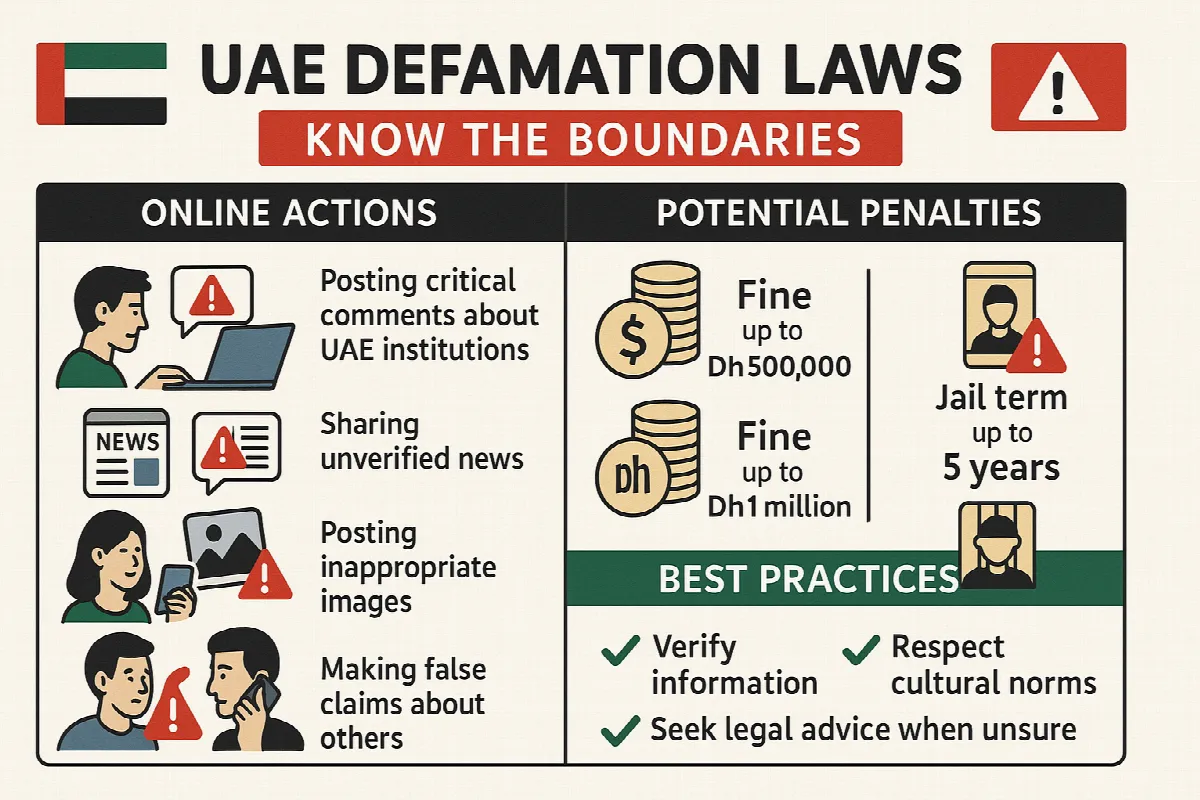
The Abu Dhabi Judicial Department has issued a stark reminder to the public regarding the severe legal consequences of damaging the UAE’s reputation online. According to the recent advisory posted on X (formerly Twitter), individuals who publish content that ridicules or harms the country’s reputation could face imprisonment for up to five years and fines of up to Dh500,000.
Recent Warning from Abu Dhabi Authorities
On Tuesday, 29 April 2025, the Abu Dhabi Judicial Department released an advisory highlighting the penalties outlined in Article 25 of Federal Law No. 34 of 2021 regarding combating rumours and cybercrimes.
The notice specifically warns against:
- Publishing information, news, or data
- Sharing visual images or materials
- Spreading rumours
- Any content posted on websites, information networks, or through technological means
The key factor is the intention behind such content—if it aims to ridicule or harm the reputation, prestige, or status of the UAE, its authorities, or institutions, it falls under this strict legal provision.
This recent advisory follows a similar warning issued by the Abu Dhabi Police earlier this month, on 12 April, urging the public to avoid spreading rumours and fake information. The police emphasized the importance of verifying information before sharing news on social media platforms to ensure public safety.
Understanding UAE’s Defamation Laws
Defamation laws in the UAE are designed to protect the reputation of individuals, organizations, and state institutions. These regulations reflect the nation’s commitment to maintaining social harmony and decency.
What Constitutes Defamation in the UAE?
Under UAE law, defamation is defined as making false statements about a person or organization that harms their reputation. It involves distributing damaging material to third parties that criticizes the subject’s reputation, social standing, or moral character.
Defamation in the UAE falls into two main categories:
1. Libel
- Definition: Defamation in written or published form
- Examples: Articles, blog posts, social media posts, emails, or any other written communication containing false accusations
- Digital Context: In today’s connected world, this often involves content shared on social media platforms, websites, forums, or messaging apps
2. Slander
- Definition: Defamation in spoken form
- Examples: Verbally spread false rumours, defamatory comments made in speeches, or derogatory remarks in personal conversations
- Digital Context: Voice messages, podcasts, or video content with spoken defamatory statements
For a statement to be considered defamatory under UAE law, it must meet three key criteria:
- Falsehood: The statement must be untrue
- Harm: The statement must have caused damage to the reputation of the target
- Intent: The defamation must have been made with malicious intent or reckless disregard for the truth
Legal Framework and Penalties
The UAE’s approach to defamation is governed by multiple legal frameworks, with particularly severe penalties for online violations:
Penal Code (Federal Law No. 3 of 1987)
Articles 372 through 379 cover defamation-related crimes:
- Article 372: Imprisonment for up to one year and/or a fine of up to Dh20,000 for written or oral false statements that damage someone’s reputation
- Article 373: Imprisonment for up to one year and/or a fine of up to Dh10,000 for insults or defamatory remarks made with the intent to harm dignity
- Article 374: Fines or imprisonment for up to one year for defamation involving the disclosure of confidential information or personal data
Cybercrime Law (Federal Law No. 5 of 2012, updated by Federal Law No. 34 of 2021)
This law specifically addresses online defamation with significantly harsher penalties:
- Article 20 (in original law): Imprisonment for up to five years and/or a fine of up to Dh1 million for defamation or insults made via social media, emails, or other digital platforms
- Article 25 (in updated law): Imprisonment for up to five years and a fine not exceeding Dh500,000 for publishing content intended to ridicule or harm the reputation of the UAE, its authorities, or institutions
Additional Penalties
Legal experts note that residents who post and share anti-social and morally unethical content on social media that contradicts the country’s tolerance and co-existence policy could face fines of up to Dh1 million and imprisonment.
Special Considerations for Expatriates and Visitors
For the large expatriate community and visitors in the UAE, understanding these defamation laws is particularly important. Unlike in some Western countries where freedom of speech might provide broader protections, the UAE’s legal framework places significant emphasis on protecting reputation and dignity.
Social Media Usage
Expatriates should be particularly cautious when:
- Commenting on UAE policies or institutions
- Sharing news articles without verifying their accuracy
- Participating in online discussions about sensitive topics
- Posting photographs that might be considered inappropriate or disrespectful
Workplace Communications
In professional settings, care should be taken when:
- Sending emails that contain criticism of colleagues or organizations
- Making statements about competitors or other businesses
- Discussing workplace issues on social media platforms
- Sharing information about employers or clients
Defenses Against Defamation Claims
If accused of defamation in the UAE, several defenses may be available:
1. Truth
Demonstrating that the statement made is factually true can serve as a defense. However, truth alone may not always be sufficient if the statement was made with malicious intent.
2. Public Interest
Statements made in the public interest or as part of fair comment may be defensible if they are made responsibly and without malice. This defense has limitations in the UAE compared to some other jurisdictions.
3. Privilege
Certain communications are protected under legal privilege, such as statements made in court proceedings or during legal consultations.
How to File a Defamation Complaint
For those who believe they have been defamed, the process to seek legal recourse typically involves:
1. Gathering Evidence
Collect all relevant evidence, including:
- Screenshots of social media posts or websites
- Copies of printed publications
- Recordings of verbal statements
- Witness accounts
- Documentation of any damages suffered
2. Filing a Complaint
Submit a formal complaint to:
- The UAE police
- The public prosecutor’s office
- Relevant cybercrime authorities (for online defamation)
3. Legal Proceedings
If the complaint is accepted:
- The case will proceed through the UAE legal system
- You may need to present evidence in court
- Legal representation is recommended
Best Practices to Avoid Defamation Issues
To navigate the UAE’s strict defamation laws safely, consider these guidelines:
For Social Media Users
- Verify information before sharing
- Avoid commenting on sensitive political or social issues
- Refrain from posting negative content about individuals or organizations
- Be cautious about sharing news from unverified sources
- Think twice before posting emotional responses to current events
For Businesses and Organizations
- Implement clear social media policies for employees
- Train staff on UAE defamation laws
- Establish approval processes for public communications
- Avoid negative marketing that criticizes competitors
- Ensure all published content is factually accurate
For Content Creators and Media
- Fact-check all information thoroughly
- Seek legal advice for potentially controversial content
- Maintain documentation to support published claims
- Consider the intent and impact of the content
- Understand the heightened scrutiny for digital publications
Recent Case Examples
While specific cases often remain confidential in the UAE legal system, several types of scenarios have resulted in defamation proceedings:
- Social Media Criticisms: Individuals facing charges after posting criticism of government policies or institutions on platforms like Facebook, Twitter, or Instagram
- False Business Allegations: Cases involving unsubstantiated claims about business practices or product quality
- Personal Reputation Attacks: Instances of personal attacks on social media targeting an individual’s character or morality
- Spreading Unverified News: Sharing false information about public events or crises that caused panic or damaged institutional reputation
Conclusion
The UAE’s defamation laws reflect the nation’s cultural values regarding reputation, dignity, and social harmony. With the digital landscape constantly evolving, authorities are increasingly vigilant about online content that could harm the reputation of the country, its institutions, or its residents.
The recent warning from the Abu Dhabi Judicial Department serves as an important reminder of the serious legal consequences for violating these laws—up to five years imprisonment and fines of Dh500,000.
For residents, expatriates, and visitors, understanding and respecting these legal boundaries is essential for successfully navigating life and work in the UAE. When in doubt, the safest approach is to verify information, consider the potential impact of your words, and seek legal advice when necessary.
Disclaimer: This article is for informational purposes only and does not constitute legal advice. For specific guidance on UAE defamation laws, please consult with a qualified legal professional.
Additional Reading Material
The UAE week, every Monday
The week's stories on jobs, visas, money and daily life in one short email. Unsubscribe in one click.