UAE Central Bank Sanctions Bank for Anti-Money Laundering Violations
CBUAE imposes financial penalty on bank for non-compliance with anti-money laundering policies following regulatory examination. Learn about UAE’s financial crime prevention framework.
By Vadim Kouznetsov, published

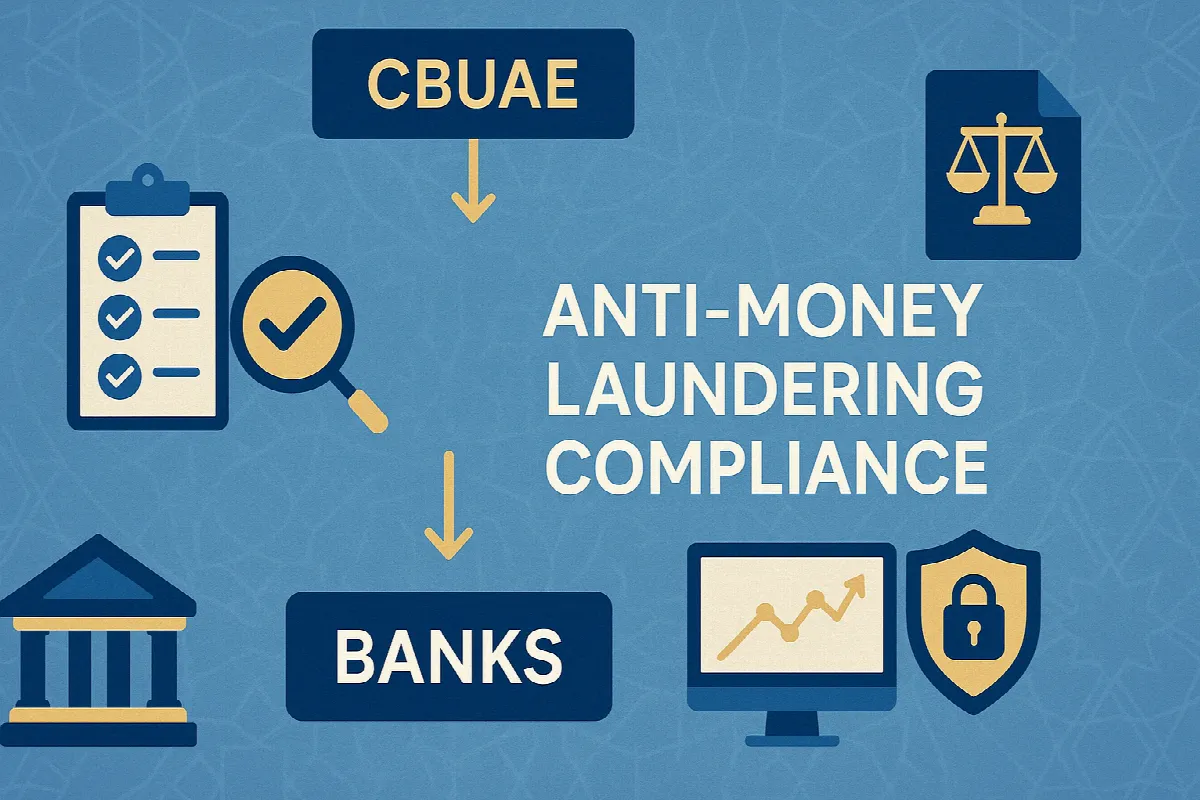
The Central Bank of the UAE (CBUAE) has taken decisive action against a bank operating within the country, imposing a financial sanction for failing to adhere to policies and procedures related to anti-money laundering and combating the financing of terrorism and illegal organisations.
Regulatory Enforcement Action
According to official statements, the penalty was implemented following a thorough examination conducted by the CBUAE. The sanction was issued under Article 14 of the Federal Decree Law No. 20 of 2018 on Anti-Money Laundering and Combating the Financing of Terrorism and Illegal Organisations, including its subsequent amendments.
The CBUAE maintains strict oversight through its supervisory and regulatory functions, striving to guarantee that all banks and their personnel comply with UAE laws, regulations, and standards adopted by the central bank. This careful oversight helps protect the transparency and integrity of both the banking sector and the broader UAE financial system.
This enforcement action demonstrates the UAE’s ongoing commitment to maintaining high standards within its financial sector and aligning with global best practices to prevent financial crimes.
Financial Crime Prevention Framework
The UAE has consistently strengthened its financial crime prevention framework in recent years, implementing comprehensive measures to combat money laundering and terrorist financing activities. These efforts have become increasingly important as the global financial landscape becomes more sophisticated.
Banks operating in the UAE must implement proper controls, customer due diligence procedures, and reporting mechanisms for suspicious transactions. Financial institutions that fail to meet these requirements face substantial penalties, as evidenced by this recent enforcement action.
Implications for Banking Sector
This sanction serves as a clear reminder to all financial institutions operating in the UAE about the importance of compliance with anti-money laundering regulations. Banks must prioritise compliance programmes and invest in appropriate systems to detect and prevent financial crimes.
For customers and stakeholders, the action reinforces confidence in the UAE banking system, demonstrating that regulatory authorities actively monitor and enforce compliance with financial crime prevention standards.
As financial technology advances and payment systems evolve, banks will need to continuously update their compliance frameworks to address emerging risks and vulnerabilities in the financial system.
The Broader Context
This enforcement action comes as part of broader efforts across the UAE to enhance financial sector regulation and supervision. The UAE has made significant progress in addressing recommendations from international bodies regarding financial crime prevention.
By taking strong regulatory action, the UAE continues to position itself as a stable and well-regulated financial hub in the Middle East, protecting its banking system from misuse while supporting legitimate business activities.
This article was published on April 21, 2025, by JobXDubai.
Additional Reading Material
The UAE week, every Monday
The week's stories on jobs, visas, money and daily life in one short email. Unsubscribe in one click.