Dubai Vehicle Growth at 8%: New Ownership Rules Proposed to Tackle Traffic Crisis
UAE government considers stricter car ownership regulations as Dubai’s vehicle growth hits 8%, four times the global average, causing severe traffic between Dubai and Sharjah.
By Vadim Kouznetsov, published
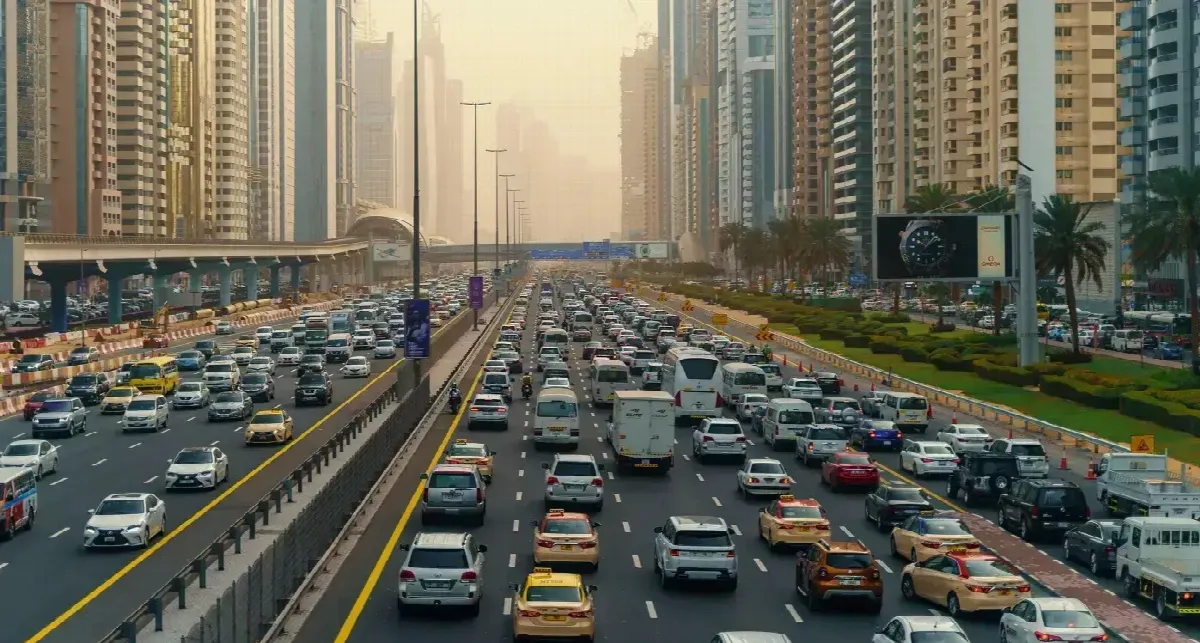
The UAE government is considering stricter vehicle ownership rules as Dubai’s vehicle growth rate hits 8%, far exceeding the global average of 2%.
Dubai’s Growing Traffic Problem
Dubai’s roads are facing unprecedented pressure as vehicle numbers continue to surge at an abnormal rate of 8% – four times the global average of 2%. This alarming statistic was highlighted by Suhail Al Mazrouei, Minister of Energy and Infrastructure, during a recent Federal National Council (FNC) meeting.
The minister stressed that this rapid growth necessitates immediate action, including updated policies and legislation concerning vehicle ownership and registration across the UAE.
“The Ministry requested that the issue be included in the UAE Government’s Annual Meetings to mobilise efforts and enhance coordination with local authorities,” Al Mazrouei stated.

Government’s Multi-Pronged Approach
To address this pressing concern, the Ministry has formed a dedicated team comprising representatives from local governments and the Ministry of Interior. This collaborative effort aims to:
- Study the traffic congestion problem in-depth
- Develop comprehensive solutions
- Propose effective measures to the Cabinet
The team has already suggested several potential solutions, including:
- Improving road corridors connecting Dubai with other emirates
- Developing new roadways
- Better integrating mass transit systems across the country
- Introducing new public transport options
The Scale of the Problem
FNC member Adnan Al Hammadi, who raised the question about growing congestion between Dubai and Sharjah, presented some startling figures:
- 1.2 million cars enter Dubai daily (up from 850,000 just 18 months ago)
- Dubai’s Traffic and Licensing Department issues approximately 4,000 new driver’s licences each day
- The combined vehicle increase in Dubai, Sharjah, Ajman, and Umm Al Quwain stands at 23%
Human Impact of Traffic Congestion
The human cost of this congestion is substantial. Al Hammadi highlighted that:
- An average employee spends 460 hours annually commuting between Dubai and Sharjah
- This equates to 60 working days lost to traffic – one-third of the total working days
- Federal government employees often leave home after dawn prayers and return after 8pm
- Many Emiratis wait in mosques, car parks, and cafés for traffic to ease before heading home
- Some residents have resorted to renting temporary accommodation closer to their workplaces
“Traffic congestion on those roads is an eternal and painful problem; all road users suffer from it, and we need prompt solutions,” Al Hammadi emphasised.
Development Timeline
When questioned about the implementation timeline, Al Mazrouei confirmed that “Development work on key federal corridors started in 2024 and is currently ongoing.”
However, Al Hammadi expressed concern that despite being told over a year ago that solutions would be implemented by the second half of 2024, traffic conditions continue to worsen.
Looking Forward
As Dubai continues its rapid growth, finding effective solutions to traffic congestion remains a top priority for both the government and residents alike. The proposals currently under consideration represent a significant step toward addressing this challenge.
The success of these initiatives will depend on close collaboration between federal and local authorities, combined with innovative approaches to urban planning and transportation management.
For now, commuters between Dubai and Sharjah must continue to plan their journeys carefully as the government works to implement long-term solutions to this pressing issue.
Stay with JobXDubai for the latest updates on transportation developments across the UAE.
Additional Reading Material
The UAE week, every Monday
The week's stories on jobs, visas, money and daily life in one short email. Unsubscribe in one click.