Work in the United Arab Emirates (UAE): Complete Guide to Finding Jobs in 2025
Discover how to find jobs, secure visas, and succeed in the UAE job market. Expert tips, salary insights, and cultural guidance for working in Dubai and Abu Dhabi.
By Vadim Kouznetsov, published

Looking to work in the UAE? From finding jobs and securing visas to understanding salaries and adapting to local culture, this comprehensive guide covers everything you need to know to start your career in Dubai, Abu Dhabi, and beyond.

Introduction: Why Work in the UAE?
The United Arab Emirates offers one of the most attractive employment destinations for professionals worldwide, combining tax-free salaries with a high standard of living and world-class infrastructure. Made up of seven emirates, of which Abu Dhabi and Dubai are the most populous, the UAE has experienced remarkable economic growth in recent years, creating abundant opportunities across multiple sectors.
With English widely used as the business language and expats making up approximately 90% of the population, the UAE presents a uniquely welcoming environment for foreign professionals. The multicultural landscape, coupled with ambitious development projects and a robust economy, makes it an ideal destination for career advancement and professional growth.
According to research from JobXDubai, the UAE job market in 2025 is particularly vibrant, with a recent study revealing that 73% of workers are contemplating job changes within the next year, driven by growing emphasis on personalised benefits, especially in health and wellness programmes. This high turnover creates continuous opportunities for new entrants to the market.
Finding Jobs in the UAE
Major Industries and Job Opportunities
The UAE economy has successfully diversified beyond its oil-rich foundations, with several thriving sectors offering excellent career prospects:
- Technology and Digital Transformation: With the UAE’s push toward becoming a smart city, there’s high demand for AI specialists, blockchain developers, and cybersecurity experts
- Finance and Banking: The Dubai International Financial Centre (DIFC) serves as a regional hub for banking, investment, and fintech innovation
- Healthcare: The medical sector is experiencing rapid growth with new hospitals and clinics opening regularly
- Construction and Real Estate: Iconic development projects continue to create opportunities for architects, engineers, and project managers
- Tourism and Hospitality: As a global travel destination, this sector offers numerous roles in hotel management, events, and customer service
- Logistics and Supply Chain: The demand for supply chain and logistics managers is growing as companies seek efficient and cost-effective logistics solutions
- Renewable Energy: Sustainability initiatives are creating new positions in solar power and green technology
Top Companies to Work For
Several prestigious organizations offer excellent career opportunities and benefits packages:
- AstraZeneca Gulf (pharmaceutical)
- Apparel Group (retail)
- DHL (logistics)
- Etihad Airways
- FedEx Express (logistics)
- Hilton Worldwide (hospitality)
- Marriott (hospitality)
- Microsoft Gulf
- Omnicom Media Group MENA
- Splash (fashion)
- THE One (retail)
- Weber Shandwick (communications)
Using JobXDubai to Find Your Perfect Role
JobXDubai.com has established itself as the fastest-growing job board in the UAE, offering several unique advantages for job seekers:
- AI-Powered Candidate Marketplace: JobXDubai’s advanced AI technology ensures perfect matches between candidates and employers in Dubai by analyzing skills, experience, and preferences. Register for free to create your professional profile and get connected with opportunities that match your potential.
- CV Enhancement Services: JobXDubai offers professional CV writing services for just $49, which can increase your chances of landing a job by 3-4 times. Their expert resume writers craft your CV to stand out in Dubai’s competitive job market, where recruiters typically spend less than 30 seconds reviewing each resume.
- Job Assistance Program: For more comprehensive support, JobXDubai offers a 2-month job assistance program that includes CV preparation, LinkedIn optimization, job search support, interview preparation, and personalized consultation. Contact [email protected] for details on this service.
- Latest Market Insights: JobXDubai’s blog (blog.jobxdubai.com) provides valuable information on salaries, living costs, hiring trends, and strategic job search timing in the UAE market.
Best Times to Apply for Jobs in the UAE
Timing your job application strategically can significantly improve your chances of success. According to JobXDubai’s research, the UAE job market presents distinct patterns throughout the year, with specific months offering better opportunities for securing employment.
Industry experts at JobXDubai recommend understanding peak hiring periods to gain an advantage. For example, January to March often sees increased recruitment activity following new annual budgets, while September to November represents another hiring surge after the summer slowdown.
How to Secure a Job Before Moving
Many expatriates find it advantageous to secure employment before relocating to the UAE. Here are effective strategies to achieve this:
- Leverage International Company Transfers: If you currently work for a multinational company with UAE operations, requesting an internal transfer can be the most straightforward path.
- Utilize Online Job Portals: Beyond JobXDubai.com, explore other popular platforms like:
- Akhtaboot
- BAC Middle East
- Dubizzle
- GulfTalent.com
- Indeed UAE
- Naukrigulf.com
- Network Strategically: Connect with UAE-based professionals in your industry through LinkedIn and professional associations.
- Consider Recruitment Agencies: Specialized agencies can represent your candidacy to potential employers while you’re still abroad.
- Research UAE CV Format: The UAE expects a different CV format than what’s standard in many Western countries. JobXDubai’s CV writing service can prepare your resume according to local expectations, significantly improving your chances of getting interviews.

Which Jobs Can You Get Easily in Dubai?
While competition exists across all sectors, certain positions remain in high demand and can be easier to secure for qualified candidates. According to recent market analysis by JobXDubai, these roles include:
Event Industry Positions
- Event Light Designer/Operator/Technician
- Event Coordinators and Managers
Logistics and Warehousing
- Storekeeper
- Warehouse Specialist
- Heavy Truck Driver
Administrative Roles
- Receptionist
- Administrative Assistants
Sales and Real Estate
- Real Estate Sales Consultant
- Sales Executives
Healthcare Professionals
Nursing is one of the most in-demand jobs in UAE, and the need for skilled nurses (and other medical professionals) is expected to grow even more in the coming years. Healthcare assistants who work alongside nurses and doctors are also in high demand.
Technology and Digital Skills
In 2025, the most sought-after tech roles in the UAE include AI specialists, fintech experts, and cybersecurity professionals, driven by the UAE’s significant investment in technology and strategic growth sectors.
Teaching and Education
Arabic and ESL (English as a Second Language) instructors are the most in-demand teaching jobs in Dubai , with numerous opportunities in the emirate’s expanding education sector.
Understanding UAE Work Visas and Requirements
Types of Work Permits and Visas
Working in the UAE requires proper documentation, which typically includes:
- Entry Permit: Your employer will initially arrange this to allow you to enter the UAE.
- Residency Visa: After entering the UAE, you’ll undergo medical testing to obtain this longer-term visa.
- Work Permit/Labor Card: This is issued by the Ministry of Labor and authorizes you to work legally.
Visa Requirements and Process
To obtain a work visa in the UAE, you’ll need:
- A valid passport with at least six months of validity
- Job offer letter or employment contract from a UAE-based company
- Educational certificates attested by the UAE embassy in your home country
- Passport-sized photographs
- Medical clearance from an approved health center in the UAE
Your employer typically sponsors your visa and handles much of the application process. Working without a proper work permit is illegal and carries severe penalties.
Family Sponsorship Requirements
If you plan to bring family members to the UAE:
Dubai requires proof that you have a salary of at least Dhs 10,000 per month before you can obtain an entry permit for your loved ones. Additional documentation and financial requirements may apply depending on your specific circumstances.
UAE CV Requirements and Professional Services
How UAE CVs Differ from Western Formats
Resumes in the UAE follow different conventions than those in Western countries. Key differences include:
- Personal Information: UAE CVs typically include personal details such as date of birth, nationality, marital status, and sometimes a photograph.
- Length: UAE CVs tend to be more comprehensive, often 2-3 pages.
- Format and Design: Clean, professional layouts with color accents are appreciated.
- ATS Optimization: Many employers use Applicant Tracking Systems to screen CVs, making keyword optimization crucial.
JobXDubai’s Professional CV Writing Service
To maximize your chances of success in the competitive UAE job market, JobXDubai offers professional CV writing services for just $49. Their team of expert writers:
- Creates UAE-specific formats that appeal to local recruiters
- Optimizes your CV with relevant keywords for ATS compatibility
- Highlights achievements rather than just responsibilities
- Adapts your experience to showcase relevance to UAE market needs
Research shows that a professionally written CV can increase your chances of landing a job by 3-4 times in the UAE market. For more information or to order this service, visit JobXDubai Professional CV.
Salaries and Cost of Living
Average Salaries in the UAE
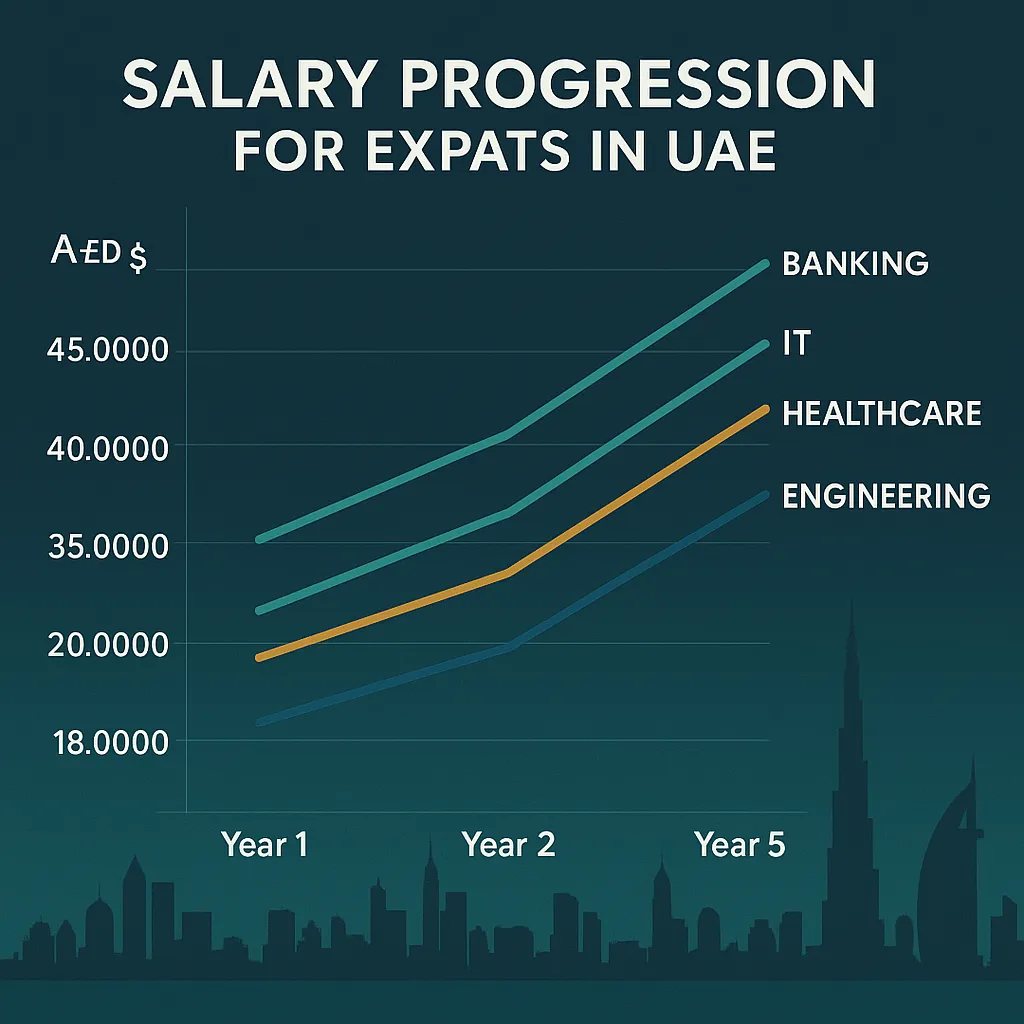
Salaries in the UAE vary widely based on industry, experience, and nationality. According to recent data from JobXDubai:
The average salary in Dubai is approximately 15,700 AED (£3,400) per month or 190,000 AED (£40,800) annually. This tax-free income makes the UAE particularly attractive to global professionals.
A “good” salary in Dubai ranges between 18,000-30,000 AED monthly, depending on your lifestyle and family situation. For expatriates, 15,000-25,000 AED monthly generally provides access to quality housing, dining, leisure activities, and savings potential.
Tax Benefits for Expatriates
One of the most significant advantages of working in the UAE is the absence of personal income tax. The average annual salary in Dubai after tax is USD $57,500 in 2025, equating to a monthly income of around USD $4,790. The absence of income tax allows expats to retain their entire gross salary, a significant advantage compared to many Western countries.
Cost of Living and Budgeting
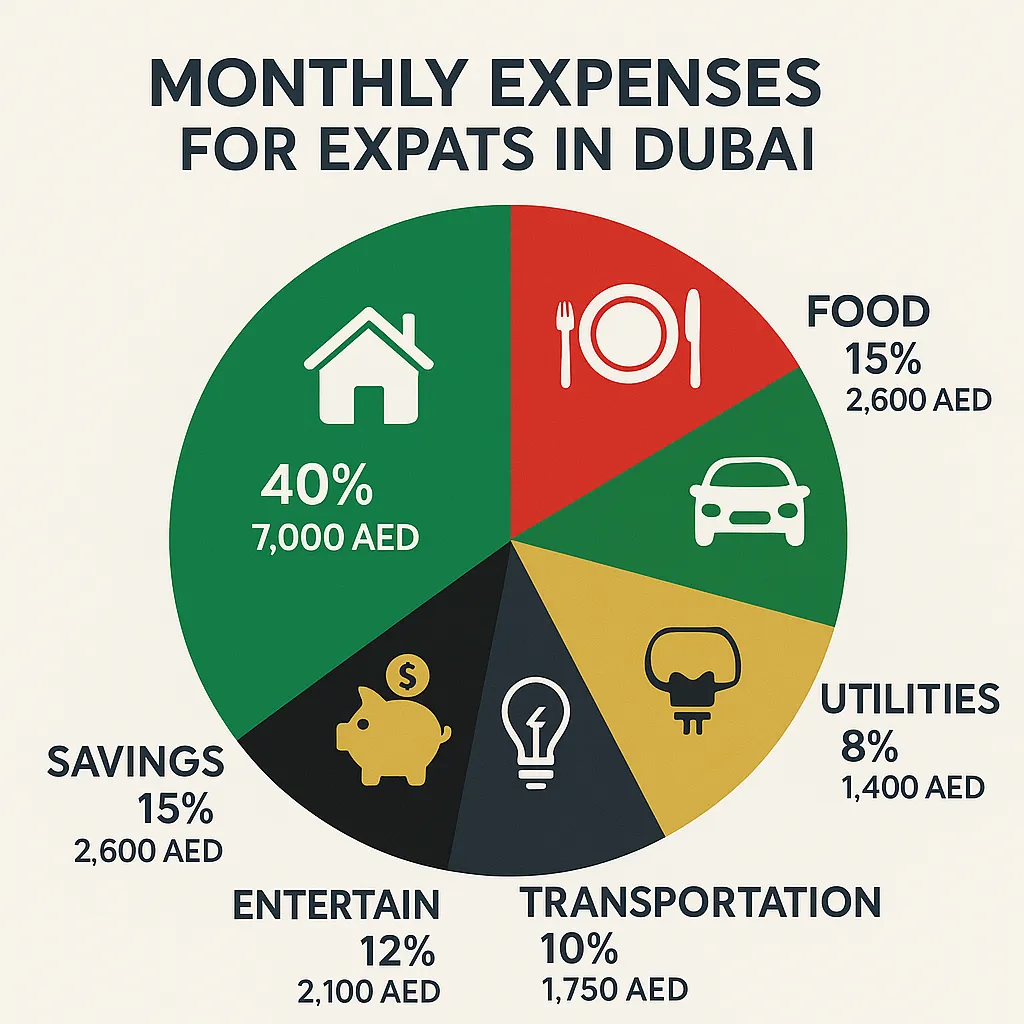
While the tax-free environment is attractive, expatriates should consider the relatively high cost of living:
The average cost of living in Dubai for an individual is approximately USD $2,150 per month in 2025. For a family of four, monthly expenses rise to around USD $4,900.
Major expenses include:
- Housing: Rental costs vary significantly by location and property type, typically representing 30-40% of monthly expenses.
- Education: International school fees range from AED 20,000 to AED 100,000 annually per child.
- Healthcare: Comprehensive health insurance is mandatory and costs vary by age and coverage level.
- Transportation: Vehicle costs, fuel, and insurance should be considered if you plan to drive.
- Utilities: Air conditioning during summer months can significantly increase electricity bills.
Relocation Costs to Consider
When planning your move to the UAE, factor in these initial expenses:
- Visa and Documentation: Processing fees, medical tests, and document attestation
- Housing Deposits: Typically 5-10% of annual rent plus agent fees (often 5%)
- Shipping Belongings: Depending on volume and distance, international shipping can cost between $2,000-$10,000
- Initial Setup: Furniture, appliances, and household items if not provided
- Transportation: Car purchase/rental or public transport passes
- Emergency Fund: Experts recommend having 3-6 months of living expenses saved
Working Culture and Expectations
Business Etiquette and Cultural Norms
Understanding and respecting local customs is essential for professional success in the UAE:
- Working Hours: The standard workweek runs from Sunday to Thursday, with Friday and Saturday as the weekend. Working hours are reduced during Ramadan.
- Business Attire: Conservative, professional dress is expected. Men typically wear suits, while women should choose modest business attire that covers shoulders and knees.
- Greeting Customs: Handshakes are common between members of the same gender, though wait for local women to initiate handshakes. Using titles and showing respect to seniors is important.
- Meeting Protocol: Punctuality is appreciated but not always strictly observed. Meetings may begin with social conversation before business is discussed.
- Relationship Building: Business in the UAE often depends on personal relationships and trust, which take time to develop.
Legal Considerations and Restrictions
When living and working in the UAE, be aware of important legal and cultural considerations:
- Zero Tolerance Policies: The UAE has strict policies regarding drugs and alcohol. There’s zero tolerance for drug possession and drunk driving.
- Public Behavior: Modest dress in public is expected, particularly in conservative areas. Public displays of affection and swearing can lead to legal issues.
- Social Media and Communication: Be cautious about criticizing the country, its leaders, or Islam on social media or in public, as this can have legal consequences.
- Ramadan Observance: During the holy month of Ramadan, eating, drinking, or smoking in public during daylight hours is prohibited for all residents, including non-Muslims.
Finding Success in the UAE Job Market
Networking and Professional Development
Building a strong professional network is particularly important in the UAE, where personal connections often lead to opportunities:
- Industry Events: Attend conferences, exhibitions, and networking events specific to your field.
- Professional Associations: Join relevant industry groups and chambers of commerce.
- Online Networking: Maintain an active LinkedIn profile highlighting your UAE experience.
- Continuing Education: Consider UAE-based certifications or courses to enhance your local credentials.
Interview Tips for the UAE Market
Prepare for success in UAE job interviews with these targeted strategies:
- Research the Company: Understand the organization’s history, projects, and values, particularly their UAE operations.
- Cultural Awareness: Demonstrate knowledge of and respect for local business customs.
- Highlight Relevant Experience: Emphasize skills and experiences most applicable to the UAE market.
- Prepare for Technical Questions: UAE employers often assess technical knowledge through detailed questioning.
- Salary Discussions: Be prepared to discuss compensation expectations based on market research.
- Follow-Up: Send a polite thank-you email within 24 hours after the interview.
Living in the UAE
Housing and Accommodation
Finding suitable housing is a significant consideration when relocating to the UAE:
- Popular Expatriate Areas: In Dubai, areas like Dubai Marina, Downtown, JLT, and Arabian Ranches are popular among Western expatriates. In Abu Dhabi, Al Reem Island, Yas Island, and Saadiyat Island offer attractive options.
- Rental Procedures: Typically, rent is paid annually or in 2-4 cheques. A security deposit (5-10% of annual rent) is standard, along with agency fees if using a real estate agent.
- Housing Types: Options range from apartments in high-rise buildings to villas in gated communities, with varying amenities and price points.
Education and Healthcare
The UAE offers excellent options for both education and healthcare:
- International Schools: The UAE hosts numerous high-quality international schools following British, American, IB, and other curricula. Places at top schools can be competitive, so early application is recommended.
- Healthcare System: The UAE offers world-class healthcare facilities, particularly in Dubai and Abu Dhabi. Comprehensive health insurance is mandatory for residents, often provided by employers as part of benefits packages.
Social Life and Leisure
The UAE offers diverse social and recreational opportunities:
- Leisure Activities: Enjoy beaches, desert safaris, water sports, golf, and shopping.
- Dining and Entertainment: Experience world-class restaurants, nightlife venues, and cultural attractions.
- Expatriate Communities: Join nationality-based groups and social clubs to connect with fellow expatriates.
- Cultural Experiences: Explore local heritage sites, museums, and cultural festivals.
FAQ: Working in the UAE
Q: Do I need to speak Arabic to work in the UAE? A: While Arabic is the official language, English is widely used in business. Learning basic Arabic phrases can be beneficial but isn’t typically required for most professional positions.
Q: What is the work-life balance like in the UAE? A: Work-life balance varies by company and industry. Standard working hours are 8 hours per day, 5 days per week. Private sector employees are entitled to 30 days of annual leave after one year of employment.
Q: How difficult is it to find employment as an expatriate? A: Competition varies by sector. Specialized skills in high-demand industries like technology, healthcare, and finance improve your prospects. Using professional services like JobXDubai can significantly enhance your job search success.
Q: What benefits can expatriates typically expect? A: Common benefits include health insurance, annual flights home, housing allowance, and education assistance for children, though these vary by employer and position level.
Q: How does the visa process work for family members? A: Professionals earning a minimum monthly salary (currently around 10,000 AED) can sponsor their spouse and children. Documentation requirements include marriage certificates, birth certificates, and proof of employment.
Q: Is it easy to change jobs within the UAE? A: The process has become more flexible in recent years. You’ll need a No Objection Certificate from your current employer in some cases, and your new employer will handle visa transfers.
Q: What should I know about the UAE’s cost of living? A: Housing typically represents the largest expense (30-40% of income). Other significant costs include education if you have children, transportation, and food. Tax-free income helps offset these costs.
Q: Are there opportunities for entrepreneurship in the UAE? A: Yes, the UAE has recently expanded opportunities for entrepreneurs through various free zones and startup-friendly visa programs, making it easier to establish businesses.
Conclusion: Your Path to UAE Success
The UAE offers exceptional career opportunities in a dynamic, multicultural environment. With its tax-free salaries, modern infrastructure, and strategic location between East and West, it remains one of the world’s most attractive destinations for ambitious professionals.
By leveraging resources like JobXDubai.com‘s candidate marketplace, professional CV services, and job assistance programs, you can significantly improve your chances of finding rewarding employment in this competitive market.
Whether you’re seeking a short-term international experience or considering a longer-term move, the UAE’s diverse economy and growth-oriented vision provide numerous pathways to career advancement and professional fulfillment.
For personalized assistance with your UAE job search, resume preparation, or market insights, contact JobXDubai at [email protected] or visit their comprehensive career resource blog at blog.jobxdubai.com.
The UAE week, every Monday
The week's stories on jobs, visas, money and daily life in one short email. Unsubscribe in one click.