

The UAE is gearing up for another scorching summer season as the astronomical calendar marks its official arrival. While residents are already feeling the rising temperatures, understanding when summer officially begins and what it means for the region can help in planning for the months ahead.
When Does Summer Officially Start in the UAE?
Summer officially begins in the UAE on June 21, 2025, coinciding with the summer solstice. This astronomical event marks not only the start of summer but also the longest day of the year in terms of daylight hours.
The term “solstice” comes from Latin roots “sol” (sun) and “sistere” (to stand still), referring to the point when the Earth’s axis is most tilted toward the sun. For countries in the Northern Hemisphere like the UAE, this consistently falls around June 21st each year.
During the summer solstice, the UAE experiences a key astronomical alignment: the sun’s rays shine directly overhead the Tropic of Cancer at 23.37 degrees North. This positioning results in the maximum amount of daylight hours for the year.
What Temperature Trends Can We Expect?
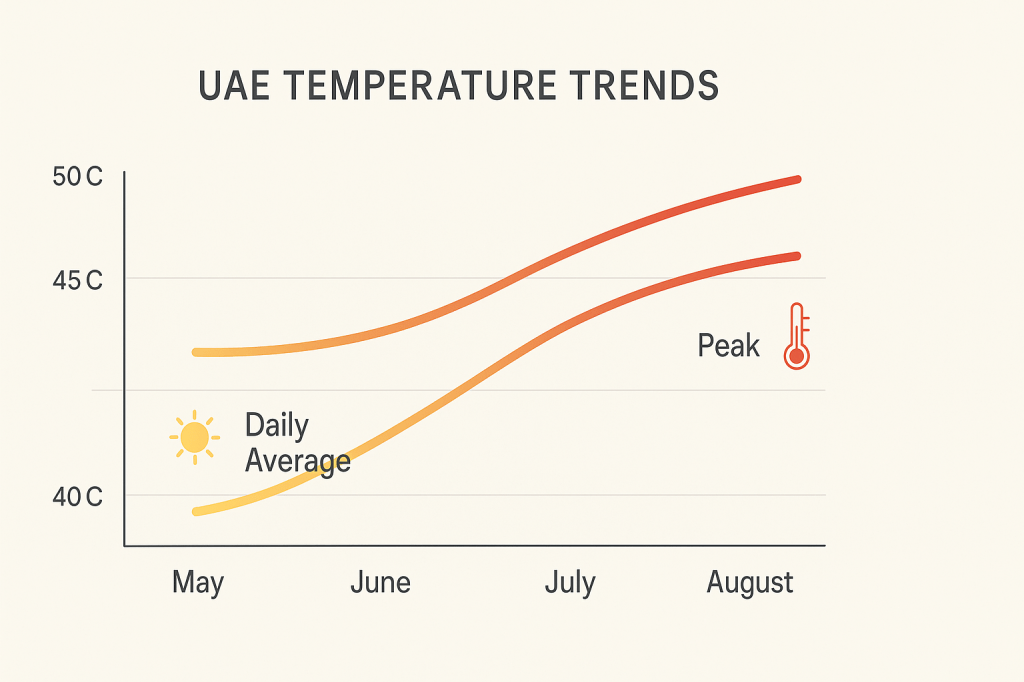
Though June 21st marks the official start of summer, it doesn’t trigger an immediate spike in temperatures. Rather, the UAE experiences a gradual warming pattern through the season.
Daily temperatures in June typically range from 47°C to 49°C, with occasional spikes reaching the 50°C mark. According to data from the National Centre of Meteorology (NCM), mean temperatures across the UAE generally increase by approximately 2°C to 3°C in June compared to May.
This warming is part of a broader seasonal pattern rather than a sudden change directly resulting from the solstice. While the longest day represents peak solar radiation for the year, there’s a delay before this increased solar energy is fully absorbed and re-radiated by Earth’s surface and atmosphere.
The Humidity Factor: Why It Feels Hotter Than It Is

One critical aspect of summer in the UAE that often gets overlooked in temperature readings alone is humidity. Coastal areas particularly experience high humidity levels during June, dramatically affecting how hot the weather actually feels.
The heat index—the “feels like” temperature—often exceeds the actual thermometer reading due to this humidity factor. When both air temperature and relative humidity are high, the body struggles to cool itself efficiently through sweat evaporation, creating a sensation of even more intense heat.
The direction of air masses plays a significant role in humidity levels:
- Air originating from the sea carries more moisture, resulting in higher humidity
- Air masses from the southeast or southwest tend to be drier and more arid
For residents and visitors alike, this means that even if thermometers show 47°C, the perceived temperature might feel substantially higher depending on humidity levels in your specific location within the UAE.
Extended Daylight Hours Following the Solstice
The summer solstice brings another important change: progressively longer daylight hours in the weeks following June 21st compared to May. This extended sunlight exposure contributes to the overall summer warming pattern as days maximize the amount of solar radiation received.
For workers and residents, this means:
- More daylight hours for outdoor activities (though caution is advised during peak heat)
- Extended evening light
- Earlier sunrise times
Preparing for the Peak Summer Season
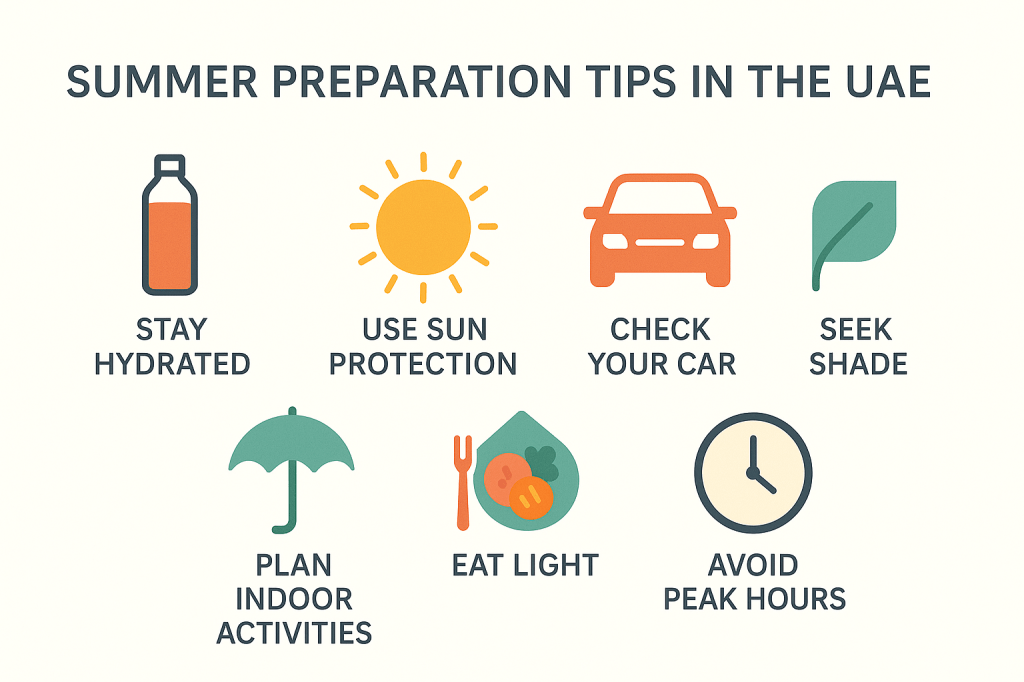
As the UAE enters the official summer season, health authorities typically recommend several precautionary measures:
- Stay hydrated: Drink plenty of water throughout the day, even when not feeling thirsty
- Limit outdoor activities: Avoid strenuous outdoor activities during peak hours (11am to 3pm)
- Dress appropriately: Wear lightweight, light-coloured, loose-fitting clothing
- Use sun protection: Apply sunscreen, wear sunglasses, and use hats when outdoors
- Monitor for heat-related illness: Be aware of symptoms like dizziness, nausea, headache, or extreme fatigue
- Check vehicle conditions: Ensure your car’s cooling system and tyres are summer-ready
- Plan indoor activities: Take advantage of the UAE’s numerous indoor attractions during the hottest periods
Impact on Daily Life and Business
The official start of summer affects various aspects of life and business in the UAE:
Working Conditions
The Ministry of Human Resources and Emiratisation typically implements the midday break rule during summer months, prohibiting outdoor work between 12:30pm and 3:00pm from June 15 to September 15. Companies must provide shaded rest areas and cooling facilities for workers during these months.
Energy Consumption
Power consumption typically spikes during summer months as air conditioning systems work overtime. Authorities often issue conservation advisories to help manage the increased demand on the power grid.
Tourism Patterns
The summer months typically see a shift in tourism demographics, with budget-conscious travellers taking advantage of reduced hotel rates despite the heat. Indoor attractions like malls, water parks, and indoor theme parks see increased visitation during this period.
Water Conservation
With increased evaporation rates during summer, water conservation becomes even more critical. Authorities typically issue guidance on responsible water usage during these months.
Key Takeaway
While June 21st marks the official astronomical beginning of summer in the UAE, the practical experience of summer heat is already underway by this date. The summer solstice primarily signifies the longest day of the year and represents the peak of solar radiation, with temperatures gradually rising through June and July as the Earth absorbs and re-radiates this increased solar energy. Combined with humidity, especially in coastal areas, residents can expect the summer months to feel significantly hotter than thermometer readings suggest.
FAQs About UAE Summer
When is the hottest period in the UAE?
The hottest period typically extends from mid-June through August, with July generally recording the highest average temperatures.
How long does summer last in the UAE?
Astronomically, summer lasts from June 21 to September 23 (the autumnal equinox). However, hot weather typically persists well into October.
What is the highest temperature ever recorded in the UAE?
The highest officially recorded temperature in the UAE was 52.1°C, measured in July 2002.
How does humidity affect temperature in coastal versus inland areas?
Coastal areas like Dubai and Abu Dhabi typically experience higher humidity levels, making temperatures feel hotter than inland areas, which may record higher actual temperatures but with drier air.
Are there any summer-specific health advisories in the UAE?
Health authorities regularly issue advisories about heat-related illnesses, hydration, and limiting outdoor exposure during summer months.
Does the UAE implement any specific summer safety regulations?
Yes, including the midday work break rule and various advisories for vulnerable populations during extreme heat conditions.
How do schools adapt to the summer season?
Most schools in the UAE adjust their academic calendars to include an extended summer break during the hottest months (typically late June through August).
Visit the JobXDubai blog for more UAE lifestyle and weather updates
This article was originally published on JobXDubai Blog on 21 May 2025.





Leave a comment