Can UAE Insurers Reject Rain Damage Claims on Your Car?
Comprehensive car insurance covers rain damage in UAE. Third-party does not. Know when insurers can reject claims and how to fight back.
By Vadim Kouznetsov, published
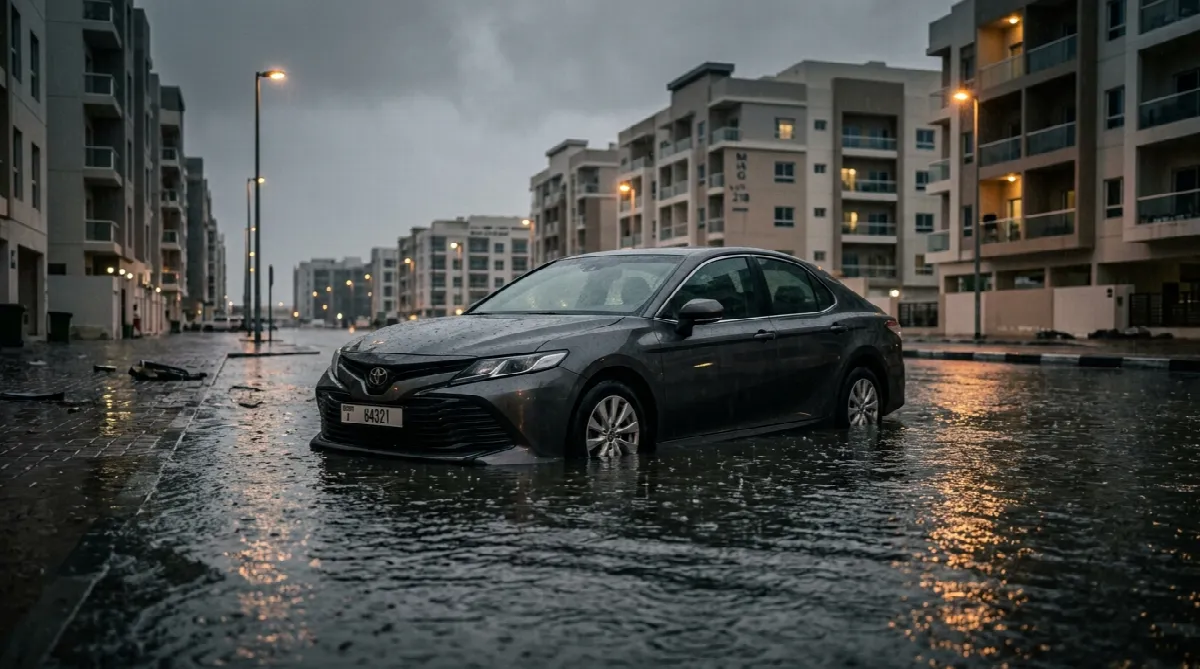
Key Takeaway: If you hold comprehensive motor insurance in the UAE, your insurer should cover rain and water damage to your vehicle — unless a specific policy exclusion applies. Third-party insurance does NOT cover damage to your own car. If your claim is rejected unfairly, you can escalate it to the Central Bank’s Insurance Dispute Resolution Committee through the Sanad platform.
After the recent heavy rains across the UAE, many car owners are discovering the hard way that not all insurance policies cover water damage. If your vehicle was flooded, leaked or suffered electrical damage during the storms, the type of policy you hold makes all the difference.
Here’s what UAE insurance law says — and what you can do if your insurer refuses to pay.
Does Comprehensive Insurance Cover Rain Damage?
Yes, in most cases. Under the Unified Motor Vehicle Insurance Policy — issued pursuant to Insurance Authority Board of Directors’ Decision No. (25) of 2016 and currently administered by the Central Bank of the UAE — an insurer must indemnify the insured for loss or damage arising from accidents.
While rain or water damage is not specifically named in the policy, it is generally treated as an external accidental event and therefore covered under comprehensive motor insurance — unless the policy contains a specific clause excluding weather-related incidents, flooding or natural disasters.
The critical point: once you pay your premium, the insurer becomes legally obligated to compensate you for losses in accordance with the risks, terms and conditions agreed in the policy. This is grounded in Article 1026 of the UAE Civil Code (Federal Law No. 5 of 1985).
Does Third-Party Insurance Cover Rain Damage to My Car?
No. A third-party liability policy is limited to covering damage caused to other people and their vehicles. It does not extend to loss or damage to your own car.
If your vehicle has only third-party coverage and it was damaged by rain, your insurer is within its legal rights to decline the claim.
This is precisely the gap that prompted the launch of FloodGuard — the UAE’s first dedicated flood cover for third-party policyholders, introduced after the devastating April 2024 floods caused an estimated $3 billion in insurance losses.
When Can an Insurer Legally Reject a Rain Damage Claim?
Chapter Four of the Unified Motor Vehicle Insurance Policy outlines the exclusions. Your insurer may lawfully refuse to pay if:
The damage was caused by a deliberate act — you intentionally drove into floodwater or damaged the vehicle yourself.
Your vehicle was being used for purposes not specified in the policy — such as racing or testing.
The car was operated by someone without a valid driving licence.
The vehicle was used beyond permitted geographical limits.
You failed to take reasonable measures to prevent the damage — for example, leaving your car in a known flood zone despite warnings.
If your insurer can demonstrate that the rain damage occurred under a scenario matching one of these exclusions, or where negligence can be established, refusal may be permissible.
What Should You Do if Your Claim Is Rejected?
If you hold comprehensive cover and your claim has been refused without a valid Chapter Four exclusion, you have the right to challenge it.
Review your policy carefully. Check for any clauses specifically excluding weather-related damage, flooding or natural disasters.
Request a written explanation. Ask your insurer to confirm in writing exactly which policy term or exclusion they are relying on.
Escalate to the Central Bank. If you believe the rejection is unjustified, file a complaint through the Insurance Dispute Resolution Committee of the Central Bank of the UAE via the Sanad platform.
The rising cost of car insurance premiums since the April 2024 floods has made it even more important to understand exactly what your policy covers — and to push back when a valid claim is refused.
How Can You Protect Yourself Before the Next Storm?
Check your policy type now. Comprehensive cover generally protects against rain damage. Third-party does not. If you only have third-party insurance, consider adding flood cover — products like FloodGuard are now available in the UAE market.
Read the exclusions. Don’t wait for damage to happen before reviewing Chapter Four of your policy. Know what is and isn’t covered.
Document everything during a storm. If your car is damaged, photograph and video the vehicle, the surrounding area, and the weather conditions. Include timestamps.
Don’t drive into standing water. This is both a safety issue and an insurance issue. If your insurer can show you drove into a known flood area, they may argue negligence and reject your claim.
Report the damage promptly. Notify your insurer as soon as possible after the incident. Delays in reporting can complicate claims.
FAQ
Does car insurance cover rain damage in the UAE?
Comprehensive motor insurance generally covers rain and water damage as an external accidental event. Third-party insurance does not cover damage to your own vehicle.
Can my insurer reject a rain damage claim on comprehensive cover?
Only if a specific exclusion under Chapter Four of the Unified Motor Vehicle Insurance Policy applies — such as deliberate acts, unlicensed driving, or failure to take reasonable preventive measures.
What is the Unified Motor Vehicle Insurance Policy?
It is the regulatory framework governing motor insurance in the UAE, issued under Insurance Authority Decision No. (25) of 2016 and administered by the Central Bank. It defines insurer obligations and exclusions.
What should I do if my claim is rejected?
Request a written explanation from your insurer citing the specific policy exclusion. If you believe the rejection is unfair, escalate to the Insurance Dispute Resolution Committee through the Sanad platform.
Does third-party insurance cover flood damage to my car?
No. Third-party policies only cover damage to other people and their vehicles. Your own car is not covered. Consider adding dedicated flood cover if you hold third-party insurance.
Is there flood insurance for third-party policyholders in the UAE?
Yes. FloodGuard, launched by Al Fujairah National Insurance after the April 2024 floods, is the UAE’s first flood cover specifically designed for third-party motor insurance holders.
Can my insurer claim I was negligent during a storm?
Yes. If you failed to take reasonable measures to prevent damage — such as driving into standing water despite warnings — your insurer may argue negligence under the policy exclusions.
Where do I file an insurance complaint in the UAE?
Through the Insurance Dispute Resolution Committee of the Central Bank of the UAE, accessible via the Sanad platform.
Further Reading
- UAE’s First Flood Insurance for Cars: Protecting Third-Party Policyholders
- UAE Car Insurance Premiums Rise: What Drivers Need to Know After Accidents
- Rain Damage in Dubai: Is the Landlord or Tenant Responsible for Repairs?
- Can UAE Banks Raise Loan Interest Rates Without Notice?
- UAE Cost of Living 2025: 6 Major Price Increases Affecting Residents
The UAE week, every Monday
The week's stories on jobs, visas, money and daily life in one short email. Unsubscribe in one click.