Abu Dhabi Variable Speed Limits: What Drivers Need to Know 2025
Abu Dhabi’s new variable speed limit system adjusts speeds in real time on Sheikh Zayed Road. Learn when limits change and how it affects your drive.
By Vadim Kouznetsov, published
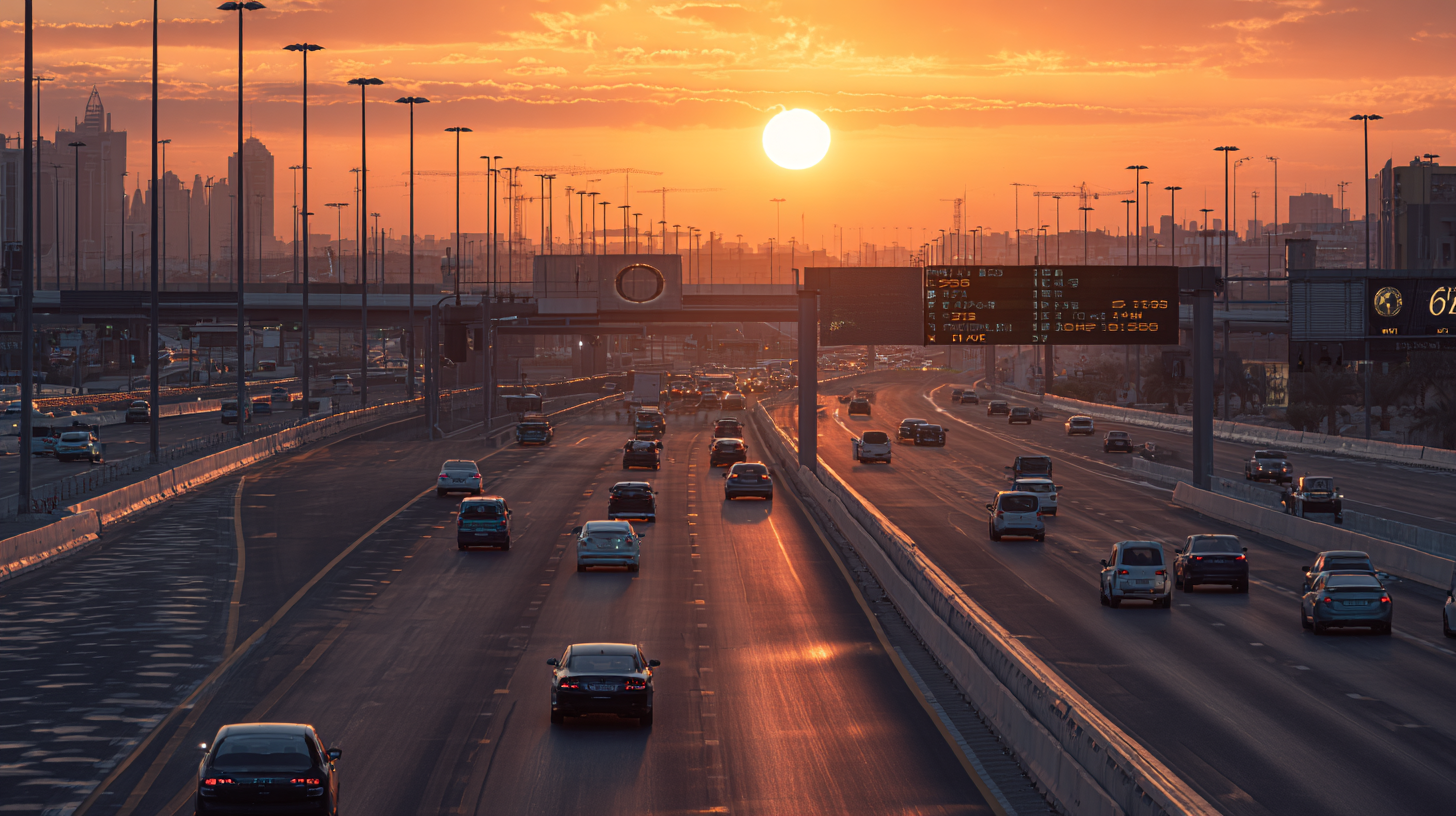
Abu Dhabi has activated a variable speed limit system on Sheikh Zayed bin Sultan Road that adjusts speeds automatically based on weather, traffic, and road conditions. The system, operational since 27 October 2025, changes the displayed speed limit in real time to improve safety and traffic flow.
Drivers will see different speed limits depending on current conditions, and you must follow the speed shown on digital signs even if you’re familiar with the usual posted limit.
What is a variable speed limit system?
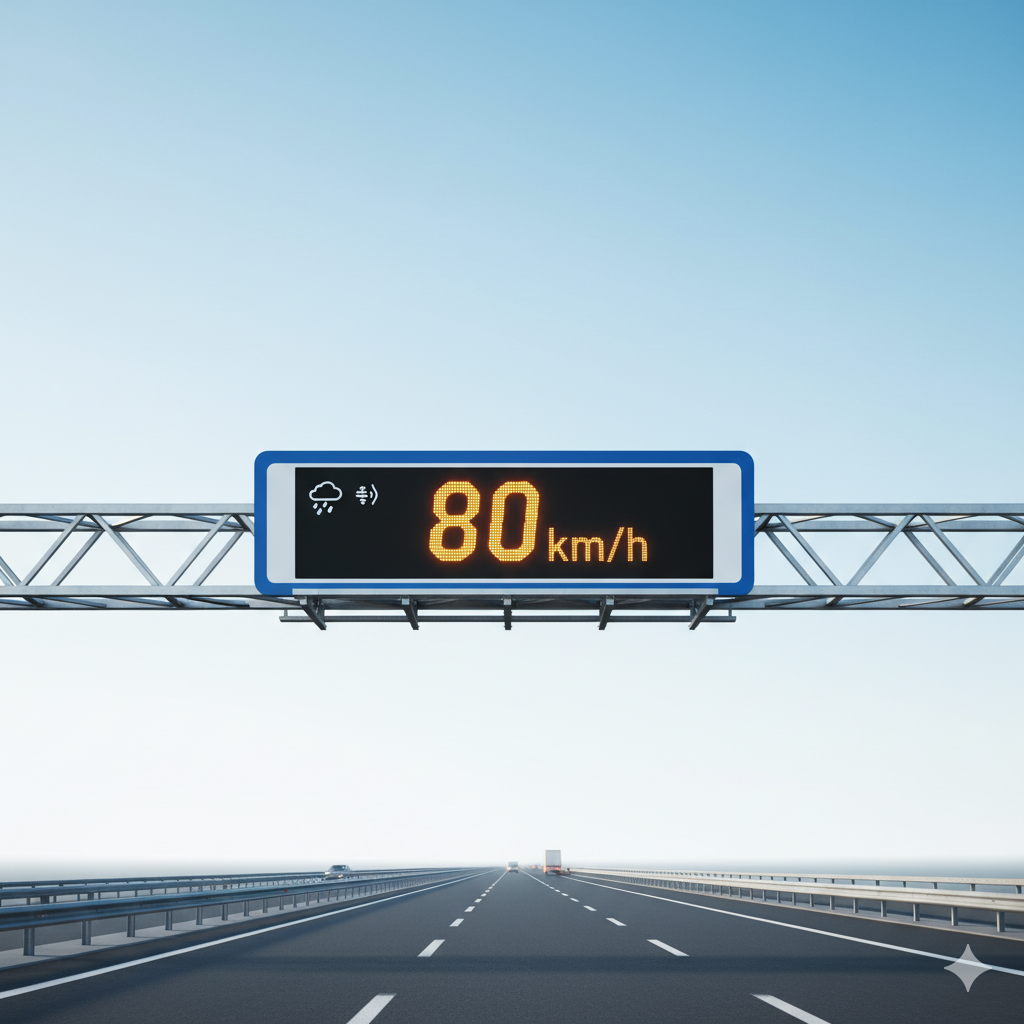
A variable speed limit (VSL) system allows authorities to modify the posted speed limit on digital signs based on real-time conditions.
The limit displayed on electronic signs changes automatically to reflect safer driving speeds during challenging situations. According to Abu Dhabi Mobility (Integrated Transport Centre), these adjustments reduce collisions and ease congestion when road pressure builds.
The system doesn’t slow drivers unnecessarily. Speed reductions happen only when conditions require them for safety.
When do speed limits change on Abu Dhabi roads?
The variable speed system lowers the displayed limit during these situations:
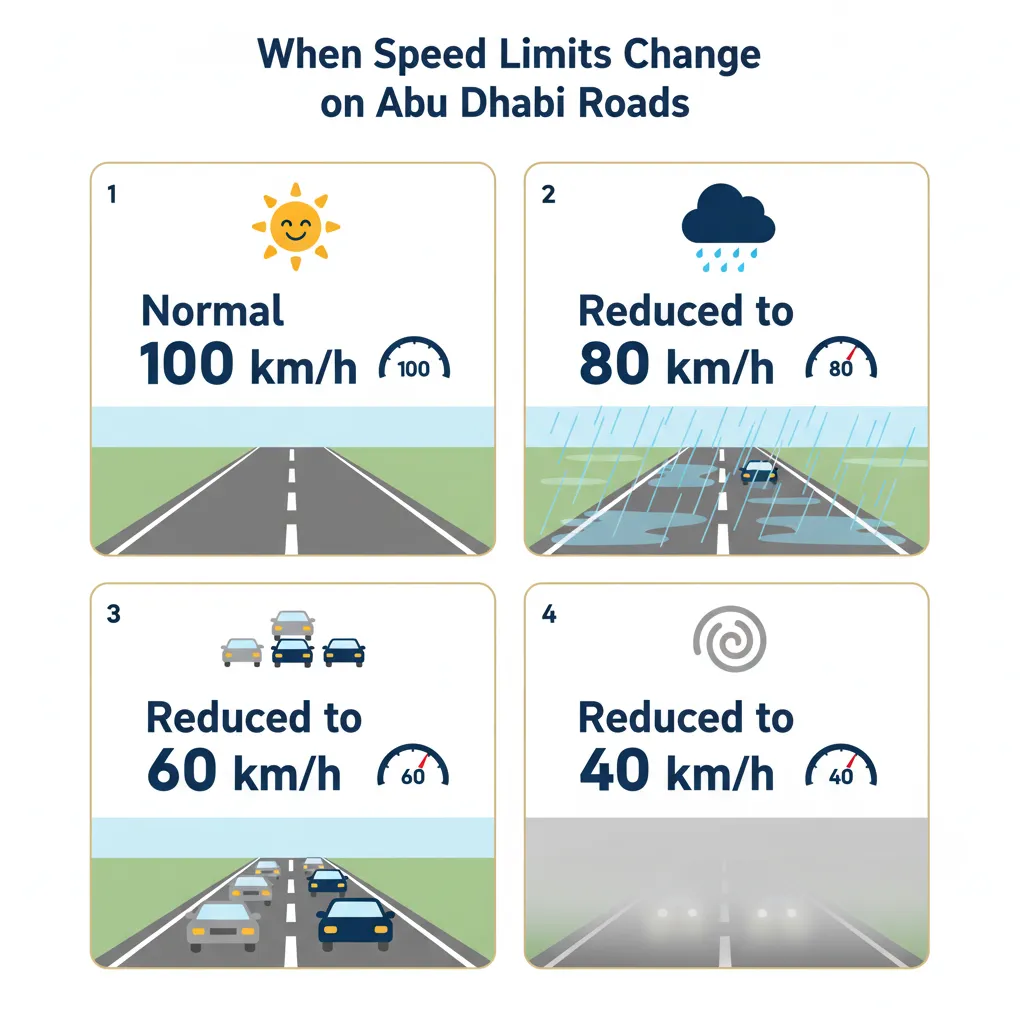
- Adverse weather conditions including rain, fog, or sandstorms
- Peak-hour congestion when traffic builds quickly
- Major events affecting traffic loads
- Roadworks or temporary lane closures
When any of these conditions occur, the variable speed signs show the new limit. Drivers must follow this updated speed regardless of their familiarity with the road’s usual limit.
Abu Dhabi recently used this system on Sheikh Khalifa bin Zayed International Road during a traffic accident, lowering the speed to manage congestion and maintain safety.
How does this compare to Dubai’s system?
Abu Dhabi’s variable speed system works similarly to Dubai’s existing speed management approach.
In Dubai, when dense fog or rain reduces visibility, authorities (Dubai Police and RTA) lower limits and display them on Variable Message Signs (VMS). These signs override the usual fixed limit, meaning drivers must follow the updated speed shown on screen.
Both emirates use the same principle: digital signs display the current legal speed limit, which changes based on conditions.
Does variable speed limit technology actually work?
Variable speed limits have operated on European motorways for years, helping manage traffic and reduce accidents.
Research demonstrates that VSL systems deliver measurable benefits:
- Reduce rear-end crashes, which occur frequently in heavy or changing traffic
- Smooth traffic flow, particularly during congestion
- Improve travel time reliability through fewer sudden stops or accidents
The systems prove especially effective on roads with frequent congestion, changing weather conditions, or high accident risk.
Recent speed regulation changes in Abu Dhabi
The variable speed system launch follows several speed regulation updates earlier in 2025.
In May 2025, Abu Dhabi Mobility reduced speed limits on two major highways:
- Sweihan Road (E20): reduced from 120 km/h to 100 km/h between Abu Dhabi and Sweihan
- Sheikh Khalifa bin Zayed International Road (E11): reduced from 160 km/h to 140 km/h on the stretch linking Abu Dhabi Industrial City to Sheikh Shakhbout Medical City
Additionally, authorities removed the minimum speed limit on Sheikh Mohammed bin Rashid Road (E311). Previously, motorists faced fines for driving below 120 km/h in the leftmost lanes, but this requirement no longer applies.
Abu Dhabi Mobility stated this change improves road safety and helps heavy vehicles move more efficiently between Abu Dhabi and Dubai.
What this means for motorists
Speed limits may now change dynamically on certain Abu Dhabi roads. Pay attention to digital variable message signs, which display the current legal speed limit.
The system aims to prevent accidents and improve traffic flow during challenging conditions. Following the displayed speeds helps maintain safety for all road users.
Remember that Abu Dhabi maintains strict zero-tolerance speed enforcement unlike other emirates. Any speed above the posted limit – including variable limits – results in immediate penalties.
Stay alert, watch for changing signs, and adjust your speed accordingly when conditions require it.
Frequently Asked Questions
What roads in Abu Dhabi have variable speed limits?
Currently, the variable speed limit system operates on Sheikh Zayed bin Sultan Road. Abu Dhabi Mobility may expand the system to other major roads based on the results from this initial implementation.
Do I get fined if I miss seeing the variable speed sign?
Yes. The speed displayed on variable message signs becomes the legal limit when active. Ignorance of the displayed speed is not a valid defence against speeding fines. Drivers are responsible for observing all road signage.
How quickly do the speed limits change?
The system adjusts speeds in real time based on current conditions. Changes happen automatically when the system detects adverse weather, traffic congestion, or other qualifying situations. The digital signs update immediately to show the new limit.
Is there still zero tolerance in Abu Dhabi with variable speeds?
Yes. Abu Dhabi maintains its zero-tolerance policy for speed limits. This applies to both fixed speed limits and variable speed limits displayed on digital signs. Any speed above the displayed limit results in immediate penalties.
What’s the difference between variable speed signs and normal speed signs?
Variable speed signs are digital displays that can change the shown limit based on conditions. Normal speed signs are fixed metal signs showing a constant limit. When a variable speed sign is active, its displayed speed overrides the normal fixed limit for that road section.
Will Dubai implement similar variable speed systems?
Dubai already uses variable speed management during adverse weather conditions, particularly fog. The systems work similarly, with variable message signs displaying adjusted limits. Dubai Police and RTA coordinate these adjustments as needed.
Can I still use cruise control with variable speed limits?
You can use cruise control, but you must remain alert to changing speed limits on digital signs. If the variable speed sign displays a lower limit, you must immediately adjust your cruise control setting or disengage it to comply with the new speed.
How will I know which speed to follow if there are multiple signs?
Variable message signs override fixed speed signs when active. If you see both a fixed sign and a lit variable message sign showing different speeds, follow the variable message sign. That becomes the legal limit.
Further Reading
The UAE week, every Monday
The week's stories on jobs, visas, money and daily life in one short email. Unsubscribe in one click.