UAE Exam Schedule 2025-2026: First-Term Dates for Students
Ministry of Education announces first-term exam schedule starting November 20, 2025. Complete guide to dates, formats, and calculator rules for UAE students.
By Vadim Kouznetsov, published

The Ministry of Education has confirmed the first-term final exam schedule for the 2025-2026 academic year, affecting students from grades 3 to 12 across both public and private schools following the ministry curriculum.
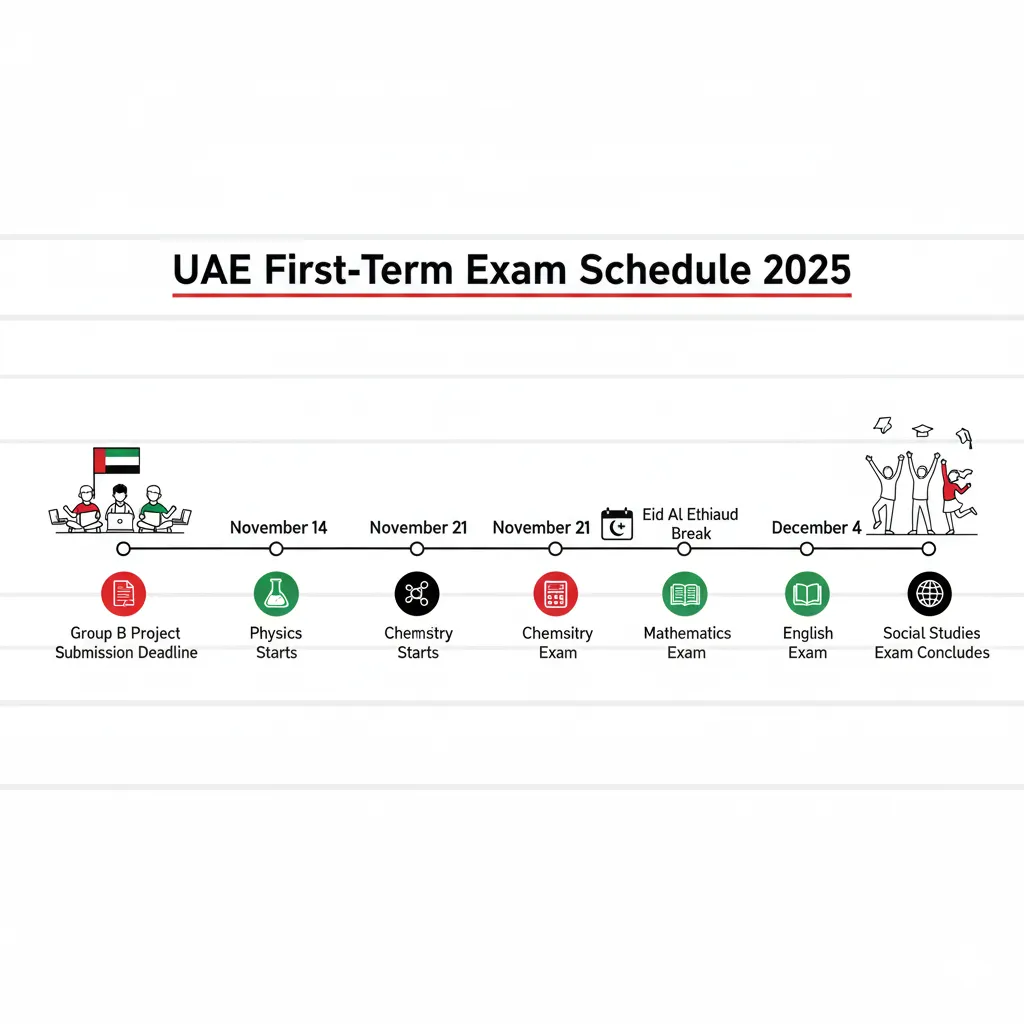
Exams start on November 20, 2025, and run until December 4, with a scheduled break during Eid Al Etihad celebrations. Here’s everything parents and students should know about the upcoming assessment period.
When Do First-Term Exams Begin?
Group A subjects—which include core academic disciplines like mathematics, science, and languages—begin on Thursday, November 20, 2025. The examination window extends until December 4, providing students with a two-week assessment period.
Schools must complete and finalise assessment records for Group B subjects by November 14, one week before written examinations commence.
Which Grades Take Paper vs Electronic Exams?
The ministry has outlined specific exam formats based on grade levels:
Paper-Based Assessments:
- Grade 3 and 4 students will complete all exams on paper
- Grade 5 students across all educational tracks will sit paper-based tests
- Some subjects for grades 6-12 will use paper format
Electronic Assessments:
- Grade 12 English language exams will be conducted electronically
- Students must bring their own laptops for digital assessments
- Grades 6-12 may have either format depending on subject and track
For families planning the academic year, the UAE 2025-2026 school calendar provides complete term dates and holiday schedules.
What Are the Calculator Rules for Exams?
Calculator permissions vary significantly by subject and educational track:
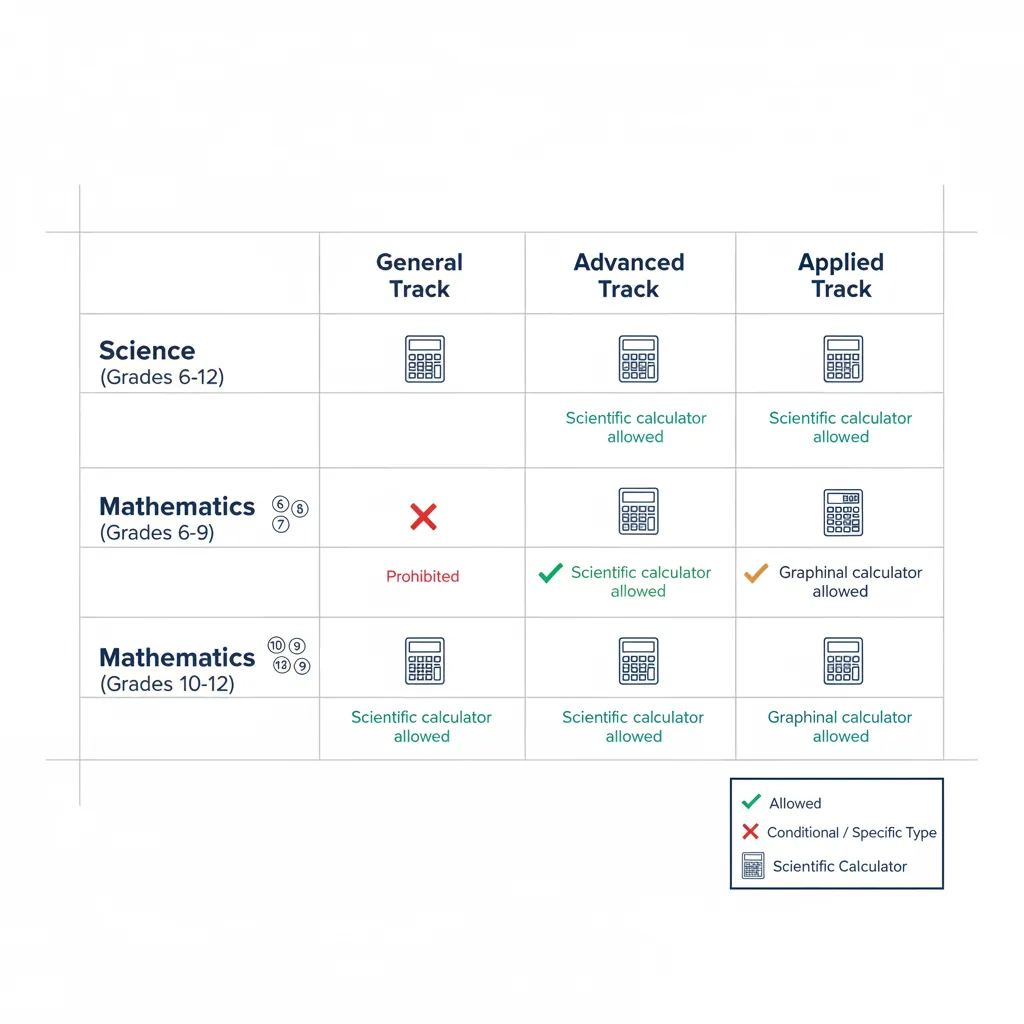
Science Subjects (Physics, Chemistry, Biology, Health Sciences): Students in grades 6-12 may use scientific calculators across all tracks.
Mathematics:
- General and advanced tracks: No calculators for grades 6-9; permitted for higher grades
- Elite track: Both scientific and graphical calculators allowed
- Applied track: Graphical calculators required
Special Provisions for Grade 12 Students
Grade 12 students enrolled in general and advanced tracks at private schools will take their examinations in public school facilities. The School Operations Department will supervise these assessments directly.
This arrangement applies to all private schools following the ministry curriculum and aims to standardise examination conditions across institutions.
How Will Chemistry Exams Work?
During chemistry exams, schools must provide printed periodic tables to students. However, students in the elite track will use the electronic version available through the Swift Assess platform on the Ministry’s Education Media Portal.
This distinction reflects the ministry’s gradual integration of digital resources while maintaining accessibility across different educational tracks.
What About Electronic Devices During Exams?
The ministry has implemented strict guidelines on electronic device usage:
- Only permitted tools are allowed in examination halls
- Unauthorised smart devices are prohibited
- Students must bring their own laptops for electronic assessments
- Schools will enforce restrictions to maintain exam integrity
Teachers cannot read exam questions aloud during tests, with one exception: grade 3 teachers may read questions (but not answers) to support younger students.
What’s the Exam Schedule for Different Subjects?
All grade 12 students—across general, advanced, elite, and applied tracks—will begin exams on November 20 with physics (applied track students will sit for applied science instead).
The schedule proceeds as follows:
- November 21: Applied mathematics (applied track) or chemistry (other tracks)
- November 24: Mathematics
- November 25: English
- Subsequent days: Arabic, Islamic education, and biology
- December 4: Social studies (final exam)
The break during Eid Al Etihad provides students with a brief respite during the examination period.
Who Supervises These Examinations?
The School Operations Department will directly supervise all examinations. Schools must adhere strictly to approved instructions without modifications.
This centralised oversight aims to create uniform standards across all educational institutions, whether public or private, following the ministry curriculum.
Parents seeking information about teaching opportunities in UAE schools can explore teaching positions and requirements available through the Ministry of Education.
How Should Students Prepare?
With Group B assessment records due by November 14 and Group A exams starting November 20, students have a clear timeline for preparation.
Students should:
- Review calculator requirements for their specific subjects and tracks
- Confirm whether their exams are paper-based or electronic
- Bring personal laptops if taking electronic assessments
- Familiarise themselves with the exam schedule for their grade level
Schools have confirmed readiness to implement these guidelines, with preparations already in place to maintain safe and productive examination environments.
For context on academic policies, the ministry recently implemented strict mobile phone bans and attendance rules across UAE schools.
What Makes This Year’s Schedule Different?
The 2025-2026 examination schedule reflects the ministry’s continued focus on standardisation and quality assurance across the education system. The clear delineation between paper and electronic formats, combined with specific calculator permissions, demonstrates an organised approach to assessment.
The schedule aligns with the broader Dubai school calendar while maintaining consistency across emirates for schools following the ministry curriculum.
Frequently Asked Questions
What subjects are included in Group A?
Group A includes core academic subjects such as mathematics, science, English, Arabic, Islamic education, and social studies. These subjects require written final examinations during the November 20 – December 4 window.
Can my child use a calculator for all maths exams?
No. Calculator usage depends on grade level and educational track. Students in grades 6-9 in general and advanced tracks cannot use calculators, while elite track students can use scientific or graphical calculators, and applied track students must use graphical calculators.
Will there be any breaks during the exam period?
Yes, examinations will pause during Eid Al Etihad celebrations. This break provides students with time to rest during the two-week assessment period.
Do private school students take exams at their own schools?
Most private school students will take exams at their own institutions. However, grade 12 students in general and advanced tracks at private schools will take exams at public school facilities under School Operations Department supervision.
What happens if my child’s school follows a different curriculum?
This examination schedule applies specifically to schools following the UAE Ministry of Education curriculum. International schools following British, American, IB, or other curricula have separate assessment schedules aligned with their specific programmes.
Can teachers help students during the exam?
Teachers are prohibited from reading exam questions aloud, except for grade 3 where teachers may read questions only (not answers). This policy maintains fairness whilst supporting younger students.
What documents should students bring to exams?
Students should bring required stationery, permitted calculators for applicable subjects, and personal laptops for electronic assessments. Schools will communicate specific requirements based on each examination’s format.
Further Reading
The UAE week, every Monday
The week's stories on jobs, visas, money and daily life in one short email. Unsubscribe in one click.