UAE Introduces New Sugar Tax on Beverages from January 2026
UAE introduces tiered sugar tax on beverages from January 2026, replacing flat 50% excise with graduated rates based on sugar content. Business impact explained.
By Vadim Kouznetsov, published
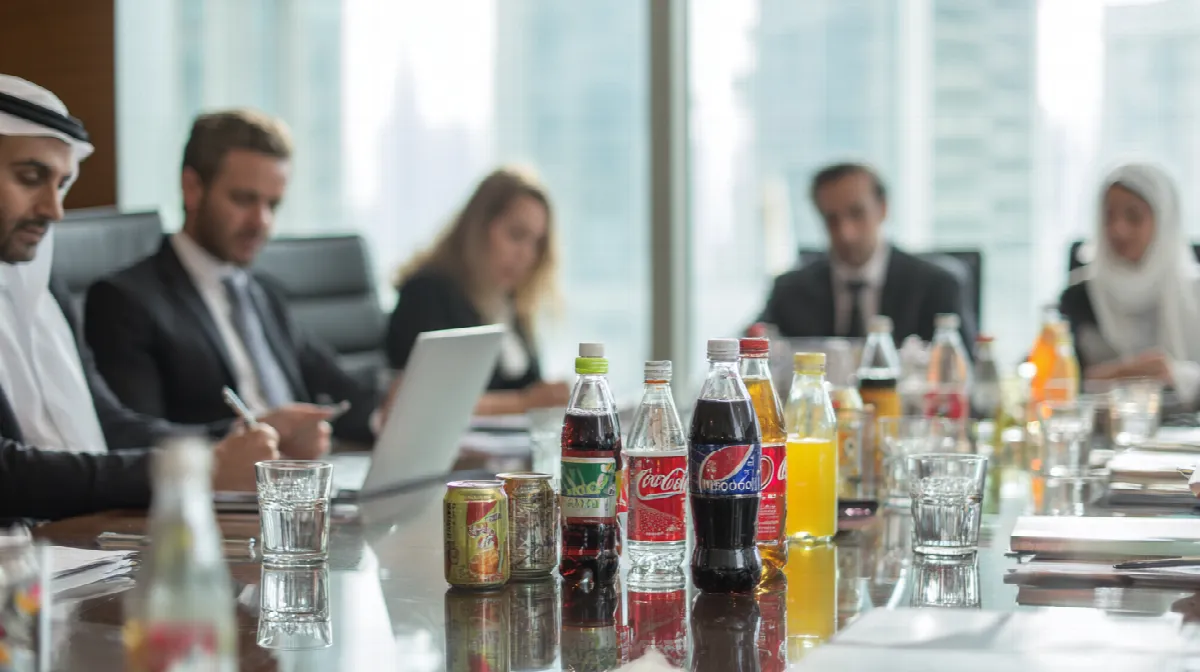
The UAE Ministry of Finance has confirmed that revised excise tax regulations on sweetened beverages will take effect nationally from 1st January 2026, shifting from a flat-rate system to a tiered model based on sugar content.
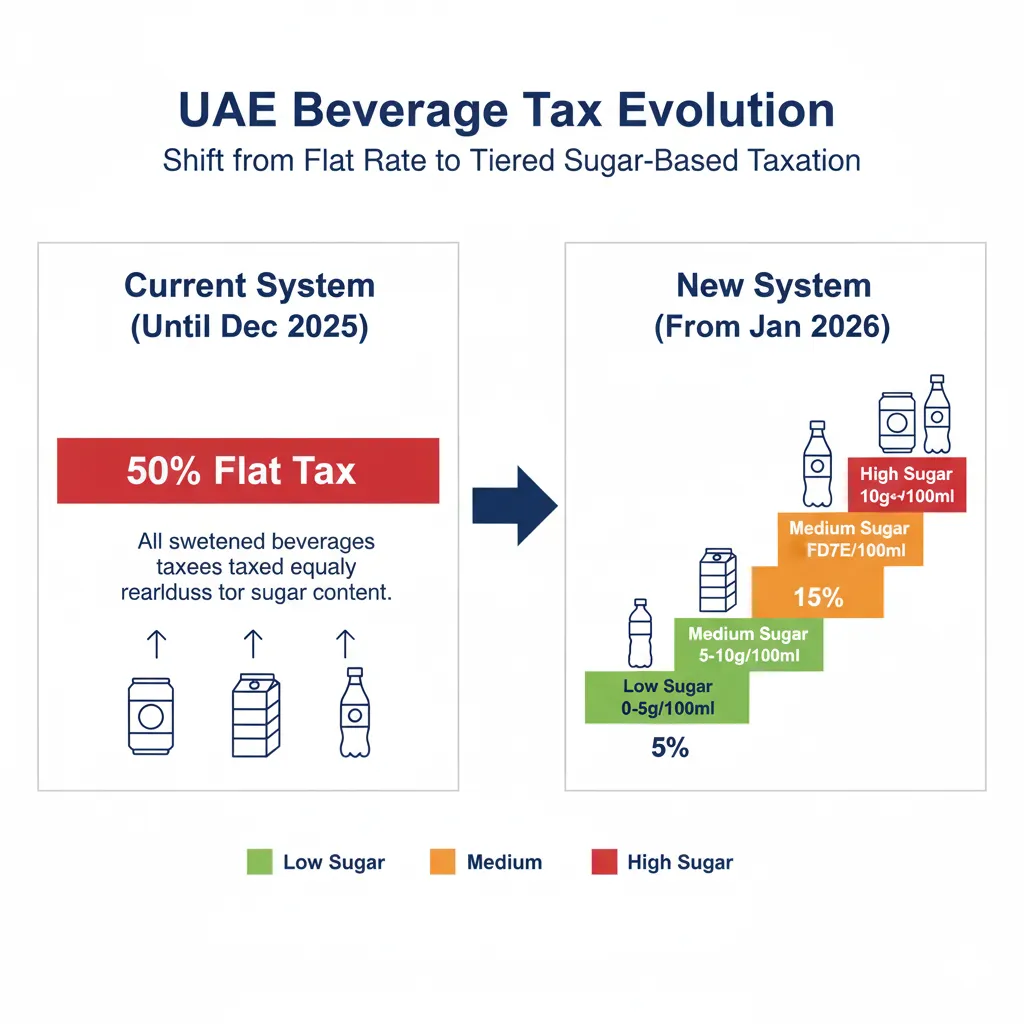
This policy change affects how businesses across the beverage industry will be taxed, moving away from the current 50 per cent excise tax applied uniformly across product categories.
What’s Changing?
The new regulations introduce a tiered volumetric model that taxes beverages according to their actual sugar content rather than categorising them broadly as “sweetened drinks.”
This means:
- Beverages with higher sugar content will face higher tax rates
- Lower-sugar alternatives may benefit from reduced taxation
- The tax calculation will be based on volume and sweetness level
The Ministry completed the proposed legislative amendments on Monday, confirming implementation will begin at the start of 2026.
How Does the New System Work?
Under the previous system, all sweetened beverages faced a uniform 50 per cent excise tax regardless of their sugar content. A drink with 5 grammes of sugar per 100ml was taxed identically to one containing 15 grammes.
The tiered approach creates different tax levels based on sugar concentration, encouraging manufacturers to reduce sugar content in their products.
This model aligns with similar policies implemented across GCC countries, reflecting a regional commitment to public health initiatives.
What About Existing Stock?
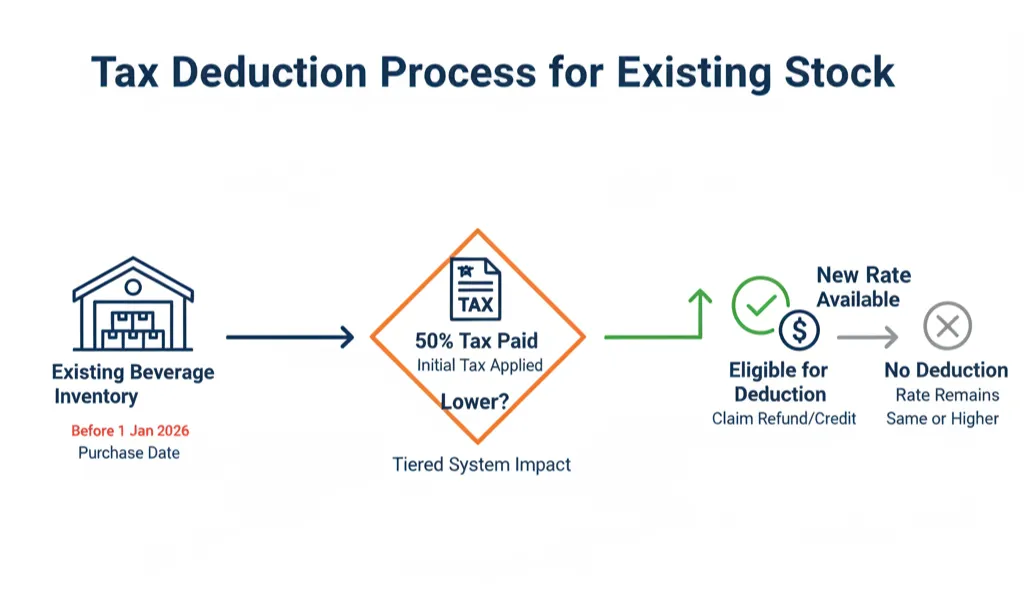
The Ministry has addressed concerns about businesses holding inventory purchased under the old tax system.
Companies that imported or produced goods subject to the 50 per cent excise tax before the amendments take effect can claim deductions if their tax liability decreases under the new system.
This provision applies specifically to:
- Stock purchased before 1st January 2026
- Goods not yet sold when the new regulations begin
- Products where the new tax rate is lower than the previously paid 50 per cent
The deduction mechanism allows businesses to recover part of the tax difference, preventing them from being financially disadvantaged by the policy change.
Why Is the UAE Making This Change?
The shift forms part of a broader GCC initiative to adopt standardised sugar-sweetened beverage taxation across member states.
Public health considerations drive much of this policy. Sugar-sweetened beverages have been linked to obesity, diabetes, and other health conditions. By implementing graduated taxation, governments aim to:
- Encourage consumers to choose lower-sugar alternatives
- Motivate manufacturers to reformulate products with less sugar
- Generate revenue whilst promoting healthier dietary choices
The Ministry noted the amendments will “foster a competitive tax environment,” suggesting the tiered system may benefit businesses producing lower-sugar products.
Impact on Businesses
Beverage manufacturers and importers will need to:
Reformulate Products: Companies may reduce sugar content in existing products to qualify for lower tax brackets.
Update Pricing: Retail prices will likely adjust to reflect the new tax structure, with higher-sugar drinks potentially becoming more expensive.
Review Supply Chains: Importers and distributors must account for the new tax calculations in their financial planning.
Implement Compliance Systems: Businesses need updated accounting and reporting procedures to handle the tiered tax model.
The Ministry emphasised that comprehensive legal and regulatory foundations will support smooth implementation at the national level.
What This Means for Consumers
Shoppers can expect to see price variations based on sugar content. Lower-sugar beverages may become relatively cheaper compared to high-sugar alternatives.
Popular soft drinks, energy drinks, and sweetened teas will be affected differently depending on their formulations.
Some manufacturers may introduce new product lines specifically designed to fall into lower tax brackets, potentially expanding consumer choice for health-conscious shoppers.
Regional Context
The UAE’s decision reflects a coordinated GCC approach to beverage taxation. Other Gulf countries are implementing similar tiered systems, creating consistency across the region.
This harmonisation benefits businesses operating in multiple GCC markets, as they can develop regional strategies rather than navigating completely different systems in each country.
For professionals in the UAE business sector, understanding these regulatory changes remains crucial for compliance and strategic planning.
Looking Ahead
The beverage industry has approximately until the end of 2025 to prepare for these changes. Companies should:
- Conduct sugar content audits of their product portfolios
- Calculate potential tax impacts under the new system
- Consider reformulation strategies
- Update financial forecasts and pricing models
- Train staff on new compliance requirements
The Ministry of Finance will likely release detailed guidance on the specific sugar thresholds for each tax tier as the implementation date approaches.
Businesses affected by these changes should also stay informed about related UAE tax regulations and compliance requirements that may affect their operations.
Key Takeaway
The UAE’s new tiered sugar tax on beverages, effective January 2026, replaces the flat 50% excise tax with graduated rates based on sugar content, encouraging healthier product formulations whilst allowing businesses to deduct overpaid taxes on existing inventory.
Frequently Asked Questions
When does the new sugar tax take effect? The new tiered sugar tax system will be implemented nationally across the UAE from 1st January 2026.
How is the new tax different from the current system? Currently, all sweetened beverages face a flat 50% excise tax. The new system introduces multiple tax levels based on actual sugar content, meaning drinks with more sugar will be taxed at higher rates.
Can businesses claim refunds for stock purchased under the old system? Yes. Companies holding inventory purchased before the changes can deduct part of the previously paid tax if their liability decreases under the new tiered system, provided the goods haven’t been sold yet.
Will this make all soft drinks more expensive? Not necessarily. Whilst high-sugar beverages may become more expensive, lower-sugar alternatives could see reduced taxation, potentially making them cheaper relative to sugary options.
Is this only a UAE initiative? No. This is part of a coordinated GCC-wide decision to standardise sugar-sweetened beverage taxation across member states using a tiered volumetric model.
What should beverage companies do to prepare? Companies should audit their products’ sugar content, calculate potential tax impacts, consider reformulation strategies, update financial forecasts, and ensure staff are trained on the new compliance requirements before January 2026.
Further Reading
The UAE week, every Monday
The week's stories on jobs, visas, money and daily life in one short email. Unsubscribe in one click.