GCC Unified Tourist Visa 2025: 1 Visa for 6 Gulf Countries
GCC launches unified tourist visa Q4 2025 for UAE, Saudi Arabia, Bahrain, Qatar, Oman, Kuwait. Schengen-style visa to boost tourism & create jobs.
By Vadim Kouznetsov, published

The Gulf Cooperation Council countries will launch the pilot phase of the unified tourist visa in the fourth quarter of 2025, offering visitors access to all six GCC nations on a single permit. This Schengen-style visa marks a transformative step for regional tourism integration.
What Is the GCC Grand Tourist Visa?
The GCC Grand Tourist Visa allows international tourists to visit the UAE, Saudi Arabia, Bahrain, Qatar, Oman, and Kuwait using one visa. Abdulla bin Touq Al Marri, UAE Minister of Economy and Tourism and Chairman of the Emirates Tourism Council, described it as “a strategic step towards deeper regional integration” that will enhance the Gulf’s collective appeal as a unified tourism destination.
The pilot programme launches in Q4 2025, with full implementation following at a later stage. Whilst the exact launch date remains undisclosed, the initiative represents years of collaborative planning among GCC member states.
Timeline: From Approval to Launch
The unified visa has progressed through several key milestones:
June 2025: Al Marri confirmed to Khaleej Times that the GCC single tourist visa had been approved and was awaiting implementation “soon,” with the Ministry of Interior and relevant stakeholders handling final arrangements.
September 2025: By mid-September, the UAE tourism sector had expanded significantly, with 39,546 commercial licences in tourism, hospitality, aviation, and related sectors—a 275% increase compared to mid-September 2020.
Q4 2025: The pilot phase launch period, though the specific date hasn’t been announced publicly.
The visa cost and duration specifications await official announcement, though industry experts anticipate competitive pricing aligned with current regional visa rates.
Expected Economic Impact Across the Gulf
Travel and tourism executives believe this visa will revolutionise the regional tourism industry, creating thousands of new jobs whilst boosting GDP across all GCC countries. The UAE’s hospitality sector has already experienced significant growth in anticipation.
Job Creation Opportunities
Industry forecasts suggest substantial employment growth across multiple sectors:
- Hospitality: Hotels, resorts, and accommodation services
- Transportation: Airlines, car rentals, and ground transport
- Tour operations: Travel agencies and tour guiding services
- Food and beverage: Restaurants and catering services
- Retail: Shopping centres and tourist-focused retail
For professionals considering careers in these sectors, Dubai’s tourism industry offers particularly strong prospects, having welcomed 18.72 million international visitors in 2024.
GDP Contribution
The visa is expected to significantly boost ‘bleisure’ (business and leisure) tourism and religious tourism, with pilgrims visiting Saudi Arabia able to easily extend their trips to neighbouring countries. This multi-destination approach encourages longer stays and higher visitor spending.
Which Countries Will Benefit Most?
Whilst all six GCC countries will gain from increased tourist flows, industry executives predict the UAE and Saudi Arabia will attract the largest visitor numbers.
UAE Tourism Performance
In 2024, the UAE received 3.3 million visitors from GCC countries, representing 11% of total hotel guests. The breakdown by source country:
- Saudi Arabia: 1.9 million visitors (57.6% of GCC total)
- Oman: 777,000 visitors (23.5%)
- Kuwait: 381,000 visitors (11.5%)
- Bahrain: 123,000 visitors (3.7%)
- Qatar: 93,000 visitors (2.8%)
These figures demonstrate existing strong intra-GCC travel patterns that the unified visa will further strengthen. With Dubai welcoming record visitor numbers, the city stands well-positioned to capture increased tourist flows.
Saudi Arabia’s Tourism Growth
Saudi Arabia’s hospitality sector has experienced remarkable expansion, with Riyadh’s luxury hotels achieving 97% occupancy rates in 2024. The Kingdom’s Vision 2030 tourism strategy aligns perfectly with the unified visa initiative, positioning Saudi Arabia as a major beneficiary.
How the Visa Compares to Schengen
The GCC Grand Tourist Visa draws inspiration from Europe’s successful Schengen visa system, which allows visitors to travel freely across 27 European countries. Key similarities include:
- Single application process: One visa application covers all member countries
- Freedom of movement: Travel between member states without additional visas
- Simplified procedures: Reduced paperwork compared to individual country visas
- Regional integration: Promotes tourism cooperation and economic benefits
However, the GCC system will likely include unique features reflecting Gulf travel patterns and tourism priorities.
Strategic Importance for Regional Integration
The unified visa represents more than tourism facilitation—it demonstrates deepening cooperation among GCC member states. This integration supports broader economic and political collaboration across the Gulf region.
The initiative aligns with individual national tourism strategies whilst creating synergies that benefit all participating countries. For professionals seeking work in the UAE, this regional integration creates expanded career opportunities across borders.
Current Visa Arrangements
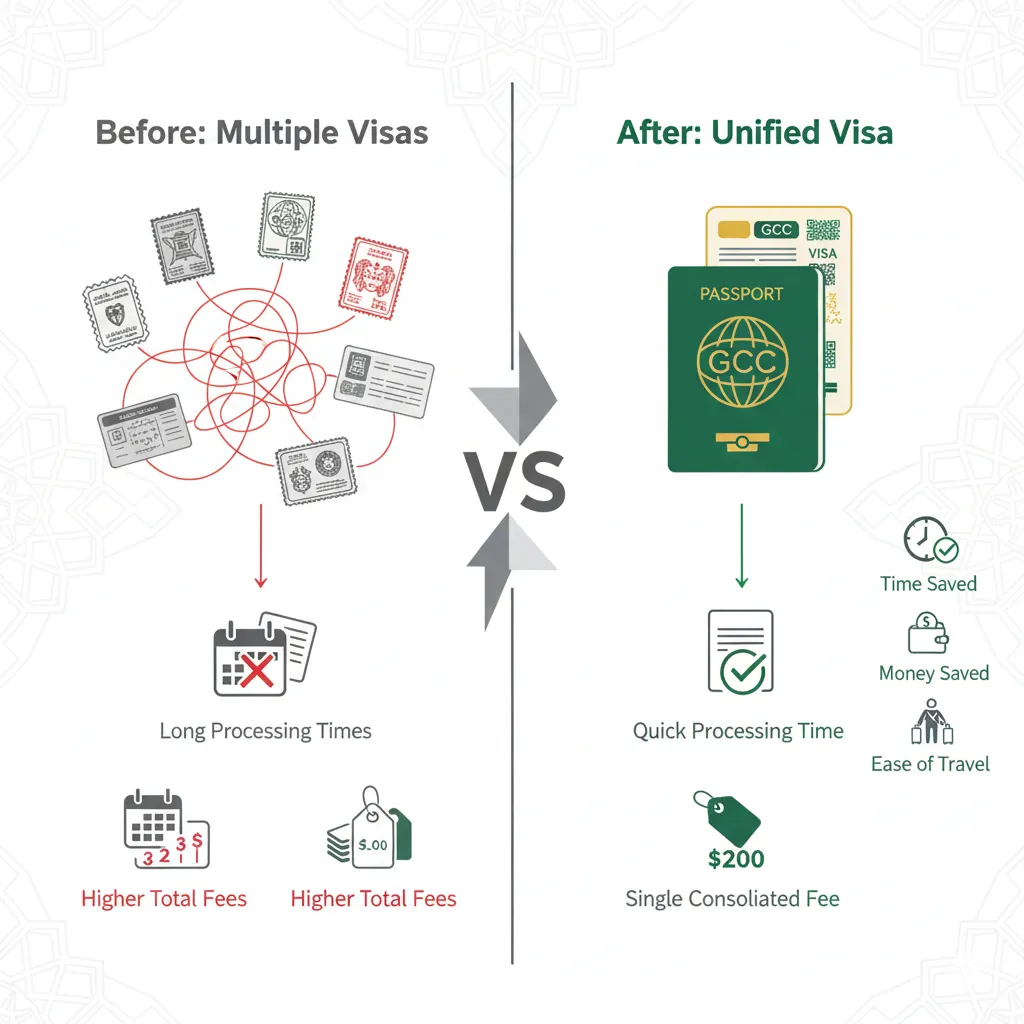
Presently, tourists visiting multiple GCC countries must obtain separate visas for each nation (unless they qualify for visa-free entry or visa-on-arrival). This process involves:
- Multiple application forms and fees
- Separate documentation for each country
- Different processing times
- Individual approvals from each destination
The unified visa eliminates these complexities, making multi-country Gulf tours more accessible and appealing to international visitors.
Impact on UAE’s Tourism Infrastructure
The UAE’s tourism sector has prepared extensively for growth, with 19,200 new hotel rooms in development across 67 projects. This expansion reflects confidence in continued tourism growth, which the GCC visa will accelerate.
The 275% increase in tourism-related commercial licences since 2020 demonstrates the sector’s rapid evolution and readiness to accommodate increased visitor numbers.
Religious Tourism Boost
Religious tourism stands to benefit significantly, particularly for pilgrims visiting Saudi Arabia for Hajj or Umrah. The unified visa allows pilgrims to easily extend their trips to explore neighbouring GCC countries, creating richer spiritual and cultural experiences.
This multi-destination approach transforms traditional pilgrimage journeys into comprehensive Gulf explorations, benefiting both religious and cultural tourism sectors.
What Happens Next?
As the Q4 2025 pilot phase approaches, several developments will unfold:
- Official announcement: Exact launch date and initial implementation details
- Pricing structure: Visa costs and duration specifications
- Application procedures: Online platforms and documentation requirements
- Participating airports: Initial entry points for visa holders
- Pilot evaluation: Assessment period before full rollout
Industry stakeholders and potential visitors should monitor announcements from GCC tourism authorities and immigration departments.
Frequently Asked Questions
When exactly will the GCC tourist visa launch?
The pilot phase launches in Q4 2025, though the specific date hasn’t been announced. Full implementation follows after the pilot period concludes.
How much will the GCC tourist visa cost?
Pricing hasn’t been officially disclosed yet. Announcements are expected closer to the pilot launch date.
How long will the GCC tourist visa be valid?
Duration specifications await official announcement, though industry sources suggest multiple duration options similar to current individual country visas.
Which countries can apply for the GCC tourist visa?
Eligibility criteria haven’t been released yet. Expect details aligned with existing GCC country visa policies, potentially with some variations.
Can I work on a GCC tourist visa?
No, tourist visas are for tourism and leisure purposes only. Employment requires separate work permits. Learn more about working in the UAE.
Will the visa allow multiple entries?
Entry specifications await official confirmation, though multiple-entry options seem likely given the multi-country nature of the visa.
Can I extend my GCC tourist visa?
Extension policies haven’t been announced. Traditional country-specific extension procedures may remain available alongside the unified visa system.
Key Takeaway
The GCC unified tourist visa launches its pilot phase in Q4 2025, allowing visitors to explore all six Gulf countries—UAE, Saudi Arabia, Bahrain, Qatar, Oman, and Kuwait—on a single permit. Industry experts predict this Schengen-style visa will transform regional tourism, creating thousands of jobs and boosting GDP across the Gulf. The UAE and Saudi Arabia are expected to attract the most visitors, building on strong existing tourism infrastructure and strategic positioning.
Further Reading
- Dubai Tourism Hits Record 18.7M Visitors in 2024: Growth Analysis
- UAE Hospitality Sector: Job Boom and Salary Hikes
- Riyadh Hotels Hit Record 97% Occupancy as Tourism Surges
- Dubai Hotels: 19,200 New Rooms Coming as Tourism Surges
- Work in the UAE: Complete Guide to Finding Jobs in 2025
- Top In-Demand Hospitality Jobs in the UAE
The UAE week, every Monday
The week's stories on jobs, visas, money and daily life in one short email. Unsubscribe in one click.