UAE Single-Use Plastic Ban 2026: What Businesses Need to Know
UAE bans single-use plastics from January 2026. Complete guide covering timeline, exemptions, and business requirements across all emirates.
By Vadim Kouznetsov, published

The UAE is taking decisive action against plastic pollution with a comprehensive nationwide ban on single-use plastic products set to take effect from January 1, 2026. This environmental initiative represents the final phase of a systematic approach to eliminate unnecessary plastic waste from daily life across the Emirates.
Understanding the 2026 Ban
The Ministry of Climate Change and Environment announced in June 2025 that the UAE will implement a complete prohibition on the import, production, and trade of single-use plastic products starting January 2026. This nationwide regulation builds upon the success of earlier measures implemented across different emirates.
Dr. Al Dahak from the Ministry emphasised that this action represents the country’s commitment to environmental stewardship and its goal of designing waste and pollution out of economic systems. The ban reflects the UAE’s recognition that plastic pollution has become pervasive, affecting everything from drinking water to food systems through microplastic contamination.
Dubai’s Leading Implementation
Dubai has positioned itself at the forefront of the plastic reduction initiative with a carefully planned timeline that serves as a model for the rest of the UAE.
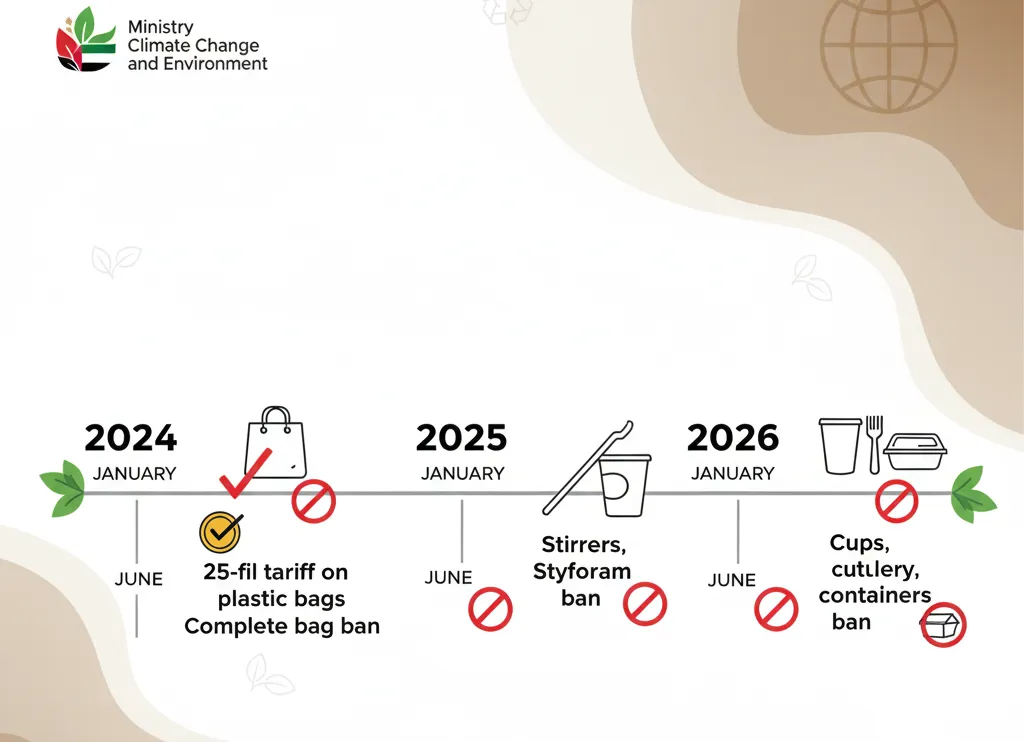
Current Status (2025): Dubai has already banned single-use plastic stirrers, tablecloths, cups, and food containers made of Styrofoam. This follows the complete elimination of single-use plastic bags implemented in June 2024.
January 2026 Extensions: The final phase will extend the ban to include single-use plastic cups and lids, cutlery, food containers, and plates. This comprehensive coverage addresses the most common single-use plastic items encountered in daily commercial activities.
Timeline of Dubai’s Plastic Reduction Strategy
January 2024: Introduction of a 25-fil tariff on single-use plastic bags, serving as both a deterrent and revenue source for environmental initiatives.
June 2024: Complete ban on single-use plastic bags took effect under Executive Council Resolution No. (124) of 2023, issued by Sheikh Hamdan Bin Mohammed Bin Rashid Al Maktoum.
January 2025: Implementation of bans on specific items including plastic stirrers, Styrofoam containers, and plastic straws.
January 2026: Final phase covering plastic cups, lids, cutlery, food containers, and plates.
Business Compliance Requirements
The regulation places specific obligations on commercial entities operating across the UAE:
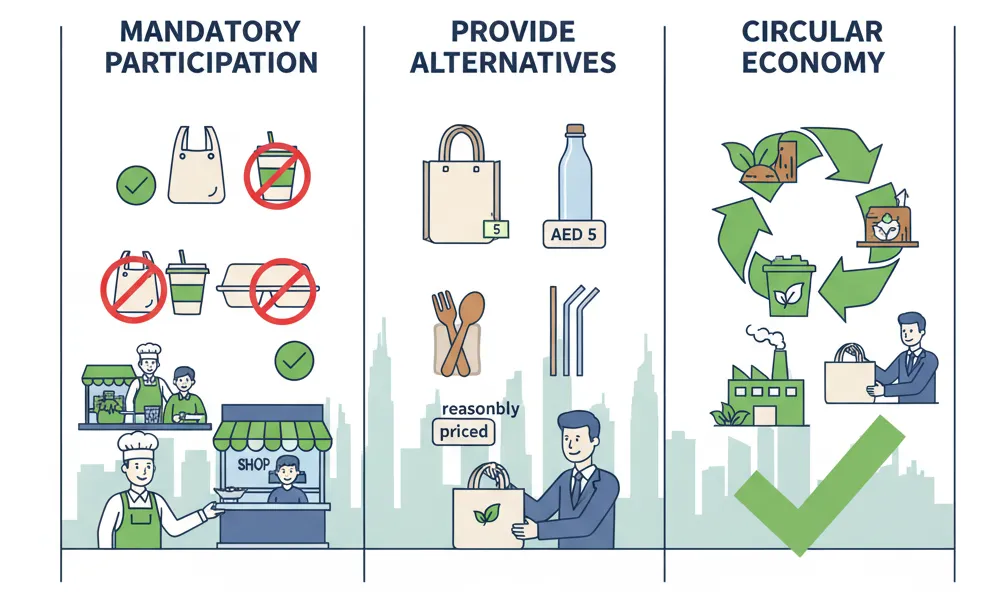
Mandatory Participation: Shops, vendors, restaurants, and other businesses must actively participate in initiatives that minimise plastic material usage. This includes both direct customer service and supply chain considerations.
Alternative Provision: Businesses are required to provide reasonably priced reusable alternatives to single-use plastic items. This ensures that environmental responsibility doesn’t create accessibility barriers for consumers.
Circular Economy Integration: Companies must adopt recycled products where possible, supporting the UAE’s transition to circular economy practices that prioritise reuse and recycling over disposal.
Exemptions and Exceptions
Dubai Municipality has clarified specific exemptions to ensure practical implementation:
Food Safety Considerations: Bread bags remain exempt, recognising their role in maintaining food hygiene and freshness during transport and storage.
Hygiene-Critical Applications: Roll bags for vegetables, fish, meat, and chicken are exempt, acknowledging their importance in preventing cross-contamination and maintaining food safety standards.
Thickness-Based Exemptions: Bags that are 58 micrometres thick and above are exempt from the ban, as these typically serve reusable functions.
Waste Management: Garbage bags remain exempt, recognising their essential role in waste collection and disposal systems.
Success Stories Across Emirates
Abu Dhabi’s Achievements: The emirate implemented its plastic bag ban in June 2022 and has since recorded a 95% reduction in plastic bag consumption. The Environment Agency – Abu Dhabi has collected over 130 million bottles through more than 150 Reverse Vending Machines, accumulating 2,000 tonnes of recyclable plastic.
Sharjah’s Progress: The emirate banned single-use plastic bags from January 2024 and has successfully discontinued local manufacturing of these items, demonstrating the feasibility of complete elimination.
Environmental Impact and Benefits
The plastic ban addresses several critical environmental challenges:
Microplastic Reduction: By eliminating single-use plastics at the source, the UAE aims to reduce microplastic contamination in water systems, food chains, and human consumption.
Waste Stream Management: The ban significantly reduces the volume of non-biodegradable waste entering landfills and natural environments.
Marine Protection: Coastal and marine ecosystems benefit from reduced plastic pollution, supporting the UAE’s commitment to protecting its natural heritage.
Business Adaptation Strategies
Companies operating in the UAE should prepare for the 2026 implementation through several approaches:
Supply Chain Review: Evaluate current packaging and service materials to identify items affected by the ban and source sustainable alternatives.
Cost Analysis: Factor the expense of alternative materials into pricing strategies while maintaining competitiveness and accessibility.
Customer Communication: Develop clear messaging to help customers understand changes and the environmental benefits of new practices.
Staff Training: Ensure employees understand new requirements and can effectively communicate changes to customers.
Consumer Preparation
Residents and visitors can prepare for the changes by:
Reusable Investment: Building collections of reusable bags, containers, and utensils for daily activities.
Habit Formation: Developing routines that incorporate sustainable alternatives into shopping, dining, and travel activities.
Business Support: Choosing to patronise businesses that proactively adopt sustainable practices beyond minimum legal requirements.
Economic Implications
The plastic ban creates both challenges and opportunities for UAE businesses:
Innovation Incentives: Companies developing sustainable packaging solutions may find expanded market opportunities as demand for alternatives increases.
Import Considerations: Businesses importing goods must ensure packaging and components comply with UAE regulations, potentially affecting supplier relationships and costs.
Competitive Advantages: Early adopters of sustainable practices may gain competitive advantages as consumer preferences shift toward environmentally responsible businesses.
Monitoring and Enforcement
The UAE government has established frameworks for ensuring compliance:
Regular Inspections: Authorities conduct systematic checks to ensure businesses comply with plastic reduction requirements.
Penalty Systems: Non-compliance may result in fines and other regulatory actions designed to encourage adherence to environmental standards.
Progress Tracking: Government agencies monitor the effectiveness of plastic reduction measures through data collection on waste streams and recycling rates.
Looking Beyond 2026
The plastic ban represents one component of the UAE’s broader environmental strategy:
Circular Economy Development: The country continues developing infrastructure and policies that support circular economy principles across multiple sectors.
International Leadership: The UAE’s comprehensive approach positions it as a regional leader in environmental policy implementation.
Technology Integration: Continued investment in recycling technology and sustainable material development supports long-term environmental goals.
FAQs
What single-use plastic items will be banned in the UAE from January 2026? The ban covers cups, lids, cutlery, food containers, and plates. This follows earlier bans on plastic bags (2024) and stirrers, Styrofoam containers, and straws (2025).
Are there any exemptions to the UAE plastic ban? Yes, exemptions include bread bags, roll bags for fresh foods, bags 58 micrometres thick and above, and garbage bags for waste management purposes.
How does this affect businesses operating in the UAE? Businesses must provide reasonably priced reusable alternatives, participate in plastic reduction initiatives, and adopt recycled products where possible to comply with regulations.
What happens if businesses don’t comply with the plastic ban? Non-compliance may result in fines and regulatory actions. Authorities conduct regular inspections to ensure businesses meet plastic reduction requirements.
How successful have existing plastic bans been in the UAE? Abu Dhabi has achieved a 95% reduction in plastic bag consumption since 2022, and has collected over 130 million bottles through recycling initiatives, totaling 2,000 tonnes of recyclable plastic.
Further Reading
The UAE week, every Monday
The week's stories on jobs, visas, money and daily life in one short email. Unsubscribe in one click.