UAE Offshore Jobs 2025: 83,000 New Positions in 5 Years Explained
UAE’s offshore industry will create 83,000 skilled jobs by 2030, generating $7 billion for the economy. Discover career opportunities.
By Vadim Kouznetsov, published

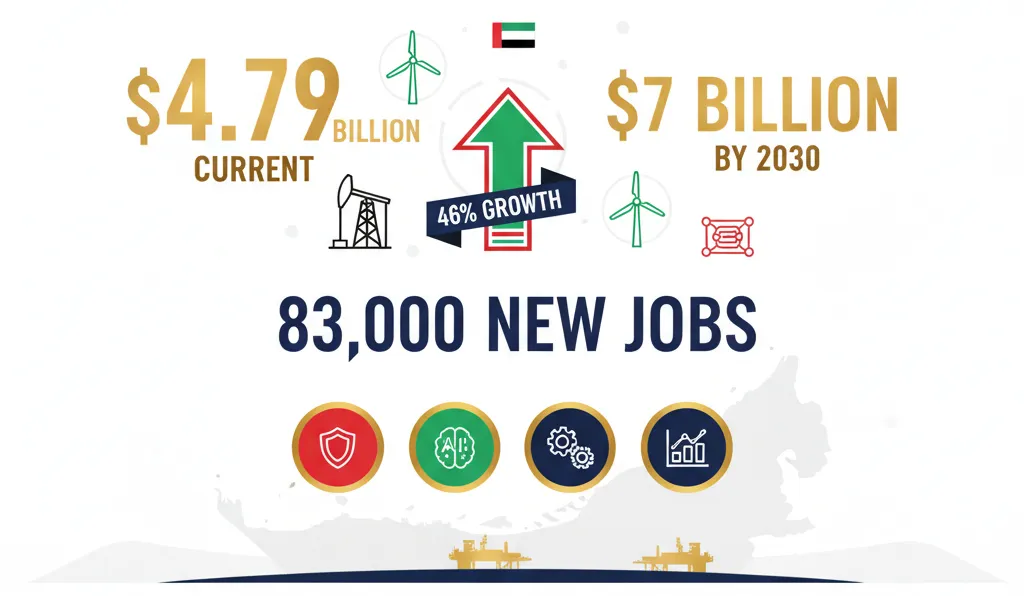
The UAE’s offshore industry is positioning itself as a major employment generator, with Robert Walters research revealing plans to create nearly 83,000 skilled jobs over the next five years. This development represents a significant opportunity for professionals seeking careers in this expanding sector.
Understanding the Offshore Industry
The offshore industry encompasses activities conducted at sea and beyond coastlines, primarily focused on resource extraction and infrastructure development. While traditionally associated with oil drilling, the sector has evolved considerably in the UAE context.
Given the UAE’s position as an oil-producing nation, dozens of local and multinational offshore companies have operated across the country for decades, employing thousands of workers. However, the current expansion goes beyond traditional oil and gas operations.
Economic Impact and Growth Projections
The financial implications of this growth are substantial. The offshore sector is projected to generate up to $7 billion (Dh25.7 billion) for the UAE’s economy by 2030, representing a 46% increase from the current $4.79 billion.
Phill Brown, head of market intelligence at Robert Walters, emphasises that this growth demonstrates how offshoring has become an increasingly strategic component of the UAE economy, supporting job creation, skills development, and service diversification.
Key Growth Drivers
Several factors contribute to the UAE’s attractiveness for offshore operations:
Strategic Location: The UAE’s position connecting Europe, Asia, and Africa provides unparalleled access to global markets and time zones.
Language Proficiency: Strong English-language capabilities across the workforce facilitate international business operations.
Digital Infrastructure: Modern technological infrastructure supports complex offshore functions and digital operations.
Government Support: Initiatives supporting innovation and business services create a conducive environment for offshore operations.
High-Demand Career Areas
The expansion creates opportunities across multiple specialised fields:
Cybersecurity Professionals: With offshore operations handling sensitive data and critical infrastructure, cybersecurity experts are increasingly sought after to protect digital assets and maintain operational security.
Artificial Intelligence Specialists: AI professionals are needed to develop and implement intelligent systems that optimise offshore operations and decision-making processes.
Machine Learning Engineers: These specialists design algorithms and systems that can analyse vast amounts of operational data to improve efficiency and predict maintenance needs.
Product Analysis Experts: Professionals who can evaluate offshore products and services, conducting market research and performance analysis to drive business development.
Evolving Business Strategies
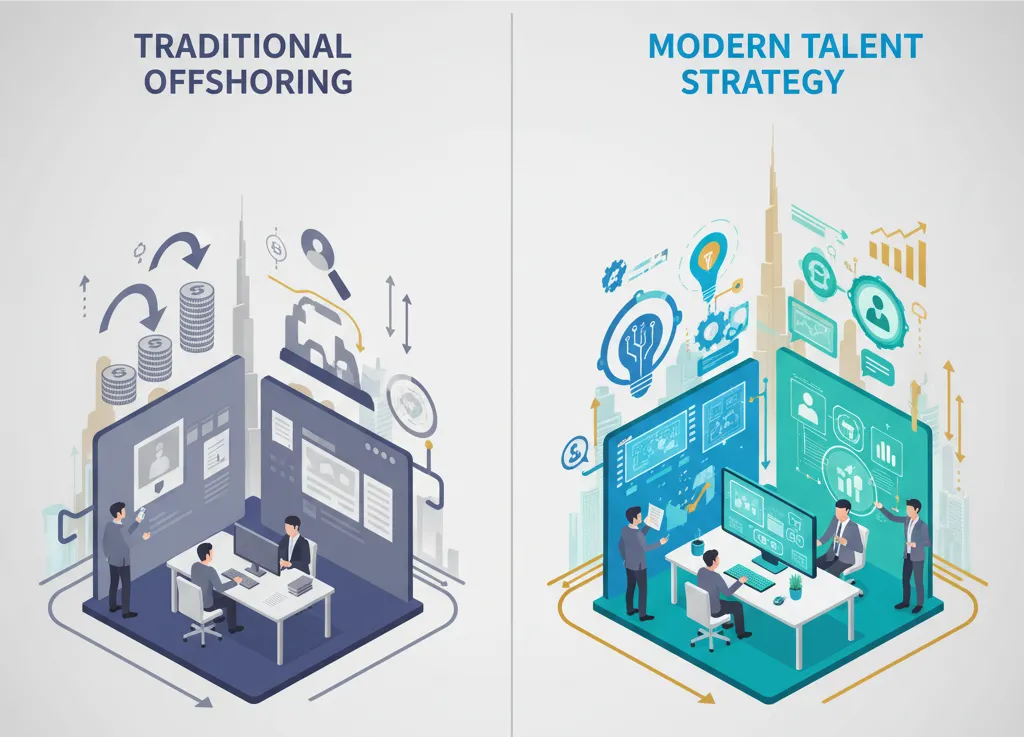
David Barr, CEO of outsourcing at Robert Walters, notes a fundamental shift in how companies approach offshoring. Rather than viewing it purely as a cost-cutting measure, organisations now see offshoring as a talent access strategy.
This evolution means companies are integrating offshore teams into their core operations, building capabilities in areas requiring strong technical expertise, cross-border collaboration, and long-term talent development.
The UAE offers a combination of advanced digital infrastructure, a multilingual workforce, and a supportive regulatory environment that aligns with international business practices.
Career Development Opportunities
For professionals considering offshore industry careers, the UAE presents several advantages:
Skill Development: Exposure to international projects and advanced technologies provides opportunities for rapid professional growth.
Cross-Cultural Experience: Working with global teams develops valuable intercultural communication skills.
Technical Advancement: Access to cutting-edge technologies and methodologies in offshore operations.
Career Progression: The industry’s growth trajectory suggests strong potential for advancement and leadership opportunities.
Industry Transformation
The current trend represents a broader evolution in global workforce strategy. Companies are increasingly decentralising high-value operations to locations with strong talent pools and supportive business environments.
This shift benefits the UAE by attracting sophisticated operations that require skilled professionals, contributing to the country’s economic diversification goals beyond traditional oil and gas sectors.
The offshore industry’s growth aligns with the UAE’s Vision 2071, which aims to make the country the world’s leading nation by its centennial. The focus on knowledge-based industries and skilled employment supports this long-term strategic vision.
Preparing for Offshore Careers
Professionals interested in offshore industry opportunities should focus on developing relevant technical skills, particularly in emerging technologies like AI and cybersecurity. Understanding international business practices and developing cross-cultural communication abilities will also prove valuable.
The industry’s emphasis on technical expertise means that continuous learning and professional development will be crucial for career advancement in this sector.
FAQs
What types of jobs are available in the UAE’s offshore industry? The offshore industry offers roles in cybersecurity, artificial intelligence, machine learning, product analysis, engineering, project management, and various technical specialisations related to offshore operations.
What qualifications do I need for offshore industry jobs? Requirements vary by role, but typically include relevant technical degrees, professional certifications in specialised areas like cybersecurity or AI, and experience with international business practices.
What salary ranges can offshore industry professionals expect? Salaries vary significantly based on specialisation and experience. Cybersecurity and AI professionals typically command premium salaries, often ranging from Dh180,000 to Dh500,000+ annually for experienced professionals.
Is the offshore industry only about oil and gas? While traditionally associated with oil and gas, the modern offshore industry includes renewable energy projects, digital services, infrastructure development, and various technology-driven operations.
How can I transition into the offshore industry from another sector? Focus on developing relevant technical skills, particularly in high-demand areas like cybersecurity and AI. Consider professional certifications and seek opportunities to work on international projects in your current role.
Further Reading
The UAE week, every Monday
The week's stories on jobs, visas, money and daily life in one short email. Unsubscribe in one click.