Dubai Ranks 4th Wealthiest City EMEA: 86,000 Millionaires 2025
Dubai becomes 4th wealthiest city in EMEA with 86,000 millionaires and $1.1 trillion liquid wealth. Discover what’s driving this economic transformation.
By Vadim Kouznetsov, published
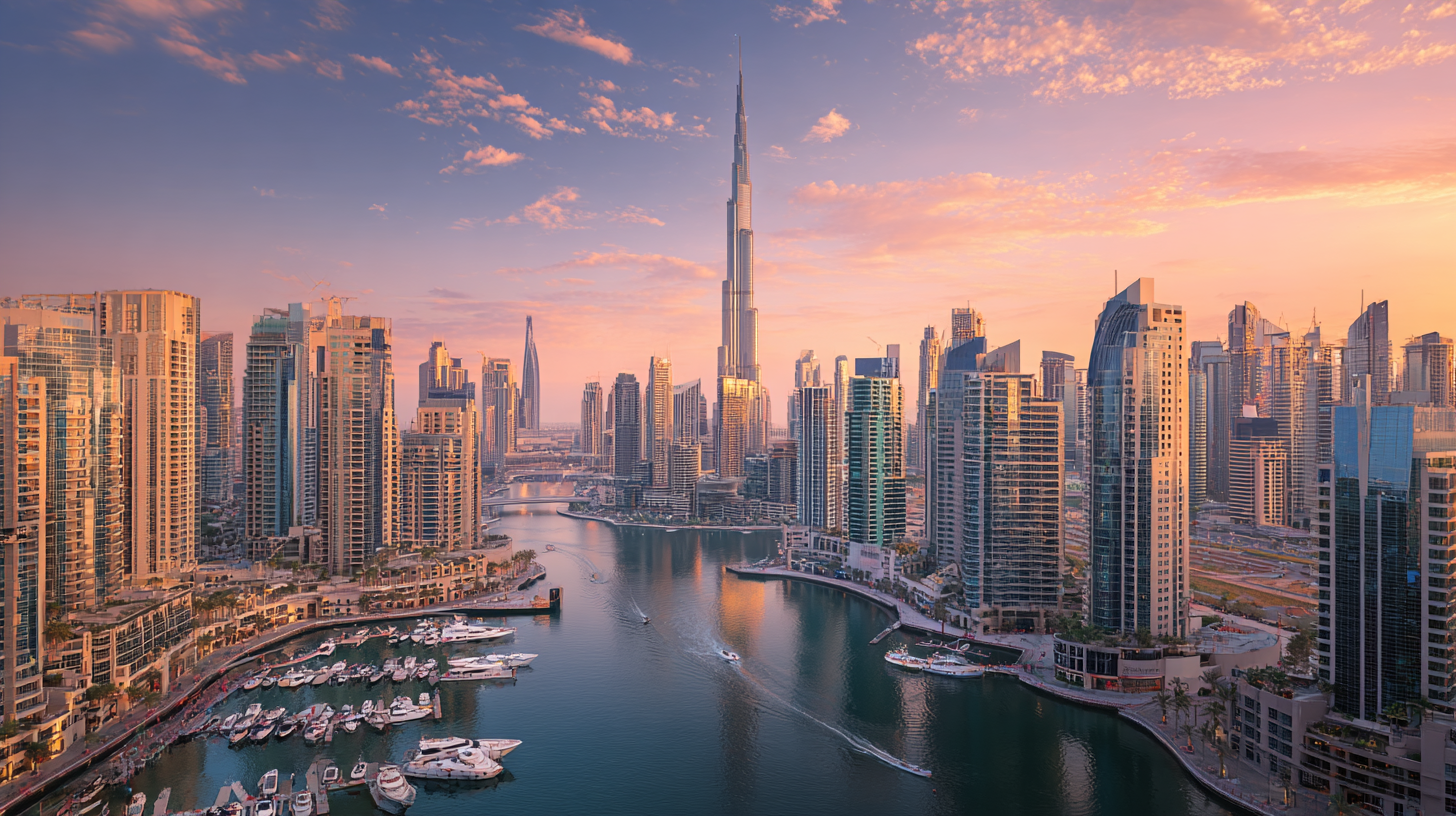
Dubai has achieved a remarkable milestone, securing its position as the fourth-wealthiest city in Europe, Middle East and Africa (EMEA) region. With $1.1 trillion in liquid wealth and an impressive population of 86,000 millionaires, the emirate now ranks alongside global financial powerhouses London, Paris, and Milan.
Dubai’s Wealth Statistics Paint Impressive Picture
Recent data from The Rise of Dubai study reveals staggering numbers that highlight the emirate’s economic transformation. As of June 2025, Dubai hosts:
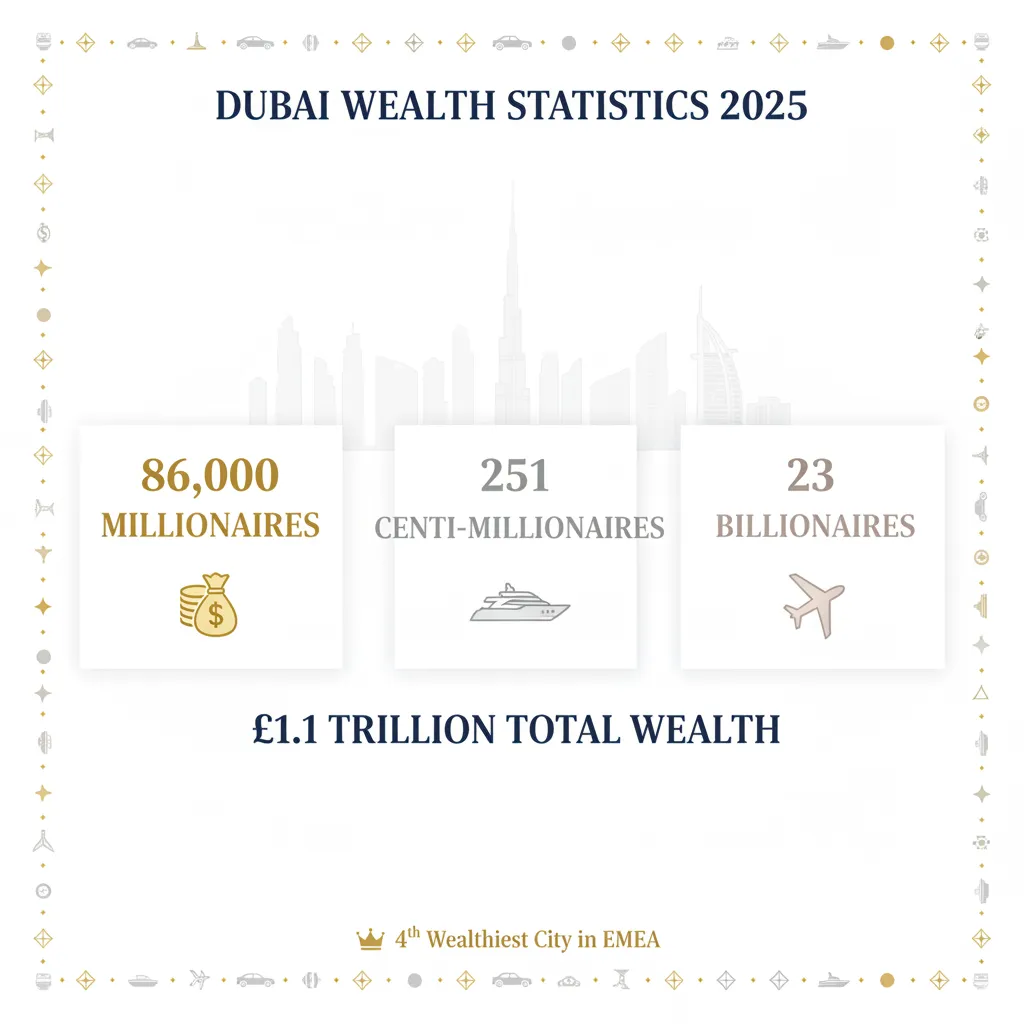
- 86,000 millionaires – individuals with investable wealth exceeding $1 million
- 251 centi-millionaires – those with assets worth $100 million or more
- 23 billionaires – the ultra-wealthy elite with fortunes exceeding $1 billion
This concentration of wealth translates to approximately $1.1 trillion in total liquid investable wealth within the city.
How Dubai Compares to Other Wealthy Cities
The emirate’s fourth-place ranking puts it in elite company within the EMEA region:
- London leads with 212,000 millionaires
- Paris follows with 163,000 high net worth individuals
- Milan holds third position with 121,000 millionaires
- Dubai claims fourth with 86,000 millionaires
According to projections, if current growth trends continue, Dubai could potentially overtake these established financial centres to become EMEA’s wealthiest city by 2040.
Factors Driving Dubai’s Wealth Attraction
Several key elements have contributed to Dubai’s rapid ascent as a wealth magnet:
Tax Advantages and Safe Haven Status
Dubai’s favourable tax environment has attracted wealthy retirees and investors seeking to preserve their wealth. The emirate’s political stability and safe-haven status provide security for high-net-worth individuals looking for reliable investment destinations.
Economic Diversification
The city’s highly diversified economy reduces dependency on any single sector, creating multiple wealth-generation opportunities across industries including real estate, finance, technology, and tourism.
Strategic Location and Connectivity
Dubai’s position as a global hub offers unparalleled access to markets worldwide. The emirate’s strong air connectivity allows investors to reach any destination globally, making it an ideal base for international business operations.
Property Market Performance
Rising property prices have contributed significantly to wealth accumulation, with real estate serving as both a store of value and investment vehicle for affluent residents.
Quality of Life Factors
Dubai offers world-class infrastructure that appeals to wealthy individuals:
- First-class healthcare systems
- Excellent international schools
- Year-round leisure activities
- Premium lifestyle amenities
Growing Family Office Hub
The UAE has emerged as the fastest-growing family office hub globally, hosting at least 250 family offices as of June 2025. Most of these operations were established post-COVID by high-net-worth individuals from:
- Africa
- India
- Russia
- United Kingdom
- Commonwealth of Independent States
- Middle East regions
Family offices typically serve ultra-wealthy centi-millionaires and billionaires, providing sophisticated wealth management and investment services.
Investment Opportunities in Dubai
The emirate’s transformation creates unique investment prospects not available in traditional markets. Regulatory sophistication combined with technological excellence opens new avenues for:
Business Growth
Dubai serves as a gateway to high-growth opportunities across emerging markets
Wealth Preservation
Stable political environment and robust financial infrastructure protect investments
Legacy Building
Long-term planning opportunities for generational wealth transfer
Population Growth Reflects Economic Success
Dubai’s wealth attraction has driven population growth to historic levels. Official data shows the city’s population has crossed 4 million residents, reaching the highest level in its history.
This demographic expansion includes:
- Business professionals
- International investors
- Wealthy retirees
- Digital nomads
- Entrepreneurs
Global Investment Flows
Consistent foreign direct investment flows continue to fuel Dubai’s economic engine. International investors recognise the emirate’s potential as a bridge between established and emerging markets.
Strong investor inflows have supported infrastructure development, business expansion, and wealth creation across multiple sectors.
Future Wealth Projections
Market analysts project continued wealth accumulation in Dubai based on current trends. The combination of favourable policies, strategic location, and economic diversification positions the emirate for sustained growth.
If momentum continues, Dubai could challenge established financial centres for EMEA’s top position within the next two decades.
Key Takeaway
Dubai’s rise to become the 4th wealthiest city in EMEA reflects a successful transformation from regional trading hub to global financial centre. With 86,000 millionaires and $1.1 trillion in liquid wealth, the emirate demonstrates how strategic vision, favourable policies, and quality infrastructure can attract international wealth and create lasting economic prosperity.
Frequently Asked Questions
Q: What qualifies someone as a millionaire in these statistics? A: Individuals with investable wealth exceeding $1 million, not including primary residence or collectibles.
Q: Does the $1.1 trillion wealth figure mean money is physically held in Dubai? A: No, this represents combined investable wealth of residents who may hold assets globally through international banks and wealth managers.
Q: What makes Dubai attractive to wealthy individuals compared to other cities? A: Low taxes, political stability, strategic location, quality infrastructure, and business-friendly regulations create a compelling proposition.
Q: How reliable are these wealth rankings? A: The data comes from New World Wealth’s extensive database and is conducted in partnership with established financial institutions.
Q: Can Dubai realistically overtake London or Paris by 2040? A: Current growth trends suggest potential, but this depends on sustained economic policies and continued international appeal.
Further Reading:
The UAE week, every Monday
The week's stories on jobs, visas, money and daily life in one short email. Unsubscribe in one click.