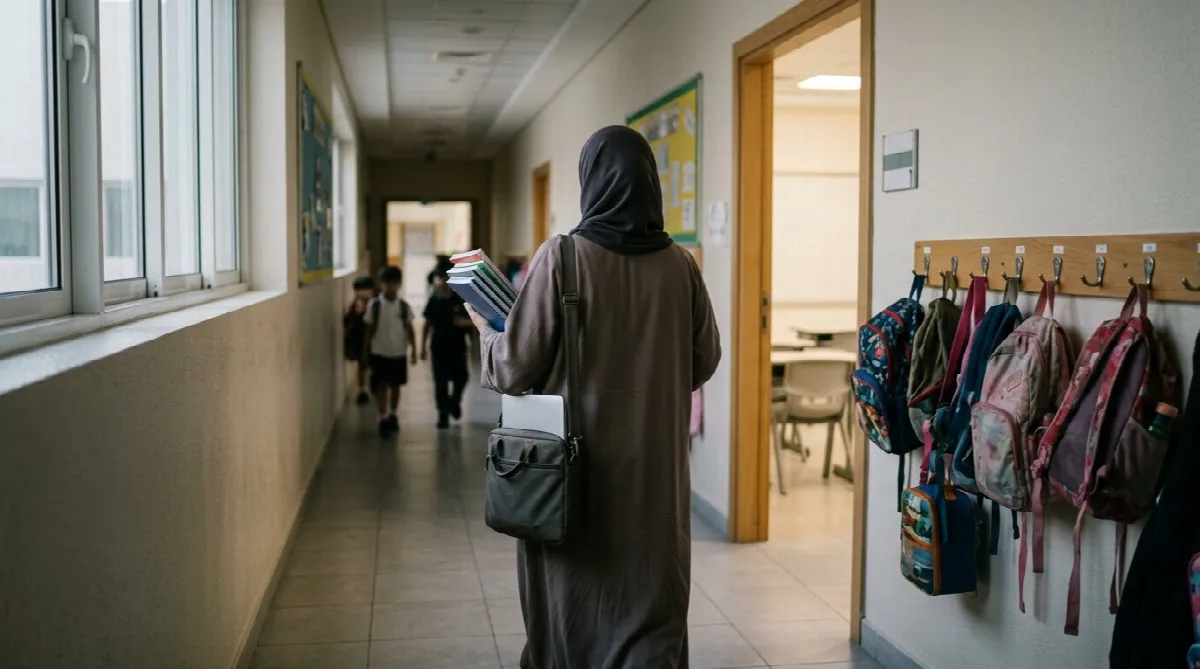
UAE Private Schools Attendance Rules: Support Over Punishment 2025
Dubai private schools adopt supportive attendance policies following new MoE guidelines. KHDA 92% threshold maintained with flexible interventions.
By Vadim Kouznetsov, published

Dubai’s private schools are emphasising positive reinforcement over punitive measures as new Ministry of Education attendance guidelines reshape student accountability across the UAE. While maintaining compliance with regulatory standards, school leaders prioritise understanding underlying attendance issues rather than implementing automatic consequences.
Private School Approach to New MoE Guidelines
The Ministry of Education’s September 1 regulations establish strict thresholds: warnings after one unexcused absence, child protection referrals after 15 days, and potential grade repetition for students exceeding annual limits. Private schools are adapting these requirements whilst maintaining their educational philosophy of support-first intervention.
Balancing Compliance with Care
Dubai’s private institutions recognise attendance as crucial for academic success whilst acknowledging that blanket punishment fails to address root causes. Schools maintain regulatory compliance through careful documentation and progressive intervention strategies.
How Leading Private Schools Handle Attendance
Springdales School Dubai’s Structured Approach
Principal David Jones outlines clear expectations: registration begins at 7:40am with lessons starting promptly at 8:00am. Late arrivals receive immediate marking, with persistent lateness resulting in detentions or behaviour contracts.
The school implements Attendance Intervention Strategies (AIS) progressively, ensuring parents understand their responsibility for punctuality whilst providing support mechanisms for struggling families.
GEMS Modern Academy’s Supportive Framework
Associate Principal Sydney Michael Atkins emphasises understanding over punishment: “Our approach is never punitive – it is supportive. We try to understand the underlying reasons for absence, whether academic stress, wellbeing concerns, or family circumstances.”
The school’s interventions include:
- Academic catch-up plans for missed content
- Counselling support for personal challenges
- Peer mentoring programmes
- Adjusted timetables for specific needs
Uptown International School’s Partnership Model
Principal Colin Gerrie advocates for collaborative solutions through the “home school triangle” – partnerships between students, parents, and staff. When attendance drops below KHDA’s 92% threshold, the school escalates to senior leadership whilst maintaining dialogue with families.
“We hold students accountable whilst working hand in hand with parents to remove barriers and prevent vital learning time loss,” Gerrie explains.
KHDA Attendance Standards and School Implementation
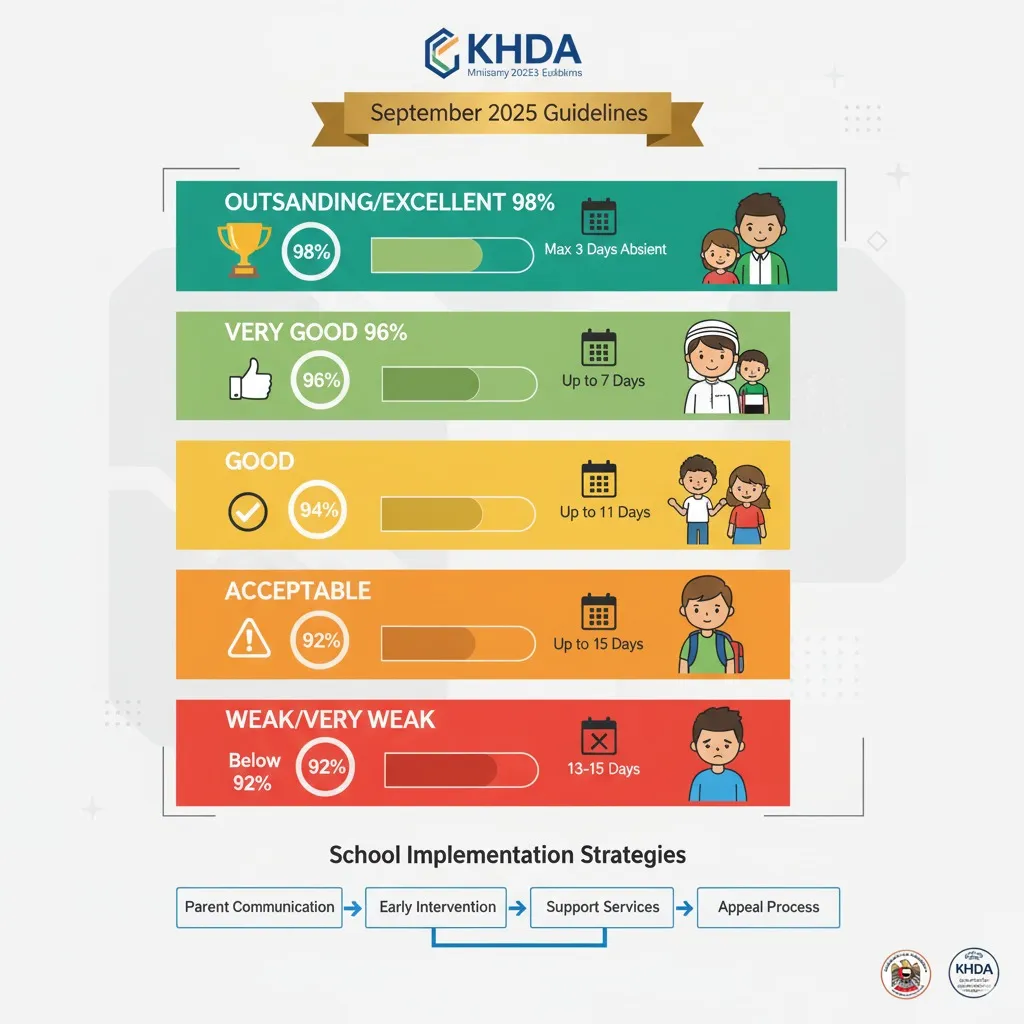
Official Attendance Categories
Dubai’s private schools follow Knowledge and Human Development Authority (KHDA) guidelines establishing clear performance bands:
Outstanding/Excellent: 98% attendance (maximum 3 days absent annually) Very Good: 96% attendance (up to 7 days absent) Good: 94% attendance (up to 11 days absent) Acceptable/Satisfactory: 92% attendance (up to 13-15 days absent) Weak/Very Weak: Below 92% attendance
American Academy for Girls’ Transparent System
Principal Lisa Johnson emphasises transparency through regular reporting: “These ratings are reported to parents each term, making expectations transparent and clearly measurable.”
The school combines accountability with incentives including assemblies, certificates, and class-based rewards to encourage consistent attendance patterns.
Authorised vs Unauthorised Absences in Private Schools
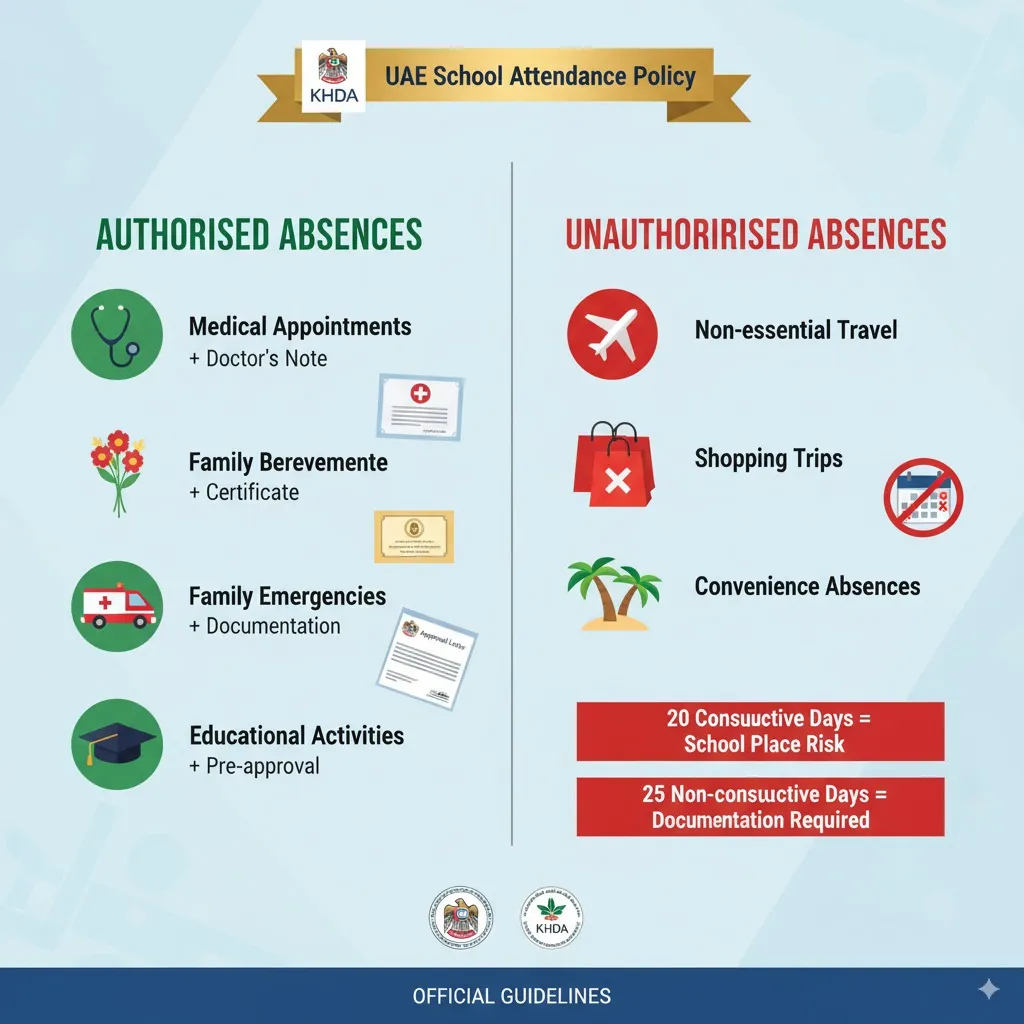
Acceptable Absence Categories
Private schools across Dubai accept specific absence types as authorised:
- Medical appointments with doctor’s notes
- Family bereavement with appropriate documentation
- Emergency family circumstances with verification
- Pre-approved educational activities
Unacceptable Absence Reasons
Schools categorise certain absences as unauthorised, potentially affecting student progression:
- Non-essential travel and extended holidays
- Shopping trips and recreational activities
- Unapproved family visits
- Convenience-based absences
Students absent for 20 consecutive days or 25 non-consecutive days risk losing their school place unless proper documentation supports their absence.
Communication Requirements and Parent Responsibilities
Immediate Notification Protocols
Schools require parents to notify absences on the first day through multiple channels:
- Phone calls to designated attendance officers
- Email communications to administrative staff
- School app notifications for immediate updates
Documentation Standards
Authorised absences require supporting evidence:
- Medical certificates for illness-related absences
- Official documentation for family emergencies
- Pre-approval forms for educational activities
- Bereavement certificates for family losses
Appeal Processes and Exemption Requests
Al Diyafah High School’s Fair Assessment System
Principal Neetha Shetty explains the school’s balanced approach: “Parents may appeal or request exemptions if their child reaches the attendance threshold due to genuine circumstances.”
The appeals process requires:
- Written submissions with supporting documentation
- Medical certificates or relevant evidence
- Principal review based on genuineness and severity
- Board of Governors consultation for complex cases
- KHDA involvement when necessary
Flexible Learning Arrangements
Some schools offer alternative solutions through approved programmes. The American Academy for Girls utilises the Rahhal programme, providing flexible learning arrangements for students facing unique circumstances whilst maintaining academic continuity.
Technology and Monitoring Systems
Real-Time Tracking
Modern private schools implement sophisticated attendance tracking systems providing:
- Immediate absence notifications to parents
- Real-time attendance percentages
- Progress monitoring for intervention planning
- Documentation systems for regulatory compliance
Data-Driven Interventions
Schools use attendance data to identify patterns and implement targeted support:
- Early warning systems for declining attendance
- Personalised intervention plans
- Family support referrals when appropriate
- Academic support for catching up on missed content
Impact on Student Outcomes and School Community
Research-Based Benefits
Educational research consistently demonstrates strong correlations between regular attendance and:
- Higher academic achievement levels
- Improved social development outcomes
- Better long-term educational prospects
- Enhanced classroom engagement
Building Consistent Habits
Schools view attendance support as character development, helping families establish consistency patterns that benefit students throughout their educational journey.
Key Takeaway: UAE private schools are implementing new Ministry of Education attendance guidelines through supportive frameworks that prioritise understanding underlying issues over punishment. While maintaining strict compliance with KHDA’s 92% threshold and MoE regulations, schools focus on partnership with parents, early intervention, and flexible solutions to maintain student engagement and academic progress.
Frequently Asked Questions
Q: How do private schools differ from government schools in handling attendance? A: Private schools typically offer more individualised support and intervention strategies whilst maintaining compliance with MoE and KHDA requirements, often providing additional resources for struggling families.
Q: Can parents appeal attendance-related consequences in private schools? A: Yes, most private schools have formal appeal processes requiring written submissions with supporting documentation, reviewed by principals and potentially school boards.
Q: What happens if a private school student’s attendance falls below 92%? A: Schools typically implement progressive interventions including parent meetings, support plans, and senior leadership involvement before considering more serious consequences.
Q: Are there differences between KHDA and MoE attendance requirements? A: KHDA sets the 92% minimum threshold for satisfactory attendance, whilst new MoE guidelines establish specific warning and referral triggers that private schools must follow.
Q: How do private schools support students with chronic medical conditions affecting attendance? A: Schools often provide flexible arrangements through programmes like Rahhal, offering alternative learning methods whilst maintaining academic standards and regulatory compliance.
Further Reading
The UAE week, every Monday
The week's stories on jobs, visas, money and daily life in one short email. Unsubscribe in one click.