UAE Corporate Tax 2025: Auditor Fees Jump 20% Before Sept 30 Deadline
UAE businesses face 10-20% auditor fee increases as companies scramble to meet September 30 corporate tax filing deadline. Costs range Dh3,000-20,000.
By Vadim Kouznetsov, published

Key Takeaway
UAE businesses rushing to meet the September 30 corporate tax deadline face auditor fee increases of 10-20%, with costs ranging from Dh3,000 to Dh20,000, as first-time corporate tax filing creates unprecedented demand for professional tax services.
The inaugural year of UAE corporate tax implementation has created a perfect storm of increased costs and compliance pressure for businesses across the Emirates. Companies with calendar year financial periods face the September 30 deadline for their first-ever corporate tax returns, driving unprecedented demand for auditing and tax preparation services.
Professional service providers are capitalising on this last-minute rush, with audit firms reporting significant fee increases as businesses scramble to meet regulatory requirements. The combination of limited time, complex new regulations, and high demand has fundamentally altered the UAE’s professional services pricing landscape.
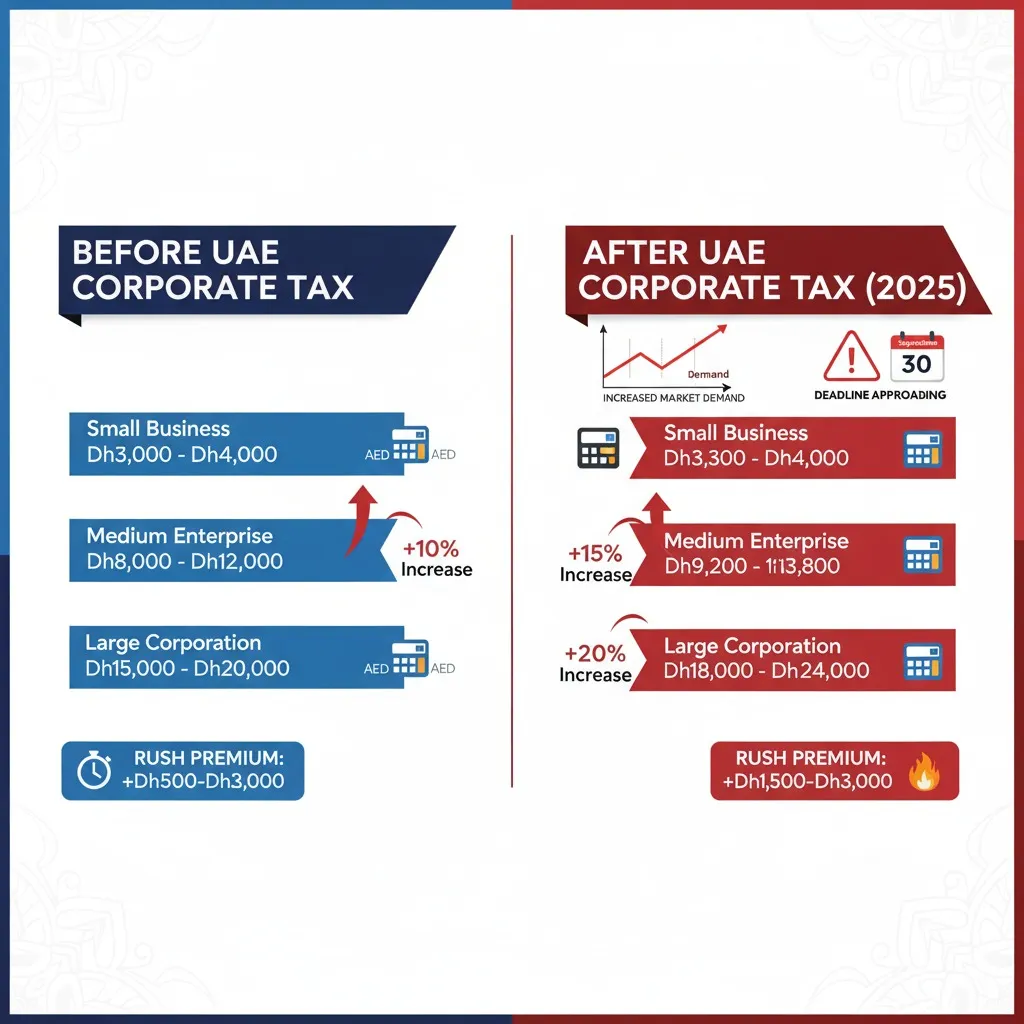
Dramatic Fee Increases Across the Market
The UAE’s corporate tax introduction has created a seller’s market for professional services, with auditors commanding premium rates for urgent tax preparation work.
Price Range Variations: Industry sources report auditor fees ranging from Dh3,000 for smaller businesses to Dh20,000 for complex corporate structures, representing substantial increases from pre-corporate tax rates.
Percentage Increases: Established firms are seeing 10-20% fee increases compared to previous audit cycles, with some companies experiencing even steeper cost rises depending on complexity and urgency requirements.
Rush Premium: The last-minute nature of many requests has created an additional premium layer, as firms prioritise urgent projects over standard scheduling, driving costs higher for businesses that delayed preparation.
Market Dynamics: Limited availability of qualified tax professionals combined with unprecedented demand has shifted negotiating power firmly toward service providers, leaving businesses with little choice but to accept higher rates.
Why Businesses Are Paying Premium Rates
The first-time implementation of corporate tax has created unique challenges that force companies to seek professional assistance despite increased costs.
Complexity Concerns: Many businesses lack internal expertise to handle corporate tax calculations, IFRS compliance requirements, and transfer pricing documentation, making external support essential rather than optional.
Risk Mitigation: Companies are prioritising compliance over cost savings, viewing professional fees as insurance against potential FTA penalties, audit scrutiny, or filing errors that could prove more expensive long-term.
Time Constraints: Businesses that delayed tax planning until recent months now face compressed timelines that require intensive professional support to meet the September 30 deadline.
Free Zone Considerations: Companies operating in free zones seeking to maintain 0% tax status require specialised advice to navigate qualifying business activity requirements and compliance documentation.
Market Expansion and Service Evolution
The corporate tax introduction has fundamentally reshaped the UAE’s professional services sector, with firms rapidly adapting to capture new revenue opportunities.
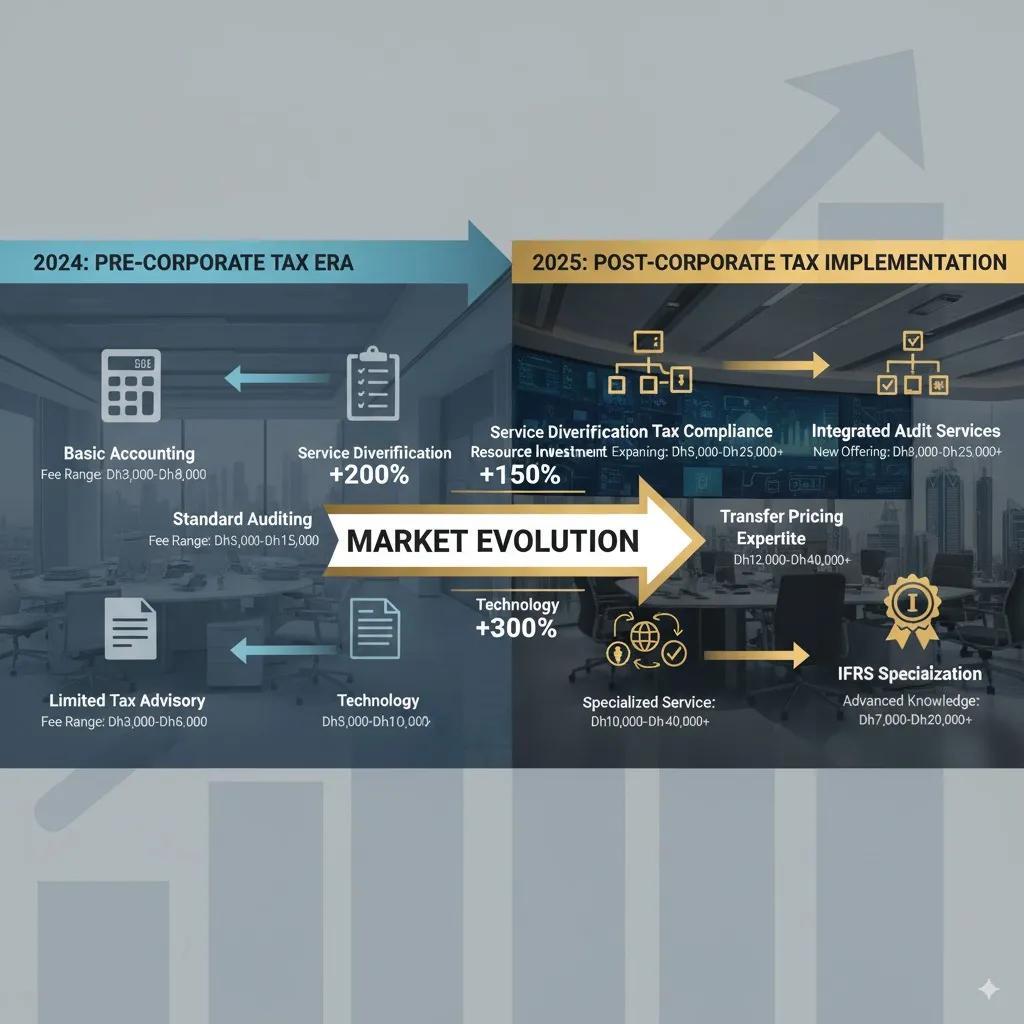
Service Diversification: Traditional tax advisory companies are expanding into audit services to offer comprehensive corporate tax solutions, creating new revenue streams whilst meeting client demand for integrated services.
Resource Investment: Established firms are bringing additional qualified staff to handle increased workloads, with some companies doubling their tax department capacity to serve the expanding market.
Technology Integration: Professional service providers are investing in tax software, compliance platforms, and automated reporting tools to manage higher volumes efficiently whilst maintaining service quality.
Specialisation Development: Niche expertise in areas like transfer pricing, free zone compliance, and international tax planning has become particularly valuable, commanding premium rates from specialised practitioners.
FTA Compliance Requirements and Deadlines
The Federal Tax Authority has established clear guidelines and deadlines that drive much of the current market urgency and compliance costs.
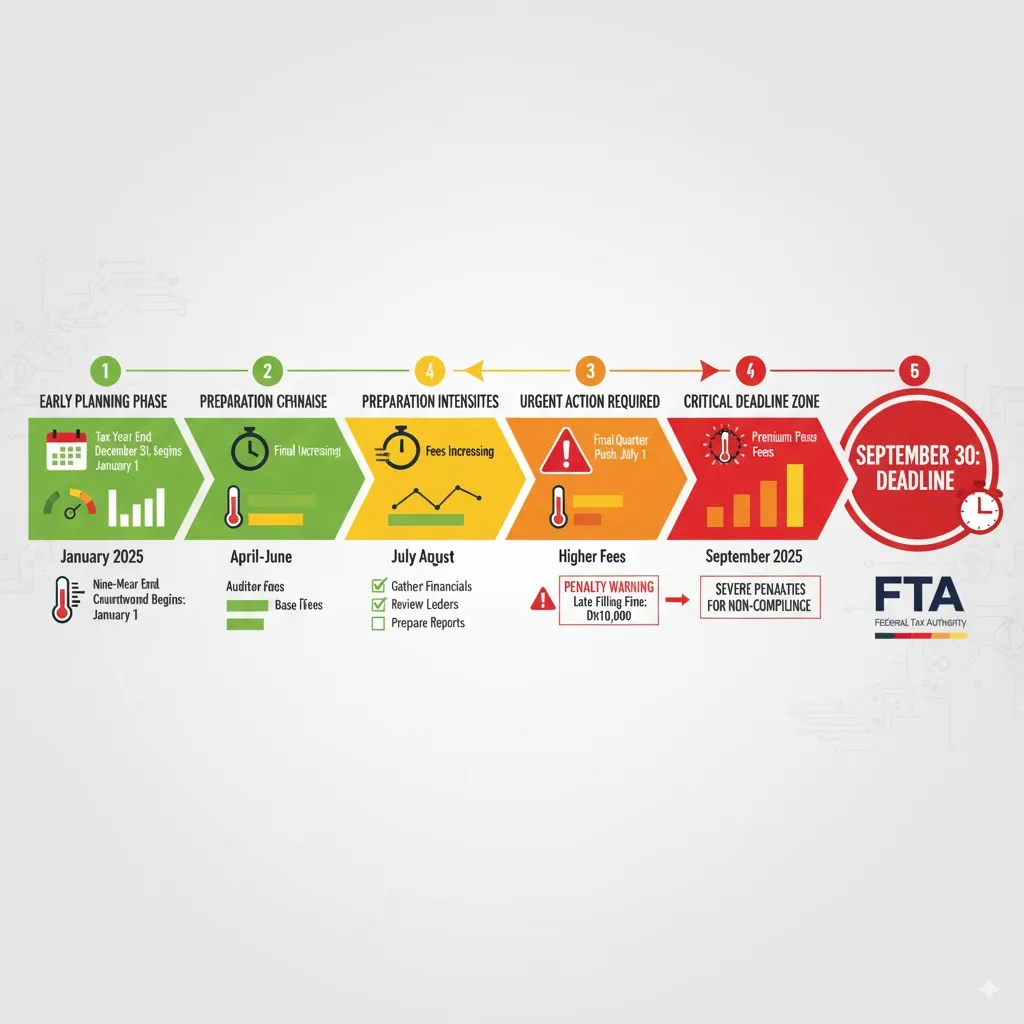
Nine-Month Payment Rule: Businesses must pay corporate tax within nine months of their tax period end, creating specific deadline pressure for calendar year companies facing September 30 submissions.
Documentation Standards: Companies must maintain comprehensive records supporting tax returns, including asset registers, liability schedules, and share ownership details, requiring professional assistance to establish proper systems.
Penalty Framework: The FTA’s penalty structure for late filing and payment creates strong incentives for businesses to prioritise compliance over cost considerations when engaging professional services.
Registration Requirements: Companies above Dh1 million annual revenue must register and file returns, with higher thresholds triggering additional audit and compliance requirements that necessitate professional support.
Impact on Different Business Categories
The fee increases affect various business segments differently, with larger companies and specific industries experiencing disproportionate cost impacts.
Large Corporations: Companies with turnover exceeding Dh50 million face mandatory audit requirements, creating captive demand that allows auditors to command premium rates for these comprehensive engagements.
Free Zone Entities: Businesses seeking to maintain 0% free zone tax benefits require specialised compliance work to demonstrate qualifying business activities, driving demand for niche expertise at elevated rates.
Bank-Financed Companies: Organisations with bank financing often require audited financial statements regardless of size, creating additional demand pressure in an already constrained market.
Small to Medium Enterprises: Smaller businesses face the greatest relative cost burden, as fixed compliance costs represent a larger percentage of their revenue compared to larger corporations with greater economies of scale.
Strategic Responses from Businesses
Companies are adopting various approaches to manage increased professional service costs whilst maintaining compliance with corporate tax requirements.
Internal Capability Building: Some larger organisations are investing in internal tax expertise and systems to reduce dependence on external providers for routine compliance work.
Service Provider Diversification: Businesses are exploring multiple service providers to compare pricing and avoid over-dependence on single firms that may exploit market conditions.
Early Planning: Forward-thinking companies are beginning 2025 tax year planning immediately to avoid next year’s last-minute rush and associated premium pricing.
Technology Solutions: Investment in accounting software, tax preparation platforms, and compliance management systems helps businesses reduce the scope of external professional services required.
Long-Term Market Implications
The current fee surge represents more than temporary market disruption, signalling permanent changes in the UAE’s professional services landscape.
Pricing Reset: The 10-20% fee increases likely represent a permanent pricing adjustment rather than temporary premium, as corporate tax compliance becomes a regular business requirement.
Market Maturation: As the corporate tax system matures, competition among service providers may eventually moderate pricing, but initial years will likely maintain elevated rate levels.
Service Quality Evolution: Higher fees are driving investment in better systems, training, and expertise, potentially improving overall service quality and efficiency in the professional services sector.
Regulatory Stability: Once initial implementation challenges settle, businesses can expect more predictable pricing and service availability as the market adjusts to the new regulatory environment.
Frequently Asked Questions
How much are UAE auditor fees increasing for corporate tax preparation?
Auditor fees have risen 10-20% compared to previous years, with total costs ranging from Dh3,000 for smaller businesses to Dh20,000 for complex corporate structures, depending on company size and complexity.
Why are businesses paying higher fees for tax preparation services?
The first-time corporate tax implementation has created unprecedented demand for professional services, while limited availability of qualified tax experts has shifted market power to service providers, enabling premium pricing.
What is the deadline for UAE corporate tax filing in 2025?
Companies with calendar year financial periods must file their corporate tax returns by September 30, 2025, representing their first-ever corporate tax submission under the new UAE system.
Which businesses are most affected by the fee increases?
Large corporations above Dh50 million turnover, free zone companies maintaining 0% tax status, and bank-financed businesses requiring audited statements face the greatest fee impact due to mandatory compliance requirements.
Can businesses avoid using external auditors for corporate tax filing?
While smaller businesses below certain thresholds may handle basic filing internally, the complexity of UAE corporate tax rules, IFRS requirements, and penalty risks make professional assistance advisable for most companies.
How can businesses manage increased audit and tax preparation costs?
Companies can invest in internal tax expertise, compare multiple service providers, begin early planning for future years, and implement technology solutions to reduce the scope of external professional services needed.
Will auditor fees continue increasing in future years?
The current 10-20% increase likely represents a permanent pricing adjustment rather than temporary premium, though market maturation and increased competition may eventually moderate rate growth.
Further Reading
The UAE week, every Monday
The week's stories on jobs, visas, money and daily life in one short email. Unsubscribe in one click.