Why Are Indian Businesses Rushing to Shift Production to UAE After 50% US Tariffs?
Indian companies shift production to UAE to avoid 50% US tariffs. Learn about setup options, value addition requirements, and business opportunities 2025.
By Vadim Kouznetsov, published

Indian businesses with significant US exports are accelerating plans to establish production hubs in the UAE following the implementation of 50% tariffs on Indian goods. The tariffs, which took effect on August 27, 2025, have prompted jewellers, food brands, and manufacturers to explore joint ventures and investments in the UAE to maintain access to US markets. Companies can reduce tariff exposure from 50% to just 10% by relocating production to the UAE, provided they meet 35-40% local value addition requirements.
Business consultancies report a significant surge in enquiries from Indian companies seeking UAE setup options since President Trump’s tariff announcements.
What Prompted the 50% US Tariffs on Indian Exports?
The escalating trade dispute between the US and India developed through two distinct phases:
Initial 25% Tariff Implementation
President Trump initially imposed 25% tariffs on Indian exports to the US as part of broader trade negotiations. Many Indian businesses initially viewed this as a negotiating tactic rather than permanent policy.
Doubled Tariffs for Russian Oil Purchases
The tariffs were doubled to 50% after India continued purchasing oil from Russia despite US sanctions. This additional 25% penalty specifically targeted India’s energy import decisions during the Russia-Ukraine conflict.
Sector-Specific Exemptions
The tariffs notably exclude pharmaceutical and technology products, meaning companies like Apple can continue shipping iPhones from their Indian facilities to the US market without additional tariff burden.
This selective approach has created both winners and losers in India’s export economy.
Which Indian Industries Are Most Affected?
The 50% tariffs have created varying impacts across different sectors:
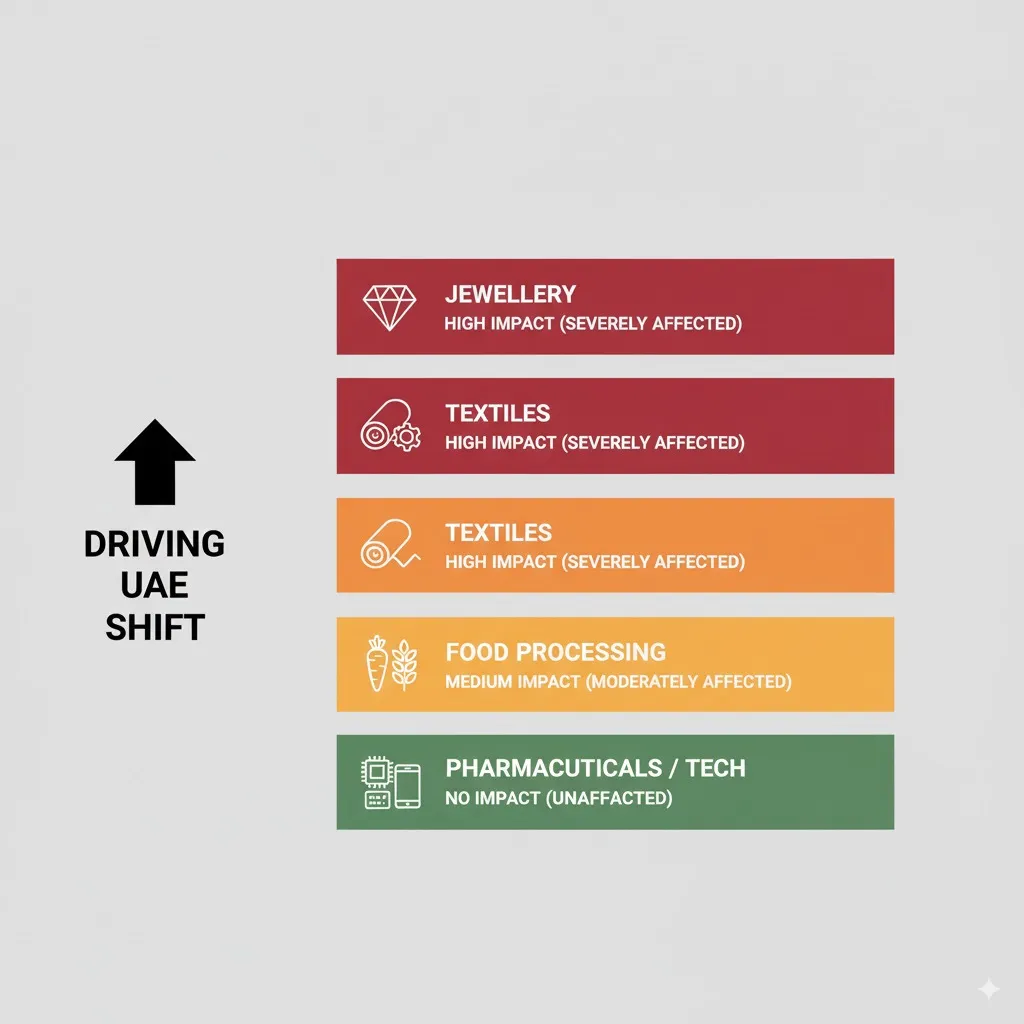
Jewellery and Precious Metals
India’s jewellery export businesses face the biggest impact from the tariff increases. The luxury goods sector, already dealing with high gold prices, now confronts pricing challenges that could eliminate their US market competitiveness.
Dubai-based jeweller Anil Dhanak of Kanz Jewels advises caution: “People need to wait and watch as Mr. Trump has a tendency to change decisions within a short time. Let’s wait to see if there are any changes in the next one month.”
Food Processing and Manufacturing
Food brands are actively exploring UAE joint ventures to maintain their US market access. The labour-intensive nature of food processing makes these businesses particularly vulnerable to tariff impacts.
Textiles and Garments
Traditional export sectors like textiles face significant challenges, with many companies already having UAE presence positioning them advantageously for expansion.
Protected Sectors
Pharmaceutical and technology companies remain unaffected, providing some stability to India’s overall export portfolio.
How Does UAE Production Help Indian Companies?
Shifting production to the UAE offers substantial tariff advantages:
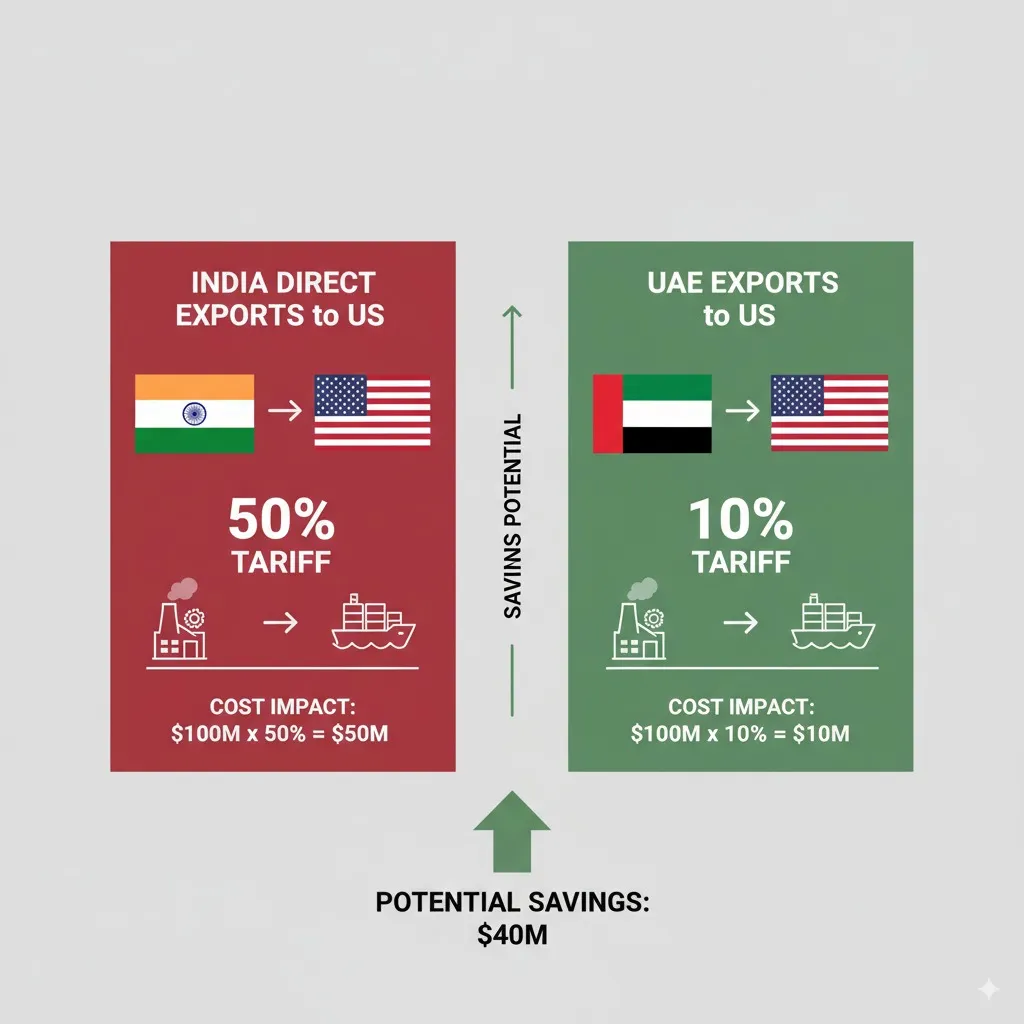
Tariff Reduction Benefits
- UAE to US exports: Subject to only 10% tariffs
- Indian direct exports: Now facing 50% tariffs
- Net savings: 40 percentage points difference in tariff rates
Rules of Origin Requirements
To qualify for preferential treatment, Indian companies must demonstrate 35-40% local value addition in the UAE. This requires:
- Meaningful manufacturing or assembly operations in the UAE
- Final-stage production completion within UAE facilities
- Local sourcing or processing components
- Documentation compliance with US trade regulations
Strategic Advantages
Stephen Innes of SPI Asset Management notes: “India’s labor-intensive exports, the stitching together of supply chains, now face a brick wall in their largest market (the US). That’s not just a tariff, it’s an eviction notice from a house they’ve lived in for decades.”
What Types of UAE Business Setups Are Indian Companies Exploring?
Indian businesses are considering various UAE business establishment options:
Joint Ventures
- Partnership with UAE entities for shared expertise and resources
- Local market knowledge integration with Indian operational experience
- Risk sharing between Indian and UAE partners
- Faster market entry through established UAE networks
Direct Investment
- Wholly-owned subsidiaries providing complete operational control
- Manufacturing facilities designed for specific US market requirements
- Distribution centres for regional market coverage
- Research and development centres for product localisation
Processing and Assembly Operations
- Final-stage manufacturing to meet rules of origin criteria
- Packaging and distribution centres for US market access
- Quality control facilities meeting US standards
- Logistics hubs for efficient US market delivery
What Challenges Do Companies Face in This Transition?
The shift to UAE production involves several considerations:
Financial Investment Requirements
- Setup costs for new UAE operations
- Working capital for inventory and operations
- Compliance expenses for US market requirements
- Ongoing operational costs in a higher-cost environment
Operational Complexities
- Supply chain restructuring to incorporate UAE operations
- Quality control systems adaptation
- Workforce recruitment and training in the UAE
- Regulatory compliance across multiple jurisdictions
Market Uncertainties
Anil Dhanak’s cautious approach reflects broader industry concerns about policy volatility and the need for strategic patience before making major investments.
How Are Business Consultancies Responding?
UAE business setup consultancies report increased activity:
Enquiry Volume Changes
Oksana Sukhar from Sovereign Group reports: “Indian firms have always shown interest in the UAE – making up around 5% of our total enquiries on business setup in the region since January 2025.”
Service Adaptations
Consultancies are adapting services to address:
- Tariff optimization strategies for US market access
- Rules of origin compliance guidance
- Supply chain restructuring advice
- Local value addition requirement planning
Early Mover Advantages
Companies already established in the UAE benefit from:
- Existing infrastructure and operational knowledge
- Established supplier relationships and market presence
- Regulatory familiarity and compliance systems
- Workforce availability and cultural understanding
What Sectors Show the Most UAE Interest?
Venkatesh Santhanam of MCA Gulf identifies key sectors:
Established UAE Presence
Several Indian businesses already operate in UAE sectors including:
- Textiles and garments manufacturing and processing
- Metals and engineering goods production and finishing
- Chemicals and pharmaceuticals (though pharma faces no US tariffs)
- IT-enabled services and technology solutions
Growth Opportunities
The UAE’s thriving startup ecosystem provides additional opportunities for Indian companies to establish innovative operations.
What Are the Long-term Implications?
This production shift could have lasting effects:
Supply Chain Restructuring
- Permanent changes to global supply chain configurations
- UAE positioning as a manufacturing and processing hub
- Reduced dependence on direct India-US trade routes
- Enhanced regional trade integration
Economic Development
- Job creation in UAE manufacturing and services sectors
- Technology transfer between Indian and UAE operations
- Enhanced bilateral economic relationships
- Diversified revenue streams for both countries
Market Dynamics
The shift reflects broader trends in:
- Trade policy uncertainty requiring supply chain flexibility
- Geopolitical considerations in business location decisions
- Regional trade bloc formation and optimization
- Manufacturing hub competition globally
How Can Indian Companies Prepare for UAE Expansion?
Immediate Steps
- Market research on UAE business environment and regulations
- Financial planning for setup and operational costs
- Legal consultation on business structure and compliance requirements
- Relationship building with potential UAE partners
Strategic Planning
- Supply chain mapping to identify value addition opportunities
- Compliance planning for US rules of origin requirements
- Workforce planning for UAE operations
- Technology transfer strategies for local operations
Risk Management
- Diversification strategies beyond US market dependence
- Policy risk assessment and mitigation planning
- Currency hedging for multi-country operations
- Exit strategy planning for changing circumstances
Frequently Asked Questions
How quickly can Indian companies establish UAE operations?
With fast-track business setup platforms, companies can establish UAE entities within minutes to days, though meaningful production operations require months of planning and setup.
What minimum investment is required for UAE manufacturing operations?
Investment requirements vary significantly by sector and scale, but companies must demonstrate sufficient local value addition (35-40%) to qualify for preferential US tariff treatment.
Can existing Indian companies modify their UAE operations to serve US markets?
Yes, many Indian companies with existing UAE presence are well-positioned to expand or modify operations to meet US market requirements and tariff optimization needs.
Do these tariffs affect all Indian exports to the US?
No, pharmaceutical and technology products are exempt from the 50% tariffs, meaning companies in these sectors face no additional trade barriers.
How long might these tariff conditions remain in effect?
Trade policies can change, but companies are planning for extended periods given the strategic nature of the US-India trade relationship and broader geopolitical considerations.
What support is available for Indian companies expanding to the UAE?
The UAE offers various business setup support services, including fast-track licensing, investment incentives, and regulatory guidance for international companies.
Key Takeaway
Indian businesses are accelerating UAE production shifts to circumvent 50% US tariffs by leveraging the UAE’s preferential 10% tariff rate on US exports. Companies must achieve 35-40% local value addition in UAE operations to qualify for these benefits, with jewellery, food processing, and textile sectors leading the relocation efforts. While pharmaceutical and technology sectors remain exempt from tariffs, the broader shift represents a significant restructuring of India-US trade relationships and positions the UAE as a strategic manufacturing and processing hub for global supply chains.
Further Reading
The UAE week, every Monday
The week's stories on jobs, visas, money and daily life in one short email. Unsubscribe in one click.