UAE Central Bank Fines: Dh370M Penalties Hit Financial Institutions
UAE Central Bank imposed Dh370 million in fines on 31 financial institutions in 2025. Learn about compliance violations and impacts.
By Vadim Kouznetsov, published
Why did UAE Central Bank impose Dh370 million in fines on financial institutions?
The UAE Central Bank imposed over Dh370.3 million ($101 million) in penalties against banks, money exchange houses, insurers, and finance companies since January 2025. These fines target compliance violations in anti-money laundering, consumer protection, and federal regulatory standards.
This enforcement campaign represents one of the most extensive regulatory actions in recent years, signalling the UAE’s commitment to strengthening its position as a trusted global financial hub.
How many financial institutions received penalties from UAE Central Bank?
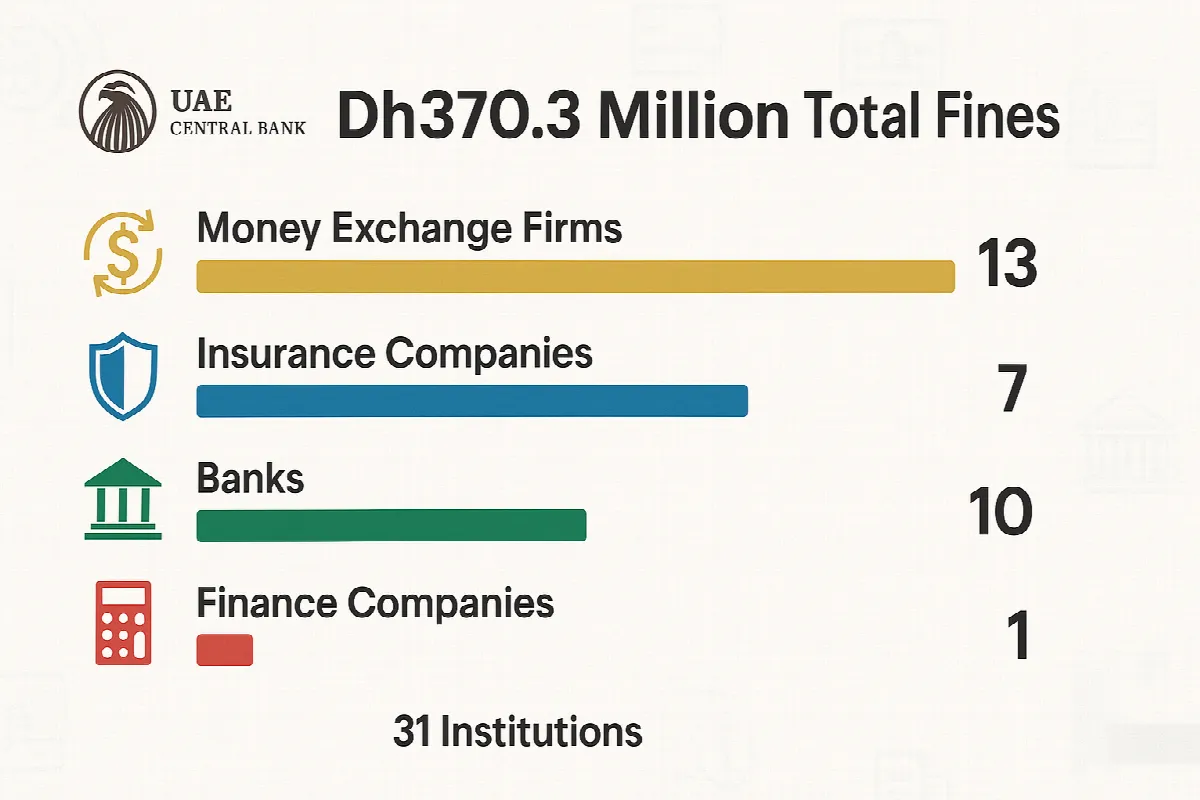
The regulatory crackdown affected 31 financial institutions across different sectors:
Money exchange firms: 13 companies faced penalties, with the most severe being a Dh200 million fine imposed in May 2025.
Insurance companies: Seven insurance and brokerage firms received sanctions for compliance failures.
Banking sector: Ten banks, including three foreign lenders, were penalised for regulatory violations.
Finance companies: One finance company was included in the enforcement actions.
The penalties extended beyond monetary fines to include licence cancellations, operational suspensions, and restrictions on specific services.
What violations led to these substantial fines?
UAE Central Bank inspections revealed three primary areas of non-compliance:
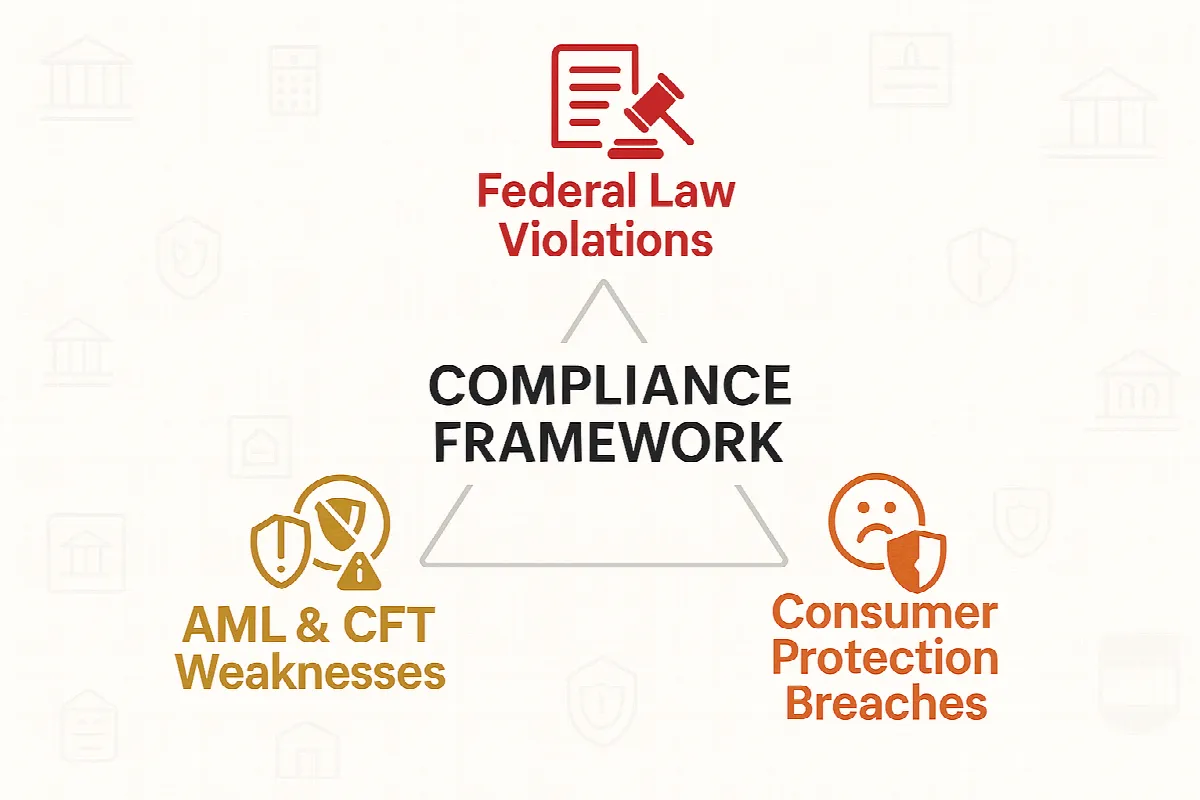
Federal law violations: Institutions failed to comply with regulations governing licensed financial institutions operating in the UAE.
AML and CFT weaknesses: Inadequate anti-money laundering and counter-terrorism financing systems posed risks to the financial system’s integrity.
Consumer protection breaches: Failures in market conduct standards and consumer protection protocols violated regulatory requirements.
These violations directly threatened the UAE’s reputation as a reliable financial centre and its compliance with international standards.
Which penalties were the most significant in 2025?
Several high-profile sanctions demonstrate the Central Bank’s serious approach to enforcement:
Largest individual fine: A money exchange company received a Dh200 million penalty in May 2025, accompanied by a Dh500,000 fine against its branch manager.
Banking restrictions: One local bank was prohibited from onboarding new Islamic banking clients for six months due to significant compliance lapses.
Licence revocations: Multiple exchange houses, including Gomti Exchange and Al Hindi Exchange, had their licences permanently cancelled.
Personal accountability: Senior executives faced individual penalties, with one branch manager fined Dh500,000 and barred from holding specialised financial roles in the UAE.
How does this enforcement campaign benefit the UAE’s financial sector?
The regulatory actions serve multiple strategic objectives for the UAE’s financial ecosystem:
International credibility: These measures support the UAE’s recent removal from the European Union’s high-risk money laundering list, enhancing its global reputation.
System integrity: Strict enforcement deters future violations whilst encouraging proactive compliance across all financial institutions.
Consumer protection: Enhanced oversight protects individual and business clients from inadequate service standards and potential fraud.
Market confidence: Transparent regulatory actions demonstrate the Central Bank’s commitment to maintaining high standards in the financial sector.
Ahmed Youssef, a veteran banking analyst in Dubai, explains: “The decision to publish details more consistently signals a commitment to transparency and to bolstering the efficiency of the financial system.”
What does this mean for UAE’s position as a financial hub?
The enforcement campaign strengthens the UAE’s standing in several key areas:
Regional leadership: The UAE reinforces its position as the Middle East’s primary financial centre through robust regulatory oversight.
International compliance: Meeting global standards attracts foreign investment and facilitates cross-border banking operations.
Risk mitigation: Proactive enforcement prevents potential blacklisting by international bodies, which could severely impact the financial sector.
The timing proves particularly significant, coming after the European Parliament’s approval to remove the UAE from its “high-risk” anti-money laundering list.
How are financial institutions responding to increased scrutiny?
Banking analyst Amjad Nasr notes that the crackdown reflects “a proactive supervisory model” designed to enforce corrections and upgrades within financial institutions.
However, some challenges remain: “Despite clear regulatory roadmaps, some firms remain slow to modernise or fail to strengthen their compliance frameworks. In such cases, fines are not an end in themselves but a corrective tool to force accountability.”
This approach encourages institutions to invest in compliance infrastructure rather than face costly penalties and operational restrictions.
What should financial sector employees expect going forward?
The Central Bank’s statement emphasises zero tolerance for violations: “The Central Bank will not tolerate violations that undermine transparency, consumer protection, or the integrity of the financial system.”
This stance suggests continued intensive monitoring and enforcement, requiring all financial sector workers to maintain strict compliance with:
- Anti-money laundering protocols
- Consumer protection standards
- Federal regulatory requirements
- International compliance frameworks
FAQ
Will these fines affect banking services for customers? No, the penalties target institutional compliance rather than customer services. Enhanced oversight should improve service quality and consumer protection.
How does UAE’s enforcement compare to other financial centres? The UAE’s proactive approach aligns with international best practices seen in major financial hubs like Singapore and Hong Kong.
Are more penalties expected in 2025? The Central Bank has indicated continued vigilance, suggesting ongoing enforcement actions for institutions failing to meet compliance standards.
What happens to employees at penalised institutions? Most employees are unaffected, though senior executives may face personal penalties for compliance failures under their oversight.
How do these actions affect foreign investment in UAE? Strong regulatory enforcement typically increases foreign investor confidence by demonstrating reliable oversight and risk management.
Key Takeaway
The UAE Central Bank’s Dh370 million enforcement campaign demonstrates the country’s serious commitment to maintaining international financial standards. This proactive regulatory approach strengthens the UAE’s position as a trusted global financial hub whilst protecting consumers and maintaining system integrity.
Further Reading:
The UAE week, every Monday
The week's stories on jobs, visas, money and daily life in one short email. Unsubscribe in one click.