Trump’s 50% Tariffs Push Indian Businesses to UAE & Saudi Arabia
US tariffs on Indian exports could hit 50% vs 10% on UAE/Saudi goods. Indian companies eye Gulf production facilities to maintain US market access.
By Vadim Kouznetsov, published

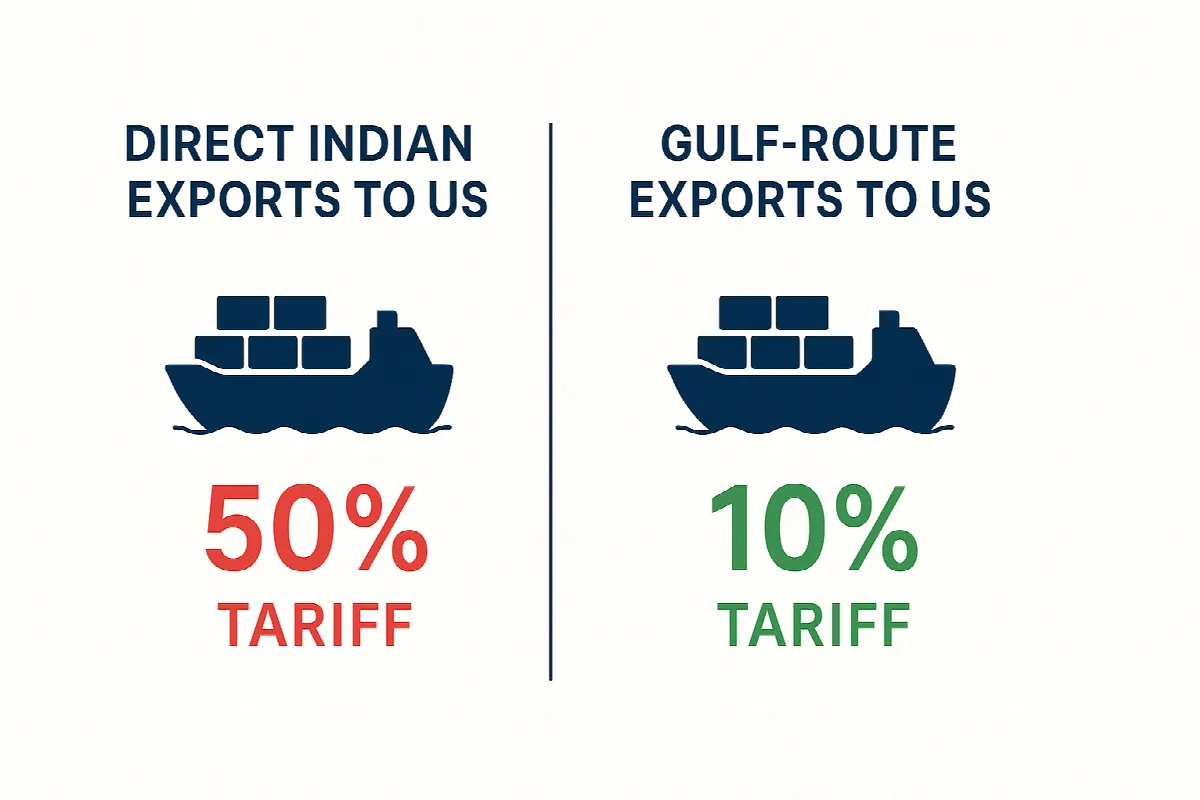
US tariffs on Indian exports could reach 50%, whilst UAE and Saudi Arabia face only 10% duties. This significant disparity creates compelling incentives for Indian companies to establish production facilities in Gulf nations to maintain competitive access to American markets.
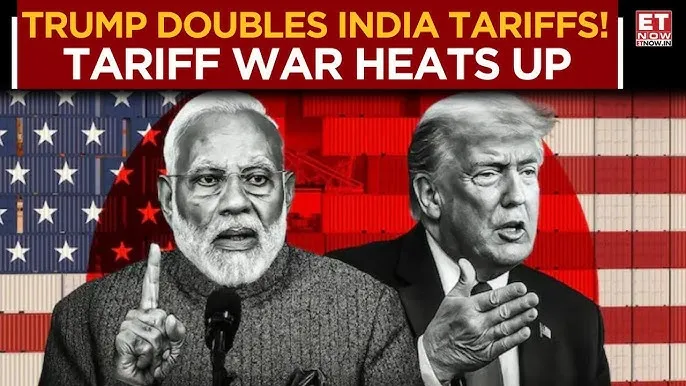
President Trump’s recent announcement of escalating tariffs on Indian imports has sent ripples through global supply chains. With potential duties of 50% on direct Indian exports versus just 10% on UAE and Saudi Arabian products, manufacturers face a stark choice: absorb crushing costs or relocate operations strategically.
What Are the Proposed US Tariff Rates on Indian Exports?
The Trump administration has outlined aggressive tariff structures targeting Indian exporters:
- General Indian exports: Up to 50% import duty
- Additional oil-related penalty: Extra 25% for continued Russian oil purchases
- Steel and aluminium: Fall under the maximum 50% category
- UAE exports to US: Capped at 10%
- Saudi Arabian exports to US: Also limited to 10%
Industry experts suggest the final rates may settle between 15-20% after negotiations, but even these reduced figures present substantial challenges for Indian manufacturers.
How Will Higher Tariffs Impact Indian Manufacturing Companies?
Companies with significant US exposure face immediate operational pressures. Kerala-based Kitex Garments, a major textile exporter, exemplifies the burden many Indian manufacturers will shoulder under these new tariff regimes.
“Even if the final tariff on India is at 15%-20%, Indian manufacturing companies with US clients have reasons to commit new investments in the UAE,” explains a senior official from an Indian consumer goods company.
The mathematics are straightforward: a 20% tariff differential between direct Indian exports and Gulf-routed products creates substantial incentive for production relocation.
Why Are UAE and Saudi Arabia Attractive for Indian Business Setup?
CEPA Benefits Create Additional Advantages
The UAE-India Comprehensive Economic Partnership Agreement (CEPA) provides Indian businesses with preferential treatment:
- Maximum 5% import duty for most Indian shipments to UAE
- Zero duties on essential and fast-moving goods under CEPA coverage
- Complete duty avoidance when using UAE free zones for re-export
Dr. Sahitya Chaturvedi, Secretary-General at Indian Business and Professional Council (IBPC Dubai), emphasises these benefits: “Indian businesses must recognize that the UAE’s import duty for Indian shipments in maximum cases is just 5%.”
Strategic Manufacturing Base Advantages
Krishnan Ramachandran, CEO of Barjeel Geojit Financial Services, clarifies the key distinction: “If the production base and value addition happens in the UAE, it (the US import duty) will be 10%.”
This approach offers more sustainable advantages than simple transshipment arrangements, which US authorities may eventually target.
Which Indian Companies Are Already Investing in Gulf Production?
Several Indian businesses have announced investment commitments in Gulf locations:
- Dubai Industrial City: Major beneficiary of Indian manufacturing investments
- Kizad Industrial Zone: Attracting production facilities focused on export markets
- Jimmy Aventus: Currently exporting perfumery products under 10% tariff rates
Jimmy Chacko of Jimmy Aventus reports smooth operations: “Current exports of perfumery products are proceeding smoothly under a 10% tariff rate. The market impact remains minimal at this stage.”
What Industries Will Benefit Most from Gulf Relocation?
Textile and Garment Manufacturing
Indian textile companies with substantial US orders face the highest pressure to relocate production capabilities.
Consumer Goods
Fast-moving consumer goods manufacturers can leverage CEPA benefits whilst accessing US markets at reduced tariff rates.
Perfumery and Cosmetics
Beauty product manufacturers already demonstrate successful Gulf-to-US export models.
How Do Trade Agreements Support Indian Business Migration?
The UAE’s strategic positioning offers multiple advantages:
- CEPA preferential terms reduce input costs
- Free zone benefits eliminate re-export duties
- Strategic location facilitates global distribution
- Established infrastructure supports immediate production scaling
What Are the Long-term Implications for UAE-India Trade Relations?
Industry sources predict substantial shifts in manufacturing patterns. Rather than viewing Gulf nations as mere transshipment hubs, Indian companies increasingly recognise them as viable production bases.
Free zone operators emphasise sustainable value addition: “The US will target transshipments at some point if these are seen as just to get away with lower tariff duties.”
This reality drives Indian manufacturers toward establishing genuine production capabilities rather than simple logistics arrangements.
Key Takeaway
Trump’s tariff threats create substantial opportunities for UAE and Saudi Arabia to attract Indian manufacturing investment. The 40% tariff differential between direct Indian exports (50%) and Gulf-routed products (10%) makes relocation economically compelling. Combined with CEPA benefits and established infrastructure, Gulf nations offer Indian businesses sustainable paths to maintain competitive US market access.
Frequently Asked Questions
How much will US tariffs on Indian exports actually be?
While Trump threatens 50% tariffs, industry experts expect final rates between 15-20% after negotiations. Even at these levels, the cost differential with Gulf-routed exports remains significant.
What’s the difference between transshipment and actual production in UAE?
Transshipment involves routing existing Indian products through UAE ports. Actual production means establishing manufacturing facilities in UAE, which qualifies for the 10% US tariff rate and provides long-term sustainability.
Which UAE free zones are best for Indian manufacturing setup?
Dubai Industrial City and Kizad Industrial Zone are primary destinations for Indian manufacturers, offering established infrastructure and export-focused facilities.
How does the CEPA agreement benefit Indian businesses in UAE?
CEPA provides maximum 5% import duties for Indian shipments to UAE, with zero duties on many essential goods, plus complete duty avoidance in free zones for re-export.
Can Indian companies avoid US tariffs entirely through Gulf production?
Companies can reduce tariffs from 50% (direct India exports) to 10% (Gulf production), but cannot eliminate US import duties entirely. The 40% reduction makes relocation financially attractive.
What sectors benefit most from UAE manufacturing setup?
Textiles, consumer goods, perfumery, and manufacturing industries with high US export volumes gain the greatest advantage from Gulf production facilities.
Further Reading
The UAE week, every Monday
The week's stories on jobs, visas, money and daily life in one short email. Unsubscribe in one click.