Commission Jobs UAE: Legal Rights & Financial Planning Guide 2025
Complete guide to commission-based employment in UAE. Learn your rights under Federal Decree-Law 33/2021, payment protections, and financial strategies.
By Vadim Kouznetsov, published

Commission-based employment in the UAE offers high earning potential but comes with significant financial uncertainty. Under Federal Decree-Law No. 33 of 2021, these arrangements are completely legal when properly documented in MOHRE-registered contracts, though workers face unique challenges around payment timing and income stability.
Thousands of UAE residents work under commission-only contracts across sectors like real estate, retail, banking, and recruitment. These roles can provide substantial earnings during good months but offer no safety net during slow periods. Understanding your legal protections and financial planning strategies becomes crucial for success in these positions.
What Makes Commission-Only Jobs Legal in the UAE?
Federal Decree-Law No. 33 of 2021 establishes clear legal framework for commission-based employment in the UAE. These arrangements become legally binding when explicitly stated in contracts registered with the Ministry of Human Resources and Emiratisation (MOHRE). Both employer and employee must mutually agree to commission-only terms before contract registration.
The law permits various pay structures including pure commission, base salary plus commission, or hybrid arrangements. However, contracts must clearly specify payment calculation methods, commission rates, and payment schedules to provide legal protection for both parties.
One significant gap exists in UAE employment law – no officially defined minimum wage applies to commission workers. The legislation broadly requires pay to “meet basic needs” without setting specific monetary thresholds, leaving commission earners particularly vulnerable during slow sales periods.
Which Industries Commonly Use Commission-Based Contracts?
Real estate represents the largest sector for commission-only employment in the UAE. Property brokers typically earn between 1-3% of sale values, creating potential for substantial monthly income but also complete earning uncertainty. Many real estate professionals report monthly earnings ranging from nothing to amounts exceeding traditional salaries by three times.
Retail electronics and luxury goods frequently employ commission structures, particularly for high-value items. Sales staff in these sectors often work 8-10 hour shifts with earnings entirely dependent on daily sales performance. Electronics retailers commonly offer 2-5% commission on sales values.
Banking and financial services increasingly use commission models for product sales roles. Credit card sales, loan processing, and investment product sales often operate on pure commission basis. These positions typically offer more structured payment schedules compared to other sectors.
Recruitment consultancies frequently employ commission-only contracts for placement specialists. Recruiters earn percentages of placed candidate salaries, creating feast-or-famine income patterns depending on successful placements and market conditions.
What Challenges Do Commission Workers Face Daily?
Payment delays represent the most common challenge for commission-based employees. Many workers report waiting 30-90 days after closing sales to receive commissions, creating serious cash flow problems for household budgeting and expense management.
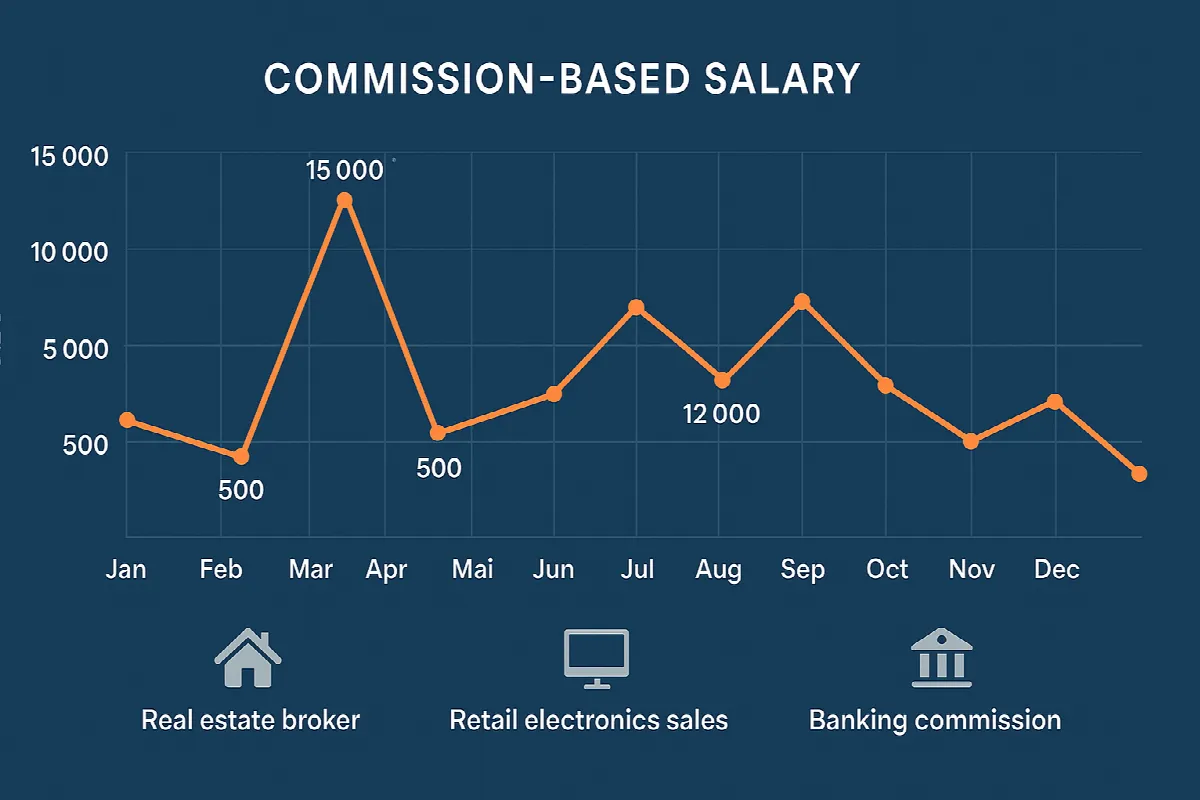
Income volatility makes financial planning extremely difficult. Commission earners often experience dramatic monthly income swings, making it challenging to secure loans, plan major purchases, or maintain consistent living standards throughout the year.
Client dependency creates additional stress for commission workers. Individual client relationships directly impact monthly earnings, leading to high anxiety levels and constant pressure to maintain customer satisfaction and repeat business.
Administrative complications can reduce expected earnings. Product returns, customer complaints, or internal processing delays can result in retroactive commission cuts, leaving workers with less money than originally calculated.
How Can You Protect Yourself in Commission Roles?
Contract review becomes absolutely critical before accepting commission positions. Examine payment schedules, commission calculation methods, clawback policies, and dispute resolution procedures. Request clarification on any unclear terms before signing.
Financial planning strategies must account for income volatility. Successful commission workers typically save larger percentages during good months to cover expenses during slower periods. Creating emergency funds covering 3-6 months of basic expenses provides crucial stability.
Documentation of all sales activities, client interactions, and commission calculations protects against payment disputes. Maintain detailed records of deals, payment schedules, and correspondence with management regarding commission calculations.
Company research helps identify reliable employers with fair payment practices. Speak with current and former employees about payment timeliness, management support, and overall working conditions before accepting positions.
What Legal Protections Exist for Commission Employees?
MOHRE provides dispute resolution services for commission-related payment issues. Workers can file complaints against employers who fail to pay agreed commissions or violate contract terms. The ministry investigates complaints and can mandate payment compliance.
Labour courts handle complex commission disputes that cannot be resolved through MOHRE mediation. Workers can pursue legal action for unpaid commissions, wrongful contract termination, or unfair commission calculation practices.
Documentation requirements protect both parties in commission arrangements. Employers must maintain clear records of sales, commission calculations, and payment histories. This documentation becomes crucial evidence in dispute resolution processes.
End-of-service benefits apply to commission workers under specific circumstances. Workers may be entitled to compensation based on average commission earnings over employment periods, though calculations can become complex.
How Do Successful Commission Workers Manage Finances?
Budgeting based on lowest monthly earnings rather than highest provides financial stability. Experienced commission workers calculate basic living expenses and work to maintain income above these minimum levels consistently.
Multiple income streams reduce dependency on single commission sources. Many successful commission workers develop side businesses, freelance activities, or part-time roles to supplement unpredictable commission income.
Strategic client relationship management creates more predictable income patterns. Building long-term customer relationships generates repeat business and referrals, reducing reliance on constantly finding new clients.
Professional development investments pay dividends in commission roles. Sales training, industry certifications, and networking activities often directly correlate with improved earnings and career advancement opportunities.
Frequently Asked Questions About UAE Commission Jobs
Are commission-only jobs legal in the UAE?
Yes, commission-only employment is completely legal in the UAE under Federal Decree-Law No. 33 of 2021, provided the arrangement is clearly stated in MOHRE-registered contracts and mutually agreed upon by both parties.
What happens if my employer doesn’t pay commissions on time?
You can file a complaint with MOHRE for payment delays or disputes. The ministry provides mediation services and can mandate employer compliance with agreed payment terms.
Is there a minimum wage protection for commission workers?
No official minimum wage exists in the UAE. The law requires pay to “meet basic needs” but doesn’t specify monetary amounts, making commission workers vulnerable during slow periods.
Can employers reduce commissions retroactively for returns or complaints?
Only if clearly specified in your contract. Review clawback policies and return handling procedures before signing commission agreements to understand potential earning reductions.
What benefits do commission workers receive?
Commission workers are entitled to standard employment benefits including health insurance, annual leave, and end-of-service gratuity calculations based on average commission earnings.
How do I calculate my end-of-service benefits on commission?
End-of-service calculations for commission workers typically use average monthly earnings over the employment period. Complex calculations may require legal assistance or MOHRE guidance.
Key Takeaway
Commission-based employment in the UAE offers significant earning potential but requires careful financial planning and contract understanding. Success depends on choosing reputable employers, maintaining detailed documentation, and developing robust financial management strategies to handle income volatility. While legal protections exist through MOHRE and labour courts, prevention through thorough contract review and company research provides the best protection for commission workers.
Further Reading:
The UAE week, every Monday
The week's stories on jobs, visas, money and daily life in one short email. Unsubscribe in one click.