UAE Employee Wins Dh1.33M Salary Case – Court Ruling 2025
Abu Dhabi Court of Cassation protects employee from Dh1.33 million salary repayment demand. Learn how proper documentation saved her case.
By Vadim Kouznetsov, published

The Abu Dhabi Court of Cassation ruled in favour of an employee who faced demands to repay Dh1.33 million in salaries during an 18-month medical leave absence. The court found the employer failed to follow proper procedures and continued paying salaries without objection, implying approval of the leave arrangement.
This landmark case demonstrates how good faith actions by employees, combined with proper documentation and employer administrative failures, can protect workers from unfair salary recovery demands. The employee received official medical leave certification from the Department of Health for accompanying a patient abroad under government sponsorship.
What led to the Dh1.33 million salary dispute in Abu Dhabi?
The dispute arose when a female employee working since February 2014 was terminated on 23rd October 2024 after an 18-month absence period. Her employment contract included a basic monthly salary of Dh35,937 and total package of Dh95,630, making the accumulated salary payments substantial during her extended leave.
The company claimed the employee was absent without justification and demanded repayment of Dh1,338,833 in salaries paid during this period. However, the employee maintained she had proper authorisation for medical leave to accompany a government-sponsored patient abroad, supported by official health department documentation.
Why did lower courts initially rule against the employee?
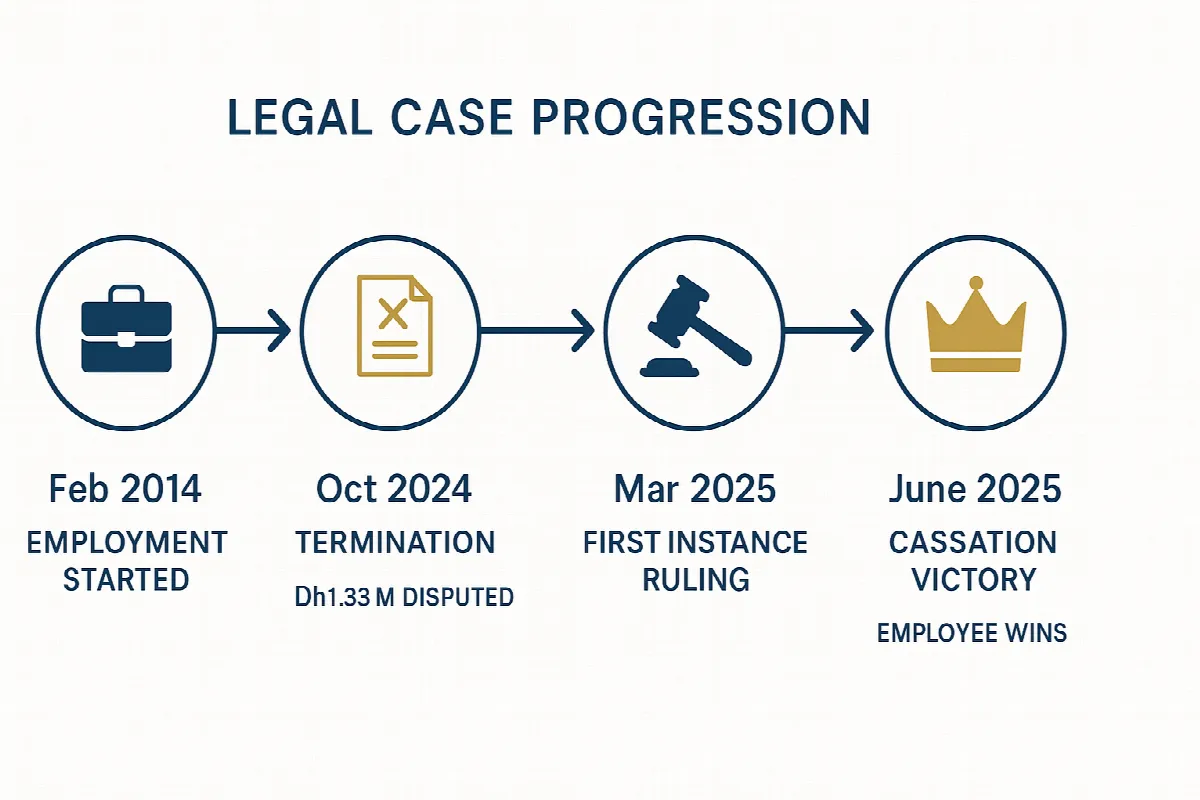
The Court of First Instance and Court of Appeal initially sided with the employer, ordering the employee to return the full Dh1.33 million whilst awarding her only Dh103,665 for unused leave and notice period pay. These courts failed to properly examine crucial evidence supporting the employee’s medical leave claims.
The lower courts overlooked several critical factors: the official Department of Health certificate validating her medical leave, the absence of formal investigation by the employer, and the continued salary payments without objection for 18 months. This oversight led to an unfair initial ruling requiring salary repayment.
How did the Court of Cassation overturn the salary repayment order?
The Court of Cassation identified serious procedural errors in the lower courts’ handling of the case. The supreme court emphasised that employees acting in good faith should not face penalties for administrative failures beyond their control, particularly when proper documentation was submitted.
The court’s 18th June ruling stated that employers cannot claim salary repayment without following required legal procedures and providing adequate evidence. The automatic payroll system continued payments, which the court interpreted as implicit approval of the employee’s leave status throughout the 18-month period.
What compensation did the employee ultimately receive?
The final ruling awarded the employee Dh103,665, comprising Dh33,536 for unused leave entitlement and Dh70,129 as notice period payment. Additionally, the court ordered the employer to pay Dh1,000 in attorney fees and refund the employee’s appeal deposit, covering her legal costs.
Most significantly, the court rejected the company’s counterclaim for Dh1.33 million salary repayment, saving the employee from a substantial financial burden. This represents a complete victory on the primary dispute whilst securing legitimate entitlements for unused benefits.
What legal precedent does this case establish for UAE employees?
This Court of Cassation ruling establishes important protections for UAE workers facing salary recovery demands. The decision reinforces that employees cannot be penalised for administrative errors when they act in good faith and provide proper documentation for their absences.
The case highlights the importance of formal communication and documentation when requesting extended leave. It also demonstrates that continuous salary payments without employer objection can constitute implicit approval, protecting employees from retroactive penalty demands.
How should UAE employees protect themselves from similar disputes?
Employees should maintain comprehensive documentation for all leave requests, including medical certificates, official permits, and formal communication with supervisors. The case shows that proper documentation from government health authorities provides strong legal protection against unfounded absence claims.
Workers should also retain records of all salary payments received during extended leave periods, as continuous payments without employer objection strengthen their legal position. Regular communication with HR departments about leave status helps prevent misunderstandings that could lead to costly disputes.
FAQ: UAE Employee Salary Dispute Rights
Q: Can employers demand salary repayment for unauthorised absences in the UAE? A: Yes, but only after proper investigation and following required legal procedures with adequate evidence.
Q: What protection do employees have against unfair salary recovery claims? A: Good faith actions with proper documentation protect employees from administrative lapses beyond their control.
Q: How important is medical leave documentation from government authorities? A: Official health department certificates provide strong legal protection against absence-related claims.
Q: Can continued salary payments indicate employer approval of leave? A: Courts may interpret ongoing payments without objection as implicit approval of employee absence.
Q: What should employees do if facing salary repayment demands? A: Gather all documentation, seek legal advice, and challenge demands that lack proper procedural compliance.
Q: Are Court of Cassation rulings binding on lower courts? A: Yes, these supreme court decisions establish important legal precedents for similar cases.
Q: How much did this employee save by winning the appeal? A: The employee avoided paying back Dh1.33 million whilst receiving Dh103,665 in legitimate entitlements.
Key Takeaway
UAE employees acting in good faith with proper documentation cannot be penalised for employer administrative failures, especially when salaries continue without objection during authorised medical leave periods.
Further Reading:
The UAE week, every Monday
The week's stories on jobs, visas, money and daily life in one short email. Unsubscribe in one click.