Dubai Ranks 7th Globally for Luxury Lifestyle: Julius Baer 2025
Dubai climbs to 7th place in Julius Baer’s 2025 luxury lifestyle report, leading Middle East with strong property growth and travel surge.
By Vadim Kouznetsov, published

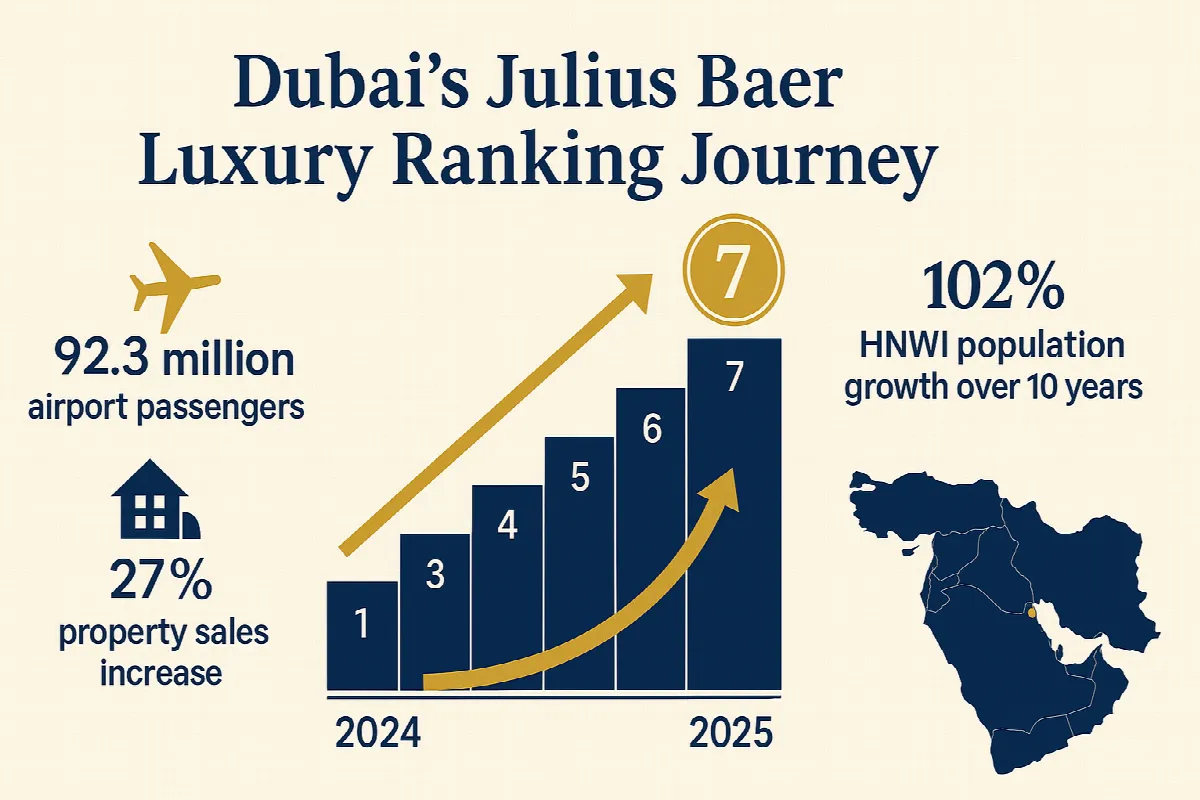
Dubai has climbed to seventh place in the Julius Baer Global Wealth and Lifestyle Report 2025, rising from 12th position last year. This remarkable five-place jump establishes Dubai as the highest-ranked city in the Middle East for luxury living, reinforcing its position as a premier destination for high-net-worth individuals worldwide.
Dubai’s Wealth Hub Status Strengthens
The emirate has solidified its reputation as a serious contender among traditional wealth hubs, with the report highlighting Dubai’s continued evolution as a centre for luxury living, business innovation, and high-end lifestyle experiences. The city’s appeal extends beyond regional boundaries, attracting global elites seeking premium residential options and investment opportunities.
Key Factors Behind Dubai’s Rise
Travel and Lifestyle Growth
The surge in both business and leisure travel significantly contributed to Dubai’s improved ranking. According to the report, 53% of respondents reported increased business travel activity, while 47% noted more leisure travel. This trend aligns with Dubai International Airport’s record-breaking performance, handling 92.3 million passengers in 2024 to become the world’s busiest international airport.
Property Market Performance
Dubai’s real estate sector demonstrated exceptional strength, with property sales values rising 27% year-on-year in 2024. The city’s high-net-worth individual population has grown by an impressive 102% over the past decade, according to Henley & Partners data.
Economic Resilience
The broader GCC region, led by Dubai, has shown remarkable stability amid global economic uncertainty. Rishabh Saksena, Co-Head Global Asset Specialists at Julius Baer, noted: “The GCC economies remain resilient amidst global macroeconomic uncertainty and regional geopolitical tensions. The broader outlook for 2025 is positive, supported by strong non-oil performance, strong fiscal buffers, and a continued commitment to economic reform.”
Luxury Spending Patterns
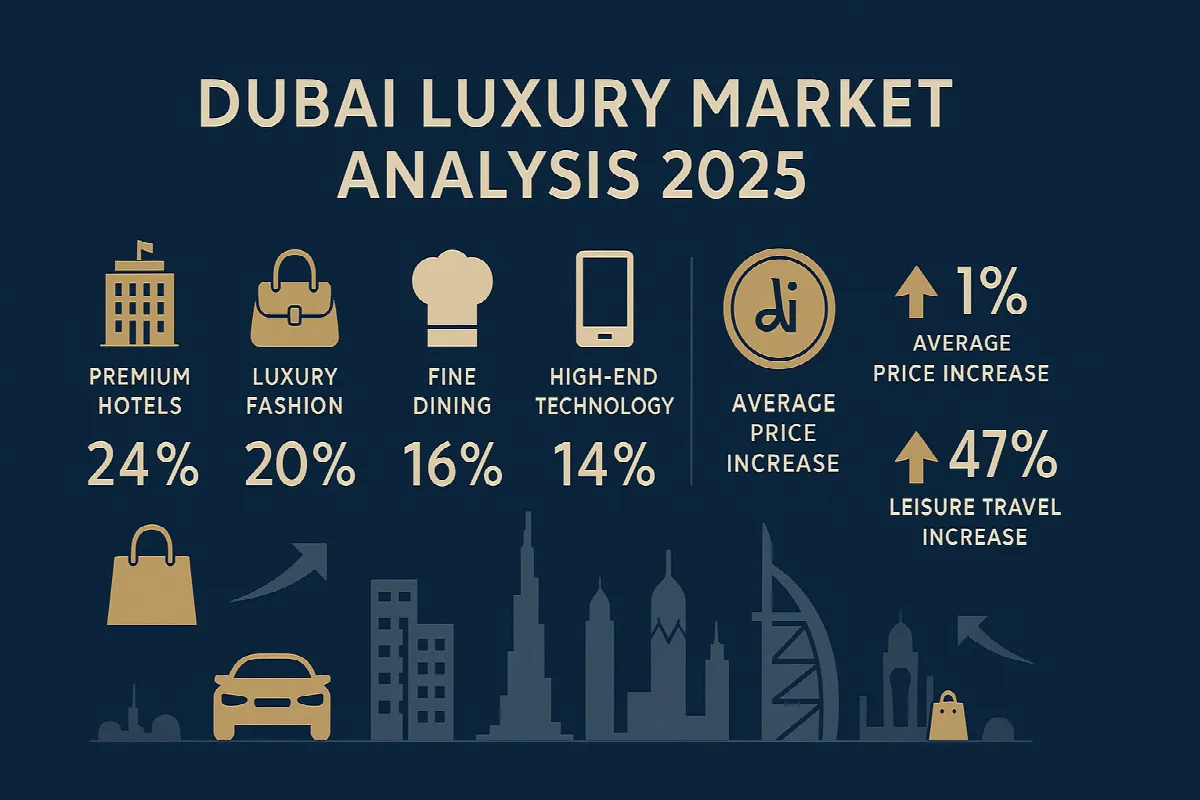
High-net-worth individuals in Dubai and the broader Middle East continue investing heavily in premium lifestyle categories:
- Premium hotels and hospitality experiences
- Luxury menswear and fashion items
- Fine dining establishments and exclusive restaurants
- High-end technology including smartphones and accessories
- Luxury handbags and accessories
The report indicates that experiential luxury remains particularly strong, with wealthy individuals prioritising exclusive travel experiences and premium dining over traditional luxury goods.
Pricing Trends and Market Dynamics
Despite Dubai’s luxury market growth, average currency prices increased by only 1% in the emirate. This modest inflation rate was offset by significant price increases in specific high-value categories, particularly cars and residential property, which experienced notable price spikes throughout the year.
Long-term Residential Appeal
Dubai’s attractiveness as a permanent residence for global elites continues to strengthen. The report notes that “the momentum of millionaires relocating to Dubai is predicted to continue,” with net inflows expected to surpass those of all other countries.
Supporting Infrastructure
Dubai’s appeal is reinforced by:
- Golden Visa programme offering long-term residency
- Entrepreneur Visa supporting business innovation
- Major financial hub status through DIFC growth
- Strong innovation ecosystem attracting global talent
The Dubai International Financial Centre reported a 25% increase in active companies in 2024, while Abu Dhabi’s non-oil economy grew 8.6%, demonstrating the region’s economic diversification success.
Future Outlook and Global Context
The Julius Baer report highlights shifting global luxury consumption patterns, with a 2% drop in global luxury prices in US dollar terms – the first decline since the index launched. This reflects falling technology prices and more conservative spending in certain regions.
However, experiential luxury continues to thrive globally, with high-net-worth individuals increasingly prioritising “longevity, both physical and financial.” Nearly all survey respondents reported taking active steps to extend their lifespan and reassess long-term wealth strategies.
Regional Investment Preferences
In the Middle East, preferred asset classes include:
- Real estate (18% of portfolio allocation)
- Equities (13% of portfolio allocation)
These preferences demonstrate continued confidence in regional growth prospects and property market stability.
Dubai’s Path to the Top 5
With UAE ambitions to double the economy by 2033 and continued investments in healthcare, wellness infrastructure, and population growth initiatives, Dubai is positioning itself for further advancement in global luxury rankings.
The city’s projected 29% increase in over-60s population by 2050 is driving comprehensive planning for longevity-focused living, creating a lifestyle ecosystem suitable for every life stage.
Key Takeaway
Dubai’s rise to 7th place in the Julius Baer Global Wealth and Lifestyle Report 2025 reflects the emirate’s successful transformation into a leading global luxury destination. With strong economic fundamentals, strategic visa programmes, and continued investment in infrastructure, Dubai is well-positioned to climb further in global luxury lifestyle rankings while maintaining its status as the Middle East’s premier wealth hub.
For professionals considering opportunities in Dubai’s thriving luxury market, explore our comprehensive guides on Dubai salary expectations and cost of living considerations.
Further Reading
The UAE week, every Monday
The week's stories on jobs, visas, money and daily life in one short email. Unsubscribe in one click.