UAE Hiring 2025: Corporate Tax Impact & Tech Salary Wars
UAE employers exercise hiring caution due to corporate tax obligations while tech talent commands premium packages. Discover 2025 salary trends and recruitment strategies.
By Vadim Kouznetsov, published

Key Takeaway
UAE businesses are adopting cautious hiring practices in 2025 due to corporate tax obligations, yet technology and AI professionals command unprecedented salary premiums as companies compete fiercely for specialised talent.
The UAE employment landscape presents a fascinating contradiction in 2025. Whilst businesses exercise unprecedented caution in their recruitment strategies, technology professionals find themselves in the enviable position of commanding top-tier compensation packages.
Corporate Tax Creates Hiring Hesitation
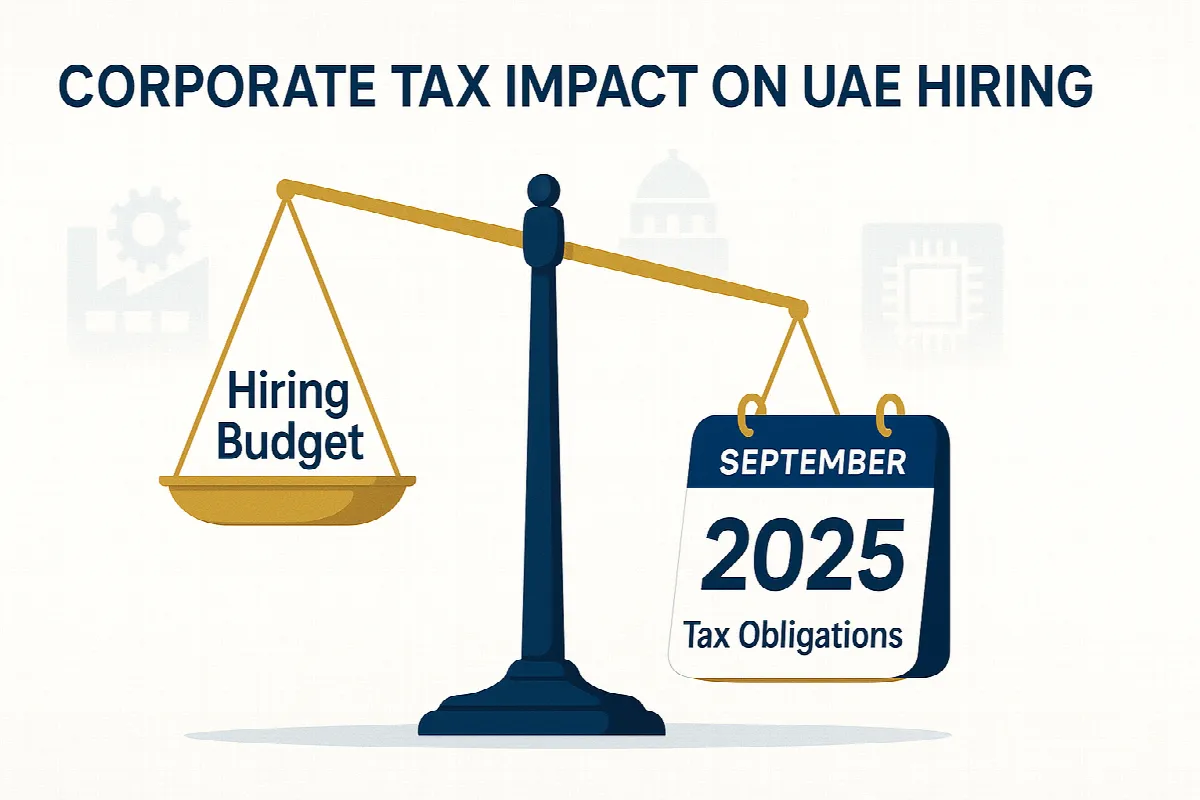
UAE employers are approaching new recruitment with heightened vigilance as the second half of 2025 unfolds. The primary catalyst for this cautious stance stems from corporate tax considerations, particularly affecting companies operating on January-to-December financial years who must file their first returns by September.
Hasan Babt, Managing Director at consultancy Tuscan, observes that across the board, “there haven’t been any major changes in demand for talent, except for the heightened caution in hiring for a few weeks during the US tariff and Iran issues.”
This corporate tax reality represents a new variable for UAE businesses, directly impacting available funds for expansion and recruitment. Finance managers and recruiters anticipate that the final quarter of 2025 will serve as a crucial reality check for companies assessing their costs and planning 2026 hiring strategies.
The ManPower Group identifies transport and logistics as sectors most likely to increase hiring in the coming weeks, yet competition remains fierce across all categories due to an oversupply of candidates relative to available positions.
Technology Professionals Win the Salary War
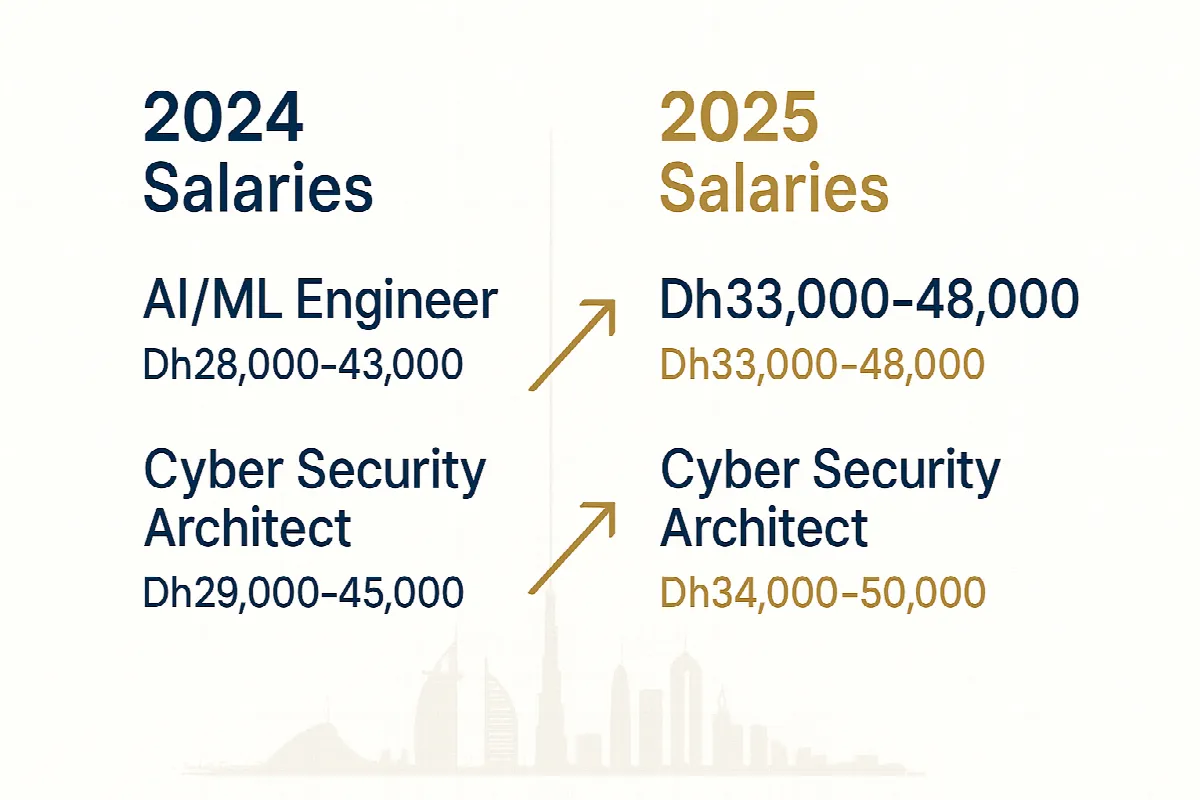
Despite general hiring caution, artificial intelligence and technology professionals experience dramatically different market conditions. UAE and Saudi Arabian enterprises demonstrate willingness to pay premium rates for exceptional talent, creating what industry experts describe as a “war for talent.”
The compensation landscape for technology roles has shifted substantially:
AI and Machine Learning Engineers:
- 2024 average: Dh28,000-Dh43,000
- 2025 current: Dh33,000-Dh48,000
- Saudi Arabia equivalent: Dh35,000-Dh50,000
Cyber Security Architects:
- 2024 average: Dh29,000-Dh45,000
- 2025 current: Dh34,000-Dh50,000
Companies are implementing innovative retention strategies previously uncommon in the region. Sign-on bonuses and retention packages have become standard practice, particularly for executives and technology talent. Several large family businesses have introduced phantom stock or profit-sharing arrangements to secure long-term commitments from high-potential managers.
Regional Differences and Investment Priorities
Saudi Arabia’s approach to talent acquisition differs slightly from the UAE, with firms establishing operations in Riyadh’s financial district offering premium expatriate packages including substantial housing, schooling, and travel allowances.
A technology consultant notes: “UAE and Saudi enterprises are not cutting down on their technology investments. The focus on AI integration remains strong, especially from government-affiliated entities.”
This continued investment priority explains why technology job cuts haven’t materialised, despite concerns about automation replacing traditional roles.
Traditional Sectors Face Salary Stagnation
Manufacturing, hospitality, and leisure sectors experience minimal salary growth, with increases ranging between 0%-3% in 2025. This subdued growth reflects stable talent supply and saturated job markets in these traditional industries.
Back-office roles face similar constraints, with many companies recognising that artificial intelligence and automation will inevitably impact these positions in the near future.
Strategic Implications for Job Seekers
The current market conditions create distinct opportunities for different professional categories. Technology specialists should leverage the competitive environment to negotiate comprehensive packages including stock options and profit-sharing arrangements.
Professionals in traditional sectors might consider transitioning towards technology-adjacent roles or developing digital skills to position themselves advantageously in this evolving market.
For those seeking positions in traditional industries, patience and flexibility regarding salary expectations may prove essential given current market dynamics.
Looking Ahead: Market Predictions
Industry analysts suggest that the final quarter of 2025 will provide clearer insights into long-term hiring trends as companies adjust to their corporate tax obligations and reassess their workforce requirements.
The technology sector’s resilience appears sustainable, driven by continued government and private sector investment in digital transformation initiatives. However, traditional sectors may require more time to return to aggressive hiring patterns.
As UAE businesses balance cost management with growth ambitions, the employment market will likely continue favouring specialised technology professionals whilst maintaining conservative approaches to general recruitment.
The challenge for employers lies in attracting and retaining top talent whilst managing new financial obligations, suggesting that creative compensation packages and employee value propositions will become increasingly important competitive differentiators.
Further Reading
- Best Times to Apply for Jobs in UAE: 2025 Monthly Hiring Guide
- Dubai Future Careers: 11 High-Demand Jobs to Prepare For Today
- UAE Job Market 2025: Blue-Collar Surge, White-Collar Shifts
- UAE Office Jobs Surge: High Demand for Administrative Roles in 2025
For the latest UAE job opportunities and career guidance, visit JobXDubai – your trusted partner in finding the perfect career match in the Emirates.
The UAE week, every Monday
The week's stories on jobs, visas, money and daily life in one short email. Unsubscribe in one click.