Casinos in Dubai: Current Legal Status & Future of Gambling in UAE (2025)
Explore Dubai’s gambling laws, legal alternatives, and the upcoming Wynn Al Marjan Island resort in Ras Al Khaimah. Get the latest on UAE’s gambling regulations, betting options, and what’s coming in 2027.
By Vadim Kouznetsov, published , updated
Last updated: May 7, 2025
The Current Legal Status of Gambling in Dubai
Dubai attracts millions of visitors yearly with its ultramodern architecture, luxury shopping, and vibrant nightlife. Many tourists, especially those accustomed to gambling activities in their home countries, often wonder if casinos and betting are permitted in this global tourism hub.
The reality is straightforward: gambling in all forms is currently prohibited throughout Dubai and the entire UAE. The prohibition stems from the UAE’s foundation in Islamic principles, where gambling is considered contrary to religious teachings as it is seen as a sin created by Satan to provoke hatred and enmity between friends and family. This stance is codified in both federal and emirate-level legislation.
According to UAE law, gambling is defined as a game where participants agree that the loser will pay the winner a certain sum of money or something else of value. The UAE Penal Code imposes significant penalties for gambling activities:
- Individuals caught gambling can face imprisonment for up to two years and/or a fine up to AED 20,000 (approximately $5,550)
- Those found operating gambling establishments can receive even harsher penalties, with imprisonment for up to ten years possible
Why is Gambling Banned in Dubai?
The prohibition of gambling in Dubai and the wider UAE has deep cultural and religious roots. As an Islamic country, the UAE bases many of its laws on religious principles that discourage games of chance. The fundamental belief is that money should be earned through honest work and effort rather than luck.
While Dubai has embraced modernity in many ways, becoming a global business and tourism hub, it has maintained certain traditional values, including restrictions on gambling. This cultural stance helps explain why, despite the emirate’s wealth and international character, casinos have not been part of its development until recently.
Online Gambling and UAE Cyber Laws
In our increasingly digital world, many wonder about the status of online gambling in Dubai. The UAE government has taken firm steps to prevent access to online gambling platforms through its comprehensive cybercrime legislation.
Under Federal Decree-Law No. 34/2021 on countering rumours and cyber-crimes (the “Cyber Crime Law”), creating, managing, or supervising websites that promote gambling can result in detention and substantial fines ranging from AED 250,000 to 500,000. The Telecommunications Regulatory Authority enforces an “Internet Access Management” policy that blocks access to gambling websites from within the UAE.
Despite these robust measures, some residents and visitors attempt to circumvent these restrictions using VPNs. However, using VPNs for illegal purposes (including accessing gambling sites) is itself illegal in the UAE and can lead to serious legal consequences.
The Changing Landscape: Gaming Regulation in the UAE
While gambling has been strictly prohibited in the UAE for decades, recent developments suggest a gradual shift in policy. In September 2023, the UAE established the General Commercial Gaming Regulatory Authority (GCGRA), a federal entity tasked with creating a regulatory framework for commercial gaming activities, including lottery, internet gaming, sports wagering, and land-based gaming facilities.
The GCGRA, headquartered in Abu Dhabi, holds exclusive jurisdiction to regulate, license, and supervise all commercial gaming activities and facilities in the UAE. The creation of this regulatory body signals a potentially significant shift in the UAE’s approach to gambling.
Led by Chairman Jim Murren (former CEO of MGM Resorts International) and CEO Kevin Mullally, the GCGRA aims to establish a secure and ethical gaming environment while ensuring adherence to federal laws. The authority focuses on several key areas, including responsible gaming practices, prevention of financial crimes, and technical standards for operators.
For more insights on the UAE’s changing regulatory landscape, see our detailed article on Wynn Al Marjan Island: UAE’s First Gaming Resort Set to Transform RAK Tourism.
Wynn Al Marjan Island: UAE’s First Integrated Gaming Resort
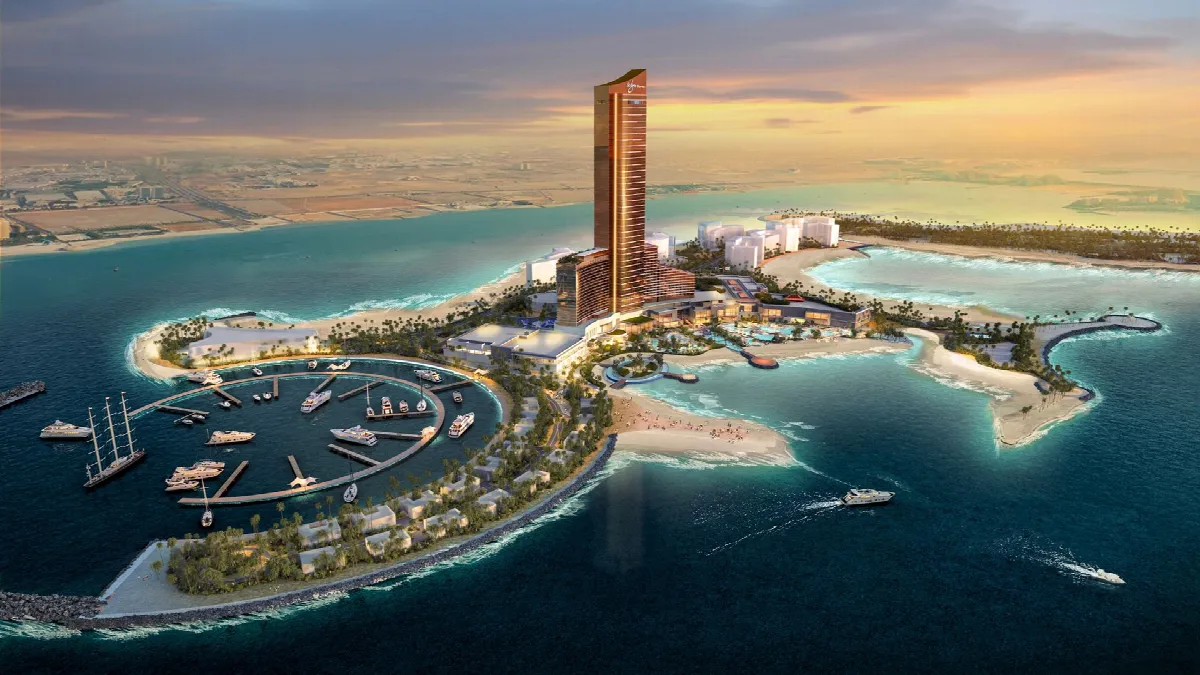
The most concrete evidence of the UAE’s evolving stance on gambling is the development of Wynn Al Marjan Island in Ras Al Khaimah. This $3.9 billion integrated resort is set to become the first licensed gaming facility in the UAE when it opens in early 2027.
In October 2024, Wynn Resorts was granted the UAE’s first commercial gaming operator’s license by the GCGRA, marking a historic milestone in the country’s approach to gambling. This development has “sparked seismic excitement throughout the nation’s hospitality and tourism sectors” and represents a significant shift in the UAE’s entertainment landscape.
The Wynn Al Marjan Island resort will feature:
- A 300-meter-tall tower with 1,542 rooms and suites
- 22 dining establishments
- Multiple gaming areas, including a main casino spanning 224,000 square feet (larger than Wynn Las Vegas) and a private “sky gaming” area on the 22nd floor
- A luxury shopping promenade
- A beach club and nightclub
- A full-service marina
- Extensive pool areas and 420 meters of private beach
Construction of the resort is progressing rapidly, with the structure currently standing at about 40 meters tall and expected to be topped off in the fourth quarter of 2025. For the latest updates on construction progress and financing details, check out our article on Wynn Al Marjan RAK: Dh8.8bn Loan Secured as Resort Tower Reaches New Heights.
Why Ras Al Khaimah, Not Dubai?
Many are surprised that the UAE’s first casino resort is being built in Ras Al Khaimah rather than Dubai or Abu Dhabi. While specific reasons haven’t been officially stated, industry observers point to several factors:
- Testing ground approach: Introducing gaming in a smaller emirate allows the UAE to gauge impacts before potentially expanding to larger tourist hubs
- Distinct regulatory environment: Each emirate has some autonomy in setting local regulations
- Tourism diversification strategy: Ras Al Khaimah is actively developing its tourism sector, and a unique attraction helps differentiate it from other Emirates
- Less cultural sensitivity: The smaller, less international population of RAK may present fewer cultural adaptation challenges
It’s worth noting that while Wynn Al Marjan Island will be the first, it likely won’t be the last integrated gaming resort in the UAE. Industry executives have suggested that other properties may follow in different emirates over the next 5-10 years.

What About Dubai’s Future?
With Ras Al Khaimah moving forward with an integrated gaming resort, many wonder if Dubai will follow suit. While there have been no official announcements about casinos in Dubai as of May 2025, industry speculation continues.
Dubai already hosts properties from casino brands like Caesars Palace, although these currently operate without gaming facilities. The establishment of the GCGRA at the federal level potentially paves the way for Dubai to introduce limited forms of gaming in the future, should it choose to do so.
Any introduction of gaming in Dubai would likely follow a carefully managed approach that balances economic opportunities with cultural considerations and responsible gambling practices. For now, tourists to Dubai seeking casino entertainment must look to Ras Al Khaimah’s forthcoming Wynn resort or to destinations outside the UAE.
Current Legal Gambling Alternatives in the UAE
While traditional casino gambling remains prohibited throughout the UAE (until Wynn Al Marjan Island opens), there are a few limited activities that bear some similarities to betting and are permitted under specific circumstances:
Horse Racing and Camel Racing
Horse racing is extremely popular in Dubai, with the Dubai World Cup being one of the most prestigious and richest horse races globally. While direct betting on races is not permitted within the UAE, there are certain types of free competitions and games at racecourses that offer cash prizes.
For example, at Meydan Racecourse, spectators can participate in free Pick 6 games on the final six races or the “Triple Tri” contest where fans pick the exact top-three finishing order for the final three races. Since there is no entry fee to participate, these activities aren’t classified as gambling under UAE law.
Camel racing, another traditional sport in the region, occasionally features similar promotional competitions, though direct betting remains prohibited.
Raffles and Skill Competitions
Certain types of raffles and skill-based competitions are permitted in the UAE, subject to proper licensing and regulation. These include:
- The UAE Lottery, operated by The Game LLC, which received the first lottery license from the GCGRA in July 2024
- Promotional draws by shopping malls and retailers (with required permits)
- Competitions where prizes are won through skill rather than chance
It’s important to note that these activities are strictly regulated and operate within specific legal frameworks that distinguish them from prohibited gambling.
Gambling Tourism from Dubai
Despite local restrictions, Dubai serves as a hub for international travelers, some of whom travel to nearby countries where gambling is legal. Popular gambling destinations accessible from Dubai include:
- Cruise ships: Once international waters are reached (typically 12 nautical miles from shore), cruise ships departing from Dubai may open their onboard casinos
- Nearby countries: Some travelers make short trips to destinations like Georgia, Cyprus, or the Seychelles, where casinos operate legally
- Virtual tourism: With the rise of online gambling, some tourists maintain their gambling activities online while physically in Dubai (though this remains illegal under UAE law)
The Economic Impact of Gaming Liberalization
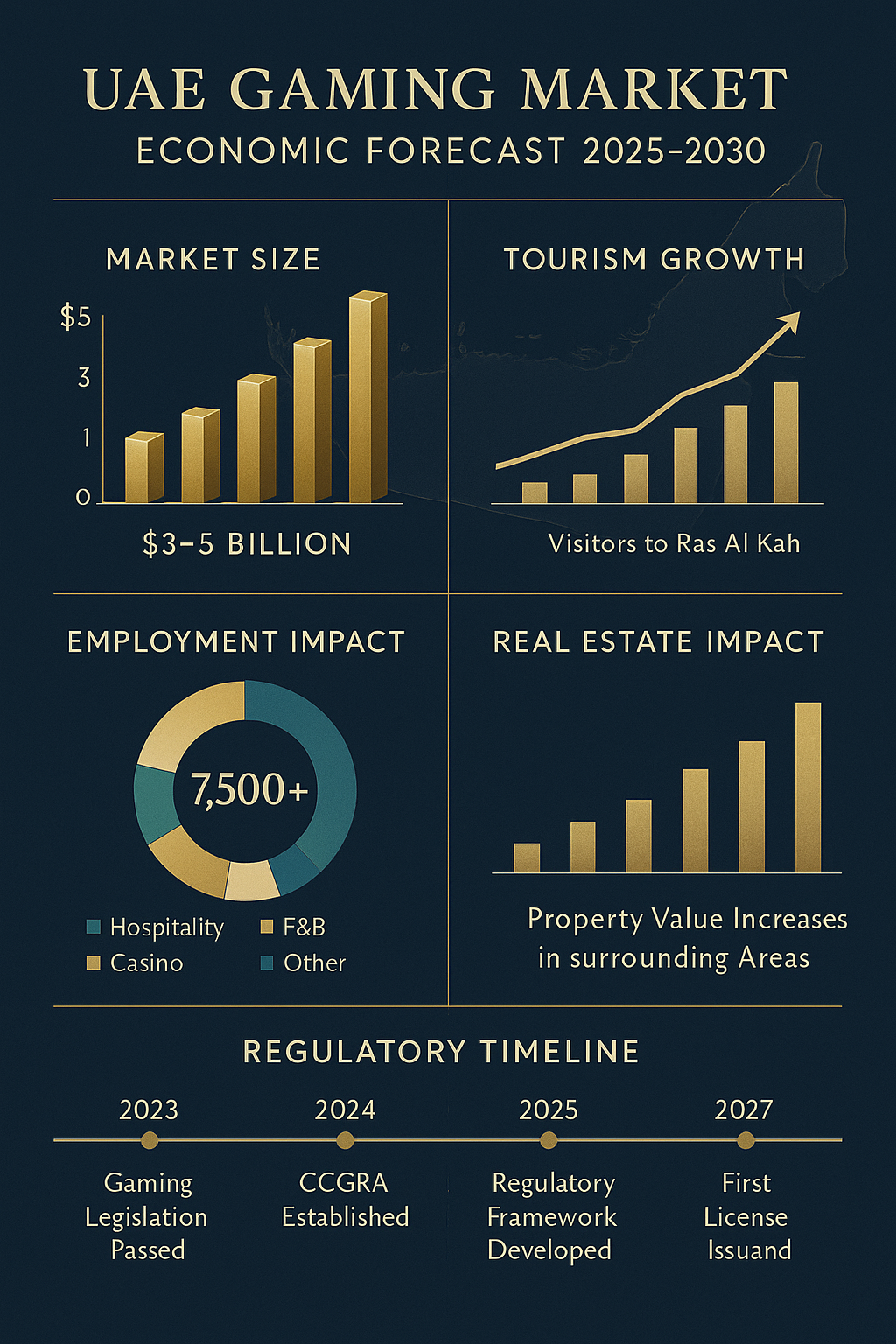
The introduction of regulated gaming in the UAE represents a significant economic opportunity. Based on projections from Wynn Resorts, the UAE gaming market could be worth between $3 billion and $5 billion, with Wynn Al Marjan Island alone expected to generate gross gaming revenue of $1 billion to $1.67 billion.
Beyond direct gaming revenue, integrated resorts create substantial economic benefits:
- Job creation: Wynn Al Marjan Island is expected to employ over 7,500 people once fully operational
- Tourism growth: The project is anticipated to significantly boost visitor numbers to Ras Al Khaimah
- Diversification: Gaming represents another step in the UAE’s economic diversification away from oil dependency
- Real estate impact: Studies suggest the development could boost property values in the surrounding area by as much as 58% over five years
For more insights into the economic potential of this development, read our analysis in Wynn CEO: UAE Gaming Market to Hit Dh18bn, First Casino Opens 2027. The UAE’s hospitality sector is also experiencing significant growth, creating numerous employment opportunities as outlined in our overview of the UAE Hospitality Sector Job Boom.
Responsible Gaming in the UAE
As the UAE moves toward regulated gaming, establishing responsible gambling frameworks will be essential. The GCGRA has emphasized its commitment to responsible gaming as a key part of its regulatory approach.
Responsible gaming measures likely to be implemented include:
- Self-exclusion programs
- Limits on betting amounts
- Mandatory breaks in play
- Information about problem gambling resources
- Age verification and other consumer protection measures
These safeguards aim to mitigate potential social harms while allowing the economic benefits of regulated gaming.
Conclusion
Dubai, in adherence to its cultural and religious beliefs, does not currently have legal casinos. However, the UAE’s gaming landscape is clearly evolving with the establishment of the GCGRA and the development of Wynn Al Marjan Island in neighboring Ras Al Khaimah.
Travelers seeking gambling experiences in 2025 have several options: wait for the opening of Wynn Al Marjan Island in 2027, explore alternatives like free competitions at racecourses, or consider destinations outside the UAE where gambling is permitted.
As the regulatory framework continues to develop and the first integrated gaming resort takes shape, the UAE is writing a new chapter in its approach to entertainment and tourism—one that aims to balance tradition with economic opportunity and responsible oversight.
For a deeper understanding of the current regulatory environment and legal considerations regarding gambling in the UAE, our article on Wynn Al Marjan: Ras Al Khaimah’s $3.9bn Beachfront Gaming Resort provides additional context and insights into this evolving landscape.
For those looking for employment opportunities in Dubai’s evolving hospitality sector, including potential future positions at gaming resorts, visit JobXDubai Professional CV Service to ensure your application stands out in this competitive market.
Key Takeaway
While traditional casinos remain prohibited in Dubai as of 2025, the UAE is undergoing a significant transformation in its approach to gaming with the establishment of a federal regulatory authority and construction of the country’s first integrated gaming resort in Ras Al Khaimah. This carefully managed evolution represents a balance between cultural values and economic opportunity, with implications for tourism, employment, and entertainment throughout the region.
The UAE week, every Monday
The week's stories on jobs, visas, money and daily life in one short email. Unsubscribe in one click.