Dubai Starts Awarding Contracts for Al Maktoum International: Inside World’s Largest Airport Project
Dubai begins awarding contracts for AED 128 billion Al Maktoum International Airport expansion. Get exclusive insights on construction timeline, technology integration, and economic impact of the world’s future largest airport.
By Vadim Kouznetsov, published
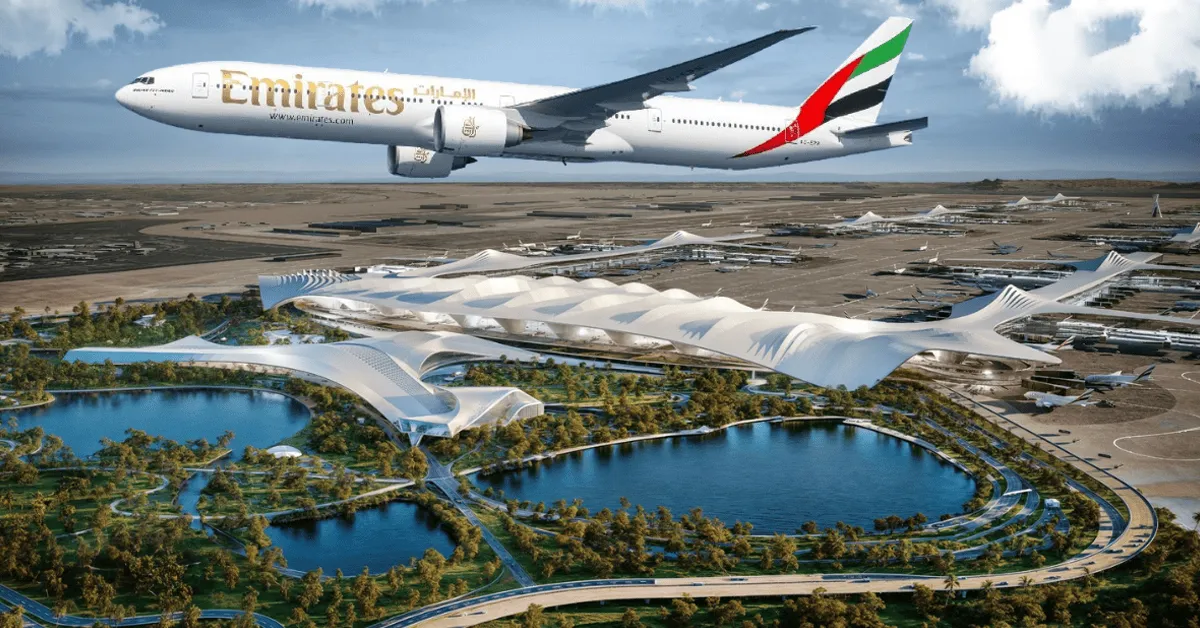
Construction officially begins on AED 128 billion mega-airport as Dubai awards first wave of contracts
Last updated: 30 April 2025
Dubai has officially begun awarding contracts for the massive Al Maktoum International Airport expansion project, marking a significant milestone in what will become the world’s largest airport upon completion. This transformative development, with a staggering investment of AED 128 billion (approximately $34.85 billion USD), represents one of the most ambitious aviation infrastructure projects globally and further solidifies Dubai’s position as a leading international hub.
First Contracts Awarded as Construction Gets Underway
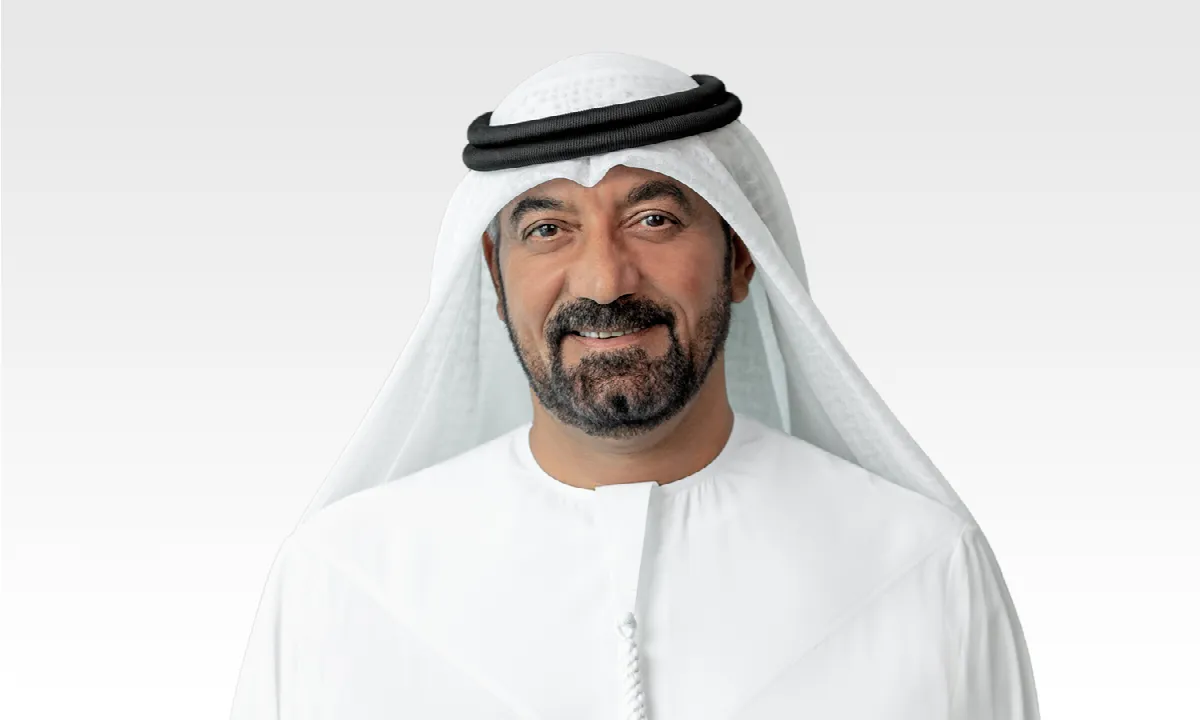
In a significant announcement that signals the project’s transition from planning to implementation, Sheikh Ahmed bin Saeed Al Maktoum, President of Dubai Civil Aviation Authority, Chairman of Dubai Airports, and Chairman and Chief Executive of Emirates Airline and Group, confirmed that the contract awarding process has officially begun.
“We did assign contracts and work has really started since His Highness gave the go-ahead over a year ago,” Sheikh Ahmed stated during an interview with selected local media outlets on Tuesday. This revelation confirms that construction work is already in progress following the official approval from Sheikh Mohammed bin Rashid Al Maktoum, Vice-President, Prime Minister of the UAE and Ruler of Dubai.
While specific details about which companies have secured the initial contracts have not been fully disclosed, industry sources suggest that a consortium of international and local construction firms, architectural companies, and engineering specialists are involved in this first phase. The contracts reportedly cover preliminary site preparation, foundational infrastructure, and initial terminal construction components.
The Scale of Contracts: Breaking Down the AED 128 Billion Investment
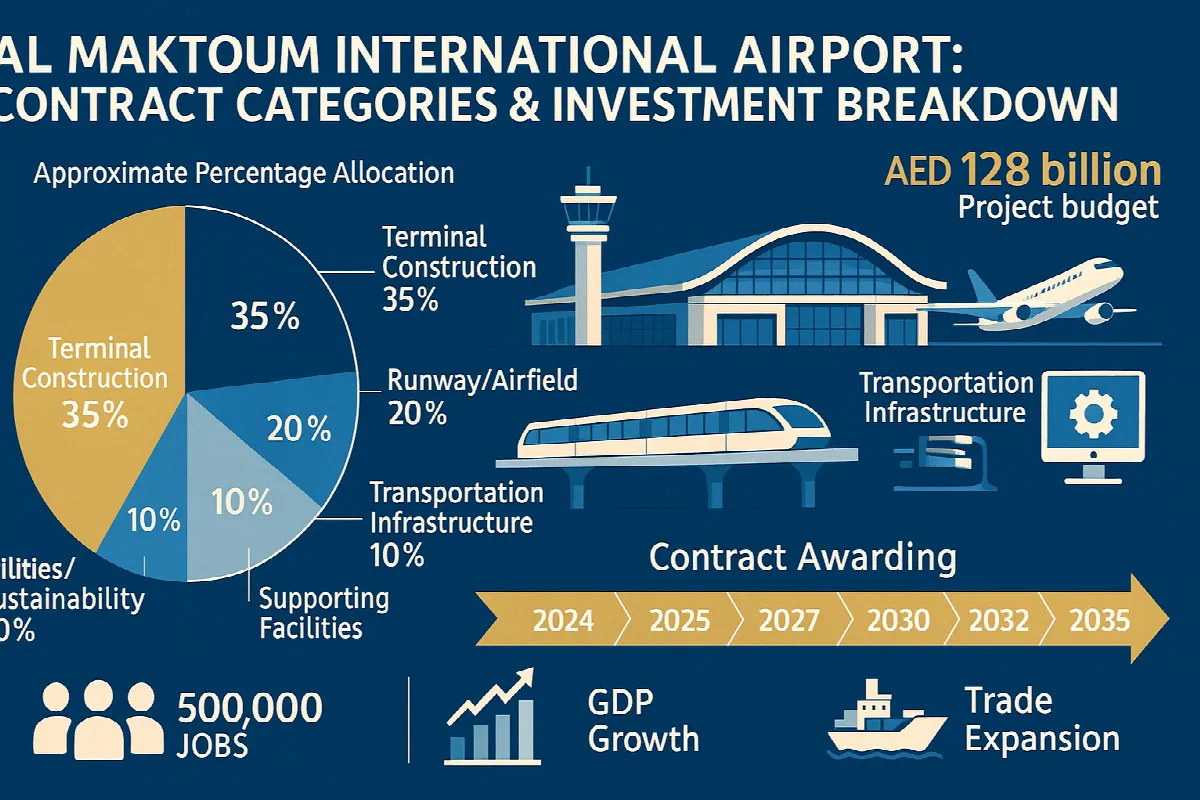
The AED 128 billion investment for Al Maktoum International Airport will be distributed across numerous contracts spanning various aspects of airport development:
Major Contract Categories
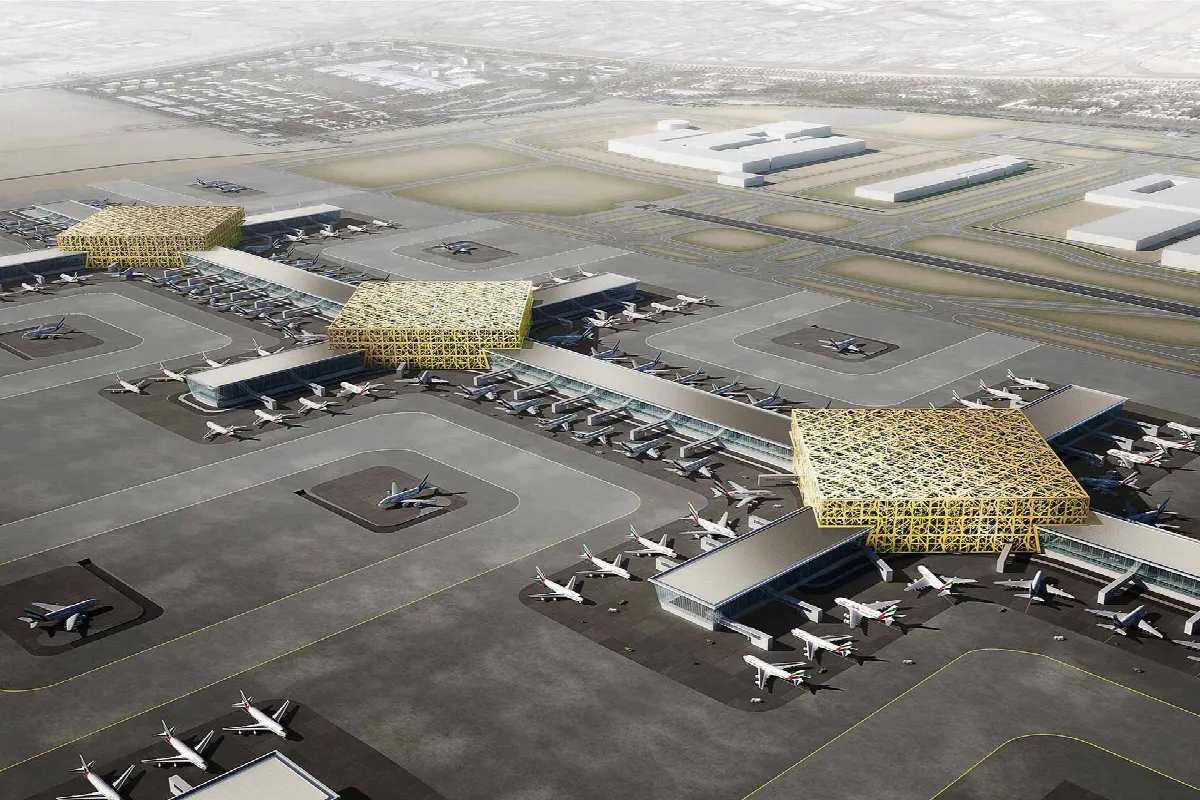
- Terminal Construction Contracts: The largest portion of the budget is allocated to building the five massive passenger terminals, including the West Terminal Building and multiple concourses. These contracts cover structural work, architectural elements, and interior finishing.
- Runway and Airfield Contracts: Specialized aviation infrastructure firms will handle the construction of the five parallel runways, taxiways, and aprons capable of accommodating the world’s largest aircraft, including the Airbus A380 and future aircraft types.
- Technology and Systems Integration: Substantial contracts are being awarded for the airport’s technological backbone, including baggage handling systems, security infrastructure, biometric systems, and passenger processing technology.
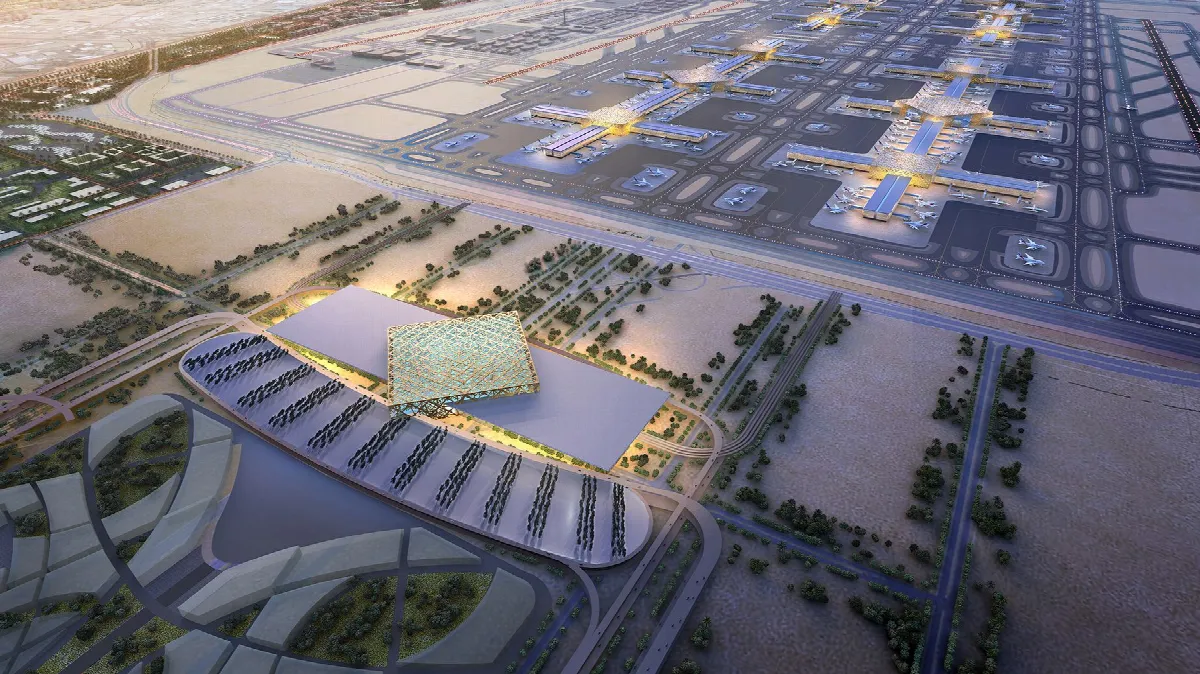
- Transportation Infrastructure: Companies specializing in transportation systems will build the automated people movers (APMs), connecting the various terminals and facilities across the 70-square-kilometer site.
- Utilities and Sustainability Infrastructure: Dedicated contracts for power generation, water management, waste handling, and environmental sustainability systems that will support the airport’s ambitious green goals.
- Supporting Facilities: Additional contracts cover the construction of maintenance hangars, cargo facilities, catering centers, and other operational buildings essential to the airport’s functioning.
Industry analysts estimate that the project will involve hundreds of individual contracts over the next decade, creating a significant stimulus for the construction sector and supporting industries throughout the UAE and beyond.
Project Timeline and Phased Implementation
The awarding of these initial contracts marks the beginning of a carefully planned phased approach to building what will become aviation’s new global flagship:
Phase 1 (Current Phase – 2030)
The first wave of contracts focuses on delivering Phase 1 of the airport by 2030, which includes:
- Construction of the West Terminal Building with cutting-edge design and passenger amenities
- Development of Concourse 1 with 100 contact gates capable of handling all aircraft types
- Building two additional runways to bring the total to three operational runways
- Implementing an advanced underground baggage handling system
- Developing essential support facilities and infrastructure
- Creating capacity for 130 million passengers annually
According to project timelines, this initial phase represents approximately 50% of the total capacity planned for the completed airport. The contracts for this phase are being awarded in a staggered approach, with priority given to critical infrastructure components that require longer construction timeframes.
Future Phases (2030 onwards)
Subsequent contract packages will be awarded as the project progresses, covering:
- Addition of Concourse 2, expanding to 200 contact gates
- Construction of Concourses
- Completing the remaining runways for a total of five parallel runways
- Building the East Terminal and additional passenger facilities
- Expanding the automated people mover networks and support infrastructure
- Developing capacity to handle 260 million passengers and 15 million tons of cargo annually
Sheikh Ahmed indicated that the contracting strategy involves careful sequencing to ensure seamless development: “In Dubai, we have been engaging with teams of our two local airlines, airports and dnata and also other airlines that operate here and putting together the plan that lets us make it perfect on the day of the opening.”
The Technical Complexity Behind the Contracts
The contracts being awarded reflect the extraordinary technical complexity of the Al Maktoum International Airport project. Unlike conventional airport developments, this project incorporates numerous innovative elements that require specialized expertise:
Advanced Structural Engineering
The terminal buildings will feature some of the world’s largest column-free spaces, requiring innovative structural solutions. Contracts for these components have reportedly been awarded to firms with expertise in large-span structures and advanced materials.
Next-Generation Systems Integration
The airport’s operational backbone will include highly sophisticated integrated systems:
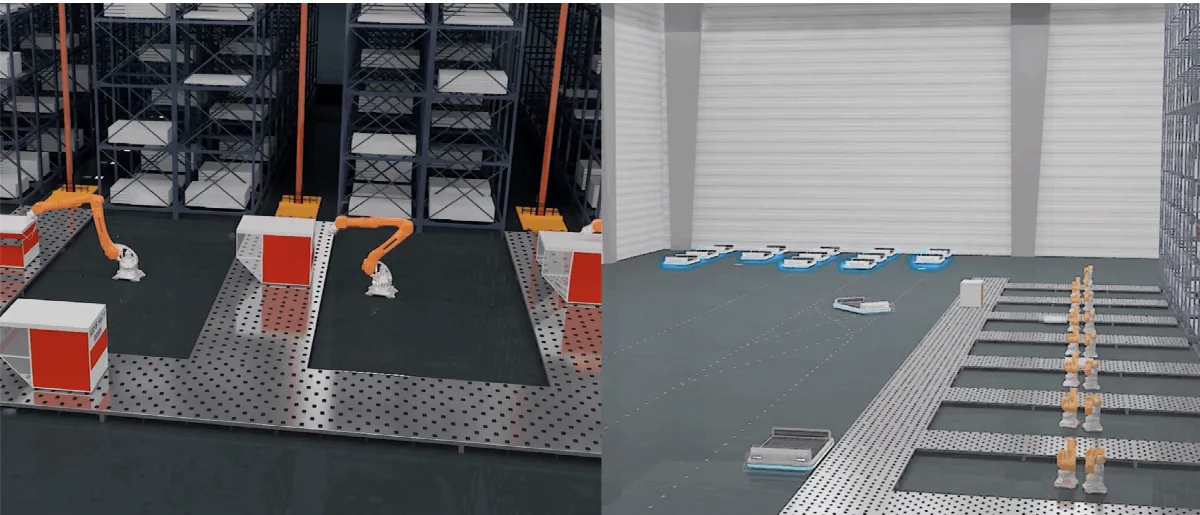
- Baggage Handling: An underground network capable of processing hundreds of thousands of bags daily with minimal connection times
- Security Infrastructure: Multi-layered security systems utilizing artificial intelligence and advanced screening technologies
- Building Management: Smart building systems controlling everything from lighting to climate control based on real-time conditions and occupancy
Sustainable Design and Construction
Contracts reportedly include strict sustainability requirements, with winning bidders demonstrating capabilities in:
- Energy-efficient building design and construction
- Renewable energy integration
- Water conservation and recycling systems
- Sustainable materials sourcing and waste management
Economic Impact of the Contract Awards
The awarding of these contracts signals the beginning of a significant economic stimulus for Dubai and the broader UAE economy:
Immediate Economic Benefits
- Job Creation: The initial contracts are expected to generate thousands of direct construction jobs. Industry experts estimate that at peak construction, the project could employ up to 40,000 workers directly on-site across various specialties.
- Supply Chain Activation: Local suppliers of construction materials, equipment, and services are already seeing increased demand as contractors begin mobilizing. This ripple effect spreads across multiple sectors of the economy.
- Skills Development: The technical complexity of the project is creating opportunities for knowledge transfer and skills development as international firms partner with local companies.
Long-Term Economic Vision
The contracting process for Al Maktoum International aligns with Dubai’s broader economic strategy:
- Supporting Economic Agenda D33: The airport expansion is a cornerstone of Dubai’s Economic Agenda D33, which aims to double the size of Dubai’s economy by 2033 and position the city among the top three global economic and business hubs.
- Enhancing Non-Oil Sector Growth: The project contributes to the emirate’s economic diversification strategy, strengthening non-oil sectors such as aviation, tourism, logistics, and construction.
- Increasing Foreign Direct Investment: The international nature of the contracts is attracting significant foreign investment and expertise to Dubai.
Local Content Requirements in the Contracts
A notable aspect of the contracts being awarded is their emphasis on local content and capabilities:
Local Partnership Mandates
According to industry sources, many of the contracts include requirements for international firms to partner with UAE-based companies, ensuring knowledge transfer and local economic benefits. These partnerships create opportunities for local firms to develop expertise in specialized airport construction and systems integration.
Supply Chain Localization
Contracts reportedly include provisions encouraging the use of locally manufactured materials and components where feasible, supporting the UAE’s industrial development goals and reducing the project’s carbon footprint by minimizing transportation distances.
Transfer of Operations: DXB to DWC
The contracts being awarded also address the complex transition of operations from Dubai International Airport (DXB) to Al Maktoum International (DWC), a process that Sheikh Ahmed describes as requiring extensive preparation:
“Just because of the size (of the airport), on the training side, opening for that day, maybe we need about 12 months,” he explained, adding that even for existing terminals, it took around 3-4 months of preparations for opening day. “Because we don’t want to see any hiccups on that day.”
The transition plan includes:
- Phased Transfer: All operations at Dubai International (DXB) will be transferred to the AED 128 billion Al Maktoum International (DWC) over a 10-year period, allowing for a smooth transition without disrupting Dubai’s critical aviation connections.
- Operational Continuity: “DXB will continue to serve as the primary hub to meet the needs of 100 million plus guests” until the transition is complete, according to Dubai Airports.
- Airline Relocation: Emirates and flydubai will eventually shift their entire operations to the new airport, requiring extensive preparation and coordination.
Technological Innovation in the Contracted Work
The contracts being awarded place significant emphasis on technological innovation, positioning Al Maktoum International as one of the world’s most advanced airports:
Passenger Experience Technologies
Contracts for passenger processing systems include provisions for:
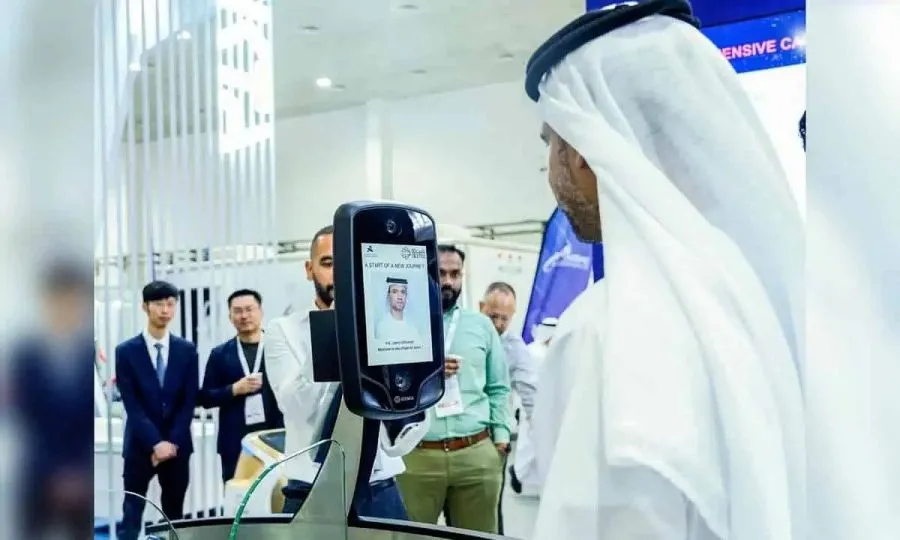
- Biometric Journey: Facial recognition and biometric scanning for seamless curb-to-gate journeys, enabling automated check-in, security, and boarding processes. These systems are expected to reduce queue times by 30-40%.
- Digital Identity Systems: Technology allowing passengers to use digital identities instead of paper passports and boarding passes.
- Self-Service Solutions: Advanced kiosks for check-in and bag drop, complemented by mobile applications providing real-time updates, navigation assistance, and contactless payment options.
Operational Efficiency Technologies
Contracts for operational systems focus on maximizing efficiency through:
- IoT Framework: A comprehensive Internet of Things ecosystem connecting assets, sensors, and systems to enable real-time monitoring, predictive maintenance, and data-driven decision-making.
- Robotics and Automation: Systems for robotic assistance with passenger information, baggage handling, cleaning, and ground handling operations such as aircraft towing and refueling.
- Autonomous Vehicles: Infrastructure supporting self-driving baggage carts, shuttle buses, and logistics vehicles to streamline airside and landside operations.
Digital Infrastructure
Contracts for the airport’s digital backbone include:
- 5G Private Networks: High-speed wireless networks supporting data-intensive applications, real-time video surveillance, and reliable connectivity for passengers, staff, and autonomous systems.
- Integrated Management Platforms: Centralized digital systems for coordinating operations, passenger flow, baggage tracking, and facility maintenance.
- Digital Twins: Virtual replicas of airport infrastructure allowing real-time monitoring, predictive maintenance, and scenario planning.
The Global Competition for Contracts
The contracting process for Al Maktoum International has attracted interest from leading global firms specializing in airport development:
International Participation
Major international construction companies, architectural firms, and technology providers from Europe, Asia, and North America have reportedly secured roles in the project, bringing specialized expertise in areas such as:
- Advanced terminal design and construction
- Next-generation baggage handling systems
- Sustainable airport infrastructure
- Smart building technologies
- Biometric security solutions
Local Champions
UAE-based companies are playing significant roles in numerous contracts, with firms specializing in:
- Large-scale infrastructure development
- Construction management
- MEP (mechanical, electrical, plumbing) systems
- IT infrastructure
- Project logistics
Environmental Considerations in Contract Specifications
The contracts being awarded incorporate stringent environmental requirements, reflecting Dubai’s commitment to sustainable development:
Green Building Standards
Contractors are required to adhere to advanced green building standards, with specifications for:
- Energy-efficient building envelopes
- Smart climate control systems
- Water-efficient fixtures and systems
- Sustainable materials selection
- Waste reduction strategies
Renewable Energy Integration
Contracts for energy systems include provisions for:
- Solar power generation capabilities
- Energy storage solutions
- Smart grid technologies
- Electric vehicle charging infrastructure
The Airport City: Beyond Aviation Infrastructure
The contracts for Al Maktoum International extend beyond the airport itself to include elements of the surrounding Dubai South development:
Integrated Urban Planning
The masterplan envisions a complete airport city with:
- Residential areas for up to one million residents
- Commercial districts and business parks
- Hospitality zones with hotels and convention facilities
- Retail and entertainment destinations
- Educational and healthcare facilities
Transportation Connectivity
Contracts include provisions for seamless connections to:
- New metro lines linking to Dubai’s existing public transport network
- Etihad Rail integration for national and regional connectivity
- Expressway connections to Dubai’s road network
- Intermodal transportation hubs
Emirates Airlines’ Growth Alongside Airport Development
As contracts for the new airport are being awarded, Emirates Airlines continues its parallel growth trajectory, as highlighted by Sheikh Ahmed:
“2024-25 will be another record year for Emirates Group in terms of numbers,” he stated, following the group’s best-ever financial performance with a record profit of AED 18.7 billion last year, up 71 percent from the previous year.
The airline’s expansion aligns with the new airport development:
- Fleet Renewal and Expansion: Emirates is currently refitting 90 percent of its existing fleet of 261 aircraft while awaiting delivery of over 300 new aircraft on order.
- Potential New Orders: Sheikh Ahmed hinted at additional aircraft acquisitions, stating: “There will be some new announcements at the Dubai Airshow. We are thinking along those lines.”
- Cash Position: The group ended 2023-24 with its highest-ever cash balance of AED 47.1 billion, providing financial resources to support its growth in conjunction with the new airport development.
Training and Workforce Development
The contracts being awarded include significant provisions for training and workforce development, essential for creating the skilled labor force needed for both construction and operation:
Construction Phase Training
Contractors are implementing specialized training programs for:
- Advanced construction techniques
- Quality control procedures
- Safety protocols for large-scale aviation projects
- Sustainable construction practices
Operational Readiness Training
Looking ahead to the airport’s opening, contracts include allowances for:
- Technical training for systems operations and maintenance
- Customer service and passenger assistance training
- Security procedures and emergency response protocols
- Specialized aviation operations training
Sheikh Ahmed emphasized the importance of this preparatory work: “Just because of the size (of the airport), on the training side, opening for that day, maybe we need about 12 months.”
Specialized Facilities and Investments
Beyond the main terminal and runway contracts, awards are being made for specialized facilities:
VIP and Private Aviation
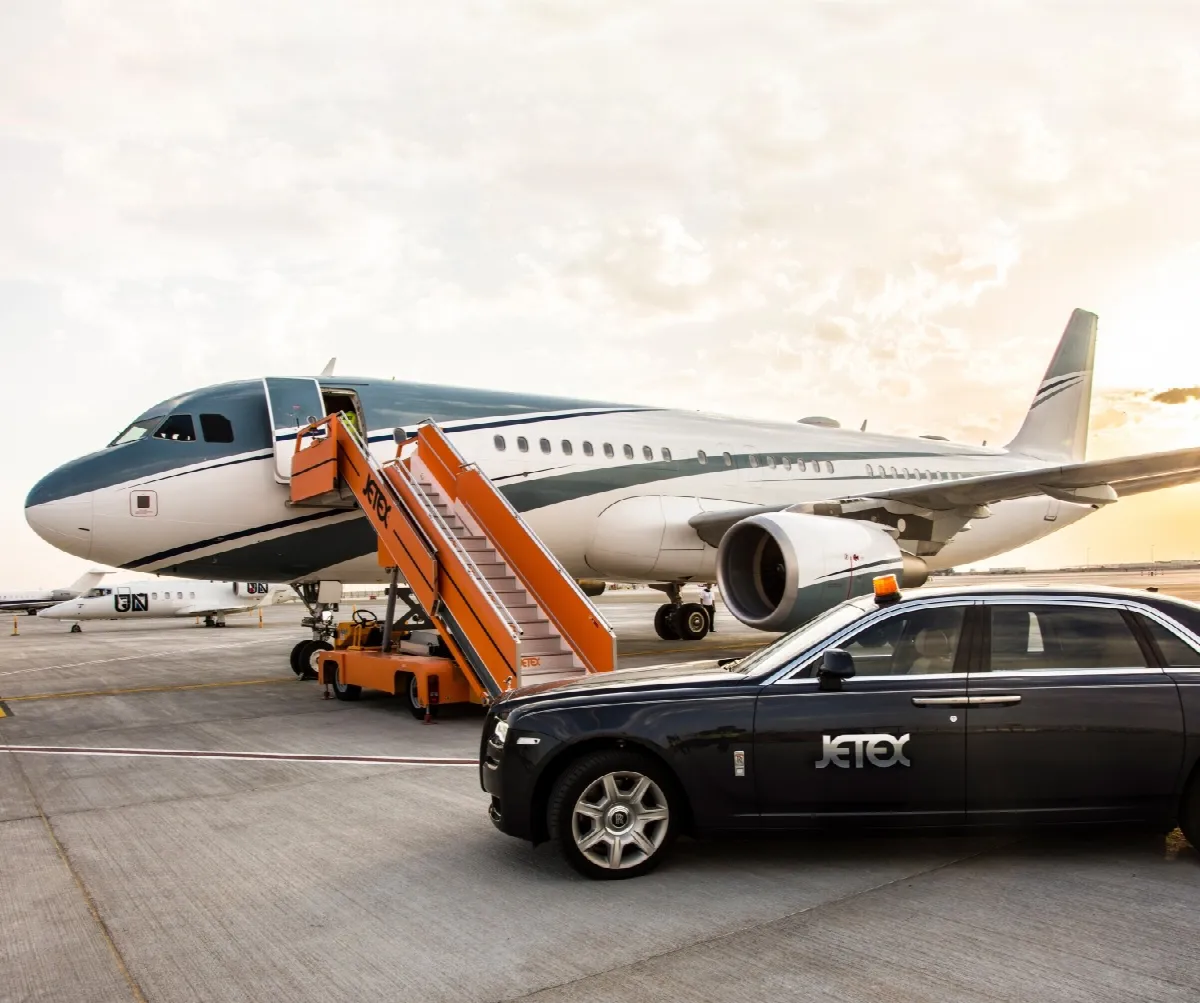
Falcon Aviation is investing over AED 360 million in a new private jet terminal at the Mohammed Bin Rashid Aerospace Hub, expected to be ready by 2030. The airport will also feature a dedicated VIP terminal catering to private, business, and government travelers with luxury amenities.
Cargo Infrastructure
Specialized contracts cover the development of advanced cargo facilities, including:
- Automated cargo handling systems
- Cold chain infrastructure for perishable goods
- E-commerce processing centers
- Specialized storage for high-value and sensitive freight
Maintenance, Repair, and Overhaul (MRO) Facilities
Contracts for maintenance infrastructure include provisions for:
- Wide-body aircraft maintenance hangars
- Component repair shops
- Engine testing facilities
- Aviation training centers
Looking Forward: A Transformative Project
As Dubai continues awarding contracts for Al Maktoum International Airport, the project is set to transform not only the emirate’s aviation infrastructure but its entire economic landscape.
Sheikh Ahmed remains optimistic about the future, even amid global economic uncertainties. When asked about the impact of the global tariff row, he stated: “It is a bit early for me to prejudge as we speak today. But I always remain very optimistic. I don’t think it affects business. Business is as usual.”
This confidence is reflected in the ambitious timeline for the airport’s development and the scale of contracts being awarded. The project represents Dubai’s unwavering commitment to its vision of becoming the world’s leading aviation hub and a global center for business, tourism, and innovation.
Economic and Social Impact
The awarding of these contracts marks the beginning of a transformative process with far-reaching economic and social implications:
Economic Growth Catalyst
- The expansion is projected to contribute significantly to Dubai’s goal of doubling its economy by 2033 as part of the Economic Agenda D33.
- The airport will support increased foreign trade targets, aiming to grow from AED 14.2 trillion in the past decade to AED 25.6 trillion in the next decade.
- Foreign direct investment is expected to rise from AED 32 billion to AED 60 billion annually, reaching a total of AED 650 billion by 2033.
Job Creation and Workforce Development
- Up to 500,000 jobs are projected across construction, aviation, hospitality, retail, logistics, and service sectors.
- The project will create opportunities for both skilled and unskilled workers, attracting a diverse workforce to the region.
- Training programs associated with the contracts will develop a new generation of aviation and construction specialists.
Real Estate and Urban Development
- The airport expansion is already driving demand for both residential and commercial real estate in Dubai South and adjacent areas.
- Property values are expected to rise as the area transforms into a bustling urban and business hub.
- New community infrastructure, including roads, public transportation, healthcare facilities, schools, and leisure amenities, will enhance the quality of life for residents.
Conclusion: A New Chapter in Global Aviation
The awarding of contracts for Al Maktoum International Airport marks the beginning of a new chapter in global aviation history. As construction progresses over the coming years, the world will witness the emergence of an airport unlike any other—a facility that redefines what an international hub can be in terms of scale, efficiency, passenger experience, and environmental responsibility.
For Dubai, the project represents the culmination of decades of aviation-focused development and a bold statement about the emirate’s future ambitions. By creating the world’s largest and most advanced airport, Dubai is not only securing its position as a critical node in global transportation networks but also driving economic growth, creating jobs, and enhancing its international prestige.
As Sheikh Ahmed succinctly put it: “We don’t want to see any hiccups on that day.” The careful planning and strategic awarding of contracts reflect Dubai’s commitment to excellence and its determination to create an airport that will serve as a global benchmark for decades to come.
Stay connected with JobXDubai for ongoing updates on this landmark project, its progress, and the numerous career opportunities it will create across multiple sectors of Dubai’s dynamic economy.
Want to explore career opportunities related to this massive project? Browse our latest job listings in construction, aviation, and logistics at JobXDubai.com.
Additional Reading Material
The UAE week, every Monday
The week's stories on jobs, visas, money and daily life in one short email. Unsubscribe in one click.